
Landscape with Factory Chimney — History & Facts
A single red chimney rises like a signal flare through a landscape that seems to pulse with color, drawing the eye upward and anchoring a world in motion. The hills undulate in bands of green, violet, and yellow, while houses cluster in the lower left, their faceted walls echoing the fractured terrain. Brushstrokes dart and swirl, refusing to settle, as if the land itself is alive with energy.
The sky, streaked with blue and lavender, presses close to the earth, blurring the boundary between atmosphere and ground. Here, the industrial and the natural are not at odds but woven together, the factory chimney as much a part of the landscape as the hills and fields. Painted in 1910, Landscape with Factory Chimney belongs to the moment when Wassily Kandinsky was pushing the boundaries of what a landscape could be. The forms are simplified almost to abstraction, yet the scene remains legible: a countryside transformed by modern industry, rendered in colors that seem to vibrate against each other.
The palette is not descriptive but emotional, creating a sense of restless possibility. This was the era when artists across Europe were breaking with tradition, and Kandinsky—soon to be a pioneer of abstraction—was among the boldest. The painting now resides in the Solomon R.
Guggenheim Museum, a testament to a world on the brink of artistic revolution. Look again, and see how the red chimney dares you to imagine what lies beyond the visible.
More Artworks by Wassily Kandinsky

Improvisation 35
Wassily Kandinsky
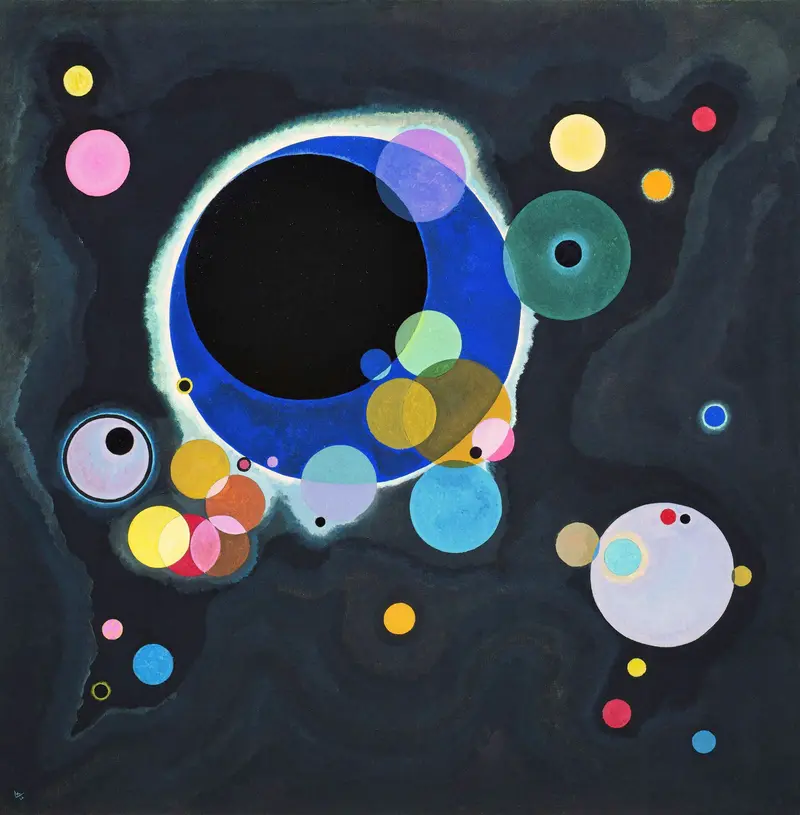
Several Circles
Wassily Kandinsky
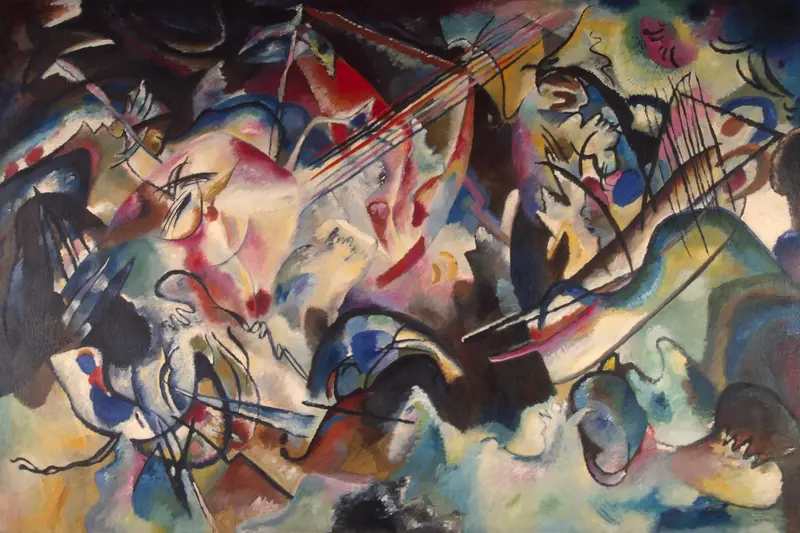
Composition VI
Wassily Kandinsky
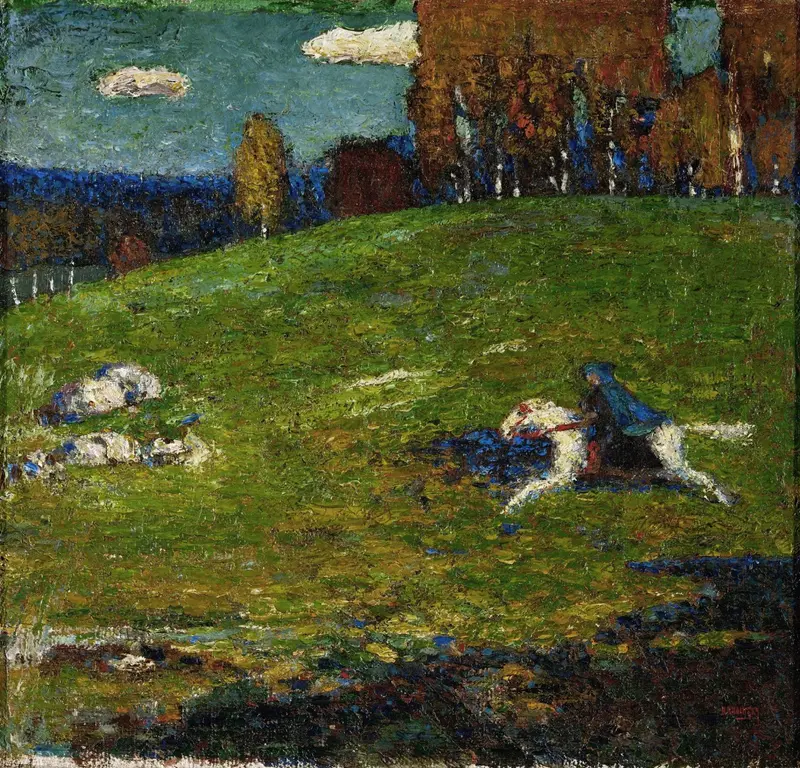
The Blue Rider
Wassily Kandinsky

Murnau
Wassily Kandinsky
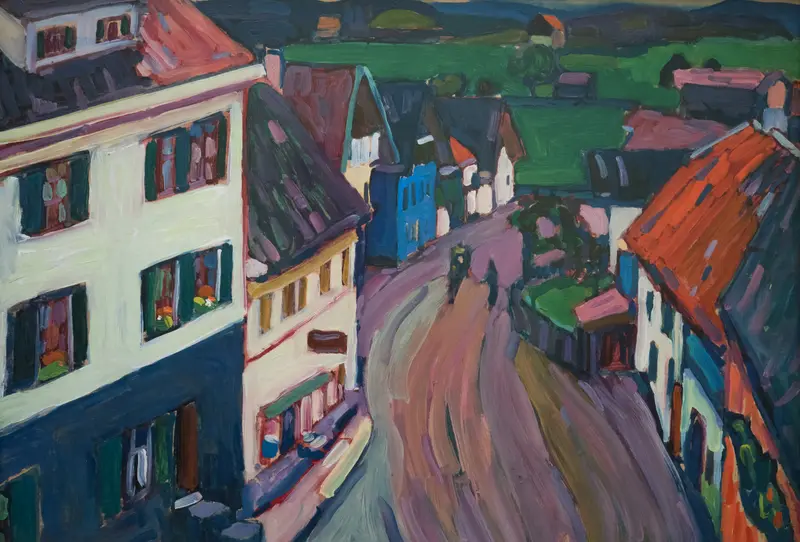
Murnau – View from the window of the Griesbräu
Wassily Kandinsky
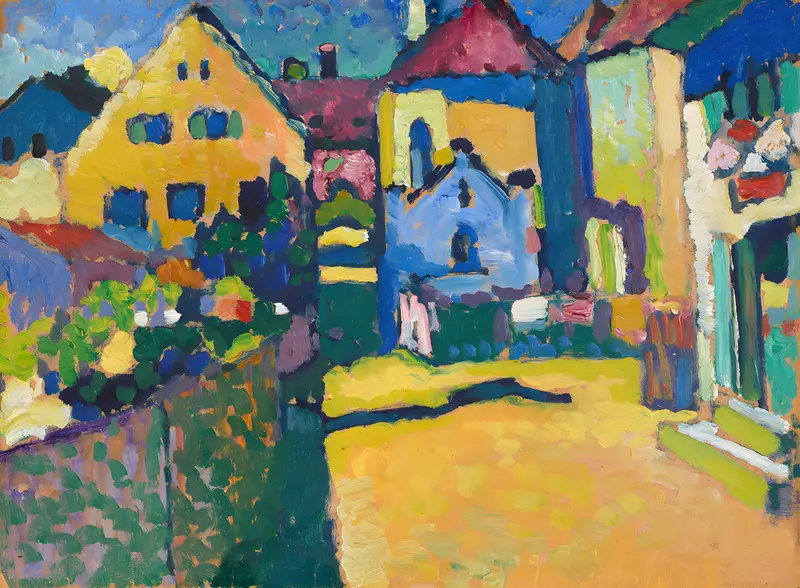
Green Lane in Murnau
Wassily Kandinsky
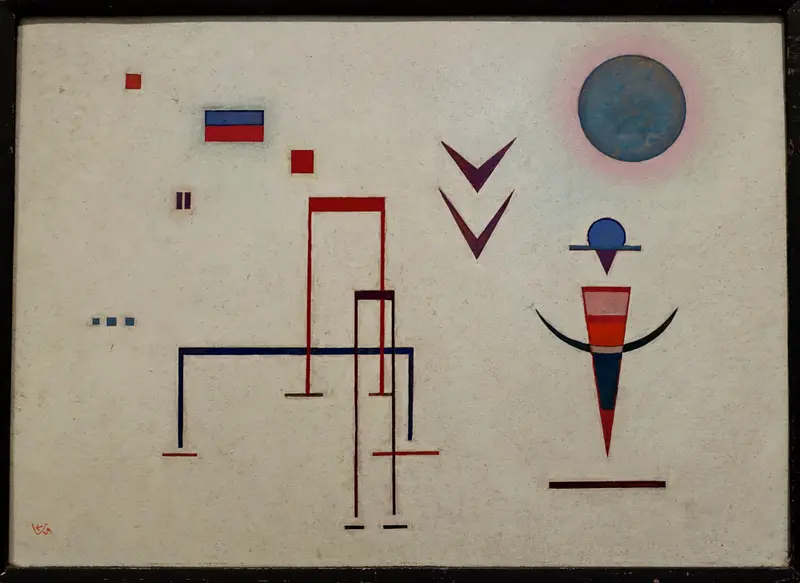
Jocular Sounds
Wassily Kandinsky

Zubovsky Platz
Wassily Kandinsky

Landscape with a yellow field
Wassily Kandinsky
More Landscape Art

The Starry Night
Vincent van Gogh

View of Delft
Johannes Vermeer

Water Lilies
Claude Monet

The Grand Canal, Venice, looking north-west from the Ca' Corner to the Ca' Contarini degli Scrigni, with the campanile of Santa Maria della Carità
Canaletto

Windsor Castle
Canaletto

The Grand Canal looking North-East from the Palazzo Dolfin-Manin to the Rialto Bridge
Canaletto