
Landscape with the Cattle — History & Facts
What first draws the eye in Landscape with the Cattle is the hush that settles over the scene, as if the world has paused to watch the animals drink at the water’s edge. The light, golden and low, pours in from the left, illuminating the backs of cattle and sheep, and picking out the figures of herders as they rest or tend to their charges. The winding path of animals and people leads the viewer deeper into the landscape, where a distant ruin crowns a hill, half-lost in the gathering dusk.
Every gesture is purposeful: a herder leans forward, attentive to his flock; a woman sits quietly, her face turned toward the water, while the cattle drink in the shadow of ancient trees. The composition draws the eye in a gentle arc, from the busy foreground to the tranquil, far-off horizon, where the sky glows with the last light of day. Painted by Adriaen Frans Boudewijns between 1674 and 1717, this work belongs to a tradition of pastoral landscapes that flourished in the Low Countries during the late seventeenth century. Such paintings were prized by collectors for their vision of rural abundance and order, a world where humans and animals coexist in harmony and the land yields its quiet pleasures.
The genre reflected both nostalgia for a vanishing countryside and a new appreciation for nature as a subject in its own right. Though history has kept few traces of this particular painting’s early journey, it now resides in the Museo del Prado, where its luminous calm invites viewers to linger, tracing the slow rhythms of another age.
More Artworks by Adriaen Frans Boudewijns
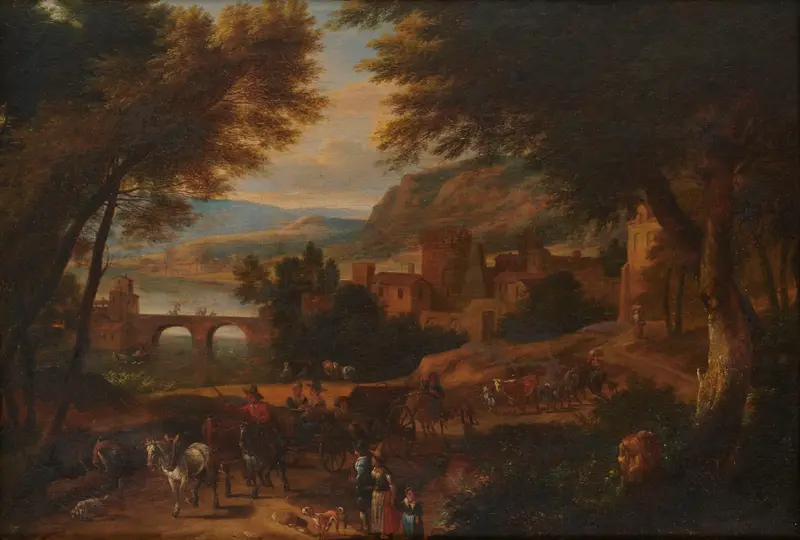
Landscape
Adriaen Frans Boudewijns
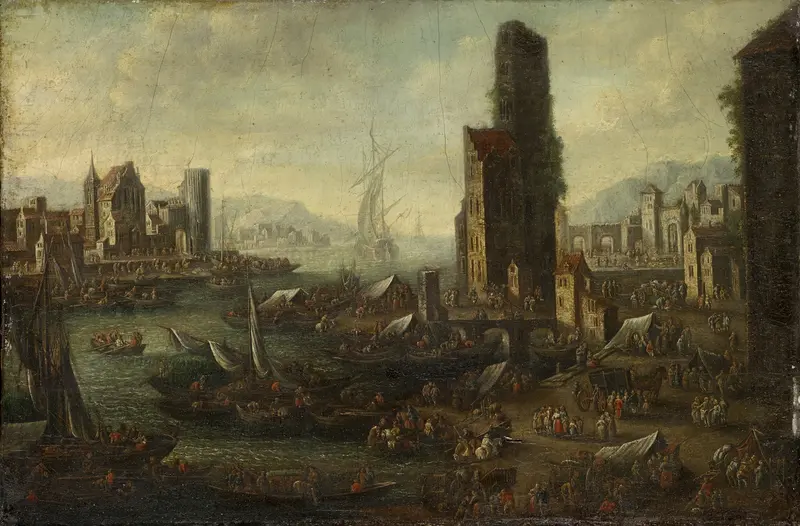
Seaport
Adriaen Frans Boudewijns
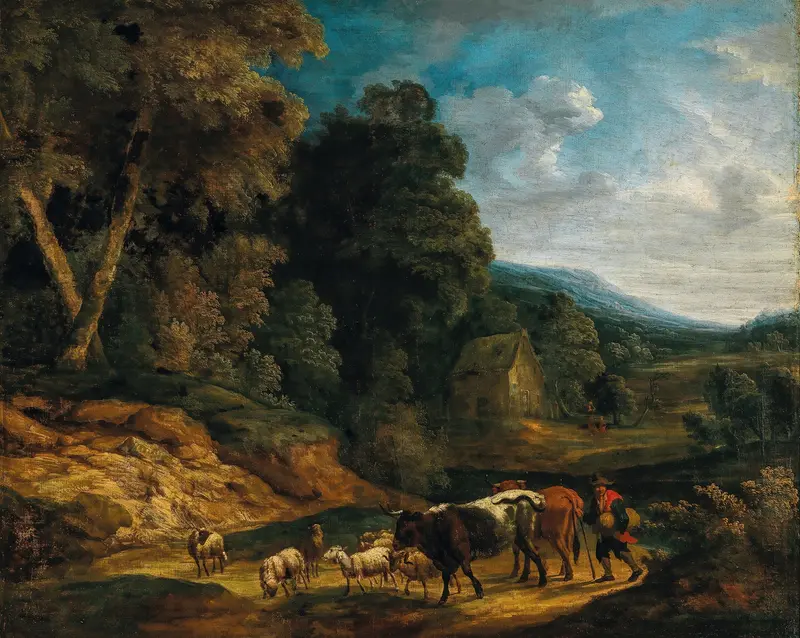
A southern landscape with herdsmen and their flock
Adriaen Frans Boudewijns
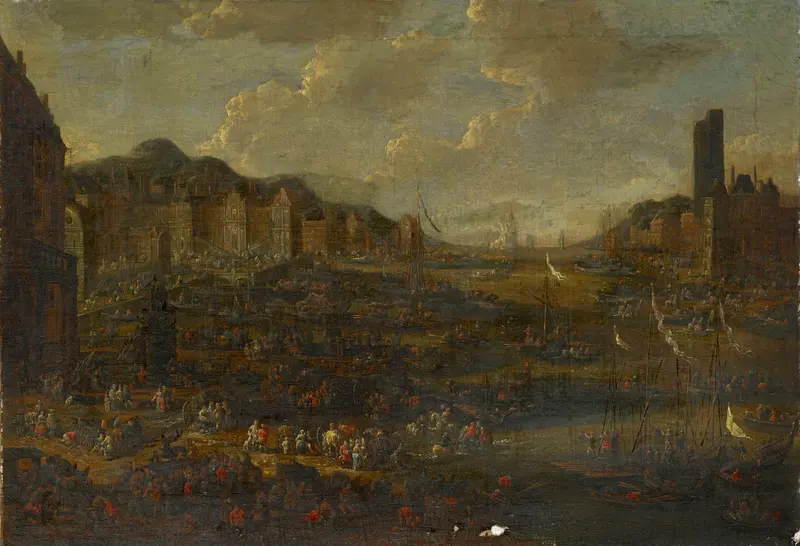
Seaport II
Adriaen Frans Boudewijns
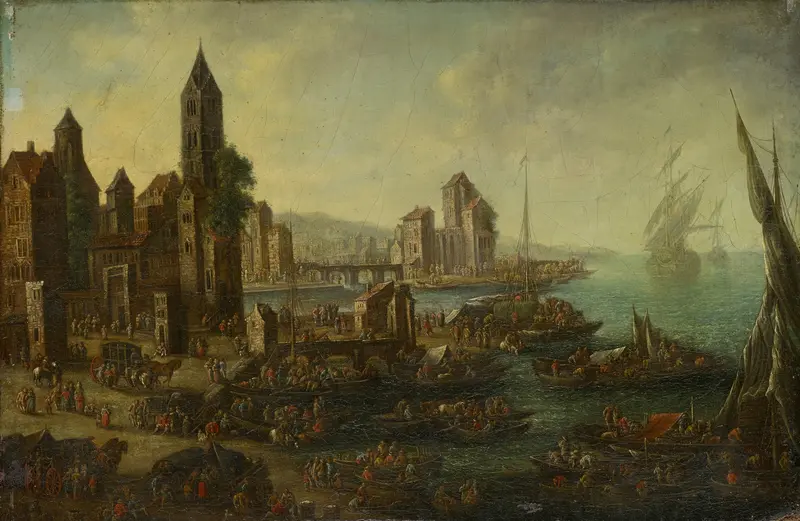
Seaport III
Adriaen Frans Boudewijns
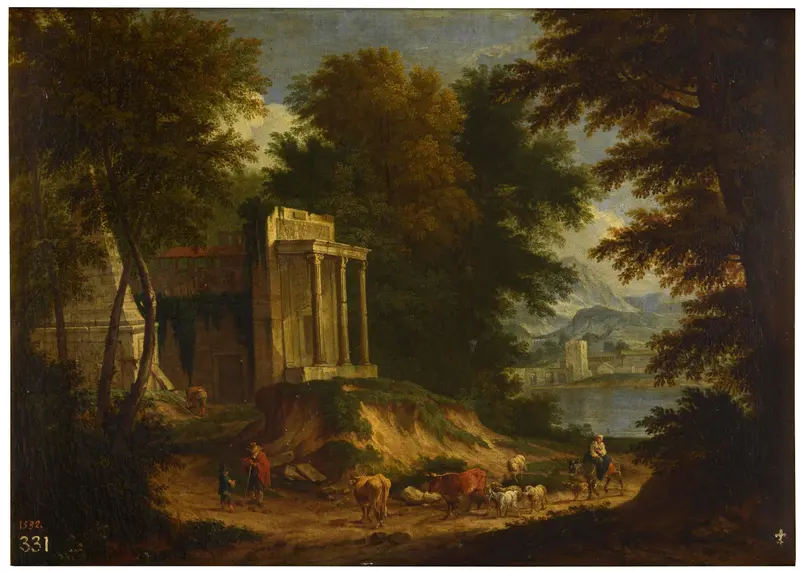
Landscape with ruins
Adriaen Frans Boudewijns
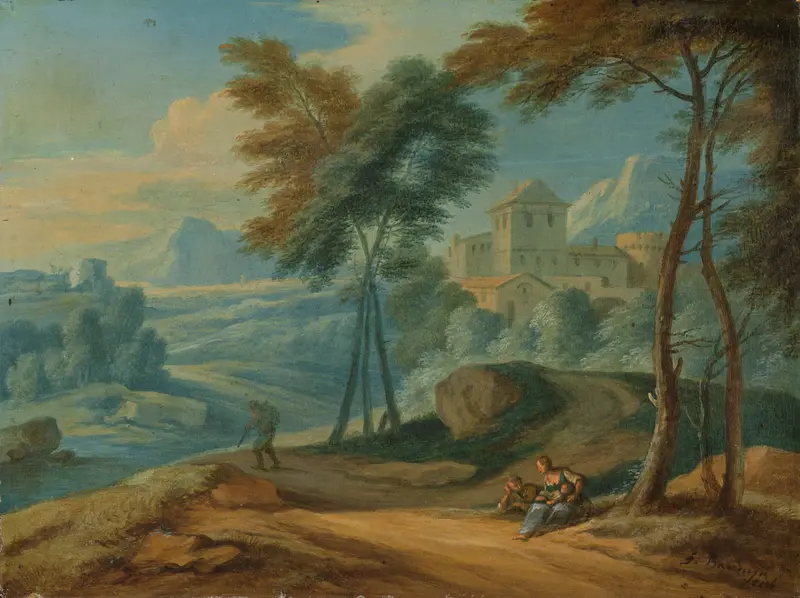
Mountainous landscape
Adriaen Frans Boudewijns
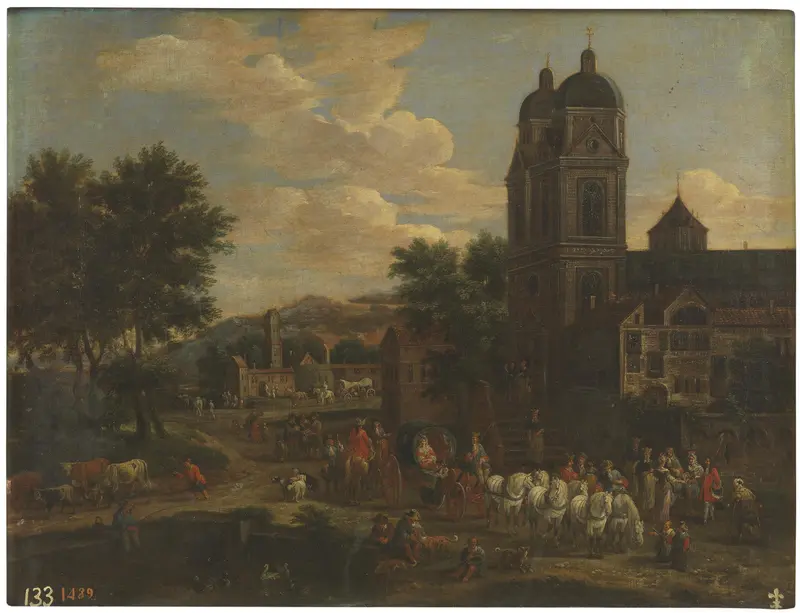
A sanctuary
Adriaen Frans Boudewijns
Port
Adriaen Frans Boudewijns
Rest on the road
Adriaen Frans Boudewijns
More Landscape Art

The Starry Night
Vincent van Gogh

View of Delft
Johannes Vermeer

Water Lilies
Claude Monet

The Grand Canal, Venice, looking north-west from the Ca' Corner to the Ca' Contarini degli Scrigni, with the campanile of Santa Maria della Carità
Canaletto

Windsor Castle
Canaletto

The Grand Canal looking North-East from the Palazzo Dolfin-Manin to the Rialto Bridge
Canaletto