
Rest on the road — History & Facts
A shaft of golden light draws the eye into the heart of Rest on the road, where travelers and herds pause beneath towering trees, their journey momentarily suspended. The artist, Adriaen Frans Boudewijns, orchestrates the scene with a gentle choreography: a cluster of figures settles in the foreground, some tending to cattle, others deep in conversation, while a woman in red cradles a child, her vivid dress anchoring the viewer’s gaze. The great arching tree frames the gathering, its branches reaching toward the luminous sky, and the ruined stone structure to the right hints at stories of the past—shelter, abandonment, or perhaps a waypoint known to many.
Each animal and figure is placed with care, suggesting not just a pause in travel, but a moment of shared humanity along the road. Painted between 1674 and 1717, this landscape belongs to a tradition that flourished in the Low Countries, where artists like Boudewijns specialized in scenes of rural life and travel. Such works were prized by city dwellers who longed for the tranquility of the countryside, and by collectors who valued the skillful rendering of light, atmosphere, and everyday detail. The ruins evoke the fascination with antiquity that swept through Europe in this era, while the winding road and distant bridge speak to a world on the move—commerce, migration, and the mingling of classes.
Though history has kept few traces of this specific painting’s journey before it entered the Museo del Prado, its quiet drama invites us to linger, imagining the stories that unfold whenever travelers rest beneath ancient trees.
More Artworks by Adriaen Frans Boudewijns
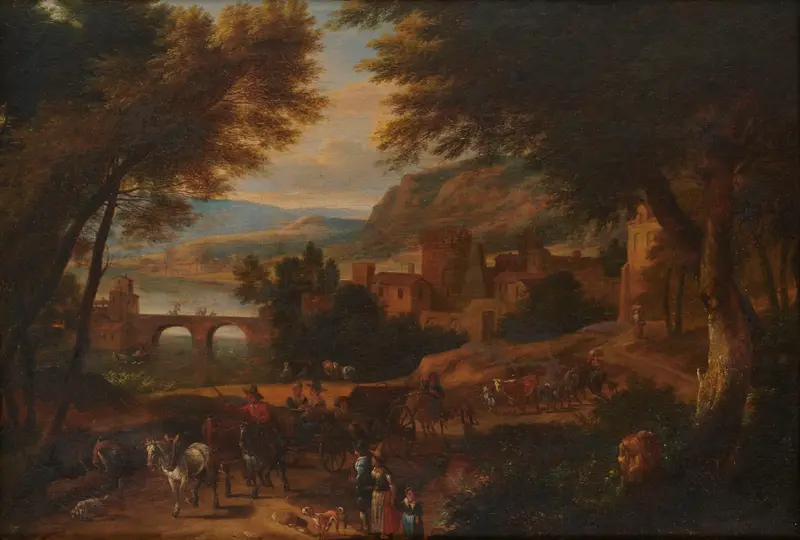
Landscape
Adriaen Frans Boudewijns
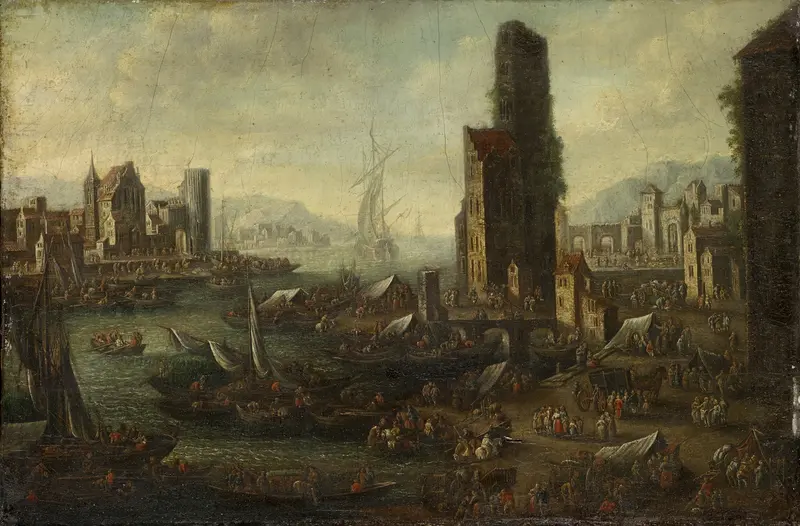
Seaport
Adriaen Frans Boudewijns
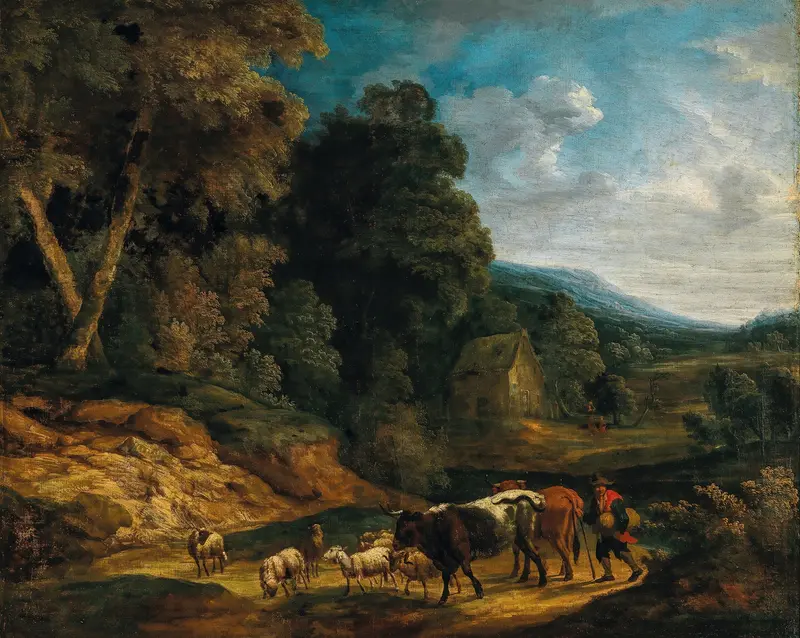
A southern landscape with herdsmen and their flock
Adriaen Frans Boudewijns
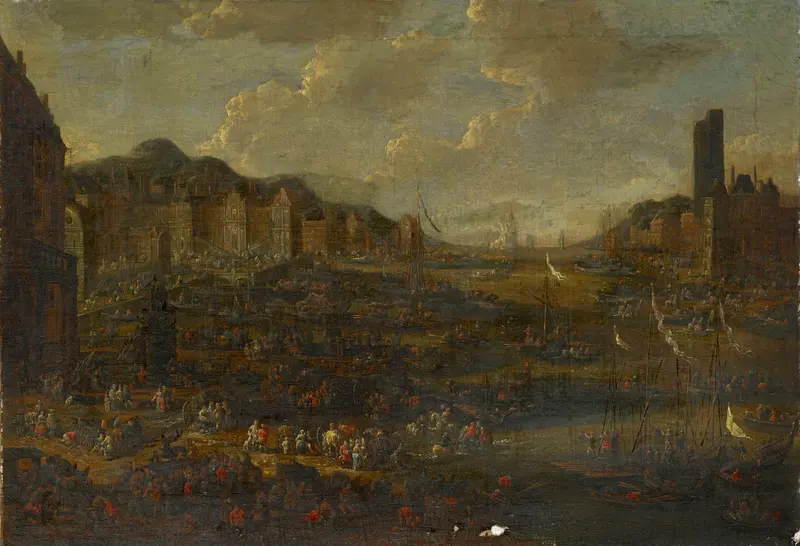
Seaport II
Adriaen Frans Boudewijns
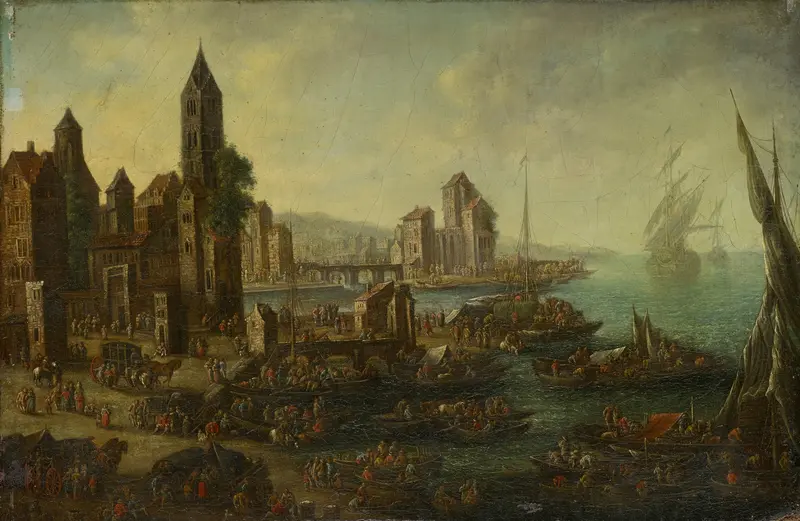
Seaport III
Adriaen Frans Boudewijns
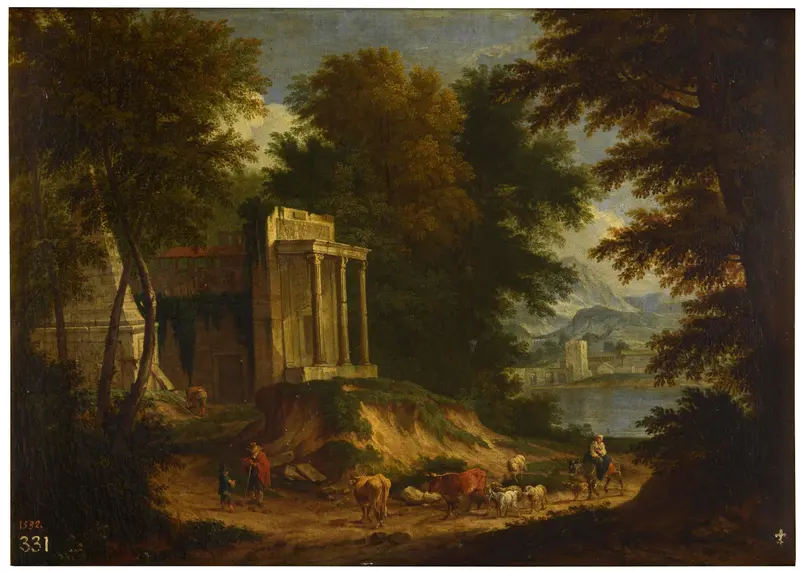
Landscape with ruins
Adriaen Frans Boudewijns
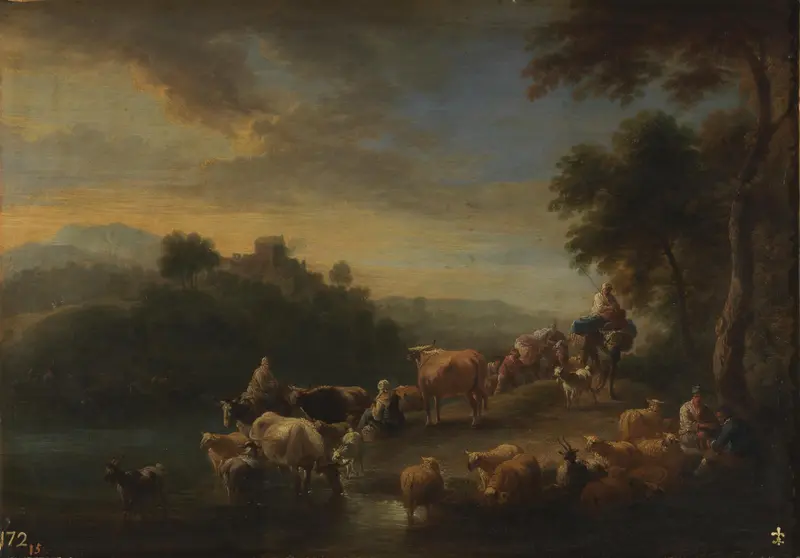
Landscape with the Cattle
Adriaen Frans Boudewijns
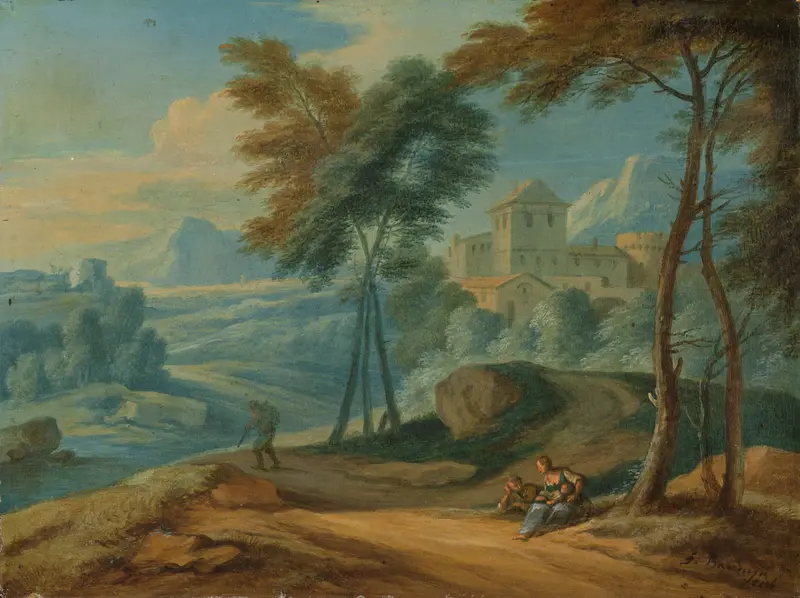
Mountainous landscape
Adriaen Frans Boudewijns
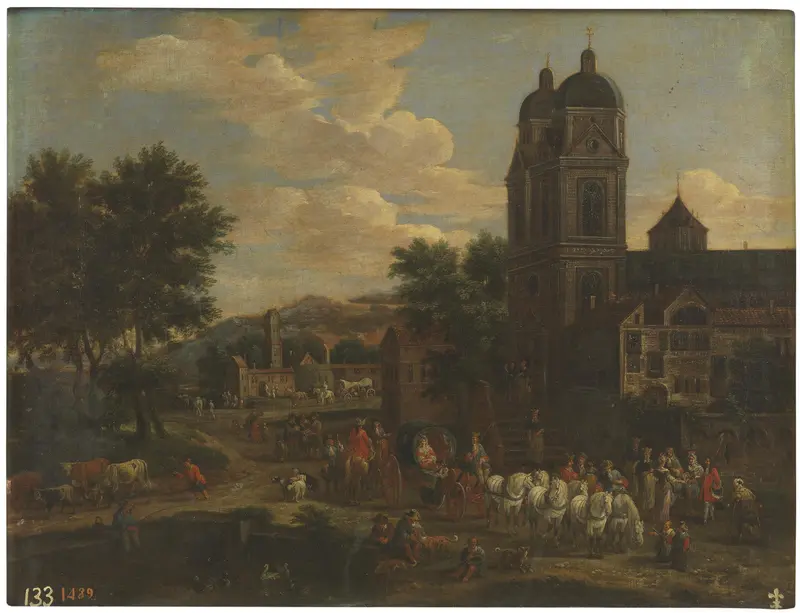
A sanctuary
Adriaen Frans Boudewijns
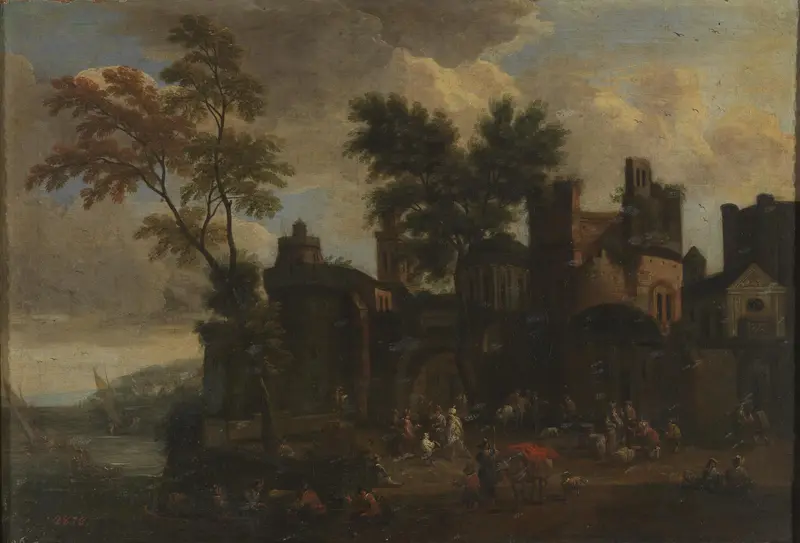
Port
Adriaen Frans Boudewijns
More Landscape Art

The Starry Night
Vincent van Gogh

View of Delft
Johannes Vermeer

Water Lilies
Claude Monet

The Grand Canal, Venice, looking north-west from the Ca' Corner to the Ca' Contarini degli Scrigni, with the campanile of Santa Maria della Carità
Canaletto

Windsor Castle
Canaletto

The Grand Canal looking North-East from the Palazzo Dolfin-Manin to the Rialto Bridge
Canaletto