
Port — History & Facts
A restless energy hums through the foreground of Port by Adriaen Frans Boudewijns, where travelers and townsfolk converge beneath the looming shadow of ancient stone towers. The eye is drawn first to the interplay of light and shadow: a shaft of pale sky slips through the heavy clouds, catching the upper leaves of the trees and the distant sails that skim the water. Below, figures cluster in animated groups—some mounted, some leading pack animals, others bent over goods or in conversation—each gesture suggesting a moment of commerce, arrival, or departure.
The architecture, half-ruined and half-inhabited, hints at a place of passage, where histories overlap and the future is always arriving by boat or on horseback. This is the world of late seventeenth-century Northern Europe, a time when ports were not only centers of trade but crossroads of stories and ambitions. Painters like Boudewijns specialized in these bustling, atmospheric landscapes, weaving together the grandeur of nature, the solidity of human architecture, and the small dramas of daily life. Works such as this, dated between 1674 and 1717 and now in the Museo del Prado, were often collected by merchants and nobles eager to display their connection to the wider world.
Though the details of this painting's journey to Madrid are lost to time, its mood and setting invite us to linger, searching the shadows for our own place in the story.
More Artworks by Adriaen Frans Boudewijns
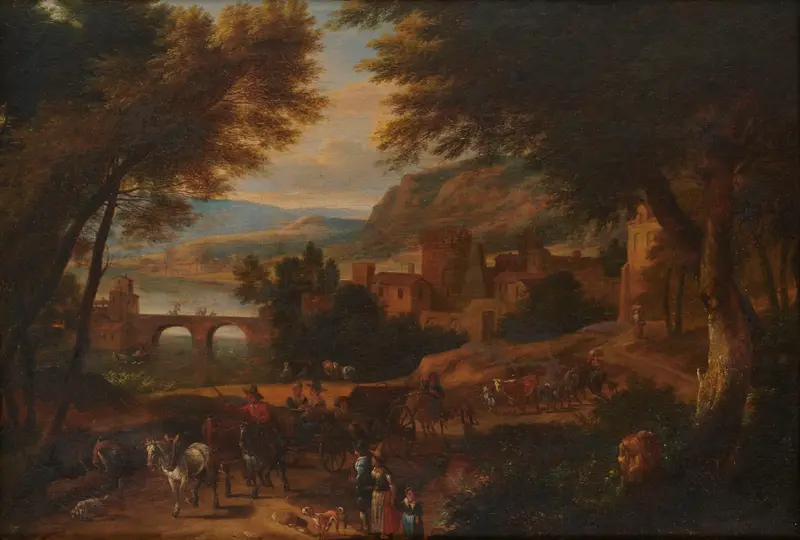
Landscape
Adriaen Frans Boudewijns
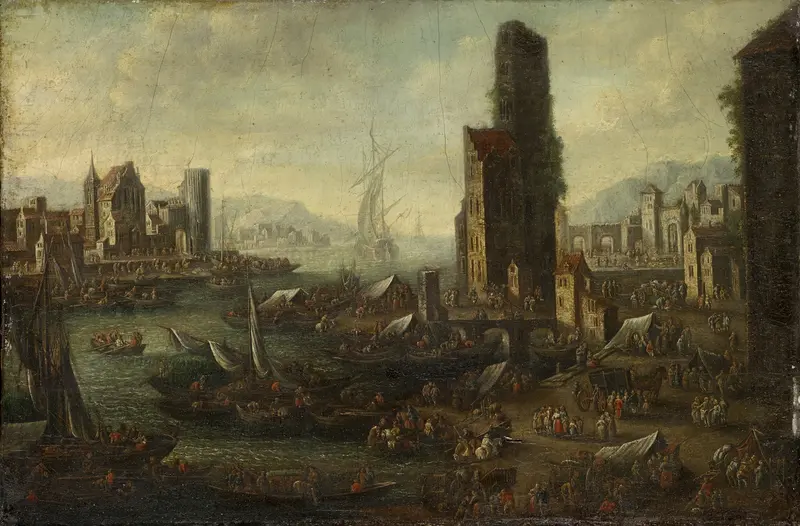
Seaport
Adriaen Frans Boudewijns
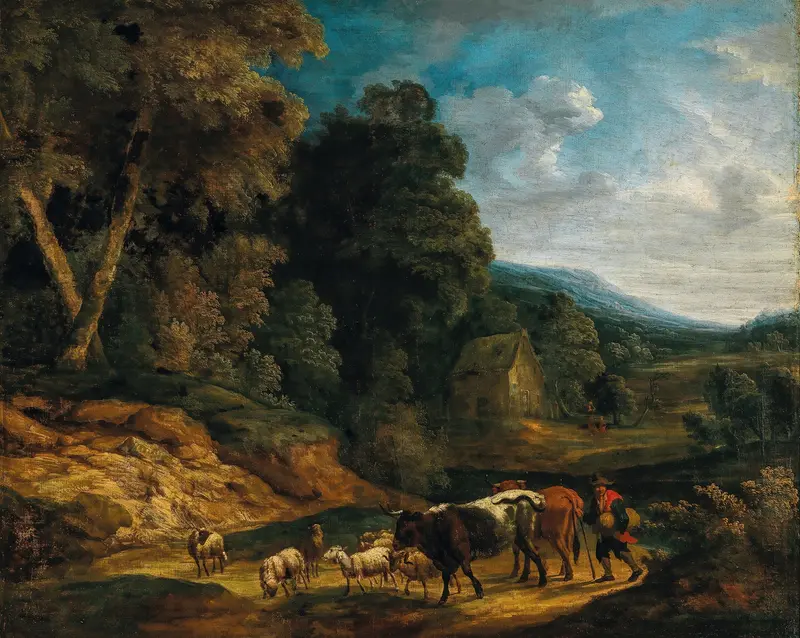
A southern landscape with herdsmen and their flock
Adriaen Frans Boudewijns
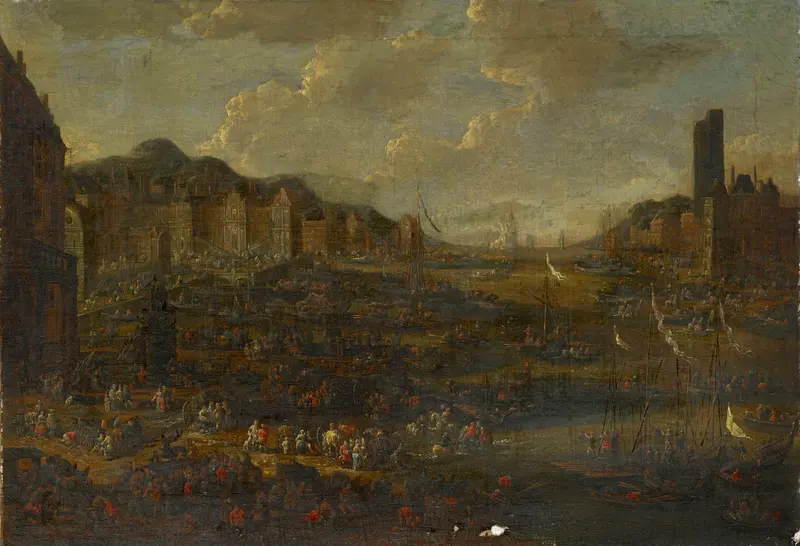
Seaport II
Adriaen Frans Boudewijns
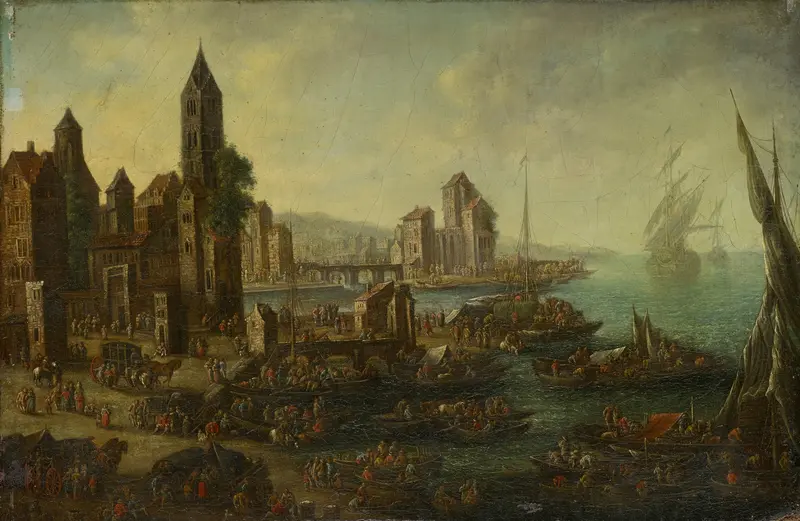
Seaport III
Adriaen Frans Boudewijns
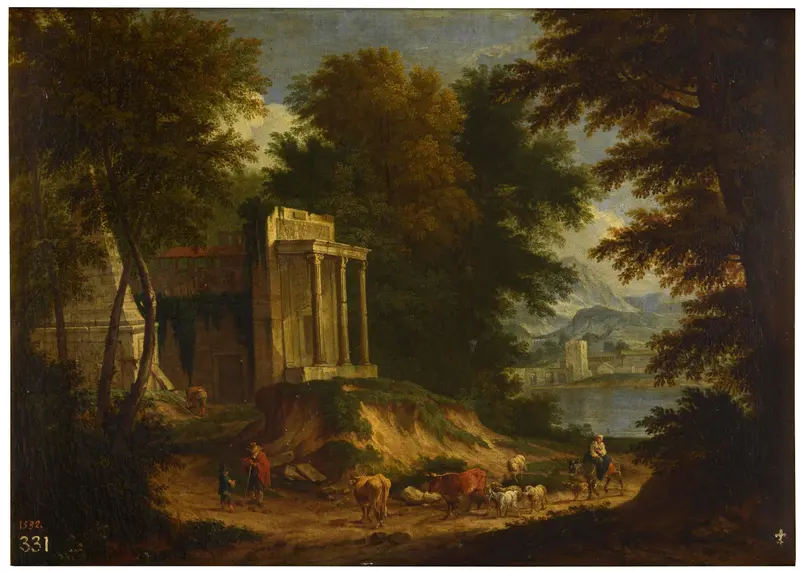
Landscape with ruins
Adriaen Frans Boudewijns
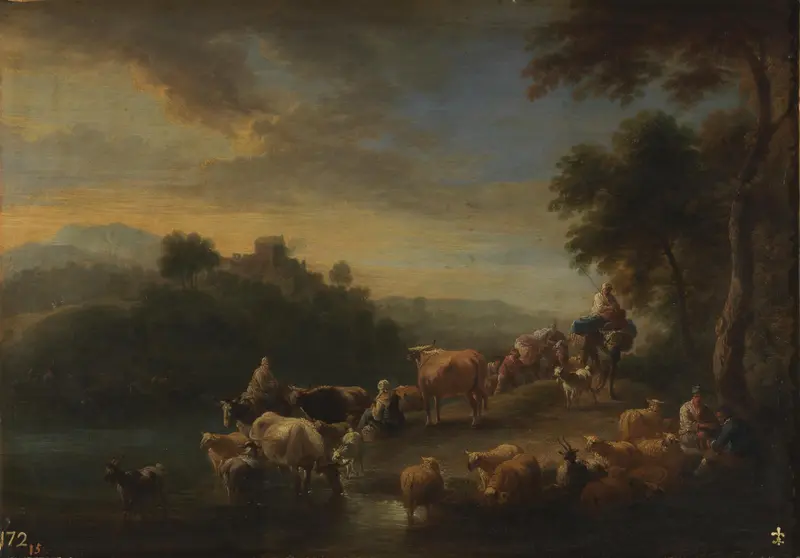
Landscape with the Cattle
Adriaen Frans Boudewijns
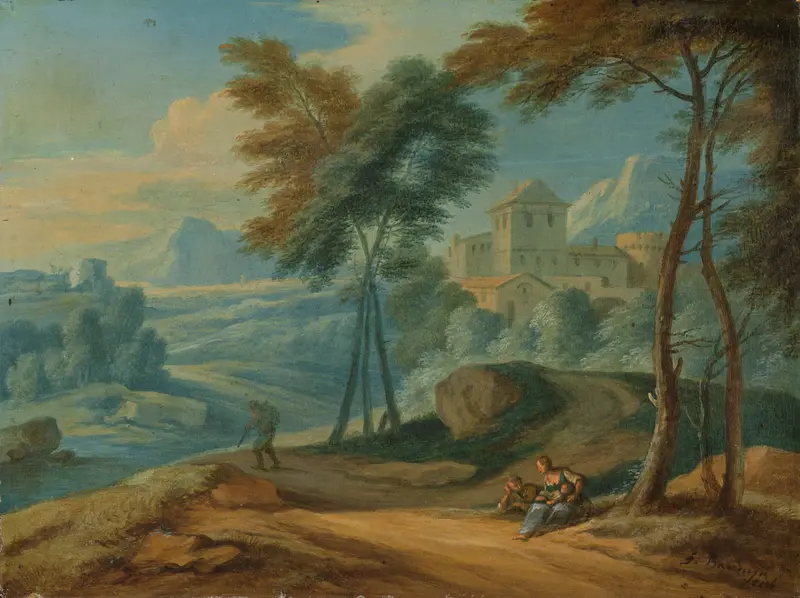
Mountainous landscape
Adriaen Frans Boudewijns
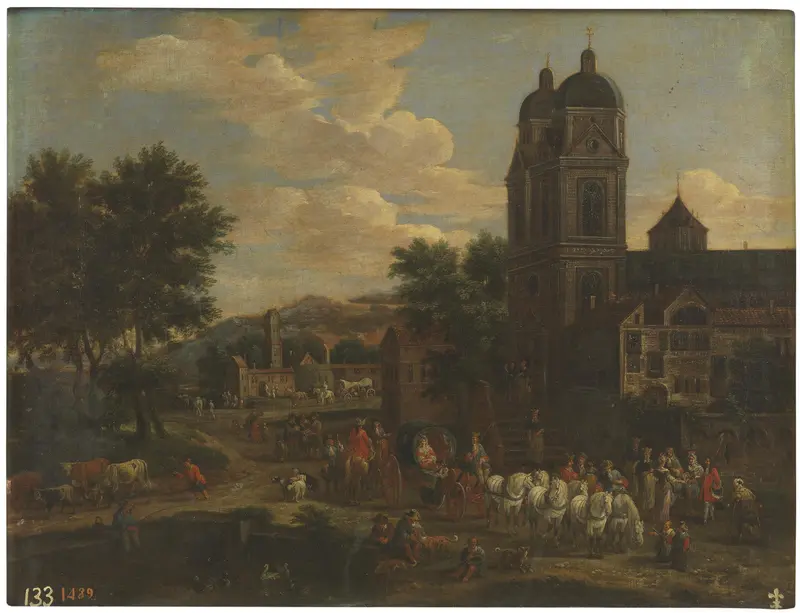
A sanctuary
Adriaen Frans Boudewijns
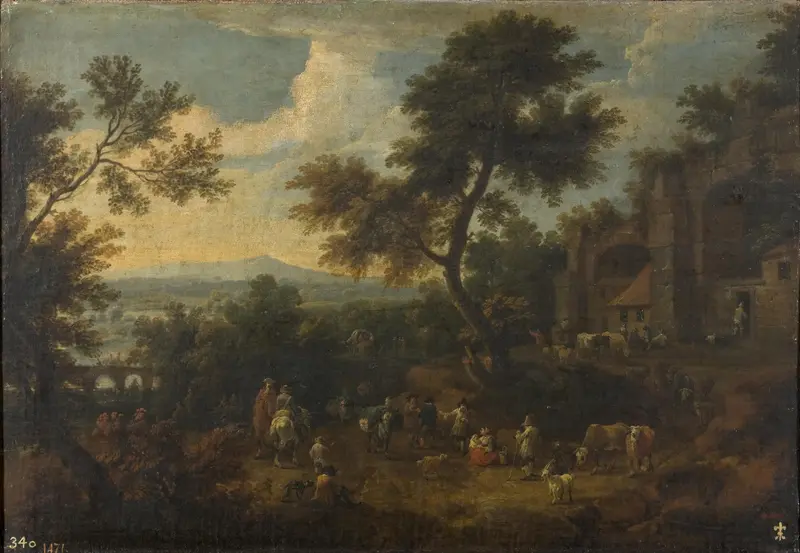
Rest on the road
Adriaen Frans Boudewijns
More Landscape Art

The Starry Night
Vincent van Gogh

View of Delft
Johannes Vermeer

Water Lilies
Claude Monet

The Grand Canal, Venice, looking north-west from the Ca' Corner to the Ca' Contarini degli Scrigni, with the campanile of Santa Maria della Carità
Canaletto

Windsor Castle
Canaletto

The Grand Canal looking North-East from the Palazzo Dolfin-Manin to the Rialto Bridge
Canaletto