
Mountainous landscape — History & Facts
What first draws the eye is the way the path curves gently into the distance, inviting the viewer to follow its course through a landscape that feels both grand and quietly lived-in. Sunlight pours over the hillside, catching the edges of trees whose trunks frame the scene like a stage. In the foreground, a small group has paused—perhaps a family resting, their figures relaxed and absorbed in a moment of calm.
Further along, a lone traveler moves toward the water, his posture suggesting the steady rhythm of a journey. The castle or monastery perched on the right, half-shrouded in trees, anchors the composition and hints at stories of refuge and watchfulness. Painted by Adriaen Frans Boudewijns sometime between 1660 and 1711, this work belongs to a world where landscape painting was both a celebration of nature and a marker of status. In the Dutch and Flemish tradition, such scenes were prized by collectors eager to bring the serenity and order of the countryside into their homes.
The artist’s careful layering of light blue and warm earth tones creates a sense of depth and tranquility, echoing the era’s fascination with harmony between man and land. Though history has kept few traces of this particular painting’s journey, it now resides in the Rijksmuseum collection, quietly inviting us to step into its sunlit silence.
More Artworks by Adriaen Frans Boudewijns
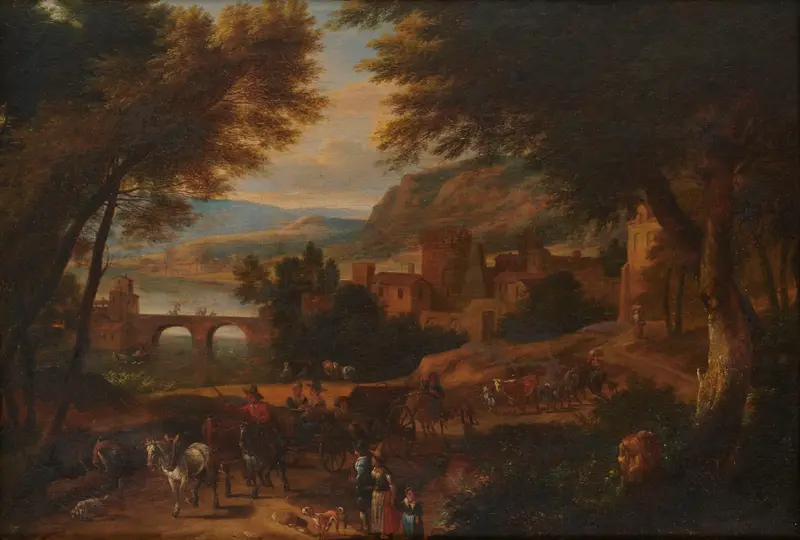
Landscape
Adriaen Frans Boudewijns
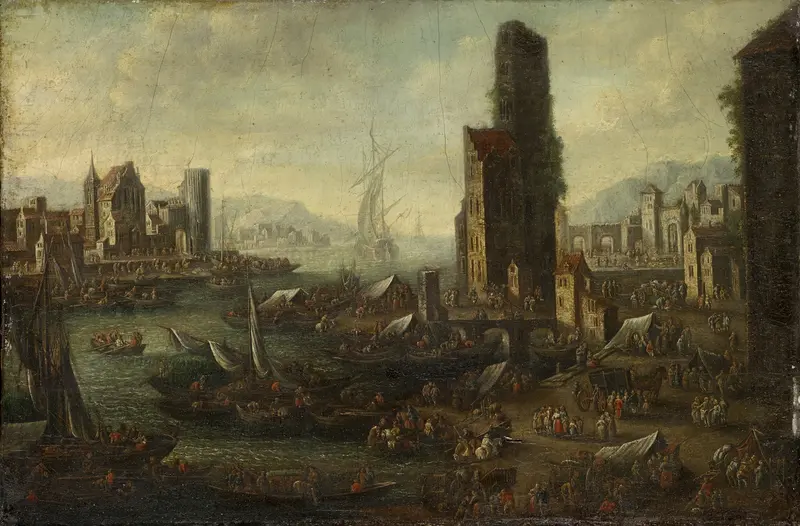
Seaport
Adriaen Frans Boudewijns
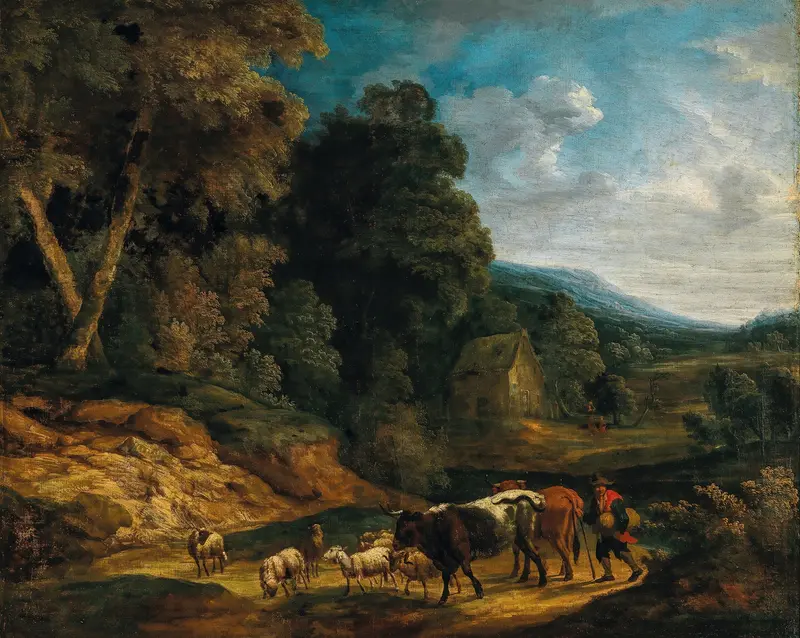
A southern landscape with herdsmen and their flock
Adriaen Frans Boudewijns
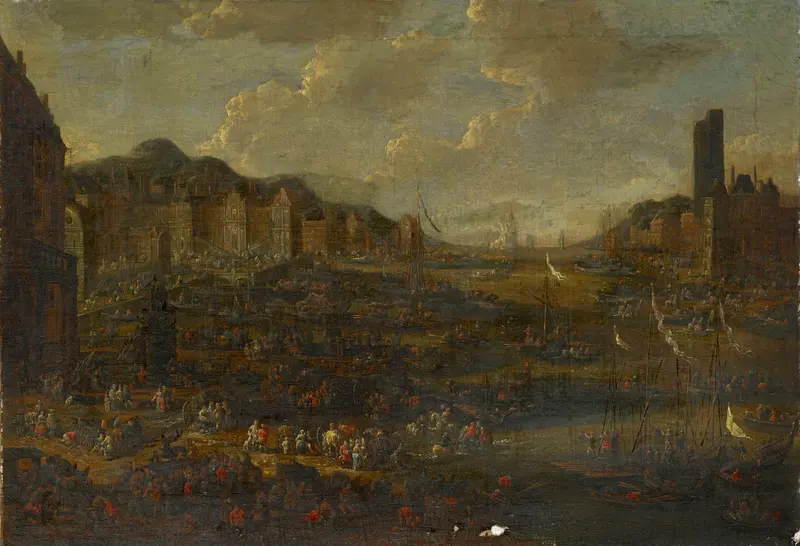
Seaport II
Adriaen Frans Boudewijns
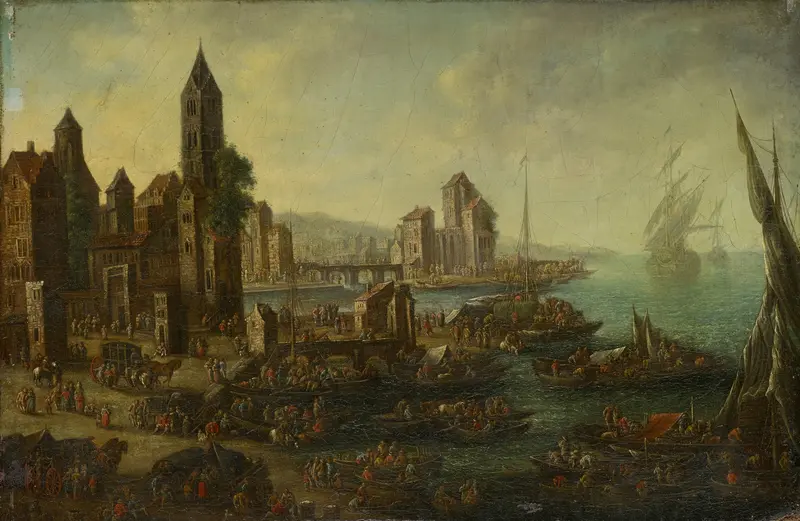
Seaport III
Adriaen Frans Boudewijns
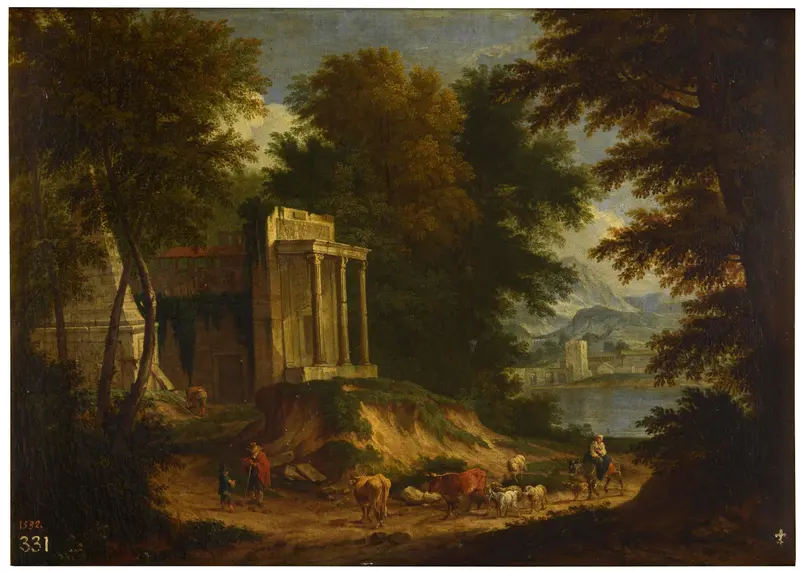
Landscape with ruins
Adriaen Frans Boudewijns
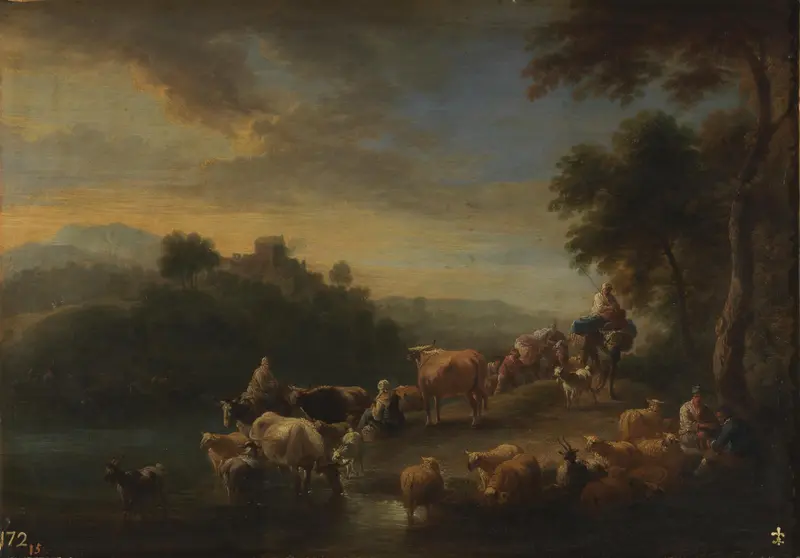
Landscape with the Cattle
Adriaen Frans Boudewijns
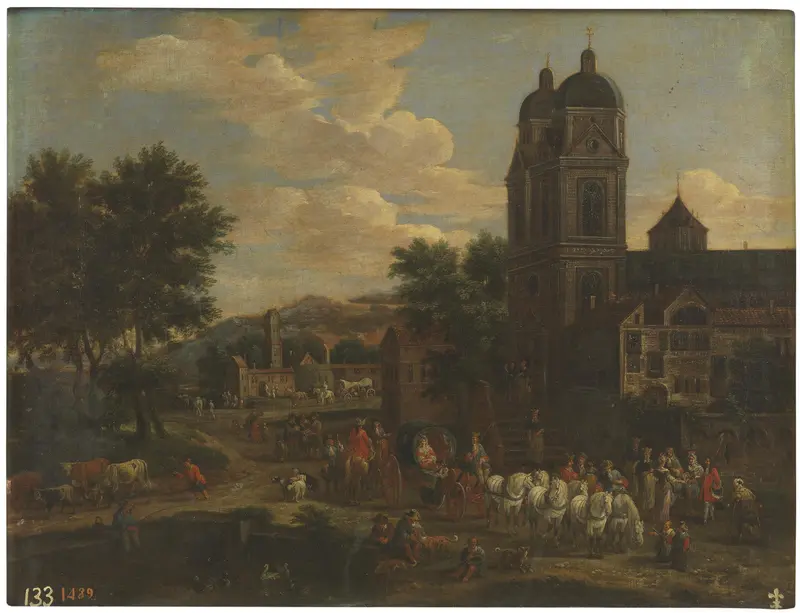
A sanctuary
Adriaen Frans Boudewijns
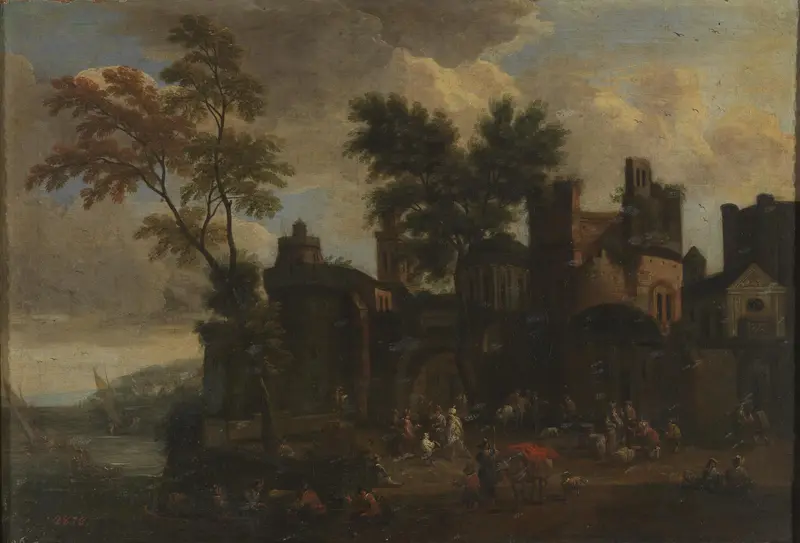
Port
Adriaen Frans Boudewijns
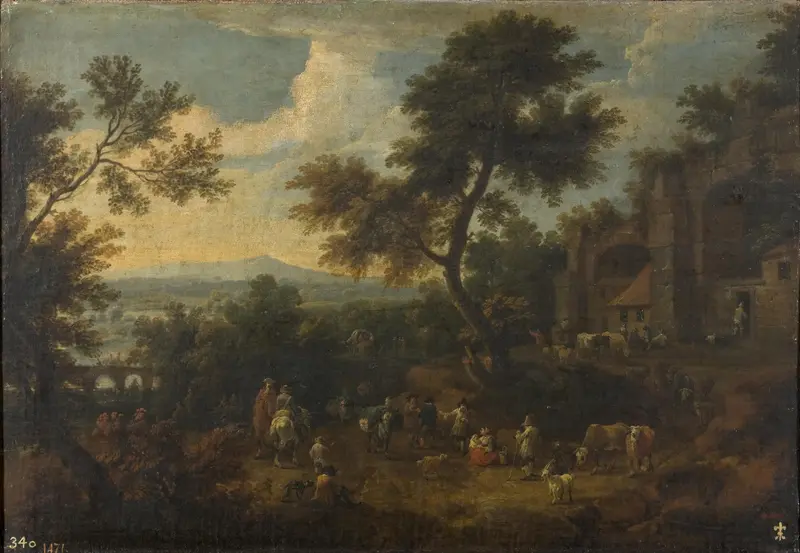
Rest on the road
Adriaen Frans Boudewijns
More Landscape Art

The Starry Night
Vincent van Gogh

View of Delft
Johannes Vermeer

Water Lilies
Claude Monet

The Grand Canal, Venice, looking north-west from the Ca' Corner to the Ca' Contarini degli Scrigni, with the campanile of Santa Maria della Carità
Canaletto

Windsor Castle
Canaletto

The Grand Canal looking North-East from the Palazzo Dolfin-Manin to the Rialto Bridge
Canaletto