
Landschaft in Belgien — History & Facts
Who listens when art speaks of silence? In Landschaft in Belgien, the landscape whispers its secrets, inviting the viewer to find harmony within its quiet embrace. Look to the center, where rolling hills gracefully rise and fall against a soft, muted sky. The delicate brushwork conveys the gentle flow of nature, while the palette of greens and browns evokes a sense of peace. Notice how the horizon line draws the eye outward, creating a balance between the land and the expansive sky above, suggesting a limitless tranquility. Yet, amidst this serene vista, subtle contrasts emerge.
The interplay of light and shadow hints at both the passage of time and the transient nature of beauty. In the foreground, a lone tree stands resolute, representing endurance against the ever-shifting landscape around it. This quiet tension between permanence and change reflects a deeper emotional resonance, inviting contemplation on the fragility of life. Johann Wilhelm Schirmer painted this piece in 1830, during a period marked by the rise of Romanticism in Europe.
At that time, he was seeking to explore the emotional depth of landscapes, influenced by his surroundings in Belgium, where the undulating terrain inspired a connection between nature and human experience. This work exemplifies his commitment to capturing the intrinsic balance found within the natural world, a theme that would echo throughout his career.
More Artworks by Johann Wilhelm Schirmer
Browse all →
Waldlandschaft mit Blick auf Olevano und den Monte Cavo
Johann Wilhelm Schirmer
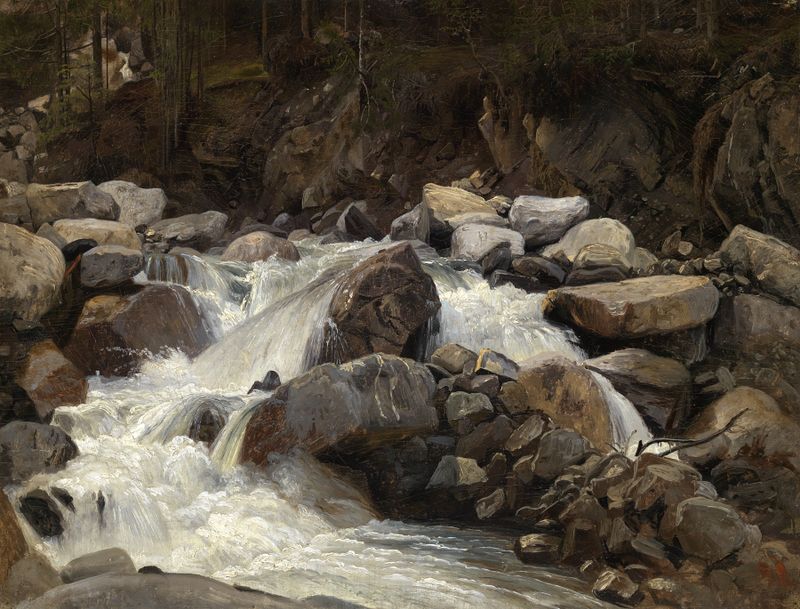
Schweizer Gebirgsbach
Johann Wilhelm Schirmer
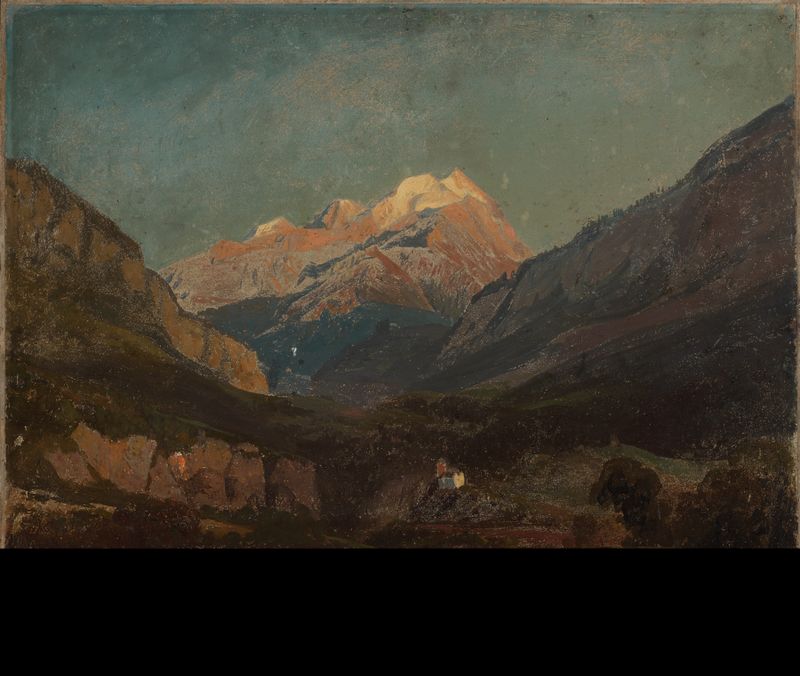
Schweizer Gebirgslandschaft mit Kapelle und fernem Schneegipfel
Johann Wilhelm Schirmer

Schweizer Gebirgslandschaft mit dem Piz Beverin im Hintergrund
Johann Wilhelm Schirmer

Waldinneres mit Hirschen am Wasser
Johann Wilhelm Schirmer

The Wetterhorn
Johann Wilhelm Schirmer

Partie aus der Römischen Campagna
Johann Wilhelm Schirmer

Felsabhang in der Schweiz
Johann Wilhelm Schirmer
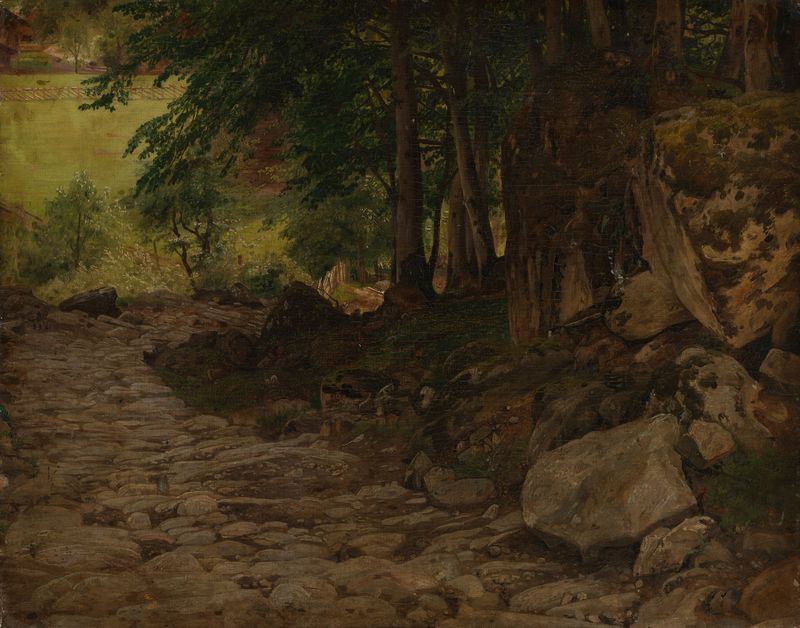
Felsweg in der Schweiz
Johann Wilhelm Schirmer
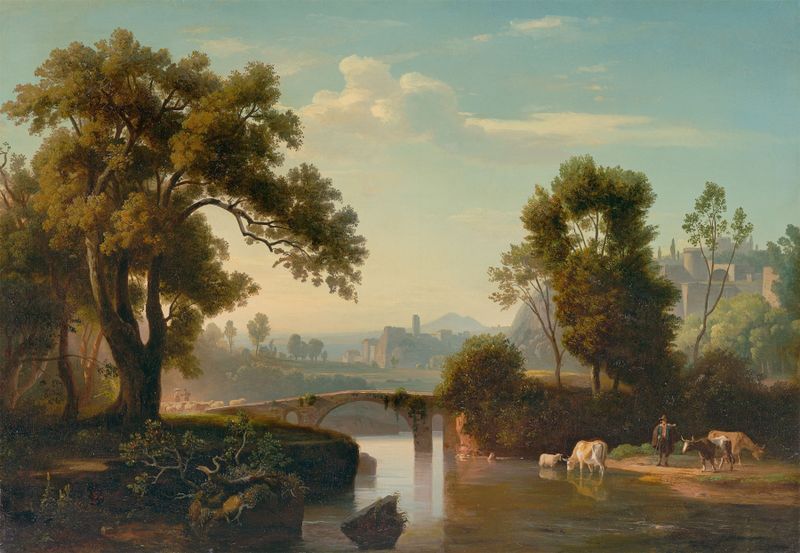
Italienische Landschaft mit Hirten
Johann Wilhelm Schirmer





