Le Baou de Saint-Jeannet — History & Analysis
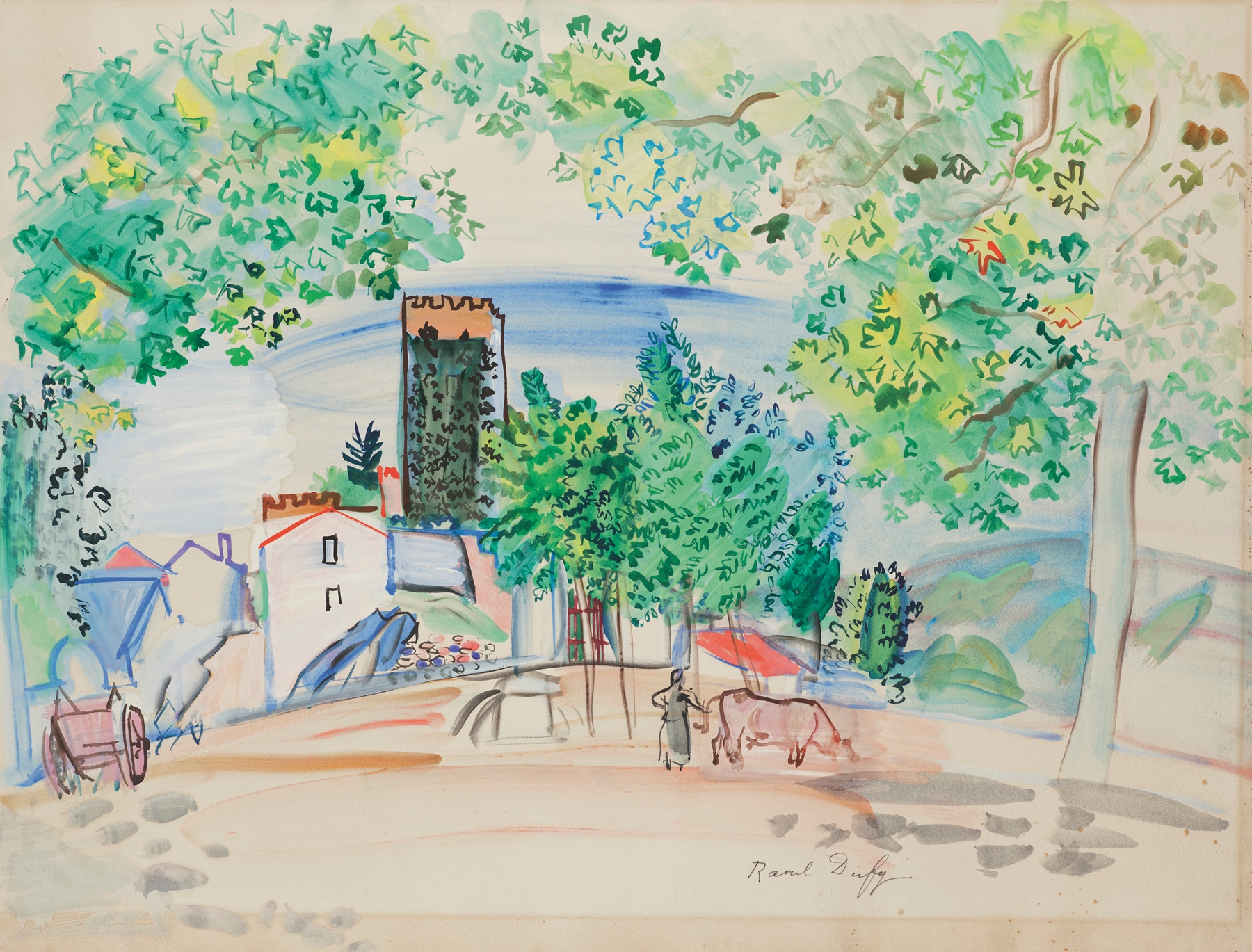
Can paint confess what words never could? In Raoul Dufy’s Le Baou de Saint-Jeannet, vibrant hues capture not just a landscape, but the silence that envelops it, whispering secrets of the heart. Look to the left at the bold strokes of azure that form the sky, where clouds dance playfully, creating a sense of movement. As your gaze drifts downward, notice the sunlit hills, their soft greens blending into muted yellows, suggesting warmth and tranquility.
The composition is infused with a rhythm, where every brushstroke seems to pulse with life, yet the stillness of the scene invites contemplation, forging a bridge between the viewer’s inner thoughts and the landscape's outer beauty. Delve deeper into the contrasting textures—the roughness of the hills against the ethereal quality of the sky. This juxtaposition mirrors the tension between silence and sound, capturing a moment where nature's serenity reigns. The interplay of light and shadow enhances the emotional gravity, inviting viewers to ponder the unspoken dialogue between the scene and their own experiences.
Each detail, from the swaying trees to the distant mountains, serves as a reminder of the beauty found in stillness. Painted in 1921, Dufy created this work during a period marked by his exploration of color and form in the vibrant atmosphere of the French Riviera. While he was already a recognized figure in the Fauvist movement, this piece reflects a turning point in his career where he sought a deeper emotional resonance in his depictions of landscapes. The world of art was evolving, and he was keenly aware of his place within it—a testament to the power of visual storytelling in an era often dominated by the written word.