
Le Cheval du Plâtrier — History & Facts
When Le Cheval du Plâtrier was first exhibited in 1822, Parisian critics were startled by its raw, almost confrontational naturalism. At a time when equestrian portraits tended toward the heroic or the picturesque, Théodore Géricault presented a humble workhorse, not a charger or racehorse, and did so with a level of anatomical scrutiny more often reserved for scientific study. The painting’s subject—a plasterer’s horse, worn and ordinary—was a direct challenge to the conventions of the Romantic movement and the expectations of the Salon audience.
This choice echoed Géricault’s fascination with the marginalized and the overlooked, a fascination that had already scandalized some with his earlier The Raft of the Medusa. The horse stands alone, tethered in a nondescript stable, its coat dappled with dust and its gaze weary but alert. Every muscle and vein is rendered with a precision that betrays the artist’s long hours spent sketching at the veterinary school in Paris. The animal’s slightly awkward stance, the traces of harness, and the muted palette suggest a life of toil rather than glory.
Light falls across the horse’s flank, emphasizing both its strength and its fatigue, inviting the viewer to consider the dignity of labor. Unlike George Stubbs’s gleaming thoroughbreds, Géricault’s subject is not idealized; instead, it is a frank portrait of endurance and vulnerability. The exact history of Le Cheval du Plâtrier after its creation is somewhat obscure, as is often the case with Géricault’s studies of horses and working animals. No grand patron is recorded, and it is likely the work was intended for a private collector or as a personal exploration by the artist himself.
Over time, the painting has become emblematic of Géricault’s deep empathy for his subjects and his innovative approach to animal portraiture. Today, it is recognized as a key work from the later years of his short career, bridging the gap between the drama of his large historical canvases and the intimate realism that would influence later artists. Its current location is not widely publicized, but it remains a touchstone for those interested in the intersection of art, labor, and animal life in early nineteenth-century France.
More Artworks by Théodore Géricault
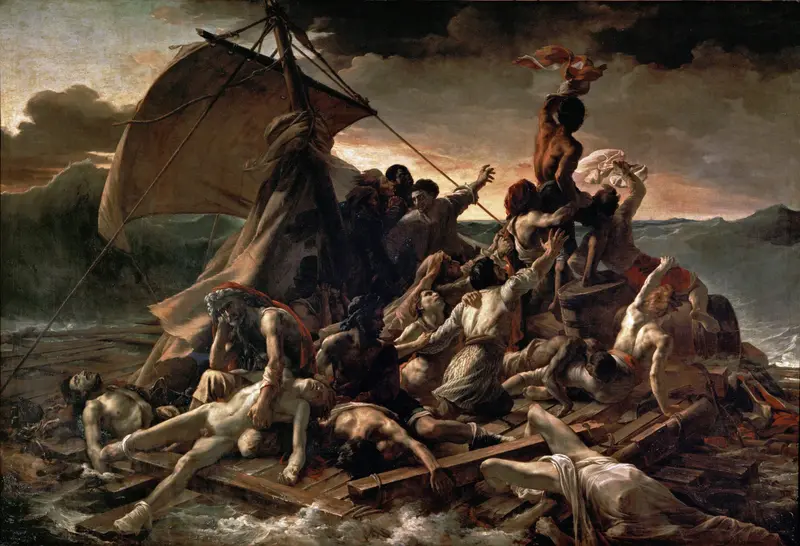
The Raft of the Medusa
Théodore Géricault

Géricault - Le naufrage du radeau de la Méduse, MBA 790
Théodore Géricault
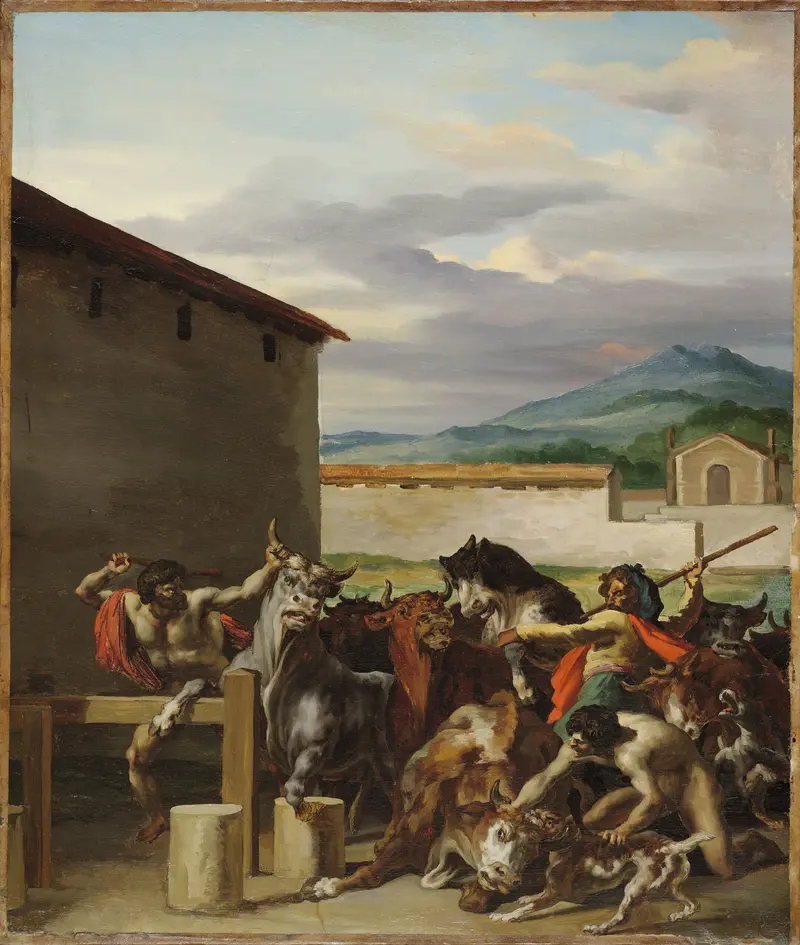
Cattle Market
Théodore Géricault
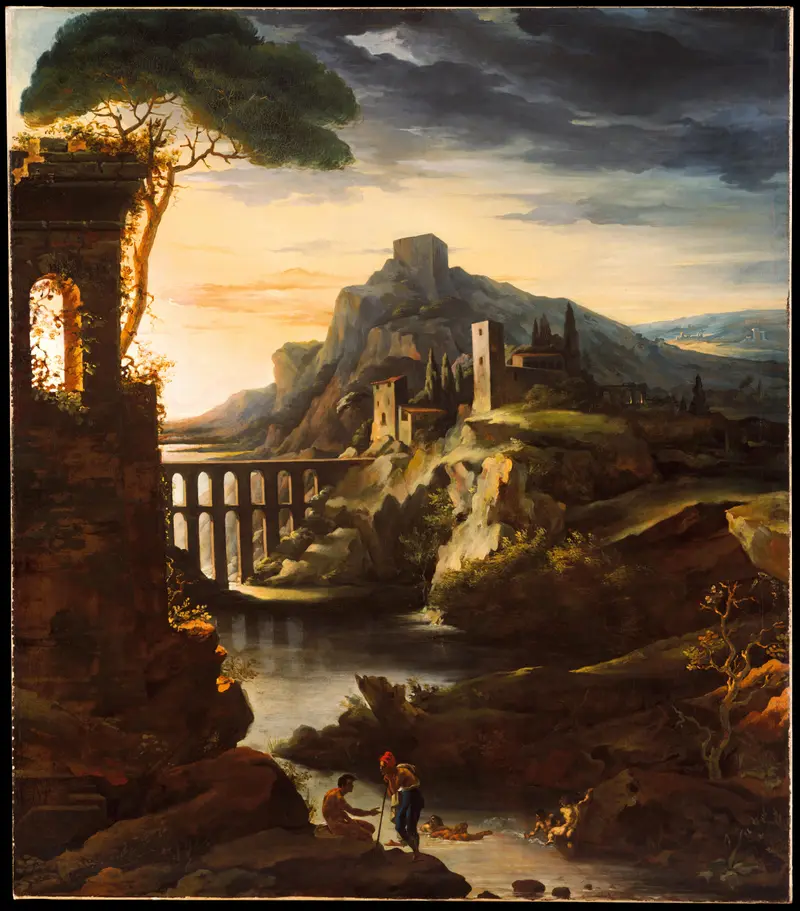
Evening; Landscape with an Aqueduct
Théodore Géricault
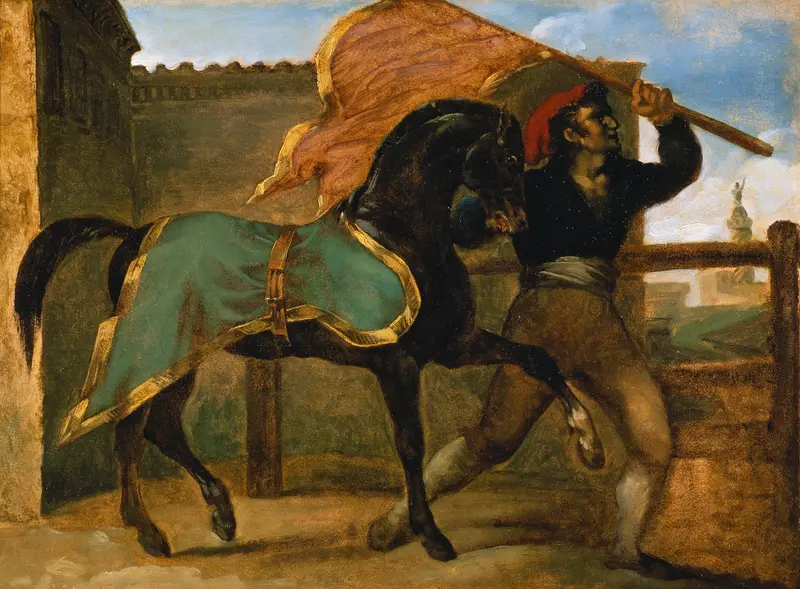
Horse Race
Théodore Géricault

Horses Standing in a Mews
Théodore Géricault
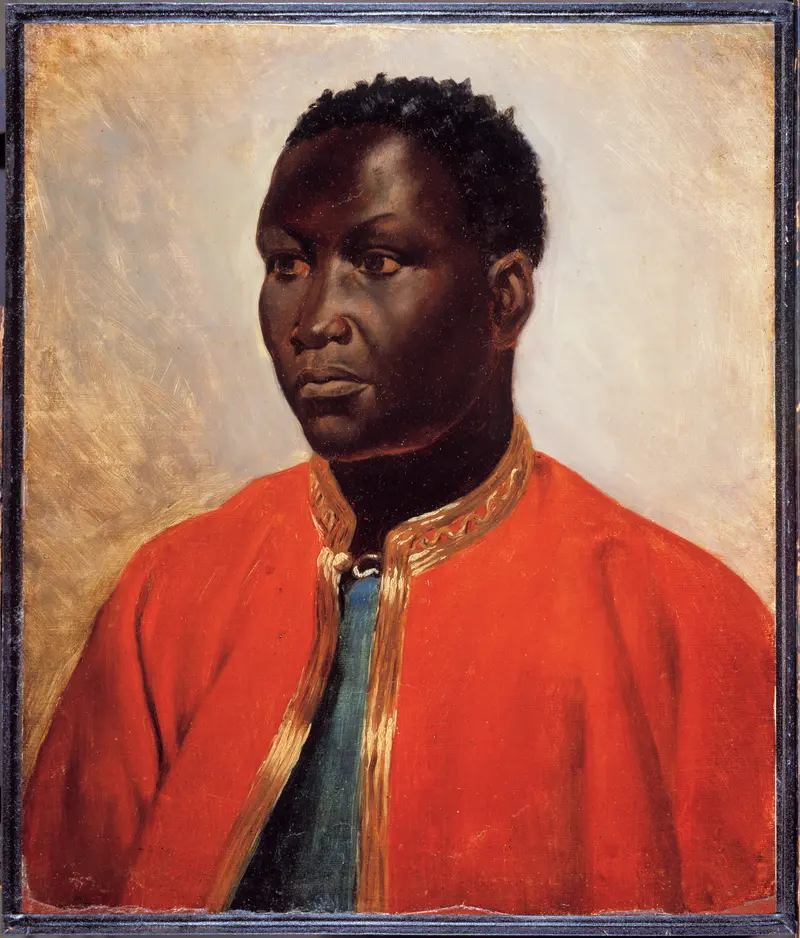
Portrait of a Negro
Théodore Géricault
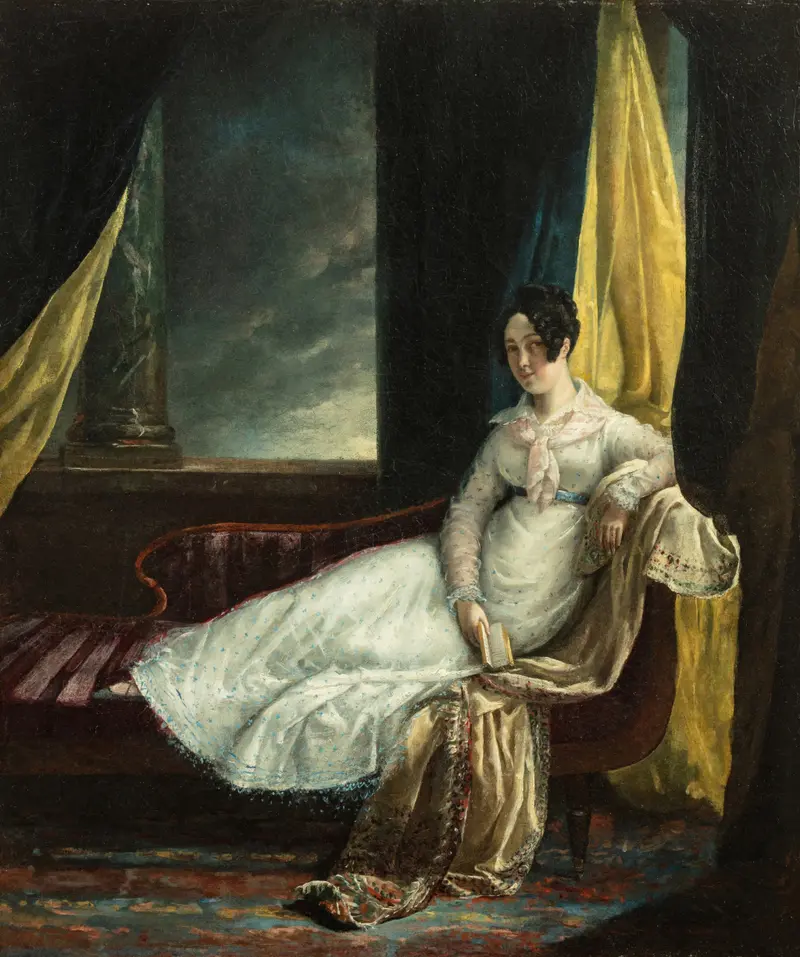
Portrait of Zoë Elmore
Théodore Géricault
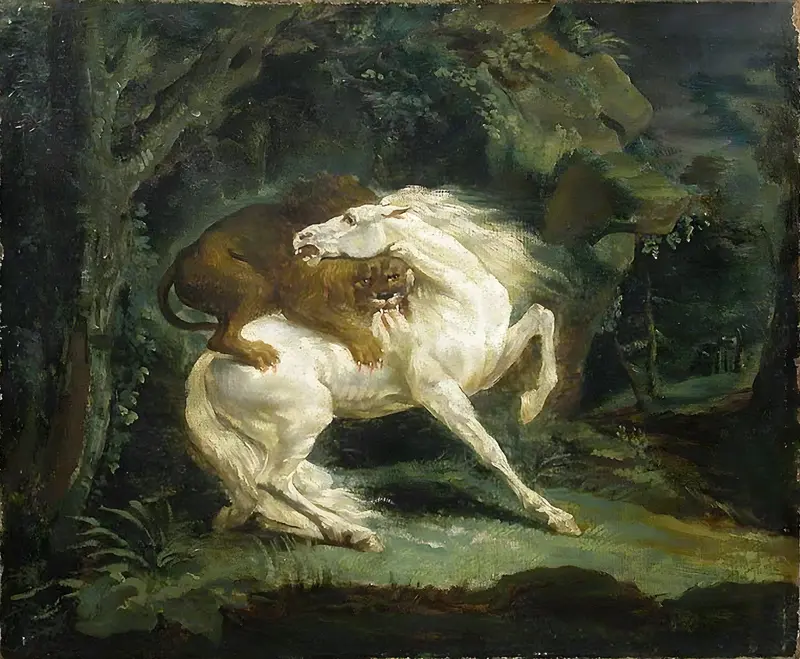
Cheval attaqué par un lion
Théodore Géricault
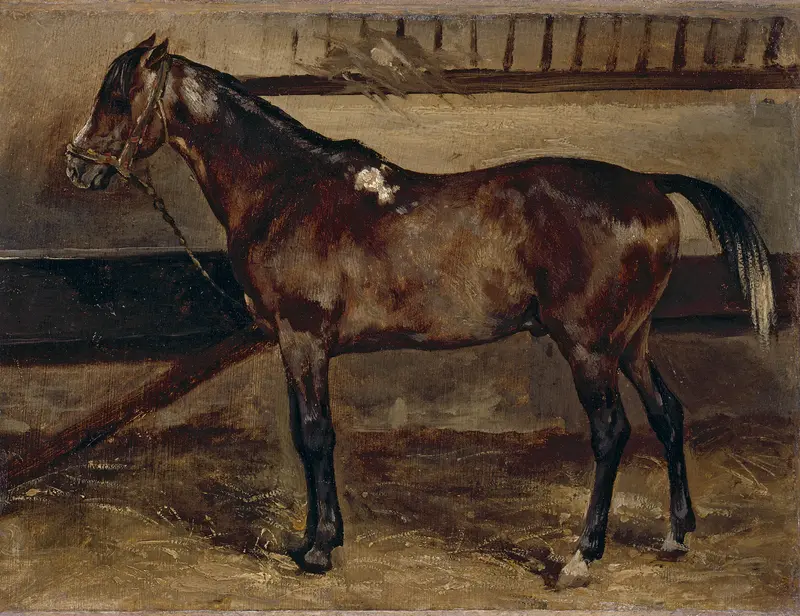
Cheval brun à l'écurie
Théodore Géricault





