
Le Combat des soldats nés des dents du serpent — History & Facts
A swirl of chaos and heroism surges through the center of Le Combat des soldats nés des dents du serpent, where figures clash and tumble beneath a sky heavy with stormy blue. The artist, Jean-François de Troy, has chosen a moment of fierce confrontation: warriors in crested helmets grapple at the heart of the scene, their bodies twisting in a knot of muscle and color. The eye is pulled to the vivid blue and red cloaks, which seem almost to crackle with energy, while the fallen in the foreground remind us of the cost of this mythic struggle.
To the right, a regal figure reclines beneath a golden canopy, one hand raised in command or judgment, his presence both detached and magnetic. Every gesture and glance is charged with intent, while the architecture and distant trees anchor the violence in a world both ancient and imagined. Works like this, painted in the early 1740s, belonged to a world where myth and history were the favored subjects of grand salons and private collectors alike. In the age of Rococo, French artists such as de Troy were celebrated for their ability to stage ancient legends with theatrical flair, blending drama and spectacle for an audience hungry for both moral lessons and visual delight.
This painting, now in the care of Paris Musées and dated between 1742 and 1743, is a testament to that taste: it offers not just a story, but a performance, inviting viewers to lose themselves in the tumult of arms and the sweep of narrative. History has kept few traces of some of these works’ original journeys, but their power to command attention remains undimmed—step closer, and the battle will begin anew.
More Artworks by Jean-François de Troy
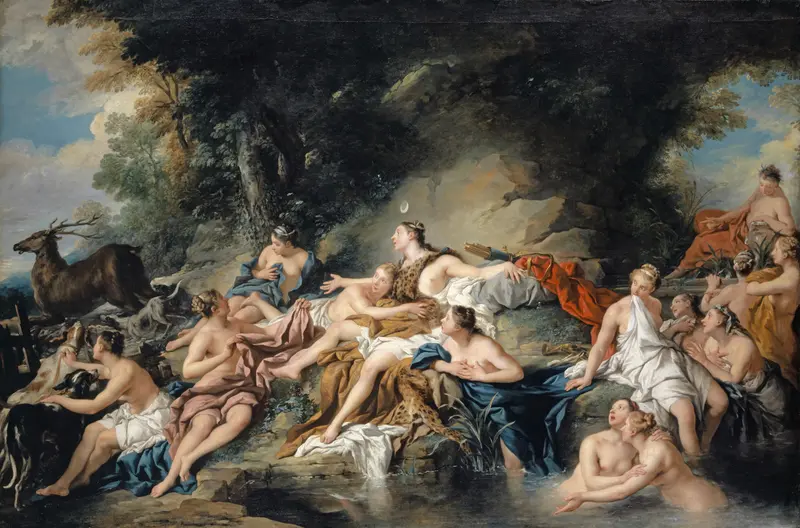
Diana and Actaeon
Jean-François de Troy
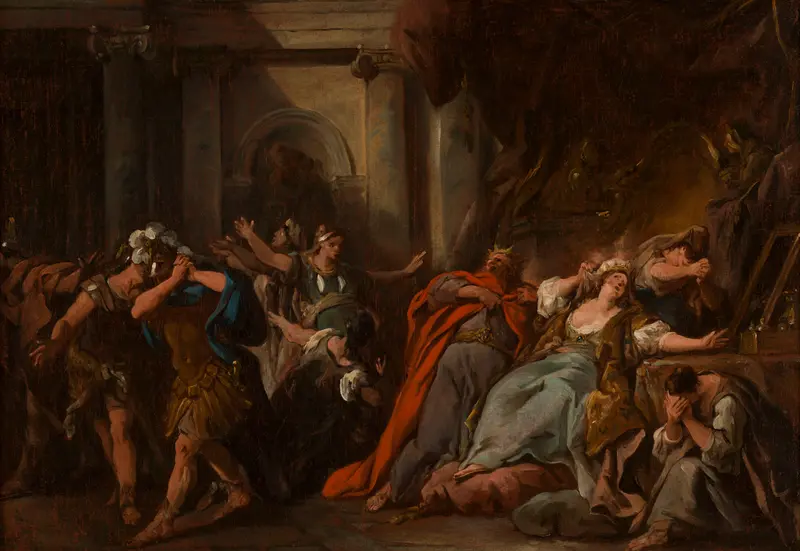
Créüse consumée par la robe empoisonnée
Jean-François de Troy
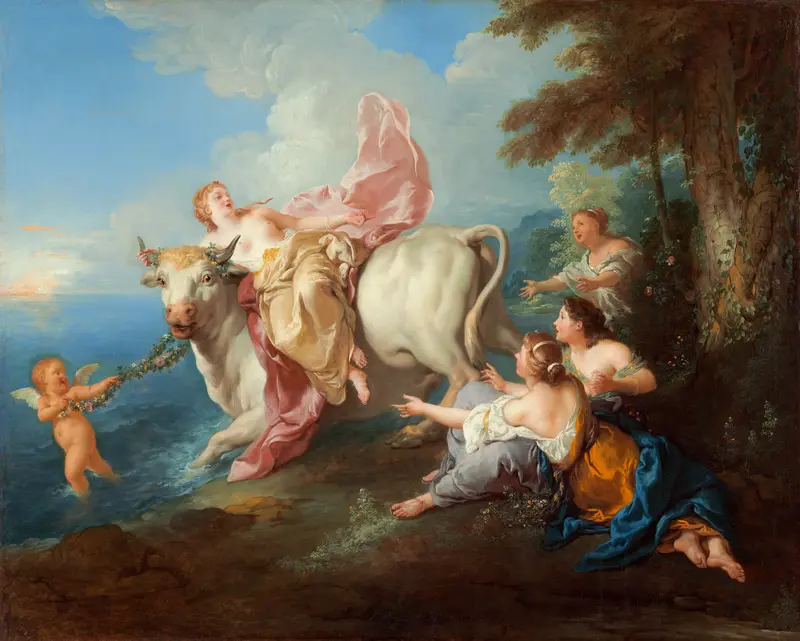
The Abduction of Europa
Jean-François de Troy
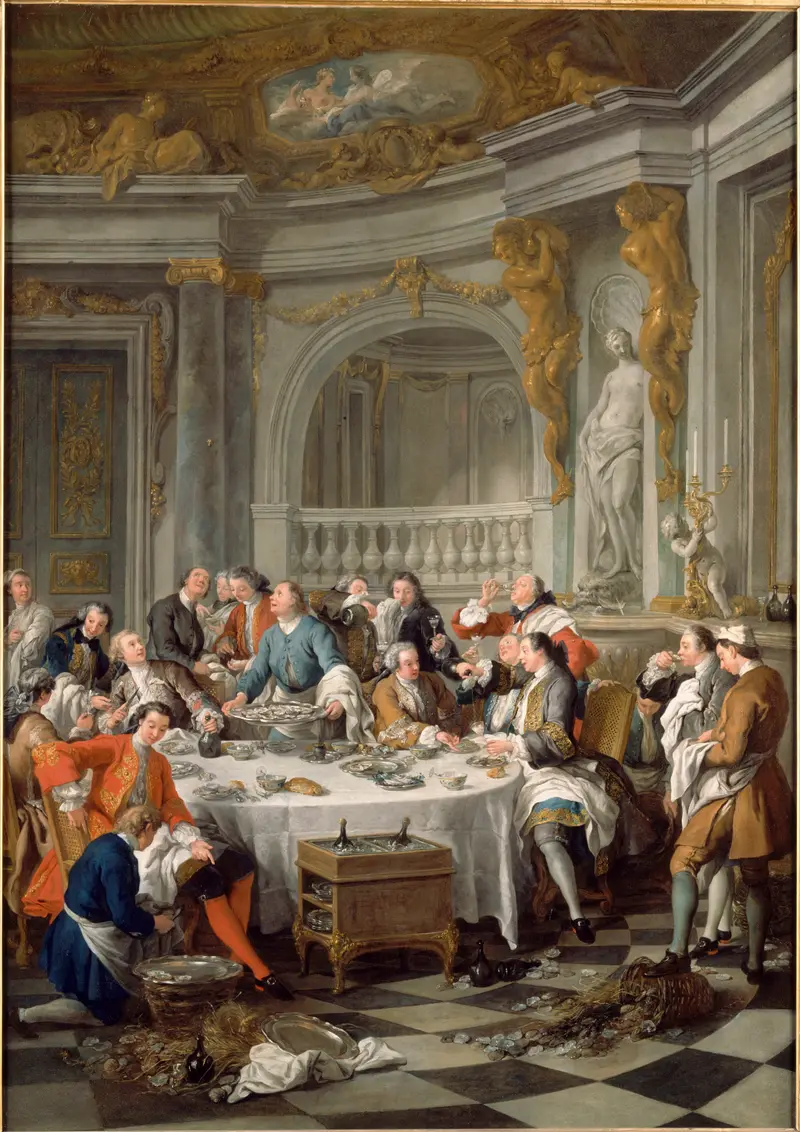
The Lunch of Oysters
Jean-François de Troy

Before the Ball
Jean-François de Troy

Pan and Syrinx
Jean-François de Troy
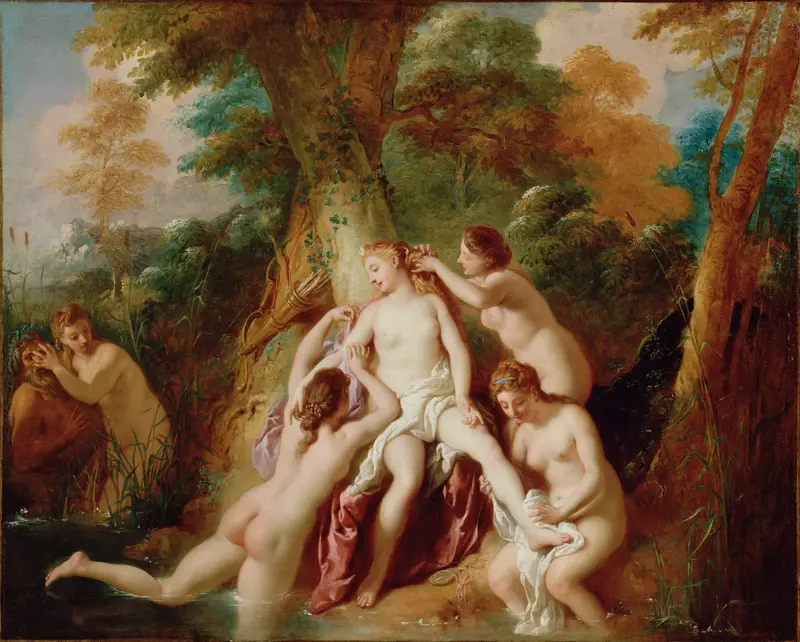
Diana and Her Nymphs Bathing
Jean-François de Troy
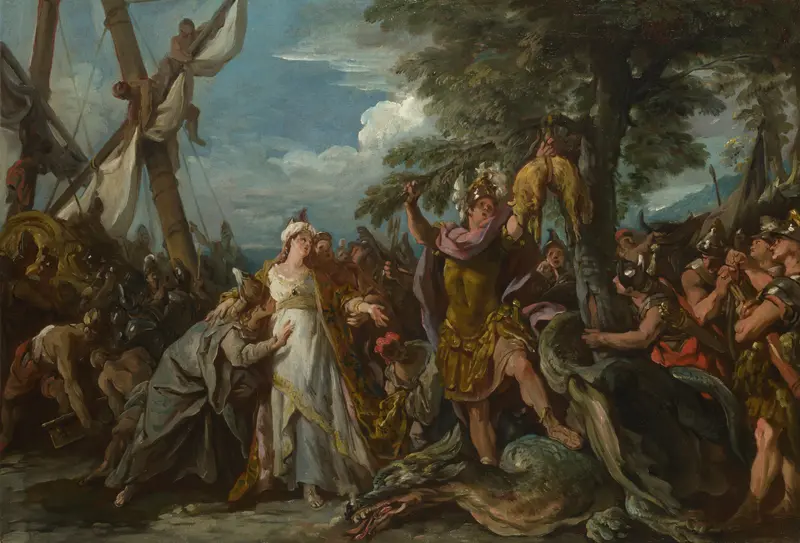
The Capture of the Golden Fleece
Jean-François de Troy

The Triumph of Mordecai
Jean-François de Troy

Lot and His Daughters
Jean-François de Troy





