
The Lunch of Oysters — History & Facts
A swirl of powdered wigs and laughter draws the eye to the heart of The Lunch of Oysters, where the clamor of a feast is caught mid-revel. The painter has chosen a moment of lively abandon: a group of elegantly dressed men and women lean in, their gestures animated, as oysters are consumed with gusto and wine flows freely. The gleam of silver platters and the tumble of empty shells across the black-and-white marble floor speak of excess, while the light, cool and clear, pools around the central table, drawing attention to the theatre of manners and appetite.
Every detail—the arching backs of the gilded statues, the crisp linen, the glances exchanged—signals a world where pleasure is both performance and pursuit. This is the Rococo at its most exuberant, painted in 1735, when Parisian society delighted in scenes of wit, luxury, and fleeting delight. Such paintings, often commissioned for the private dining rooms or salons of the elite, celebrated not just the rituals of eating and drinking, but the art of conversation, flirtation, and spectacle that defined the age. The setting, with its ornate architecture and mythological ceiling painting, frames the diners as actors in a play of refinement and indulgence.
History has kept few traces of this particular gathering, but its spirit—half satire, half celebration—remains vivid in the painter’s eye for gesture and detail. The next time you look, follow the arc of a tossed oyster shell or the glint of a conspiratorial smile, and imagine the stories whispered behind those powdered faces.
More Artworks by Jean-François de Troy
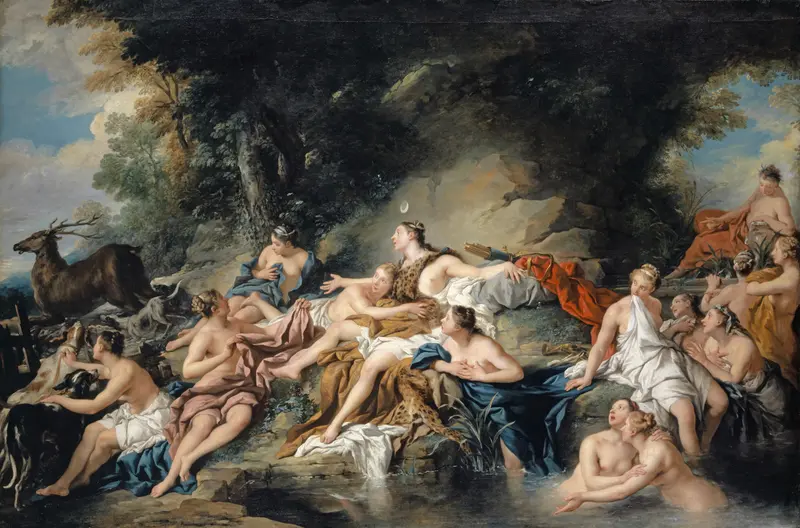
Diana and Actaeon
Jean-François de Troy
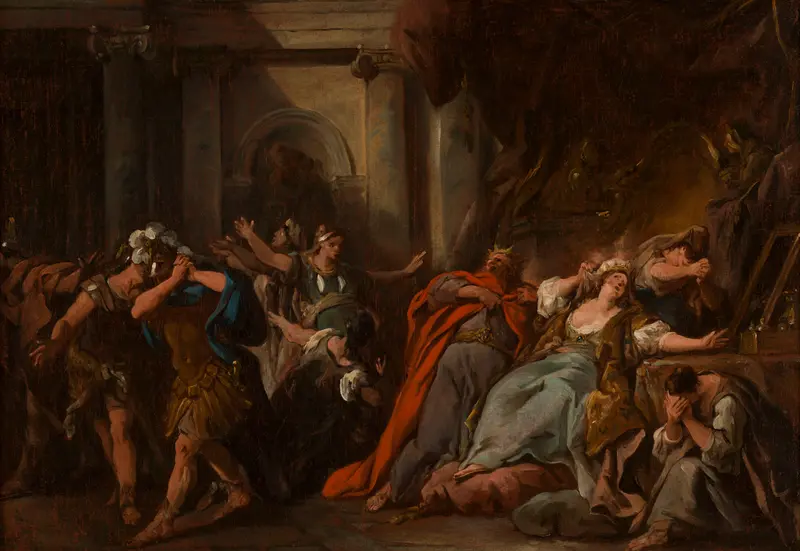
Créüse consumée par la robe empoisonnée
Jean-François de Troy
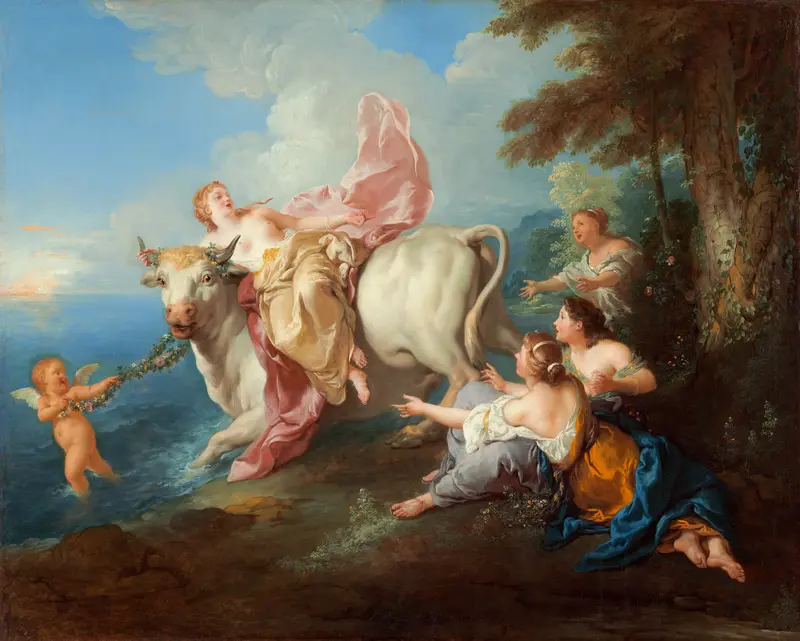
The Abduction of Europa
Jean-François de Troy
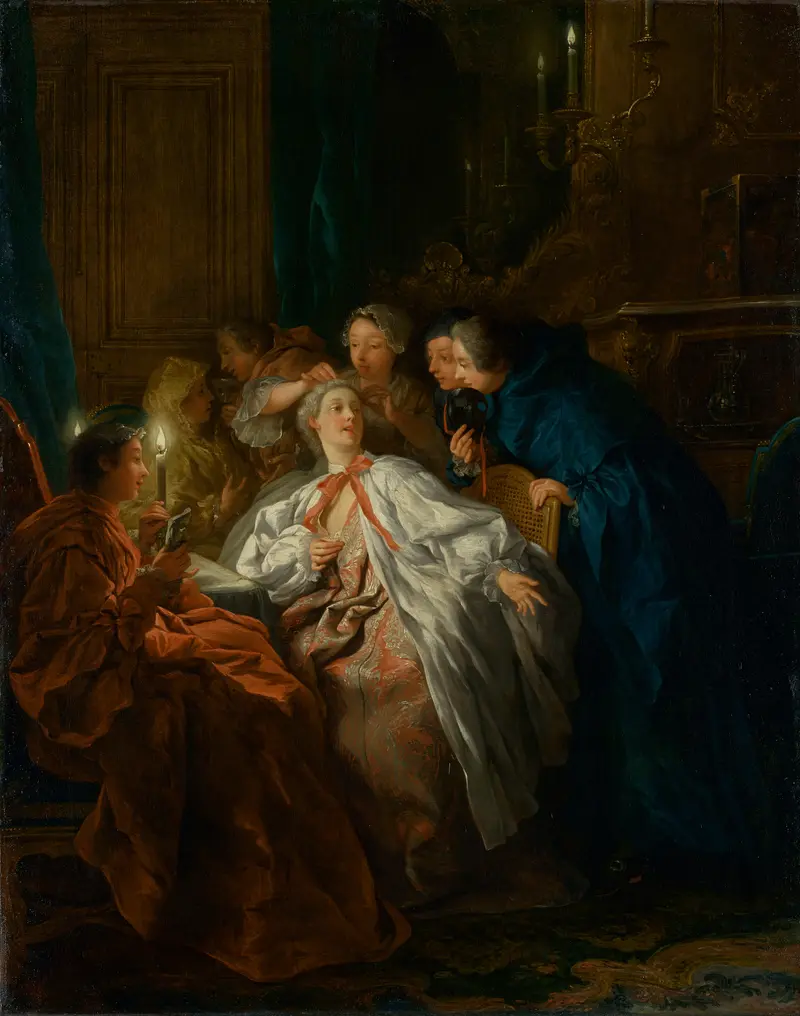
Before the Ball
Jean-François de Troy
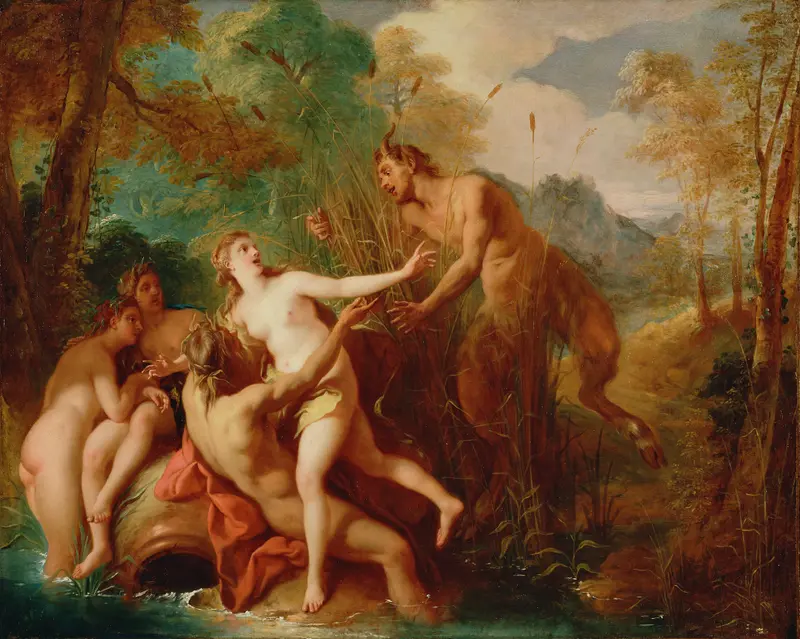
Pan and Syrinx
Jean-François de Troy

Le Combat des soldats nés des dents du serpent
Jean-François de Troy
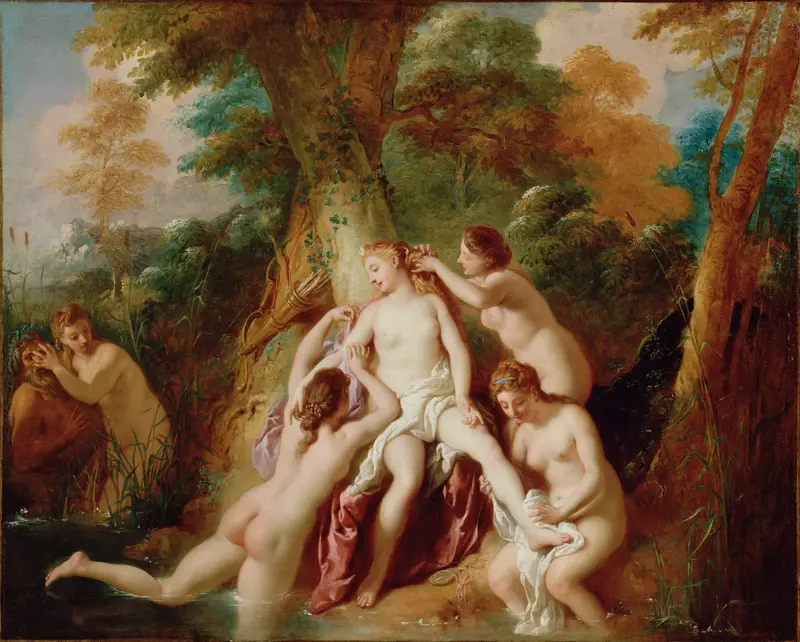
Diana and Her Nymphs Bathing
Jean-François de Troy
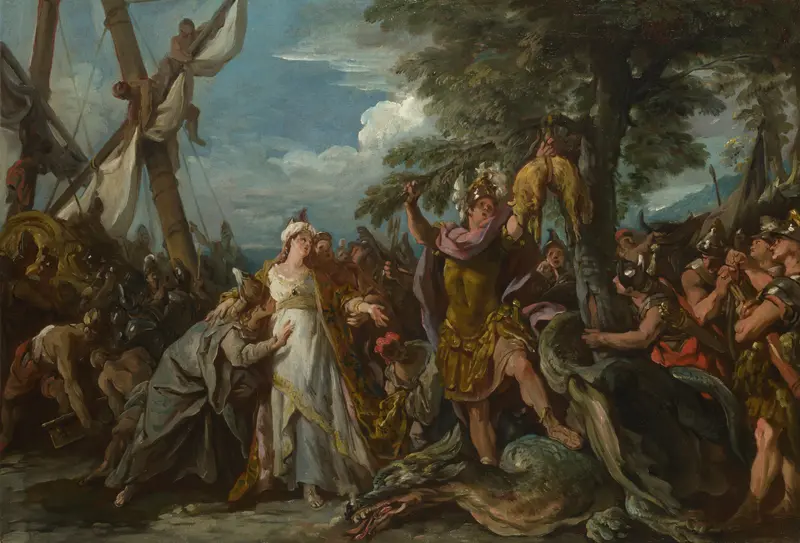
The Capture of the Golden Fleece
Jean-François de Troy
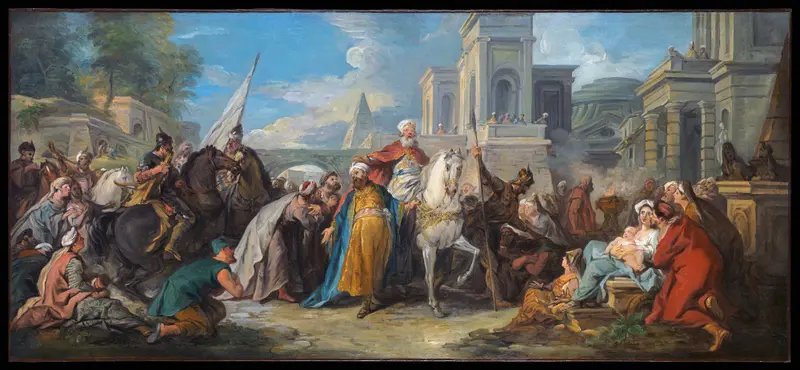
The Triumph of Mordecai
Jean-François de Troy
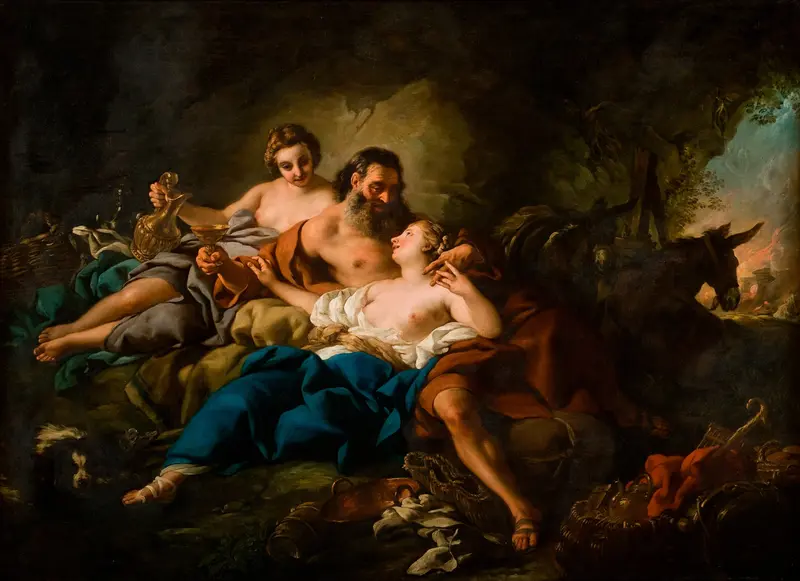
Lot and His Daughters
Jean-François de Troy
More Genre Scene Art

Banquet of the Officers of the St George Civic Guard
Frans Hals

Rembrandt and Saskia in the Scene of the Prodigal Son
Rembrandt van Rijn

Bal du moulin de la Galette
Pierre-Auguste Renoir

Quadrille at the Moulin Rouge
Henri de Toulouse-Lautrec

A Burial at Ornans
Gustave Courbet

When Will You Marry?
Paul Gauguin