
The Triumph of Mordecai — History & Facts
A surge of movement propels the eye to the figure at the center, resplendent in gold and blue, as he is led through a city thronged with onlookers. The painter has chosen a moment of public celebration, where the drama unfolds not in battle or despair, but in the spectacle of honor bestowed. The white horse, nearly luminous against the darker crowd, draws attention to the man it carries—his posture upright, his expression composed, while the crowd’s gestures range from awe to curiosity.
The architecture soars behind, framing the procession with arches and columns that speak of grandeur and order. Every figure seems caught in a moment of reaction: some reach out, others kneel, while a mother calms her child, anchoring the scene in everyday life even as history is made. Painted around 1736, this work by Jean-François de Troy belongs to a world where grand narratives and public virtues were celebrated in both paint and tapestry. Such scenes were often commissioned for royal or noble patrons, intended to fill vast walls with stories of triumph, justice, or mercy—moral lessons writ large for all to see.
This particular painting is a study for a tapestry cartoon, a preparatory work that would guide weavers in translating the painter’s vision into silk and wool. While history has kept few traces of this specific study’s journey, its energetic brushwork and theatrical composition place it firmly in the tradition of eighteenth-century French history painting, where the line between art and spectacle was always invitingly thin. Let your eye wander from the central figure to the fringes—each face and gesture is a thread in the larger tapestry of the era.
More Artworks by Jean-François de Troy
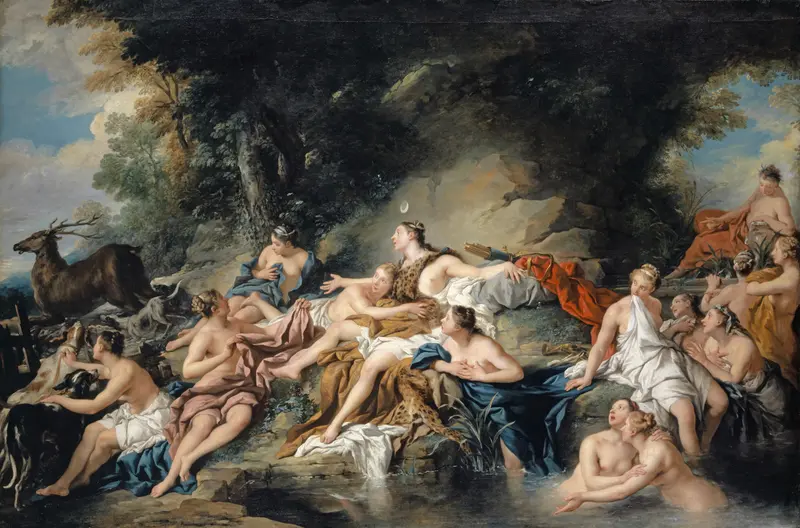
Diana and Actaeon
Jean-François de Troy
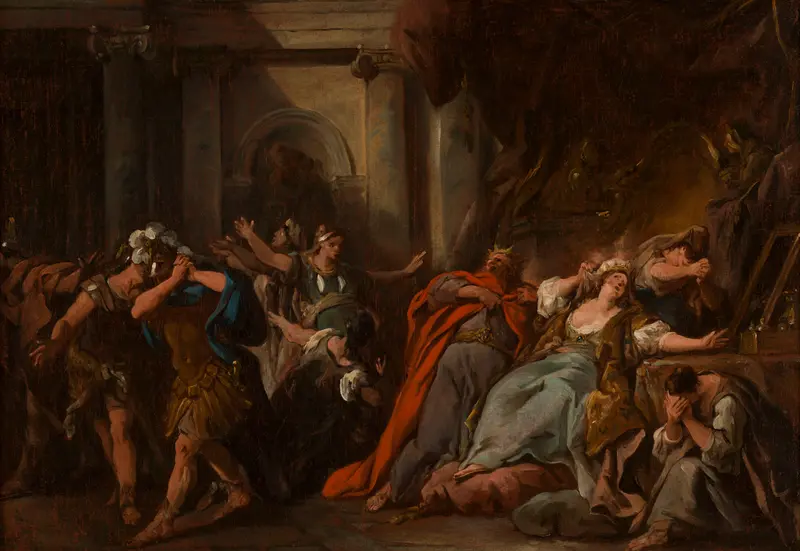
Créüse consumée par la robe empoisonnée
Jean-François de Troy
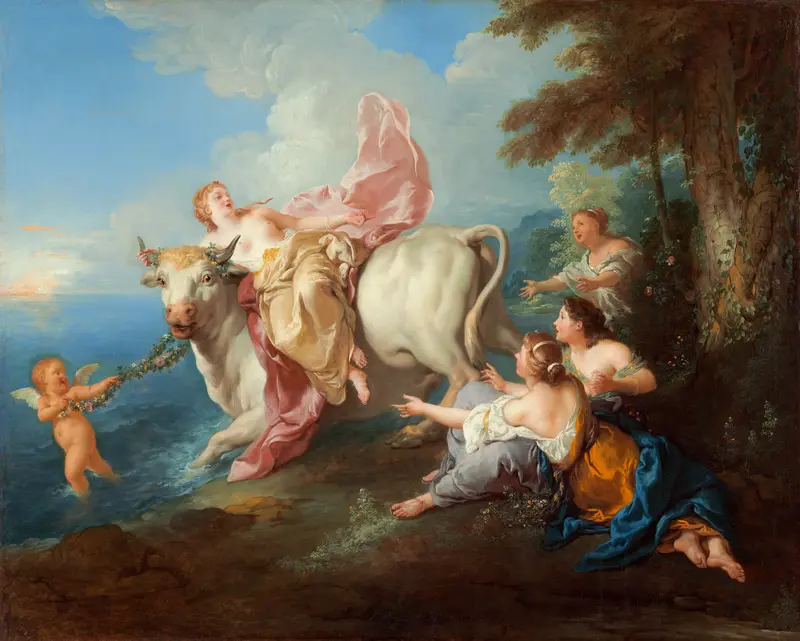
The Abduction of Europa
Jean-François de Troy
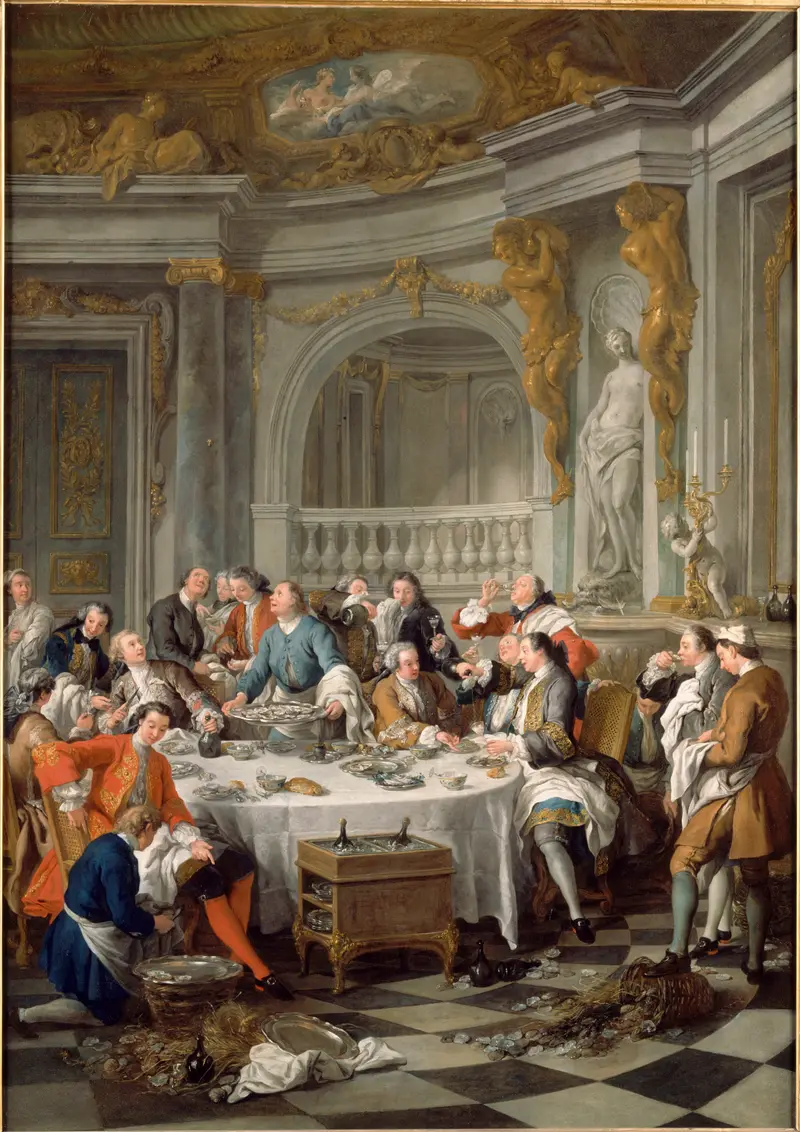
The Lunch of Oysters
Jean-François de Troy

Before the Ball
Jean-François de Troy

Pan and Syrinx
Jean-François de Troy

Le Combat des soldats nés des dents du serpent
Jean-François de Troy
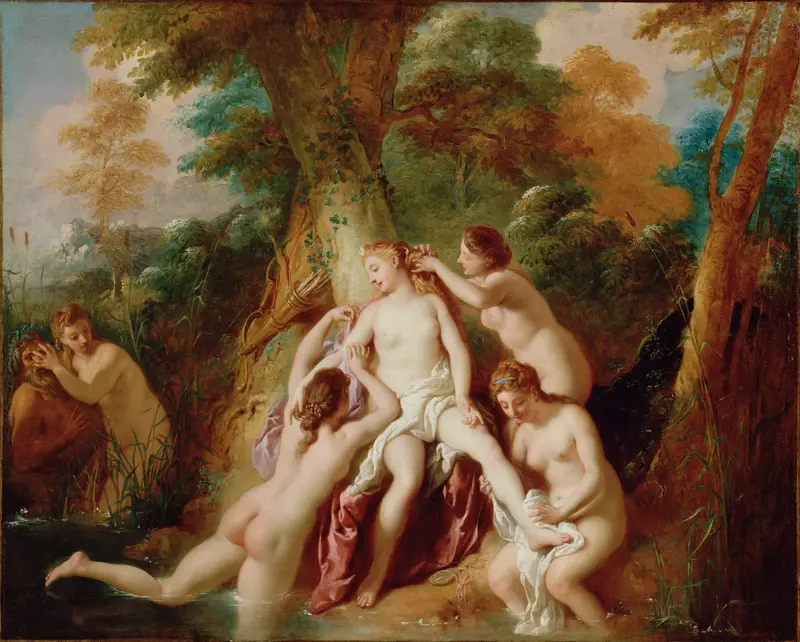
Diana and Her Nymphs Bathing
Jean-François de Troy
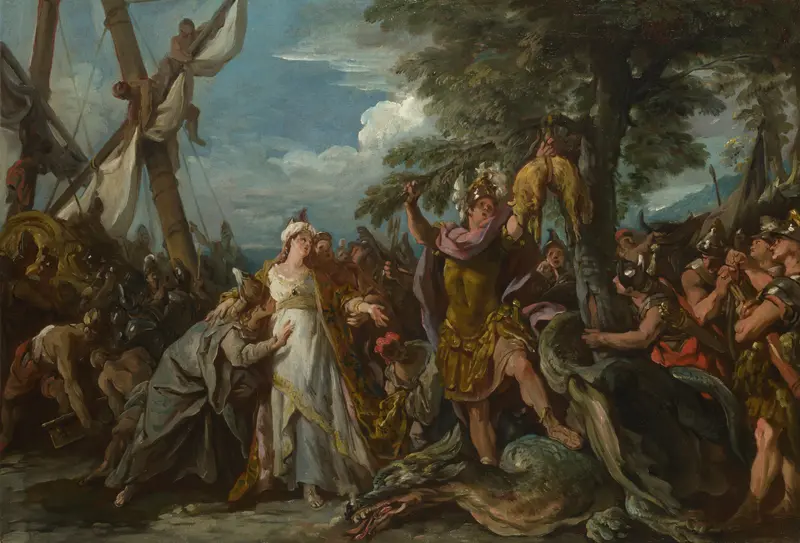
The Capture of the Golden Fleece
Jean-François de Troy

Lot and His Daughters
Jean-François de Troy





