
Pan and Syrinx — History & Facts
What first seizes the eye in Pan and Syrinx is the electric tension between pursuit and escape, played out in a sun-drenched clearing at the water’s edge. The startled figure of Syrinx, caught mid-motion, twists away from the looming form of Pan, whose wild eyes and outstretched arms emerge from the reeds like a force of nature itself. The painter composes the scene so that every gesture and glance pulls the viewer into this charged instant: Syrinx’s companions huddle together, their bodies forming a protective arc, while Syrinx herself is suspended between flight and capture, her pale skin glowing against the darker foliage.
The golden light glances off her shoulders and the reeds, heightening the sense of exposure and urgency, while Pan’s half-shadowed form blurs the line between man and beast, desire and threat. Created by Jean-François de Troy between 1722 and 1724, this work belongs to an era when mythological subjects were both a playground for sensuality and a showcase for painterly skill. In early eighteenth-century France, such paintings were often commissioned for private interiors, where the learned and the fashionable could savor stories from Ovid or Virgil, dressed in the lush colors and theatrical compositions of the Rococo. The world that produced this painting was one of shifting tastes: the grandeur of the Baroque giving way to lighter, more intimate scenes, and artists like de Troy responding with works that balanced elegance with a hint of danger.
Though history has kept few traces of this particular canvas beyond its date and subject, its drama and polish invite viewers to linger, searching the reeds and faces for the next moment in the myth.
More Artworks by Jean-François de Troy
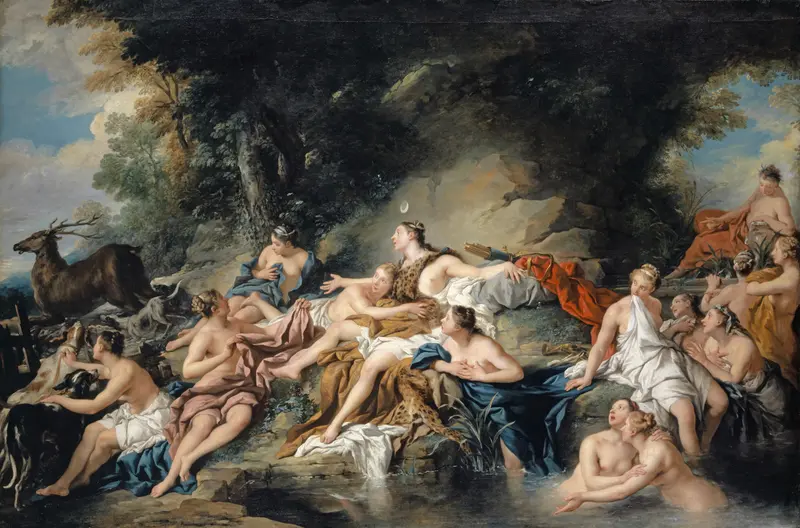
Diana and Actaeon
Jean-François de Troy
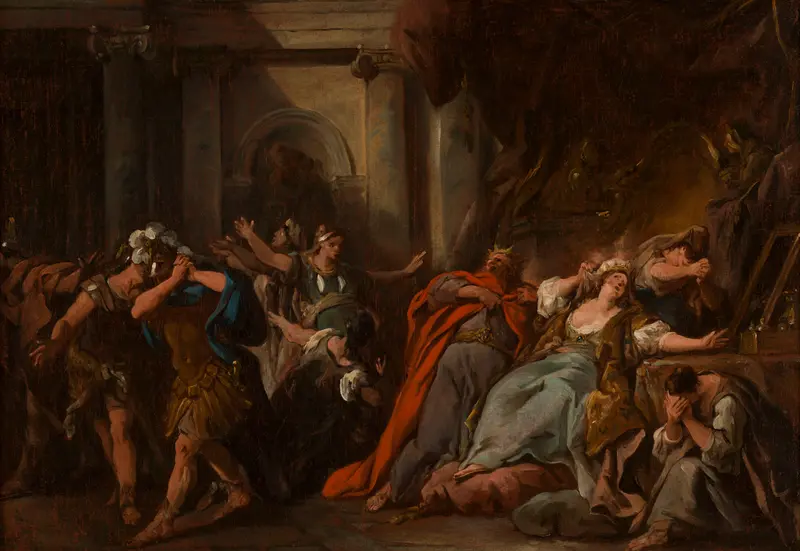
Créüse consumée par la robe empoisonnée
Jean-François de Troy
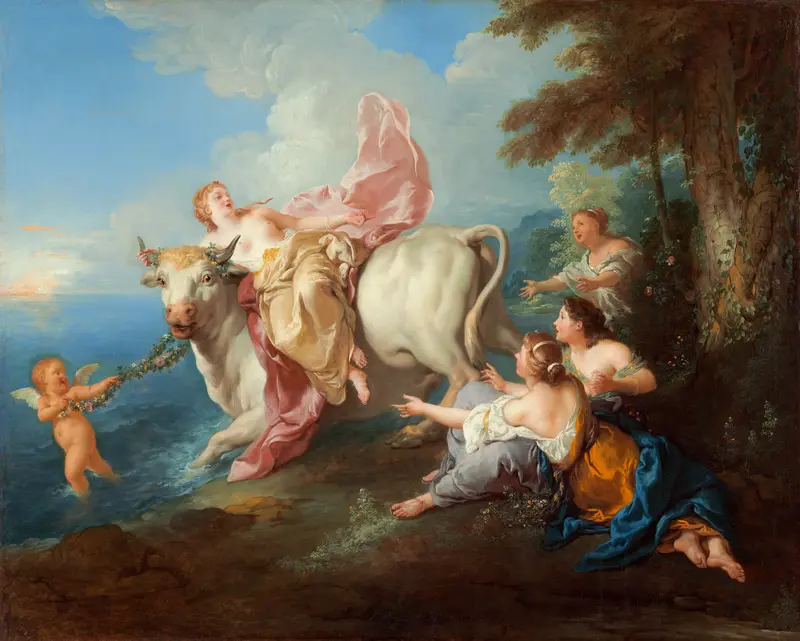
The Abduction of Europa
Jean-François de Troy
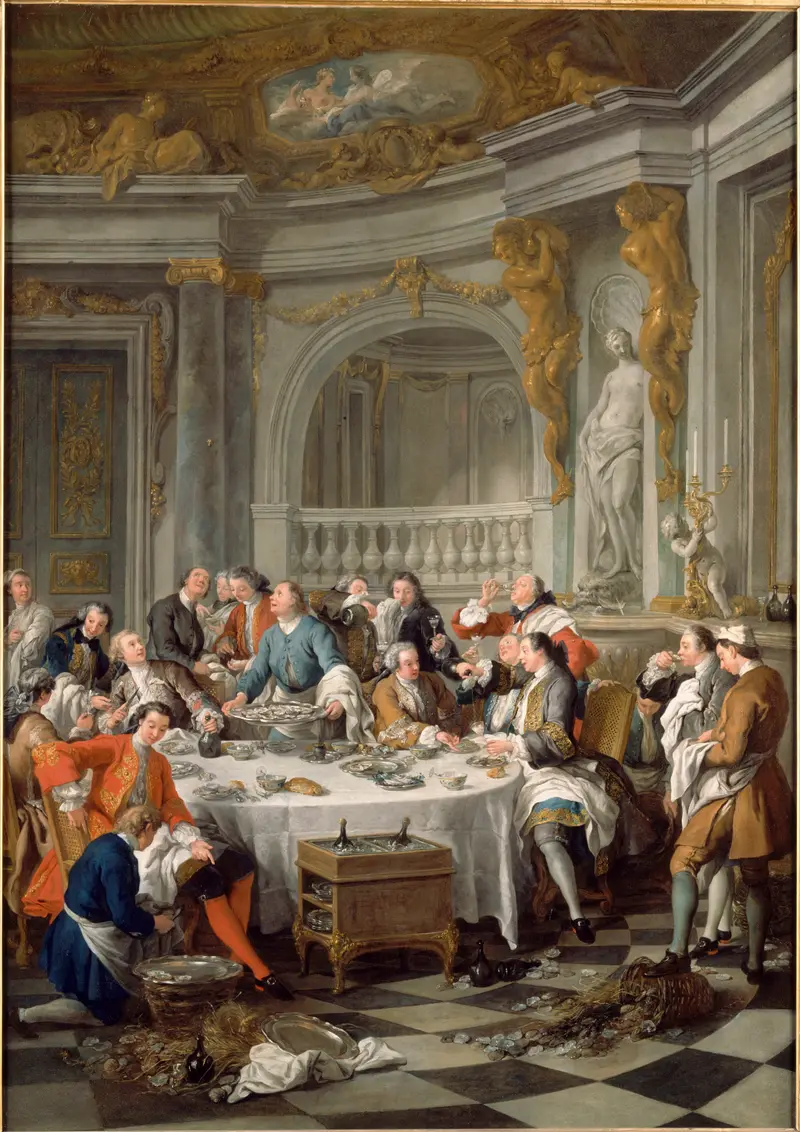
The Lunch of Oysters
Jean-François de Troy
Before the Ball
Jean-François de Troy

Le Combat des soldats nés des dents du serpent
Jean-François de Troy
Diana and Her Nymphs Bathing
Jean-François de Troy
The Capture of the Golden Fleece
Jean-François de Troy

The Triumph of Mordecai
Jean-François de Troy

Lot and His Daughters
Jean-François de Troy





