
Liegendes Paar — History & Facts
What first catches the eye in Liegendes Paar is the raw immediacy of the figures, their bodies rendered in fierce, almost jarring colors that seem to pulse against the vivid green ground. The man props himself up, his gaze lost in thought, while the woman curls beside him, her body angled away, face half-buried in her arm. There is no sense of staged romance here—just two nudes, unguarded, their forms outlined in thick, urgent brushstrokes.
The palette is restless: ochres and reds clash with acid yellows, the flesh tones refusing any idealization. The grass is not a soft bed but a flat, electric plane, amplifying the sense of exposure and immediacy. This is a moment suspended between intimacy and solitude, the brushwork itself almost as naked as the subjects. Painted in 1909, this work belongs to the world of Die Brücke, the Berlin-based group that sought to break free from academic convention and capture the intensity of lived experience.
Artists like Hermann Max Pechstein turned to the nude not for classical beauty, but as a site of truth and psychic energy, often painting friends and lovers in natural settings to reclaim a sense of primal connection. Such paintings were rarely made for grand salons or aristocratic patrons; they were statements of artistic rebellion, shared among a circle of like-minded creators and collectors. Today, Liegendes Paar resides in the Brücke-Museum Berlin, a fitting home for a work that still radiates the urgency and freedom of its radical moment.
Look again at the way the colors clash and merge—here, the early twentieth century’s restless search for authenticity is written directly on the skin.
More Artworks by Hermann Max Pechstein
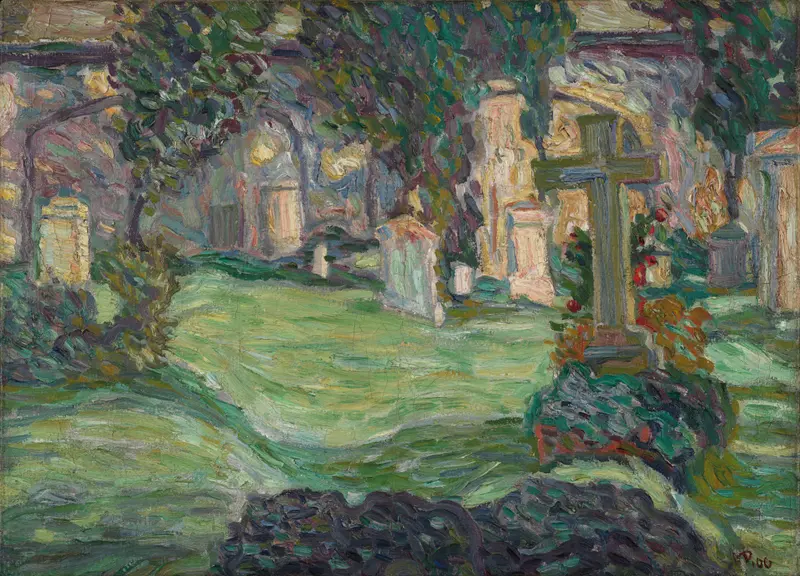
Max Pechstein Eliasfriedhof in Dresden
Hermann Max Pechstein

Früchte
Hermann Max Pechstein
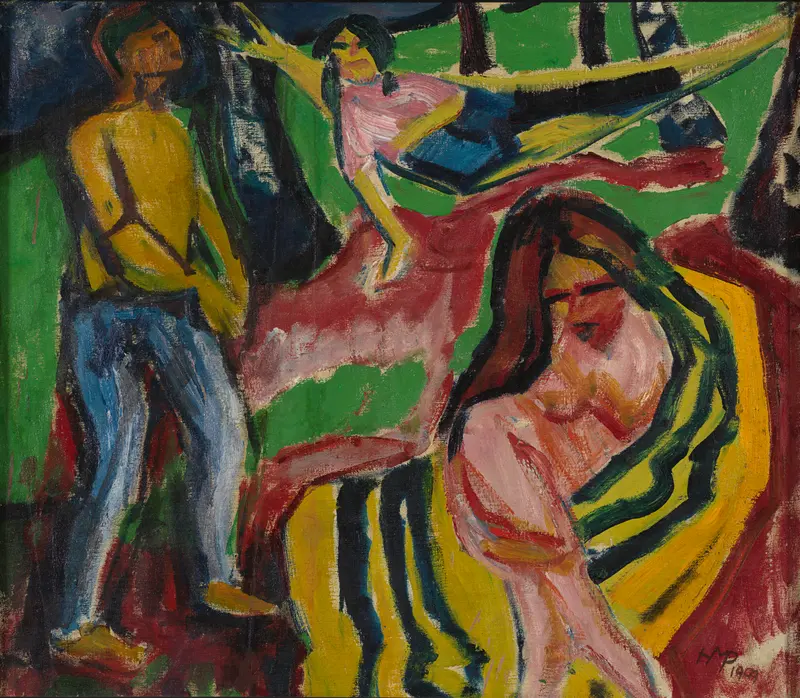
Im Wald bei Moritzburg
Hermann Max Pechstein
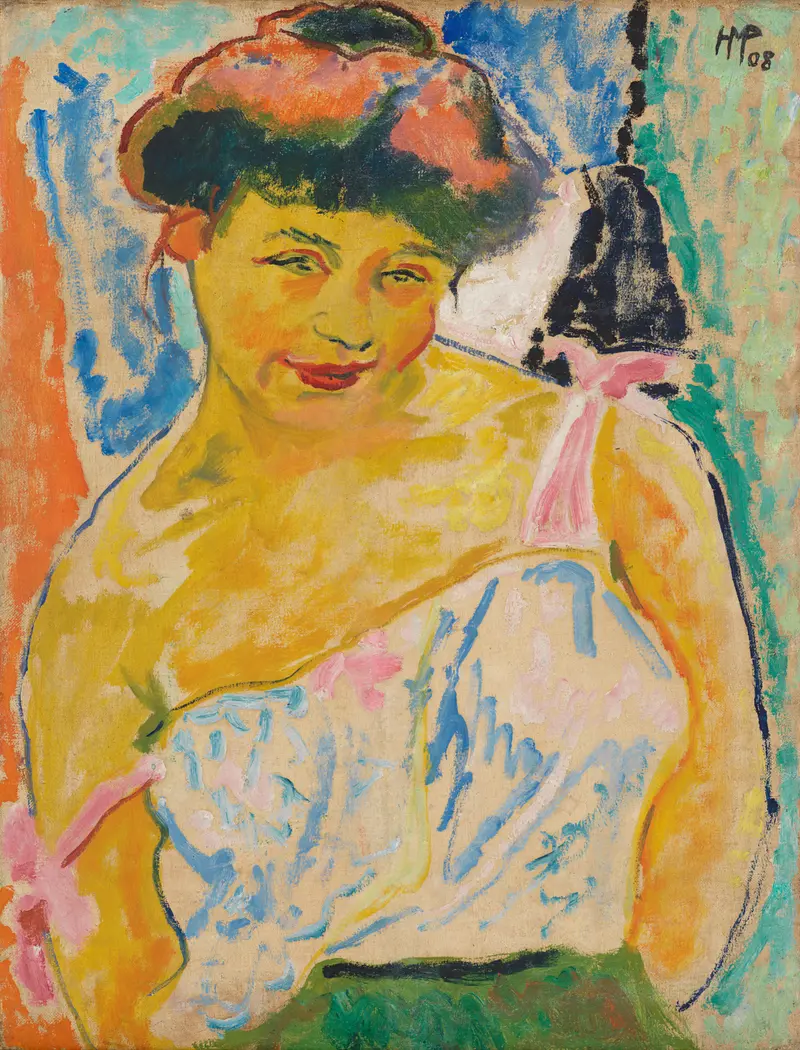
Junges Mädchen
Hermann Max Pechstein
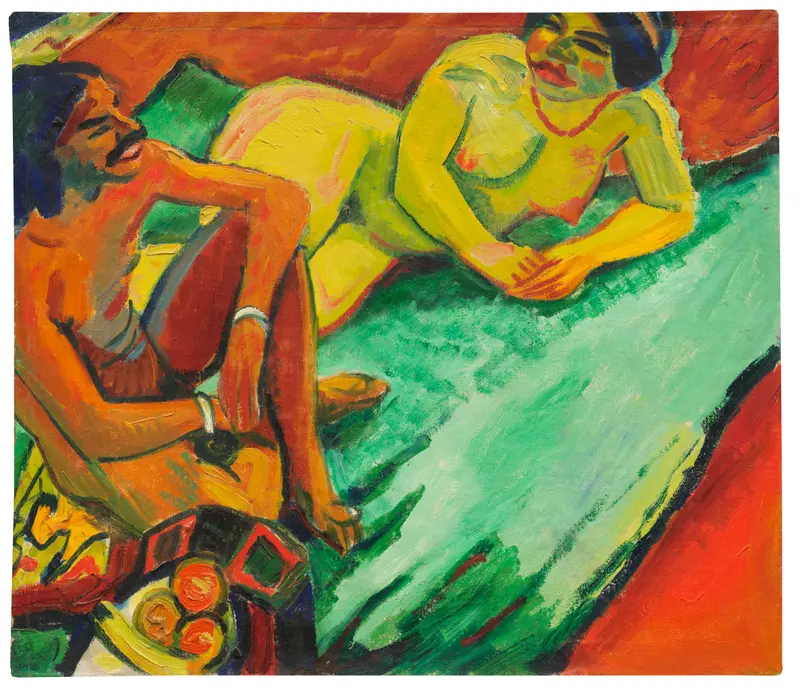
Weib mit Inder auf Teppich
Hermann Max Pechstein
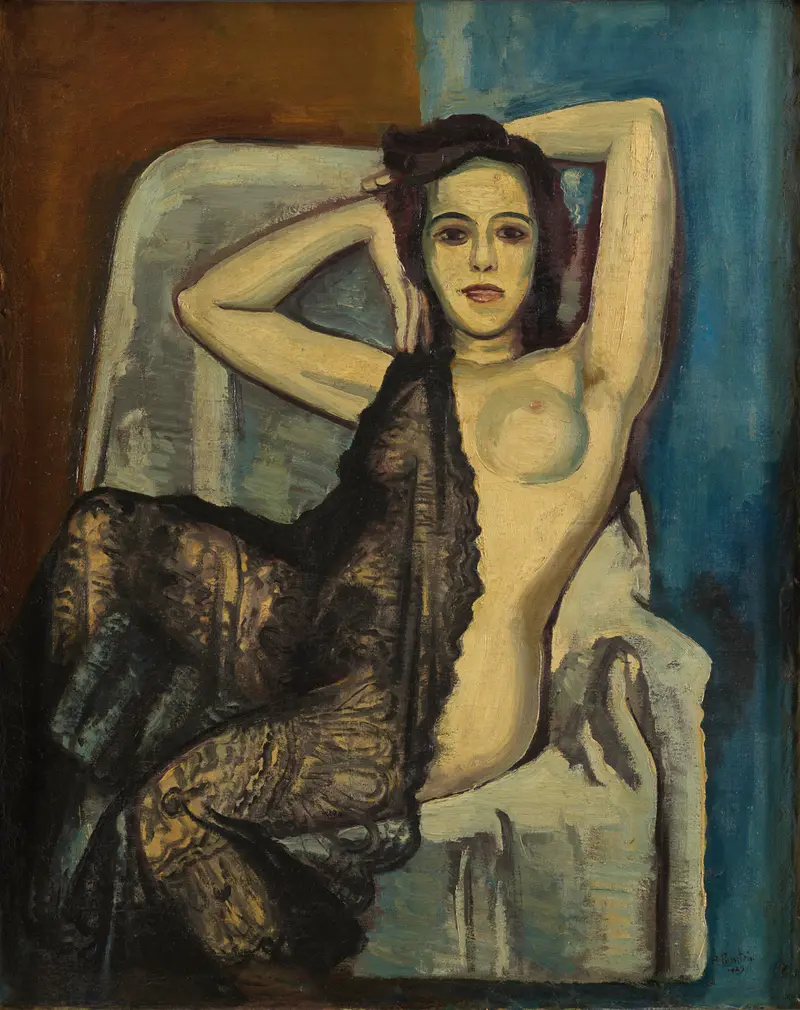
Max Pechstein Mädchen mit Schleier
Hermann Max Pechstein
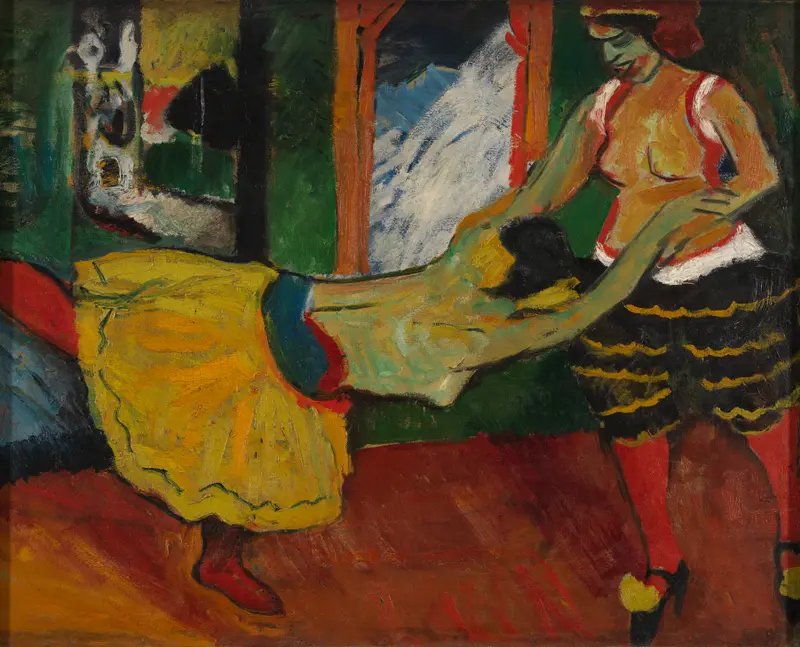
Max Pechstein Tanz
Hermann Max Pechstein
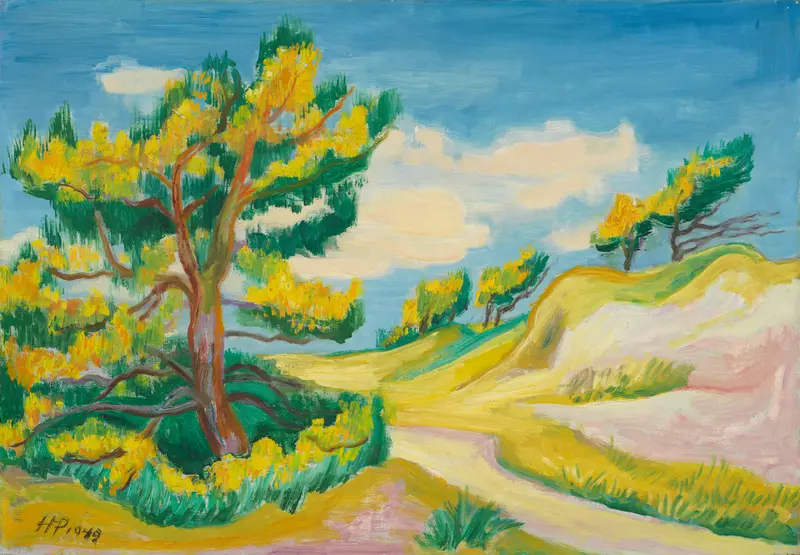
Blühende Kiefern in den Dünen
Hermann Max Pechstein

Die Quelle
Hermann Max Pechstein
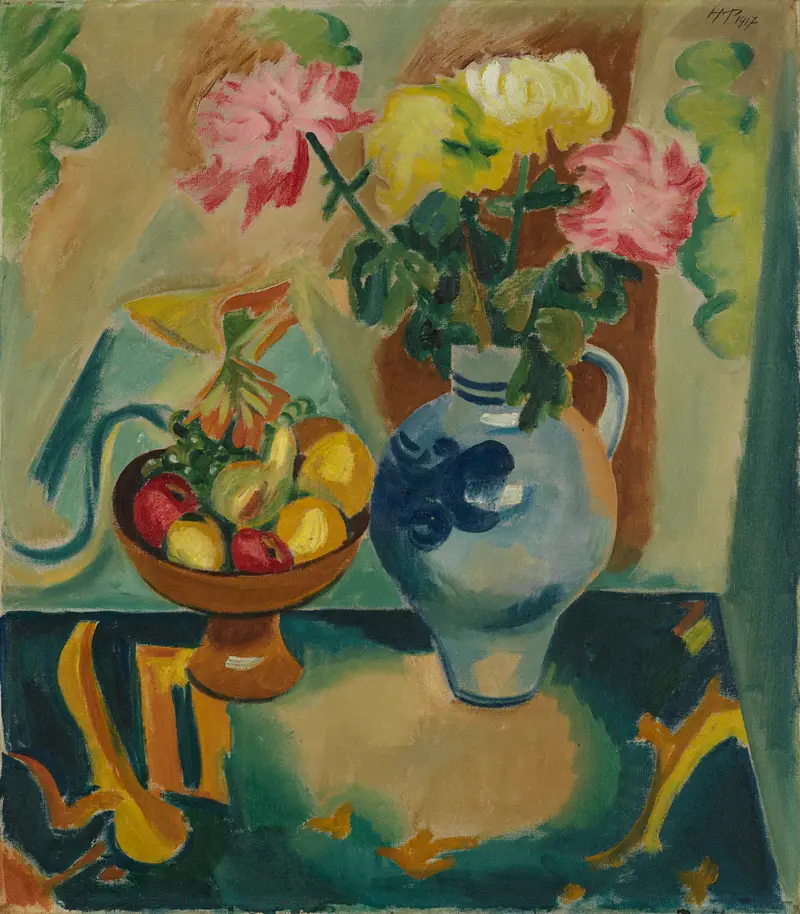
Stilleben mit Chrysanthemen und Früchten
Hermann Max Pechstein



