
Ligeia (Poe) — History & Facts
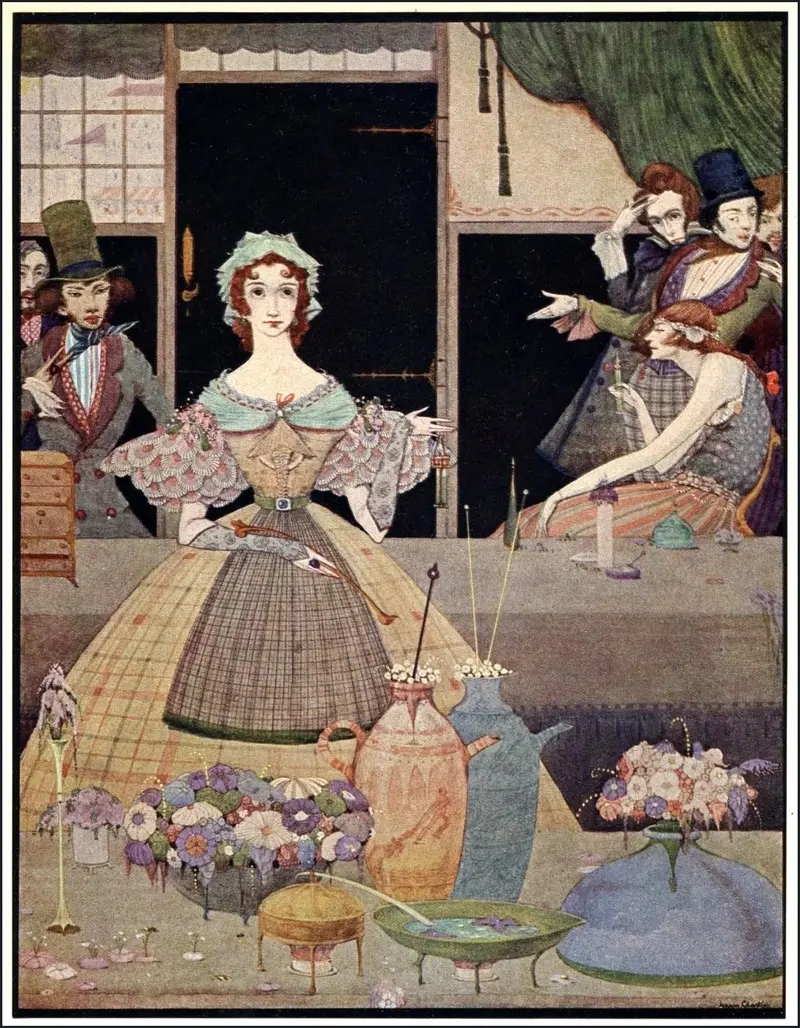
What first seizes the eye in Ligeia (Poe) by Harry Clarke is the uncanny presence of the woman at left, her gaze both hypnotic and unsettling, her shimmering, angular robe seeming to ripple with a life of its own. The man beside her recoils in a pose of theatrical alarm, his body twisted as if caught between fascination and terror. Clarke’s line is razor-sharp, his palette a feverish mix of jewel tones and sickly pastels, with the woman’s black hair and silvery gown anchoring the scene amid a swirl of serpentine forms and spectral apparitions.
Every detail is loaded with intent: the woman’s pointed shoes, the man’s extravagant red breeches, and the ghostly figure exhaling a pale beam of light toward the tableau. The entire composition teeters on the edge of dream and nightmare, inviting the viewer to linger in its charged ambiguity. Created in 1923 as an illustration for Poe’s Tales of Mystery and Imagination, this work belongs to a world where book illustration was undergoing a transformation, fueled by the decadent and symbolist movements that flourished in early twentieth-century Europe. Artists like Harry Clarke were celebrated for their ability to conjure the fantastic and the macabre, often for luxury editions aimed at collectors and bibliophiles.
Clarke’s illustrations, with their intricate detail and psychological intensity, were particularly suited to Poe’s tales of obsession and resurrection. While little is recorded about the specific journey of this piece, it survives as part of the "Dark classics" collection, a testament to the enduring appetite for art that walks the line between beauty and horror. The longer you look, the more the image seems to shift and breathe, as if the story itself were waiting to begin again.
More Artworks by Harry Clarke
Landscape by the Coast
Harry Clarke
Metzengerstein (Poe)
Harry Clarke
Morella (Poe)
Harry Clarke
The Little Mermaid (Andersen)
Harry Clarke
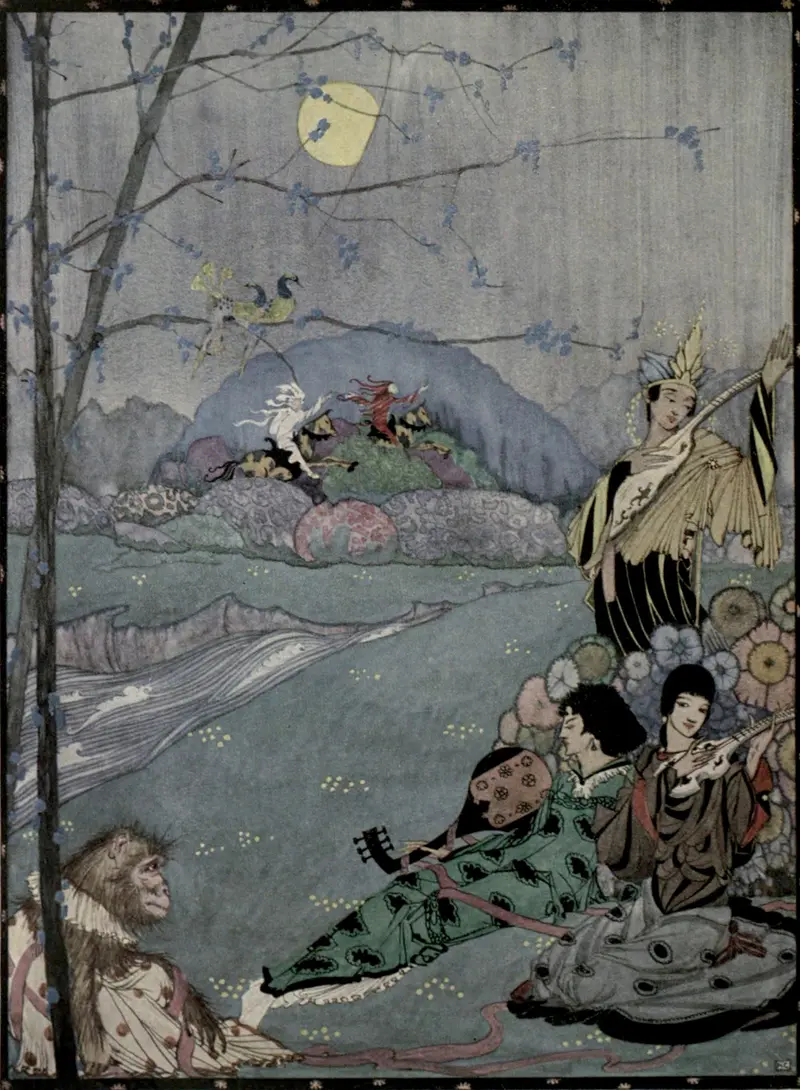
Arabia (The Year's at the Spring)
Harry Clarke
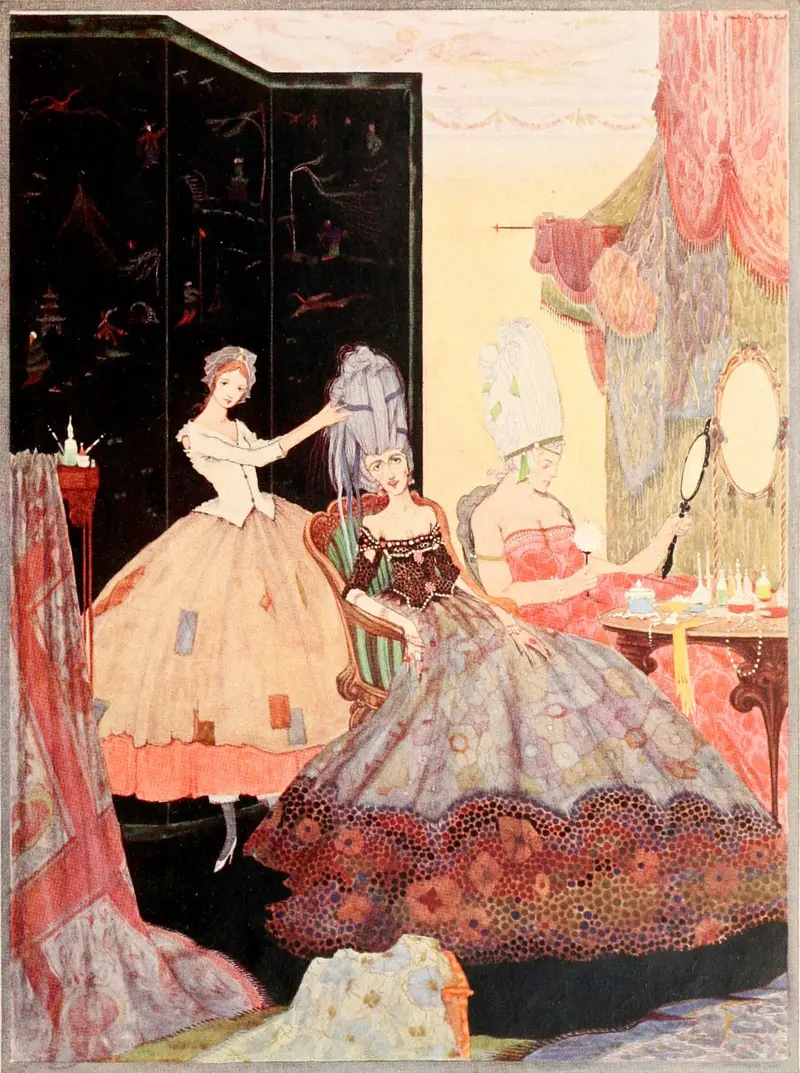
Cinderella (Perrault)
Harry Clarke
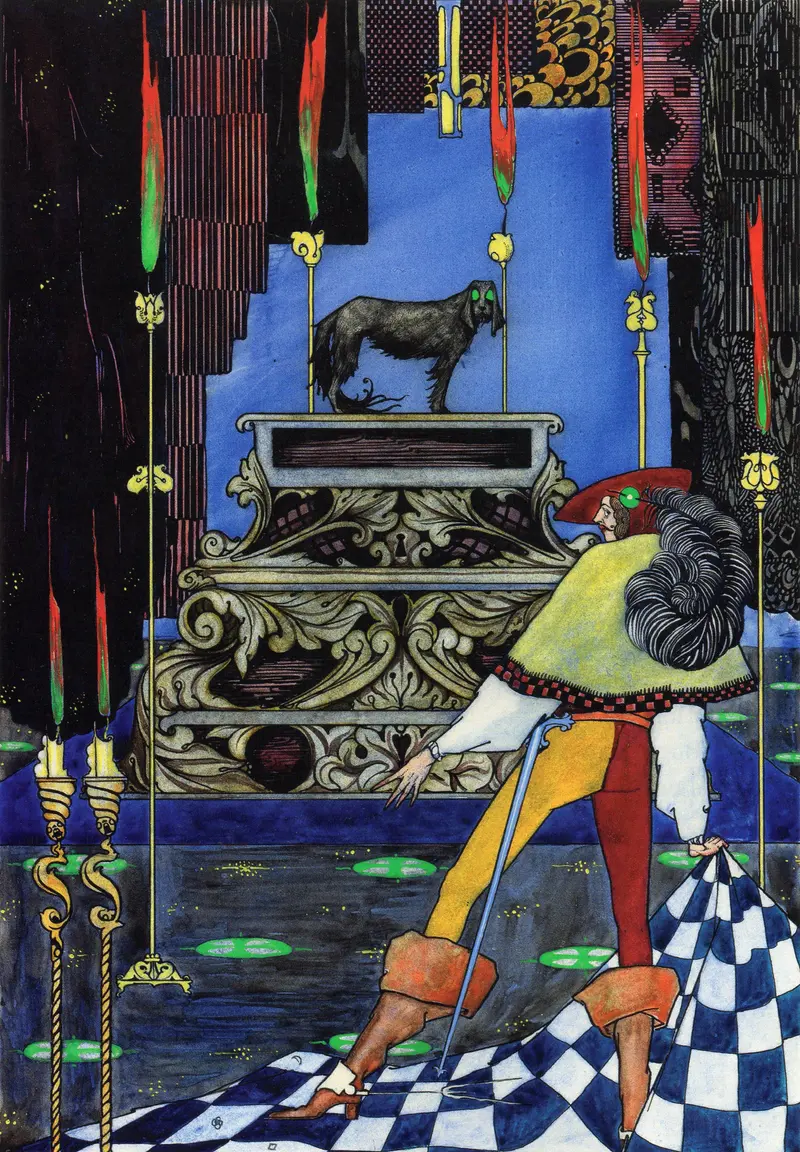
The Tinder Box (Andersen)
Harry Clarke
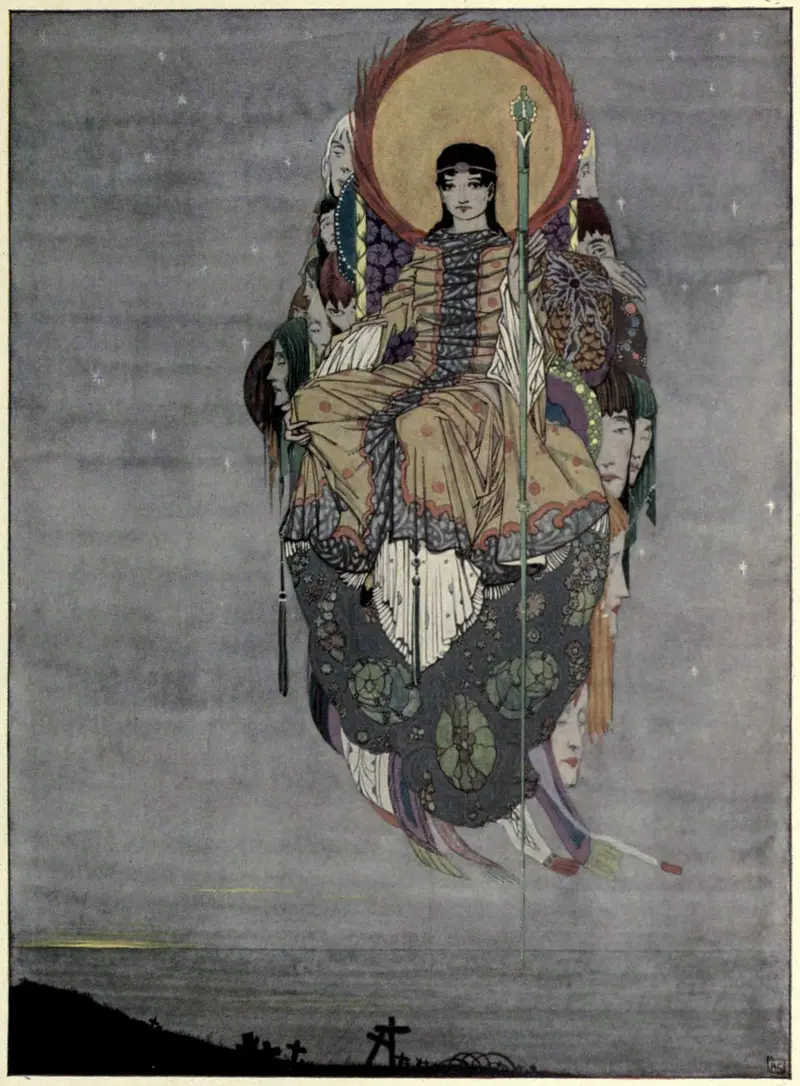
The Dead (The Year's at the Spring)
Harry Clarke
The Mystery of Marie Roget (Poe)
Harry Clarke

The Travelling Companion (Andersen)
Harry Clarke





