
Little Red Riding Hood (Perrault) — History & Facts
What first catches the eye in Little Red Riding Hood (Perrault) by Harry Clarke is the sense of delicate unease woven through its dreamlike forest. The girl’s vivid red cloak glows against the pale, vertical sweep of trees, drawing the viewer straight to her calm, almost wary gaze. She stands poised, one hand clutching her basket, the other resting on her umbrella, as the wolf approaches with a curious, almost conspiratorial air.
The forest itself seems enchanted—trees rise impossibly tall and slender, their trunks punctuated by dots of gold and pink, while birds slice through the air above, lending a sense of suspended animation. Clarke’s lines are fine and precise, his palette cool and misty except for the brilliant red, which signals both innocence and danger at the heart of the tale. Created in 1922 as an illustration for The fairy tales of Charles Perrault, this work belongs to a period when illustrated books were prized as treasures of both art and storytelling. Harry Clarke was celebrated for his intricate, often haunting style, bringing a new intensity to familiar stories.
In the early twentieth century, publishers like Harrap in London commissioned such illustrations to enchant both children and adults, making fairy tales a shared cultural touchstone. This particular image is preserved in the New York Public Library, a testament to the era’s devotion to beauty in everyday objects. Its quiet tension and ornate detail invite viewers to linger, searching for the moment when the story will tip from innocence to peril.
More Artworks by Harry Clarke
Landscape by the Coast
Harry Clarke
Metzengerstein (Poe)
Harry Clarke
Morella (Poe)
Harry Clarke
The Little Mermaid (Andersen)
Harry Clarke
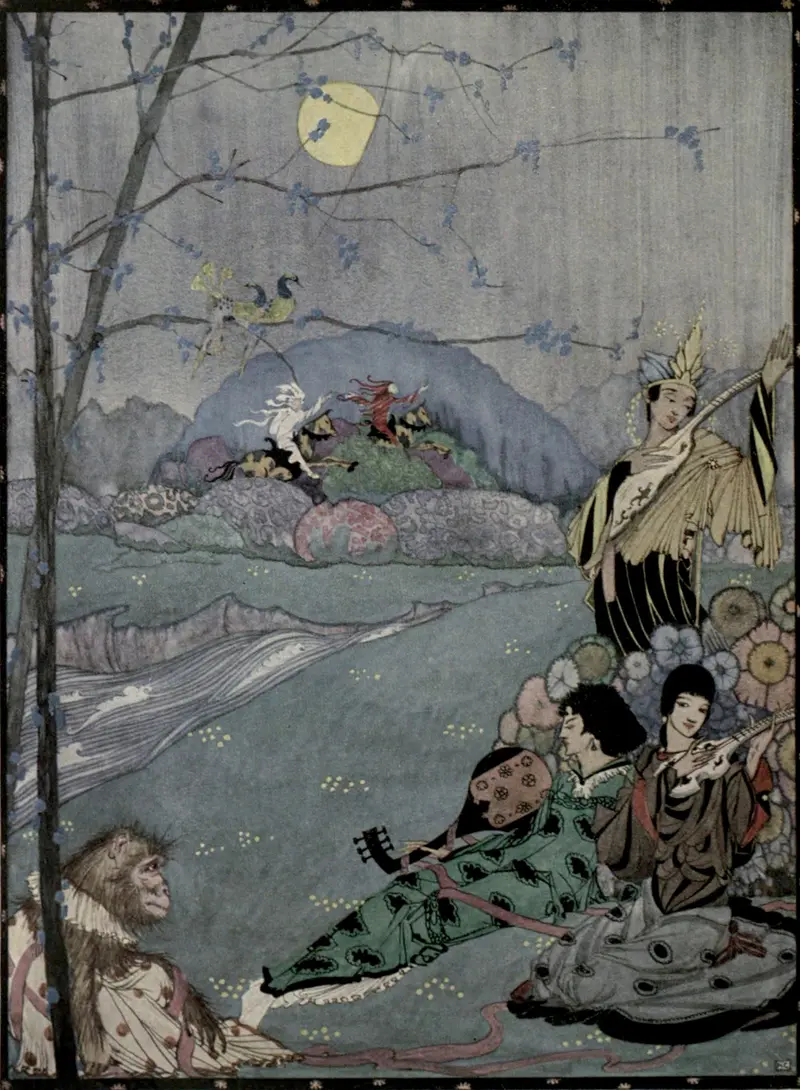
Arabia (The Year's at the Spring)
Harry Clarke
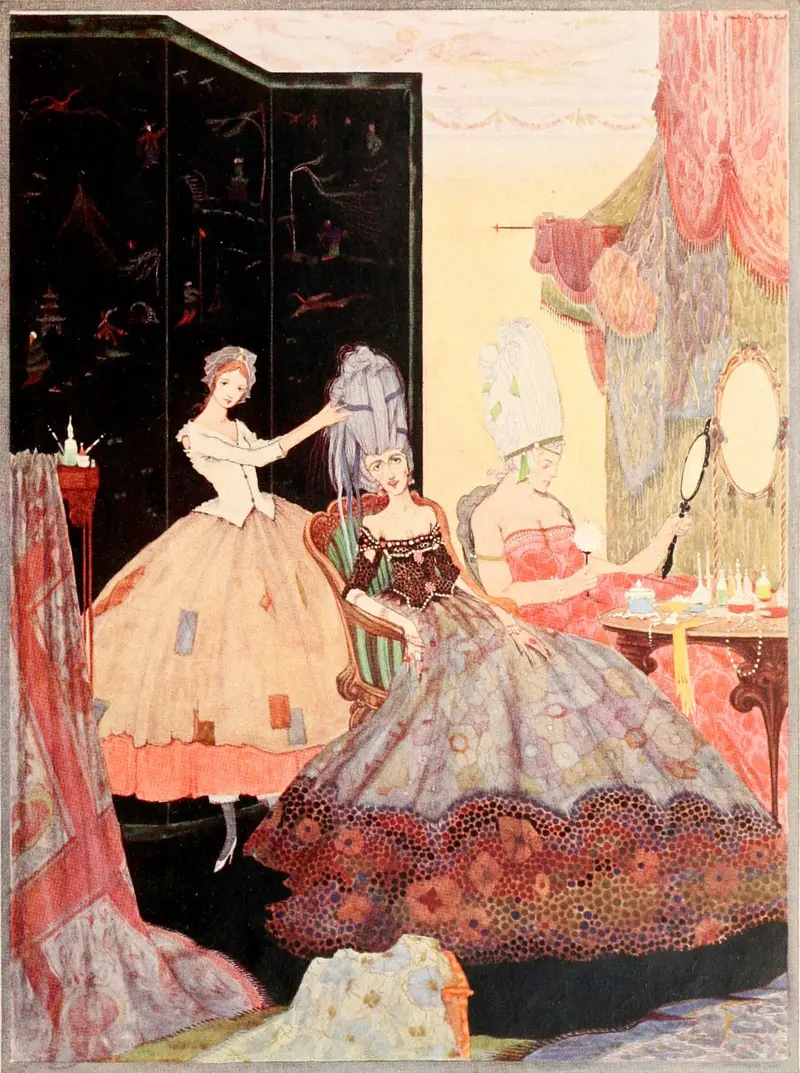
Cinderella (Perrault)
Harry Clarke
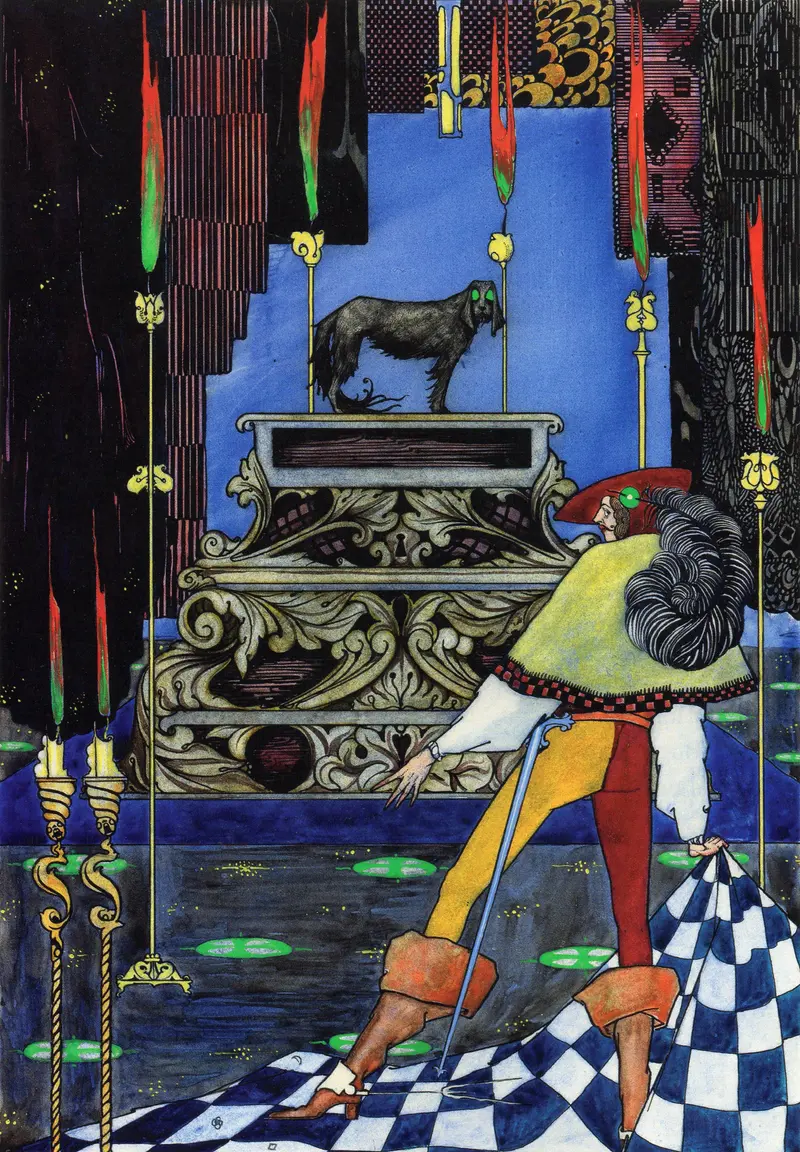
The Tinder Box (Andersen)
Harry Clarke
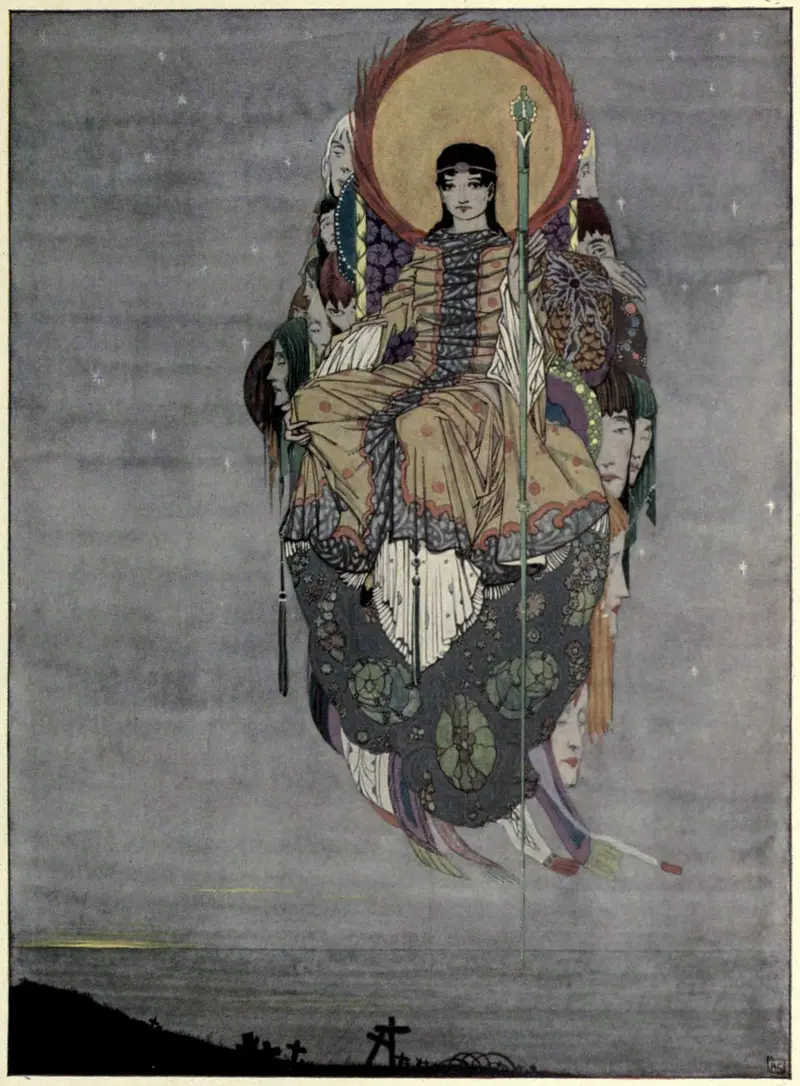
The Dead (The Year's at the Spring)
Harry Clarke
The Mystery of Marie Roget (Poe)
Harry Clarke

The Travelling Companion (Andersen)
Harry Clarke





