
Longchamp186 Monticelli parc+cygnes — History & Facts
What first draws the eye in Longchamp186 Monticelli parc+cygnes is the way figures and landscape seem to shimmer together, as if memory itself were painting the scene. The forms are almost dreamlike—women in flowing dresses, children, and swans—each rendered with thick, swirling strokes that dissolve edges and invite the viewer to linger on the play of color rather than the certainty of line. A glowing orb, perhaps a parasol or lantern, hovers at the center, casting a gentle radiance that draws the small crowd together and sets the mood of quiet festivity.
The swans in the foreground glide across a patch of reflected light, anchoring the composition with their pale forms and suggesting the calm of a park pond at dusk. Every detail, from the lush trees to the marble balustrade, is softened by the artist’s brush, creating a sense of intimacy and nostalgia. This painting belongs to the world of late nineteenth-century France, where artists like Adolphe Joseph Thomas Monticelli reveled in the freedom of color and texture, often anticipating the Impressionists in their pursuit of atmosphere over precision. Such scenes—elegant gatherings in gardens or parks—were popular among the bourgeoisie, who commissioned or collected these works as tokens of leisure and refinement.
The date recorded for this particular image, 2018-01-28, marks its documentation in a private or lesser-known collection, a reminder that many works from this era survive outside major museums, cherished for their ability to conjure vanished afternoons. In this painting, the blurred forms and luminous palette invite the viewer to imagine themselves among the figures, savoring a moment that is both ordinary and touched by the magic of recollection.
More Artworks by Adolphe Monticelli

Portrait of a Lady
Adolphe Monticelli
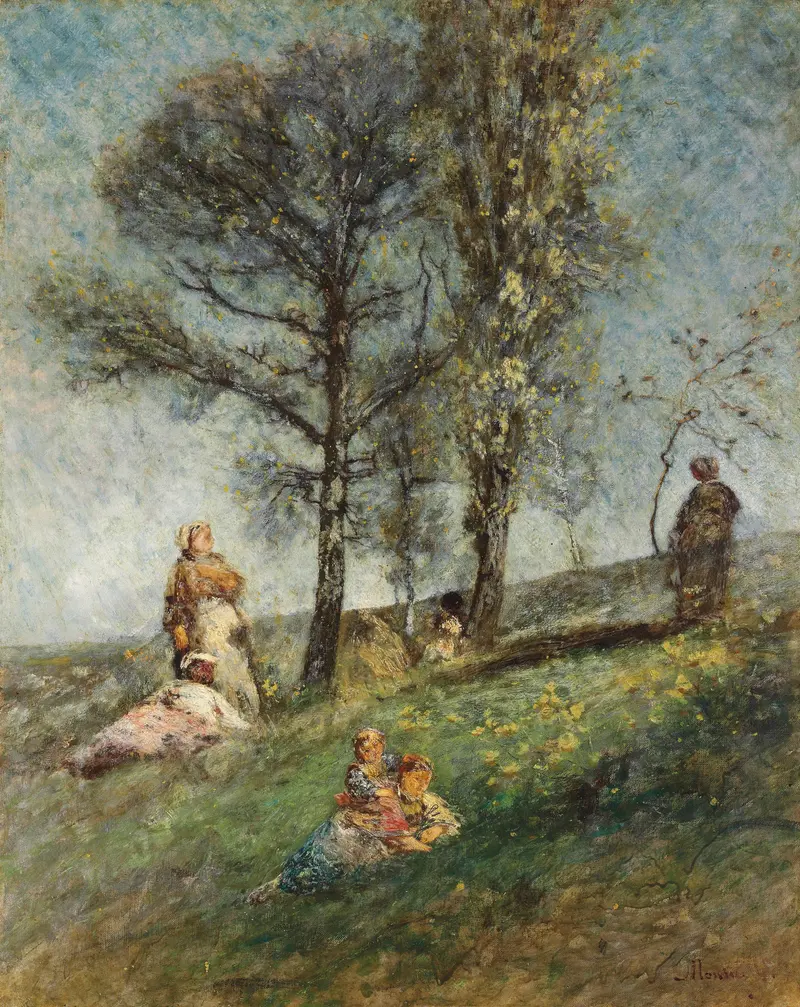
A Young Family Under Trees On A Hill
Adolphe Monticelli

Fête d'Après-Midi
Adolphe Monticelli
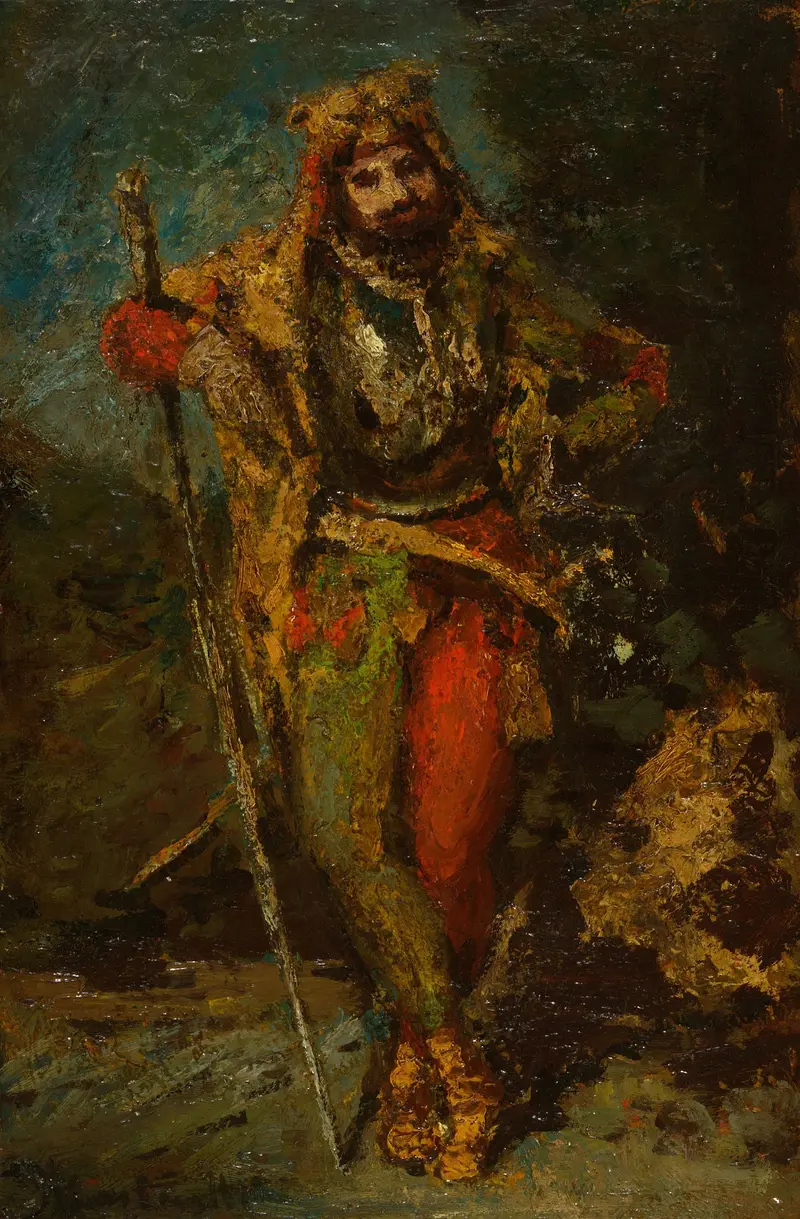
Mephisto from the Opera Faust
Adolphe Monticelli
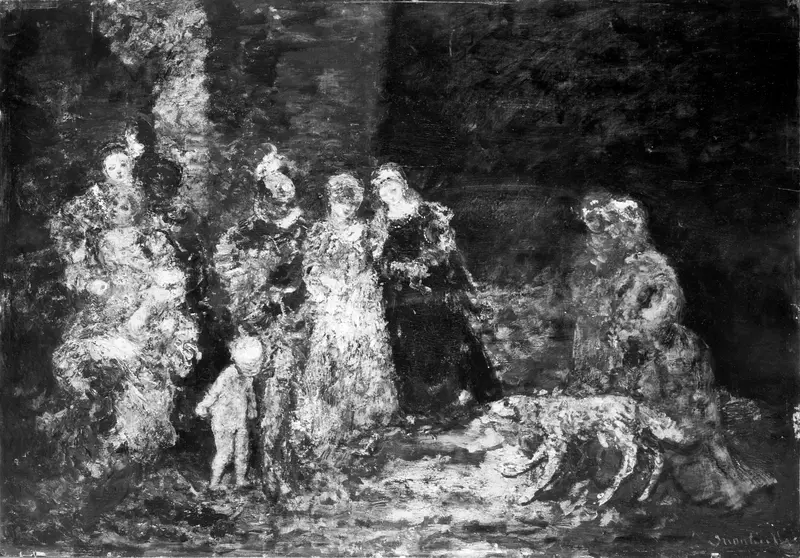
The Fairies
Adolphe Monticelli
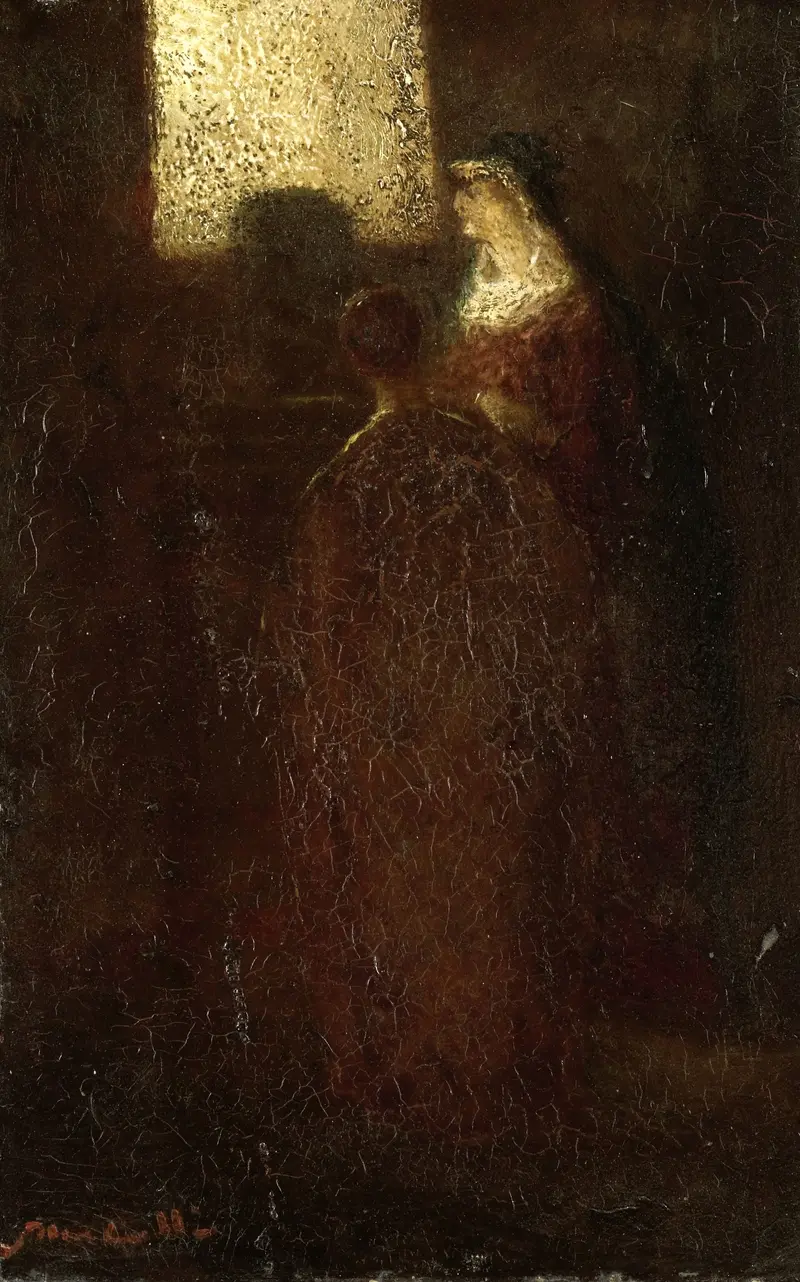
Aan het altaar
Adolphe Monticelli
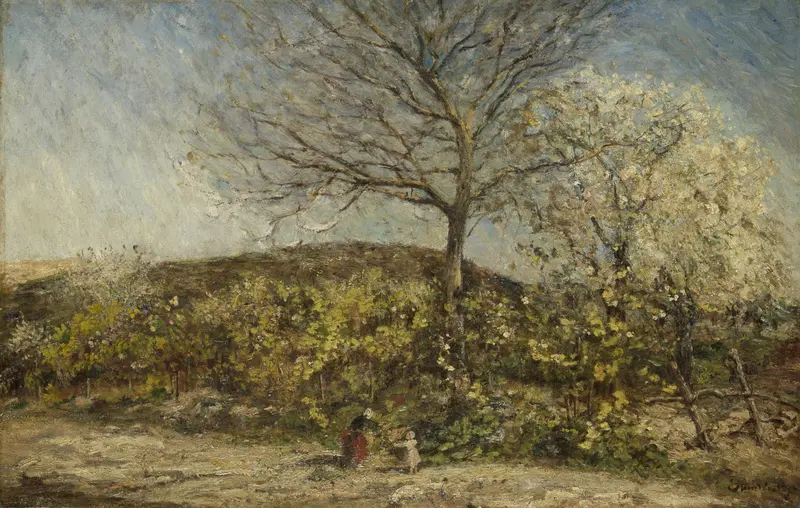
Landschap met bloeiende boomgaard
Adolphe Monticelli
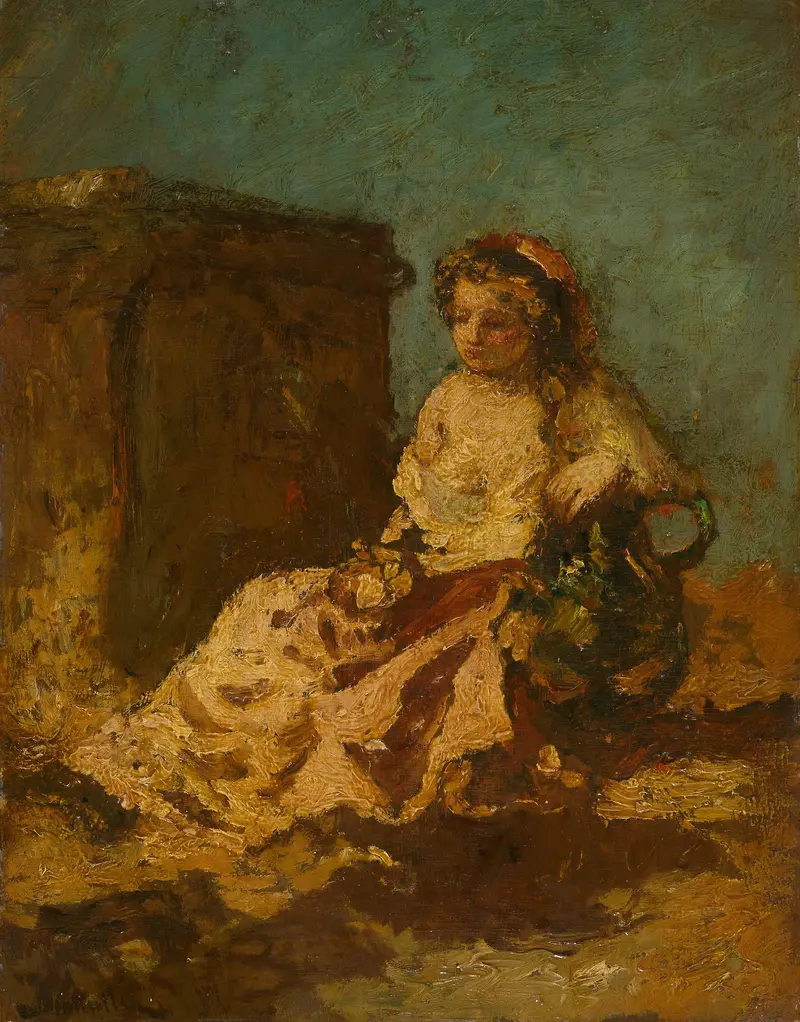
Meditation (Seated Woman)
Adolphe Monticelli
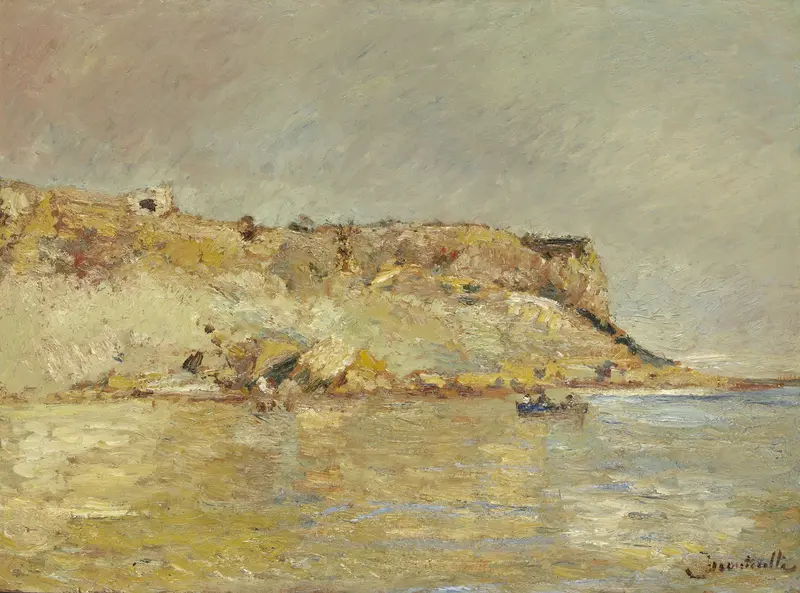
Coastal Mountains
Adolphe Monticelli
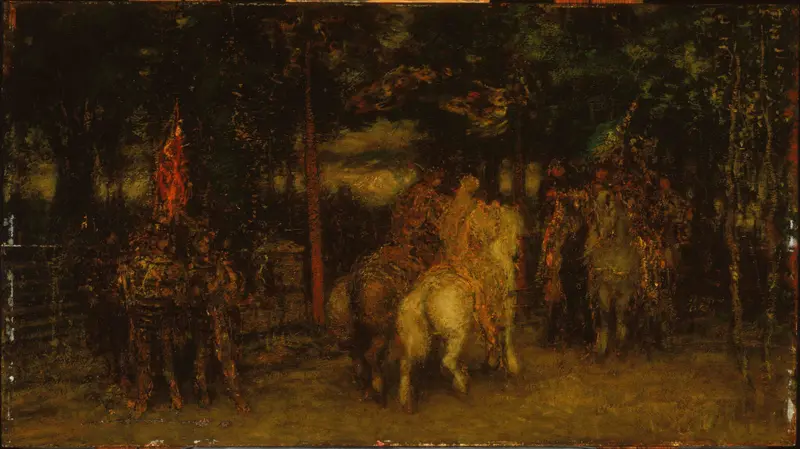
Landscape with Figures
Adolphe Monticelli
More Genre Scene Art

Banquet of the Officers of the St George Civic Guard
Frans Hals

Rembrandt and Saskia in the Scene of the Prodigal Son
Rembrandt van Rijn

Bal du moulin de la Galette
Pierre-Auguste Renoir

Quadrille at the Moulin Rouge
Henri de Toulouse-Lautrec

A Burial at Ornans
Gustave Courbet

When Will You Marry?
Paul Gauguin