
Madonna and Child with Saints, Angels and Federico da Montefeltro (San Bernardino Altarpiece) — History & Facts
When Piero della Francesca completed his Madonna and Child with Saints, Angels and Federico da Montefeltro (San Bernardino Altarpiece) in 1472, he immortalized one of the most powerful men of the Italian Renaissance not in armor or triumph, but kneeling humbly at the Virgin’s feet. Federico da Montefeltro, Duke of Urbino, had only recently survived the loss of his wife Battista Sforza, and his patronage of this altarpiece for the church of San Bernardino was as much a public statement of piety as a private act of mourning and hope for dynastic continuity. The Duke’s presence in the sacred scene—so close to the Madonna, yet set apart from the divine—was a bold assertion of his role as both ruler and servant of God. The painting captures a moment of serene adoration: the Virgin sits enthroned, the Christ Child on her lap, surrounded by a host of saints and angels in a meticulously ordered composition.
Federico kneels in profile, his distinctive aquiline nose unmistakable, offering himself in prayer. Each saint is carefully chosen—St. John the Baptist, St.
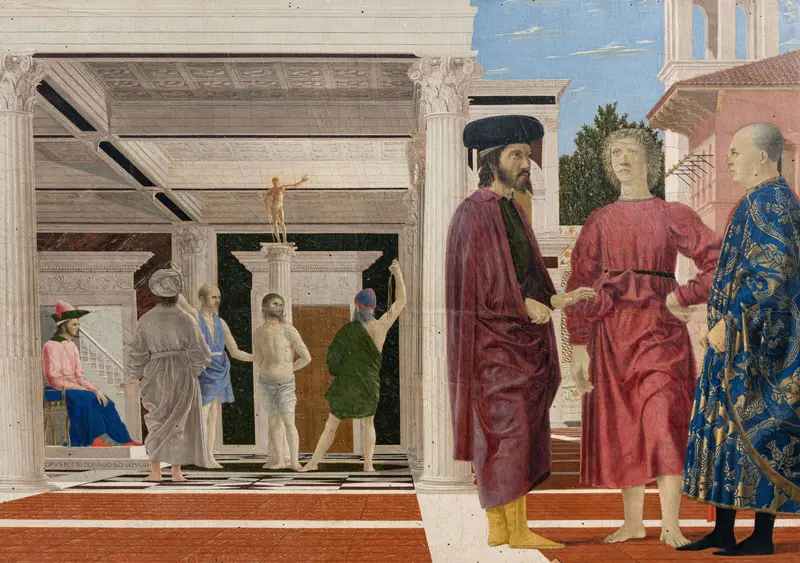
Bernardino of Siena, and others—reflecting both the Duke’s personal devotions and the civic identity of Urbino. The gentle interplay of light across marble, jewels, and flesh reveals Piero’s fascination with geometry and perspective, a hallmark also seen in his Flagellation of Christ. Unlike the emotional drama of Fra Angelico, here stillness and order convey the gravity of the Duke’s faith and the eternal nature of the sacred. After its installation in the church of San Bernardino just outside Urbino, the altarpiece remained a local treasure for centuries, surviving the political upheavals that swept through the region.
Over time, parts of the work were separated, and today the central panel is housed in the Pinacoteca di Brera in Milan, while other elements reside elsewhere. The painting stands as a testament to Piero della Francesca’s mature period, when his reputation as a mathematician and painter brought him commissions from Italy’s most discerning patrons. Though not as widely known as his frescoes, this altarpiece is a quiet monument to the intertwining of art, power, and devotion in the Renaissance court.
More Artworks by Piero Della Francesca

Portrait of the Duchess of Urbino, Battista Sforza
Piero Della Francesca

Portrait of Federico da Montefeltro
Piero Della Francesca

Federico da Montefeltro, Duke of Urbino
Piero Della Francesca
Madonna di Senigallia
Piero Della Francesca
Portrait of Battista Sforza
Piero Della Francesca
The Nativity
Piero Della Francesca

Diptych of Federico da Montefeltro and Battista Sforza
Piero Della Francesca
Flagellation of Christ
Piero Della Francesca
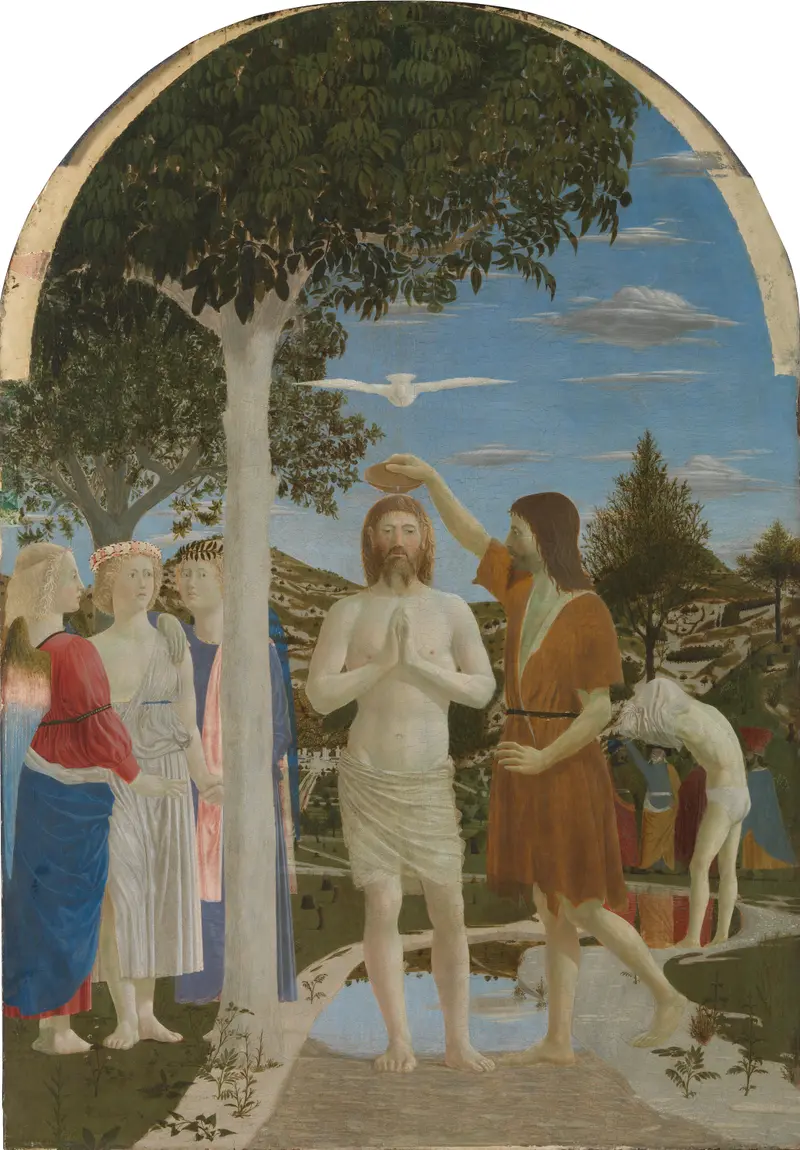
The Baptism of Christ
Piero Della Francesca
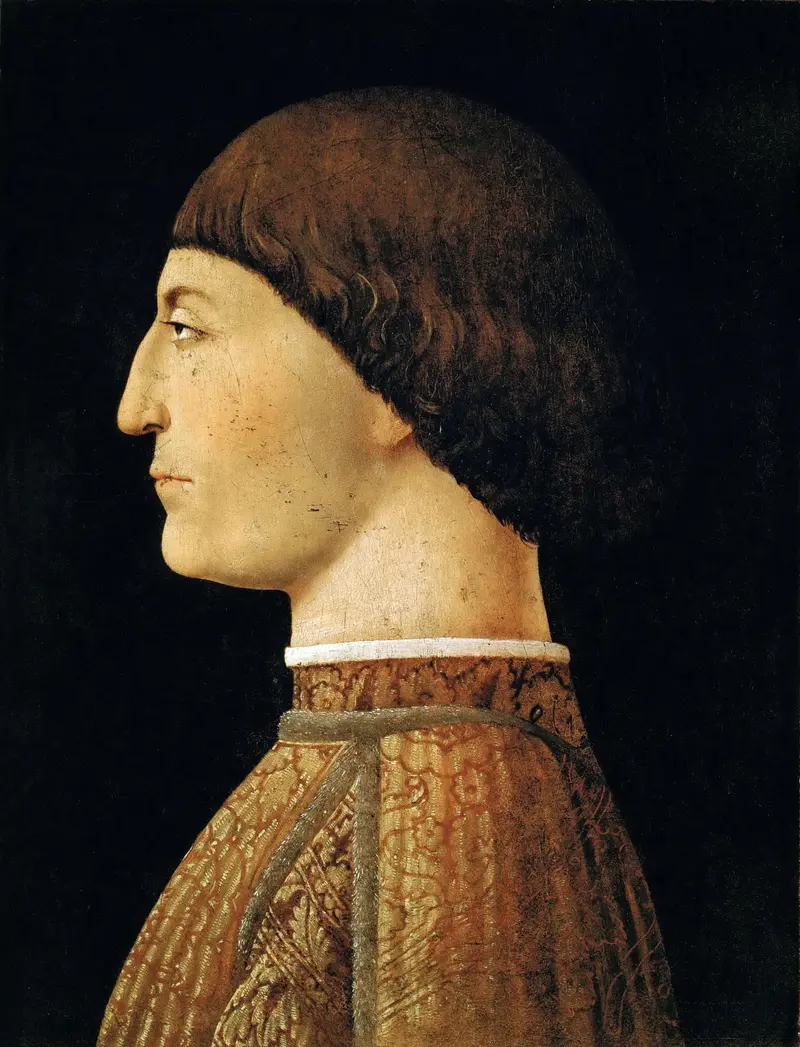
Portrait of Sigismondo Pandolfo Malatesta
Piero Della Francesca





