Mecanical elements — History & Facts
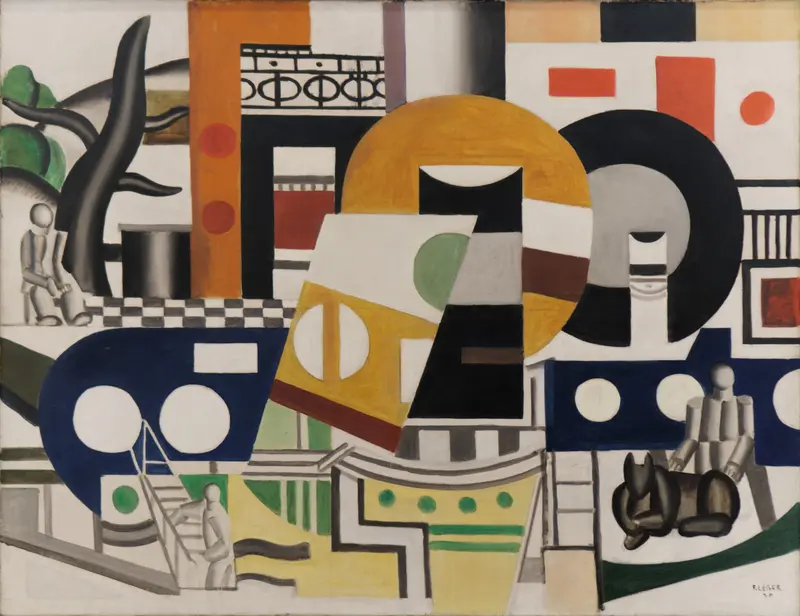
A riot of pipes, levers, and bold arcs draws the viewer into a world where machinery hums with its own strange vitality. In Mecanical elements, Fernand Léger turns the chaos of industrial forms into a tightly orchestrated dance of color and geometry. Notice how the creamy whites and pale yellows are punctuated by jolts of red and blue, guiding your eye along a route that never quite settles.
The crisp black outlines do not merely separate shapes—they give each segment the presence of a machine part, while the wavy red lines inject a surprising sense of rhythm, almost as if the mechanical is breathing. This painting was created in 1922, at a moment when Léger—and much of Europe—was fascinated by the promise and anxiety of the machine age. Artists of the Cubist and Purist movements, including Léger, were captivated by the forms of factories, engines, and the new urban world. Unlike the soft, organic curves of earlier art, these shapes are hard-edged, deliberate, and unapologetically modern.
Yet, Léger’s composition suggests not just cold efficiency but a kind of harmony, as if the future could be built from these interlocking parts. History has kept few traces of the individual stories behind such works, but the energy of their time pulses through every line—inviting you to look again, and imagine the world they were built to celebrate.
More Artworks by Fernand Léger

The Tugboat Bridge
Fernand Léger
The Wheels
Fernand Léger

Le Cirque Médrano
Fernand Léger
The Disks in the City
Fernand Léger
Le Jongleur et les acrobates
Fernand Léger
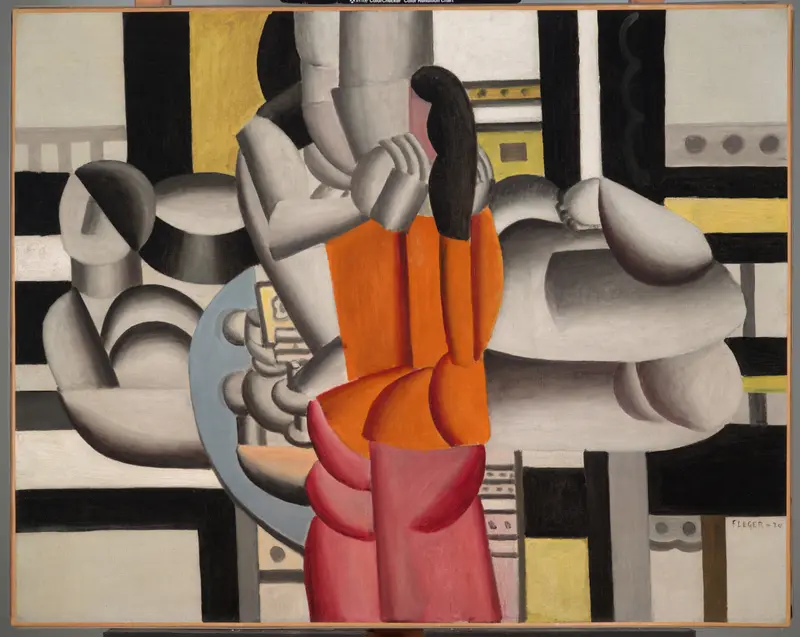
Three Women and Still Life (Déjeuner)
Fernand Léger
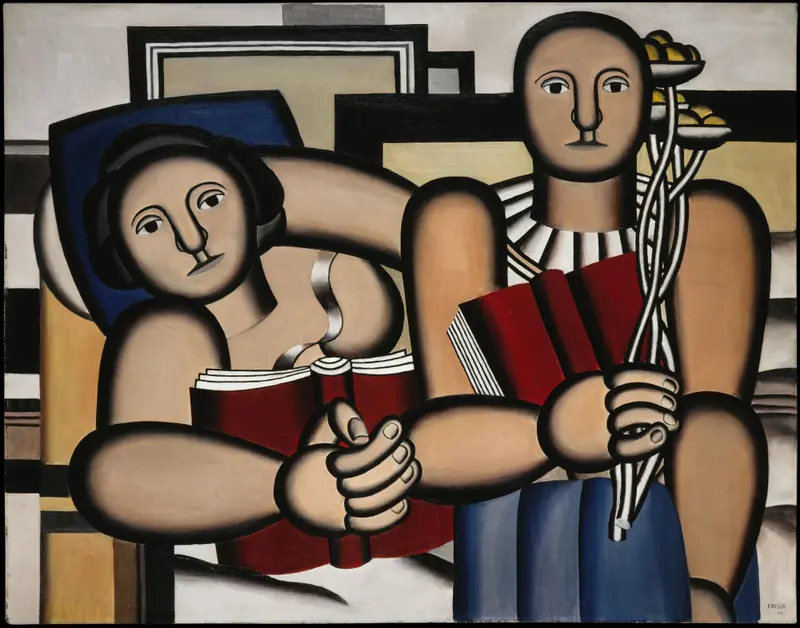
Reading
Fernand Léger
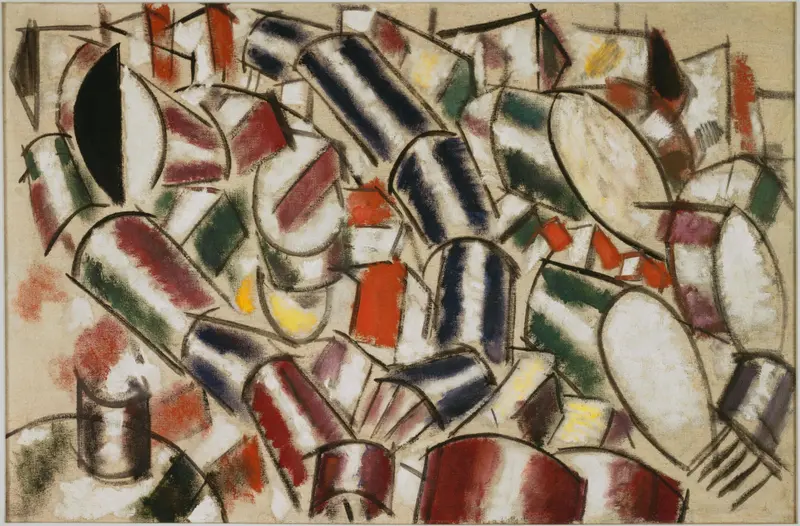
Femme couchée
Fernand Léger
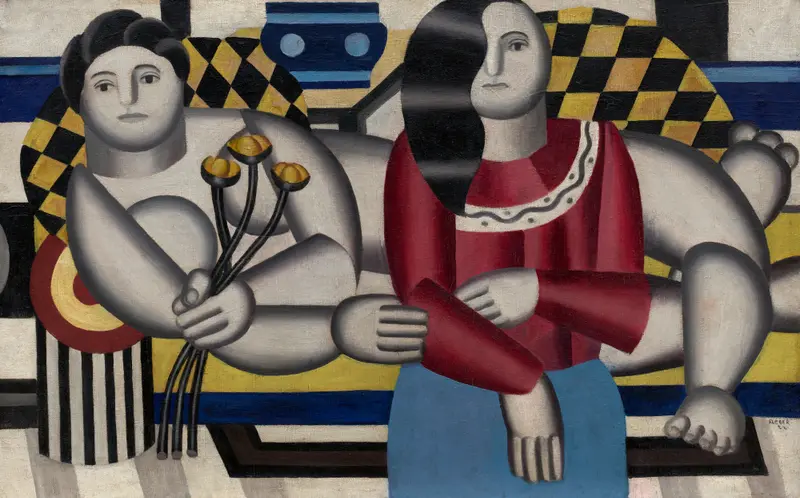
Woman holding flowers
Fernand Léger
The Tug
Fernand Léger