
Mephistopheles and Faust (Goethe) — History & Facts
What first seizes the eye in Mephistopheles and Faust (Goethe) by Harry Clarke is the uncanny tension between two figures: one looming, mask-like and sly, the other rigid, haunted, and all too human. Clarke’s ink-black shadows swallow half the scene, forcing the viewer’s gaze to dart between the ornate, swirling patterns of the cloaks and the piercing, almost accusatory stare of Faust himself. The intricate detailing of the garments is no mere decoration—it is a visual snare, echoing the seductive complexity of the bargain at the heart of Goethe’s tale.
Mephistopheles’ hand hovers with a feline grace, suggesting both invitation and threat, while Faust’s own hand clutches his chest, caught in a gesture that reads as both oath and self-defense. The stark contrast of black and white carves the psychological drama into the very fabric of the image, making the pact between them feel both intimate and inescapable. Created for Bayard Taylor’s 1925 illustrated edition of Goethe’s Faust, this work stands at the intersection of late Symbolist illustration and the fevered imagination of early twentieth-century book art. Clarke, an Irish artist famed for his contributions to illustrated literature, brought a distinctly modern anxiety to the Gothic tradition, favoring psychological suggestion over explicit narrative.
Such illustrations were not merely embellishments, but invitations for readers to linger in the text’s shadowy corners, a practice that flourished as publishers sought to elevate literature with artful, collectible editions. While history keeps few traces of this specific drawing’s journey, its place in the Project Gutenberg Open Library System ensures that its spell remains unbroken—each glance draws us deeper into the labyrinth of Faust’s bargain, and Clarke’s vision of temptation and consequence.
More Artworks by Harry Clarke
Landscape by the Coast
Harry Clarke
Metzengerstein (Poe)
Harry Clarke
Morella (Poe)
Harry Clarke
The Little Mermaid (Andersen)
Harry Clarke
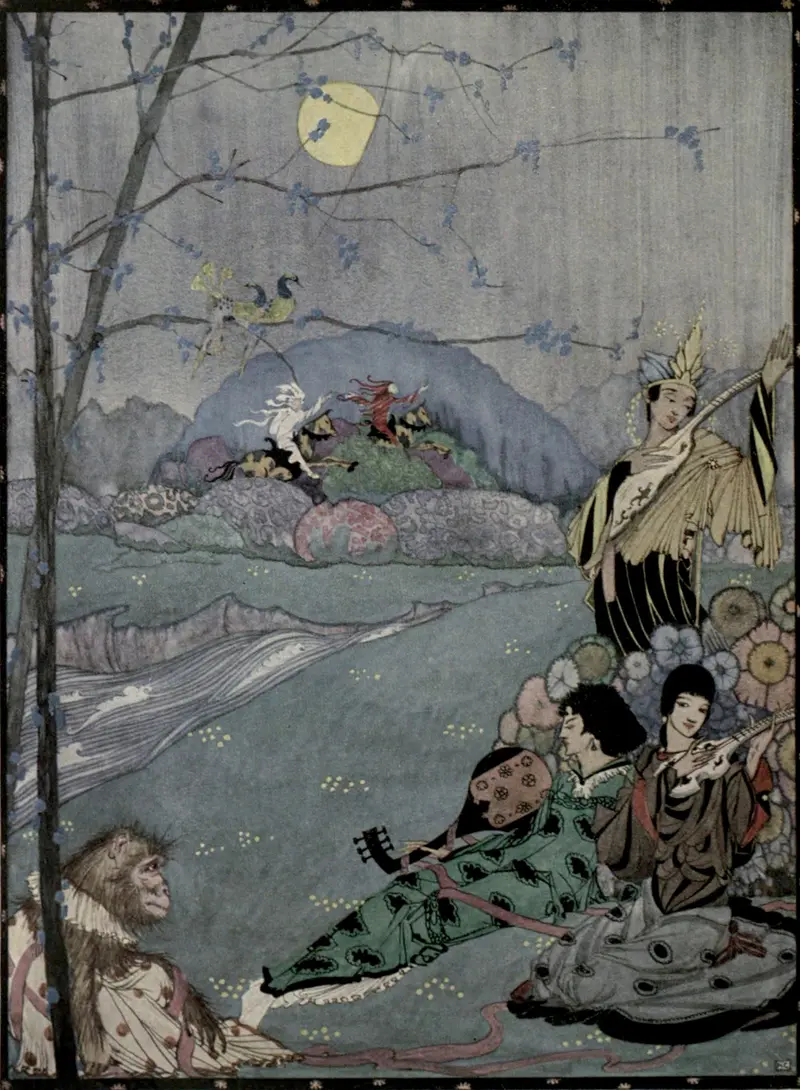
Arabia (The Year's at the Spring)
Harry Clarke
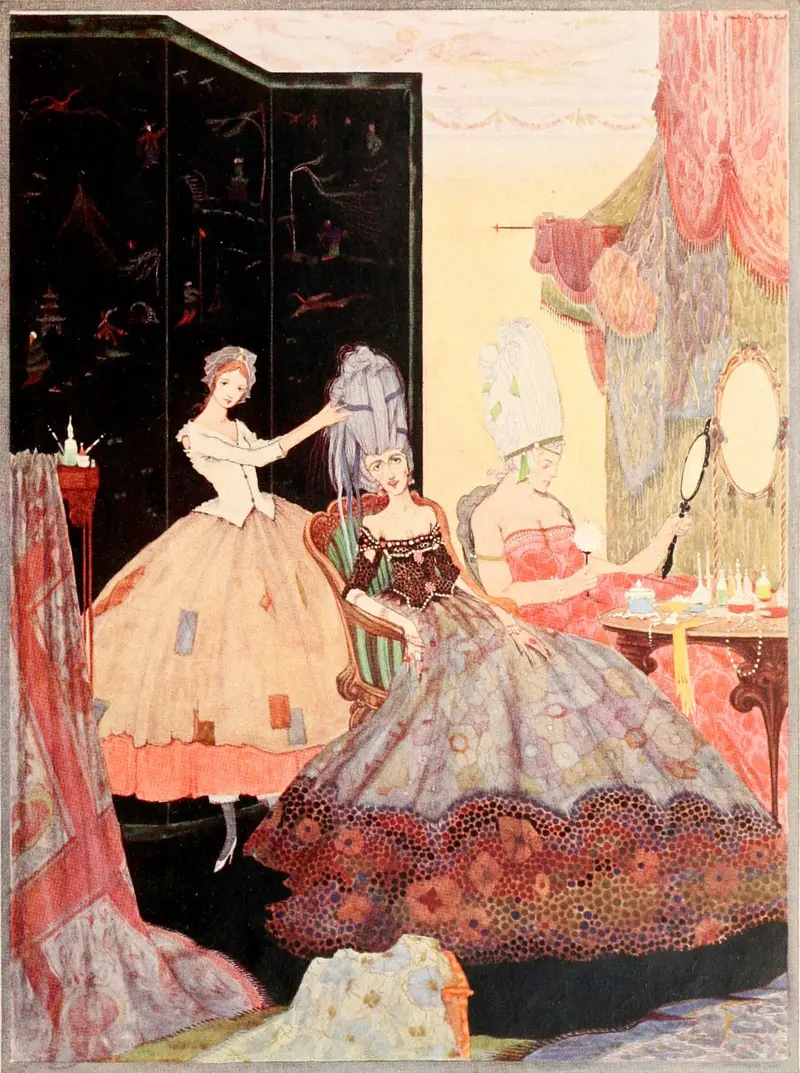
Cinderella (Perrault)
Harry Clarke
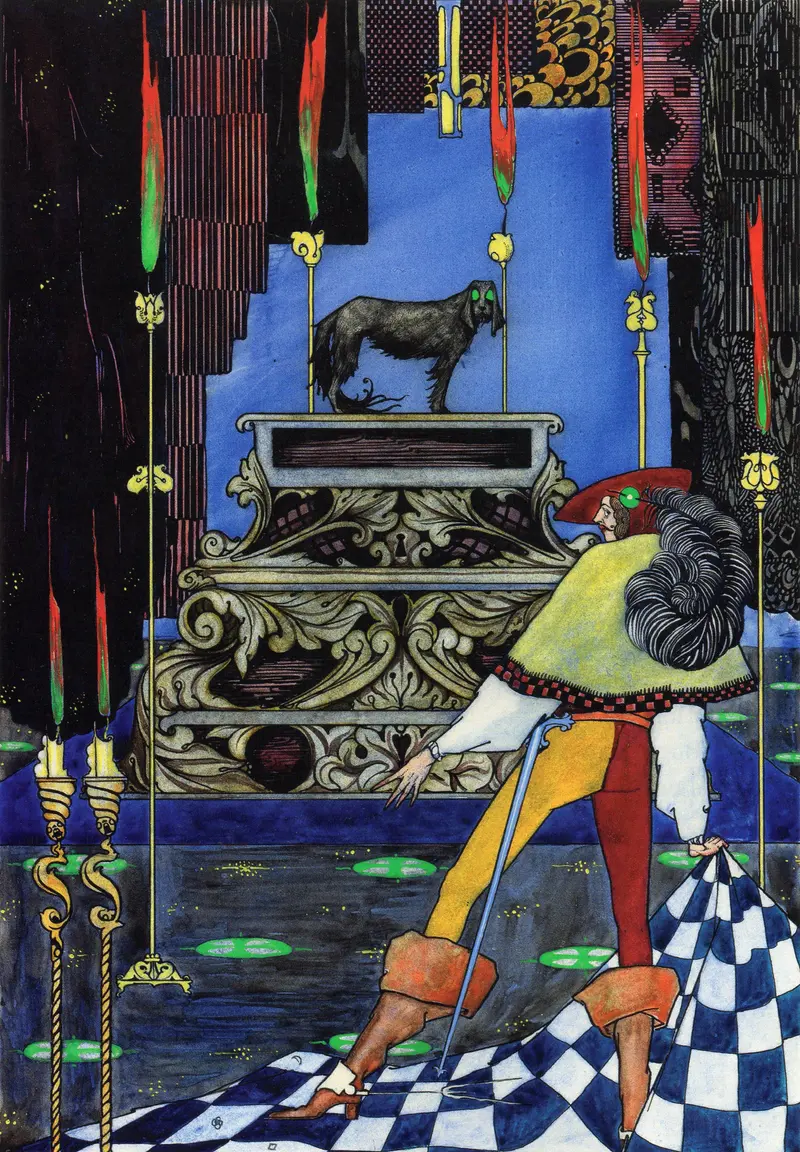
The Tinder Box (Andersen)
Harry Clarke
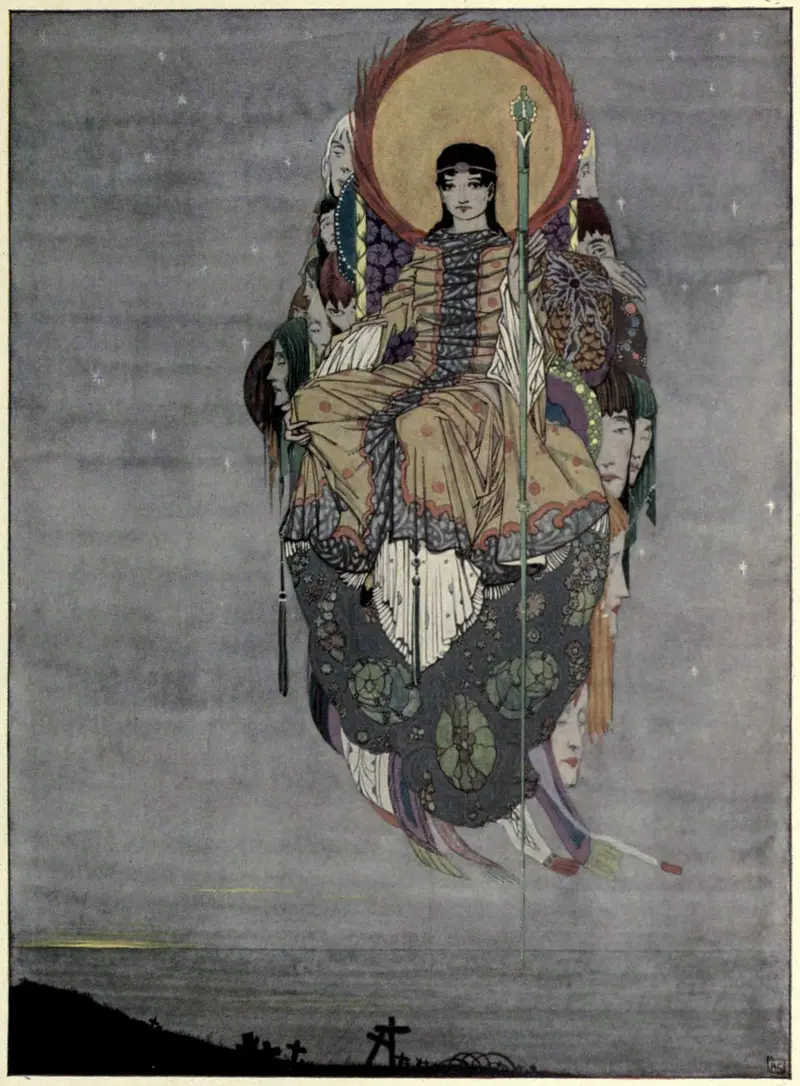
The Dead (The Year's at the Spring)
Harry Clarke
The Mystery of Marie Roget (Poe)
Harry Clarke

The Travelling Companion (Andersen)
Harry Clarke





