
Milchwagen (Milk Wagon) — History & Facts
In Milchwagen, Lovis Corinth captures a moment rife with unspoken tension, hinting at the betrayals that linger just beneath the surface of everyday life. Look closely at the vibrant yellows and whites that dominate the canvas. The milk wagon, a simple yet central element, draws your eye with its inviting luminosity. Notice how the light dances across the surface, illuminating not just the wagon but also the faces of the figures surrounding it.
The brushwork is loose yet deliberate, creating a sense of movement that suggests both the urgency of the scene and the hidden emotional currents swirling just out of view. The juxtaposition of the serene milk delivery and the concealed turmoil is striking. The figures, engaged in their mundane tasks, seem unaware of the underlying betrayals represented by the chaotic brushstrokes interspersed throughout the composition. Each stroke evokes both a sense of daily routine and the fragility of trust, an emotional complexity that invites deeper contemplation about the relationships between the characters. In 1916, Corinth painted Milchwagen during a tumultuous time in Europe, marked by the shadows of World War I.
Living in Berlin, he faced the devastating impacts of the war on society and the art world. This period saw a shift in Corinth's approach, moving toward a more expressive style that reflected his angst and the complexities of human emotions, making this work a poignant reflection of his evolving artistic vision.
More Artworks by Lovis Corinth
Browse all →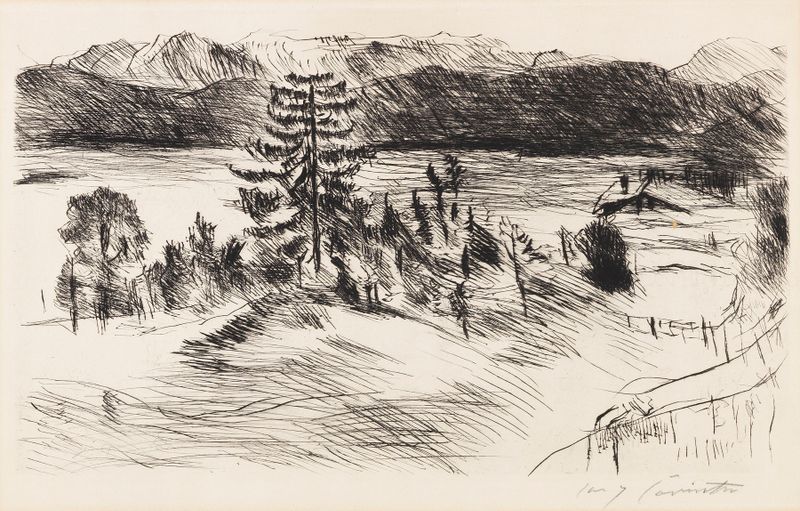
Große Walchenseelandschaft
Lovis Corinth

Walchensee im Nebel
Lovis Corinth

Große Walchenseelandschaft.
Lovis Corinth
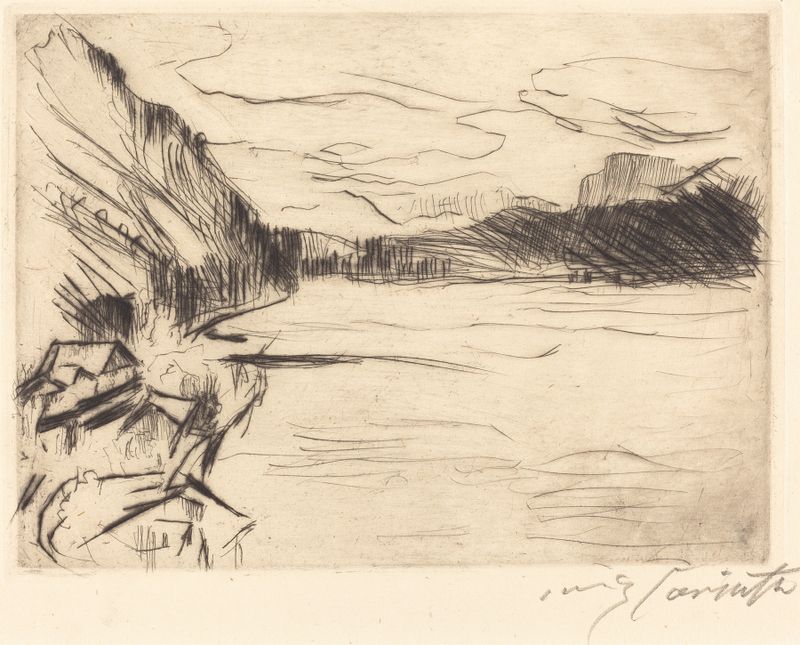
On Walchen Lake (Am Walchensee)
Lovis Corinth

Walchensee
Lovis Corinth

Gebirgsee (Walchensee im Winter)
Lovis Corinth

On the Walchen Sea (Am Walchensee)
Lovis Corinth

Bathing Place (Badeanstalt)
Lovis Corinth

Walchensee, aufgehender Mond
Lovis Corinth

Walchensee Landschaft
Lovis Corinth





