
Monks Praying in a Grotto — History & Facts
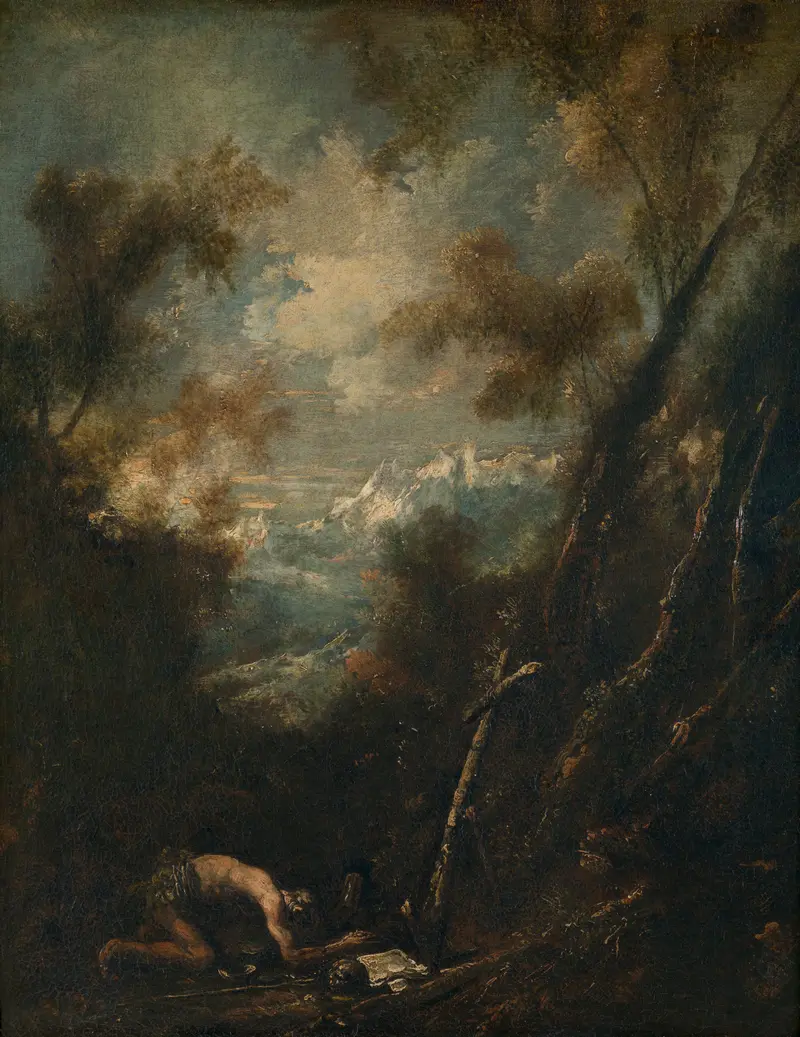
The eye is drawn first to the curious hush that settles over the scene, as if the air itself is thick with prayer. Beneath the looming darkness of the grotto’s arch, clusters of monks bow, kneel, and sit in scattered contemplation, their white habits catching what little light filters through the dense, overhanging foliage. The painter’s brushwork is restless and quick, lending the figures a sense of movement even in stillness—each gesture, from the bowed heads to the clasped hands, signals a different shade of devotion.
The only vertical element, a rough-hewn cross or bell structure, rises at the center, anchoring the group’s focus and hinting at the rituals that bind them together. Around them, the cavernous space swallows sound and detail, making the monks’ presence feel both intimate and remote. Painted circa 1705, Monks Praying in a Grotto belongs to a world where the boundaries between wilderness and worship were porous, and the grotto—a natural cathedral—became a fitting stage for spiritual drama. In the early eighteenth century, artists like Alessandro Magnasco were drawn to such subjects, reflecting both the era’s fascination with monastic life and its anxieties about solitude, penance, and the unknown.
These paintings were often commissioned by private collectors or religious institutions eager to display scenes of piety and reflection, though history has kept few traces of the patrons behind lesser-known works like this one. Now held in the Minneapolis Institute of Arts, this painting invites viewers to linger in its shadows, searching for meaning in the flicker of light on stone and habit.
More Artworks by Alessandro Magnasco

The Synagogue
Alessandro Magnasco
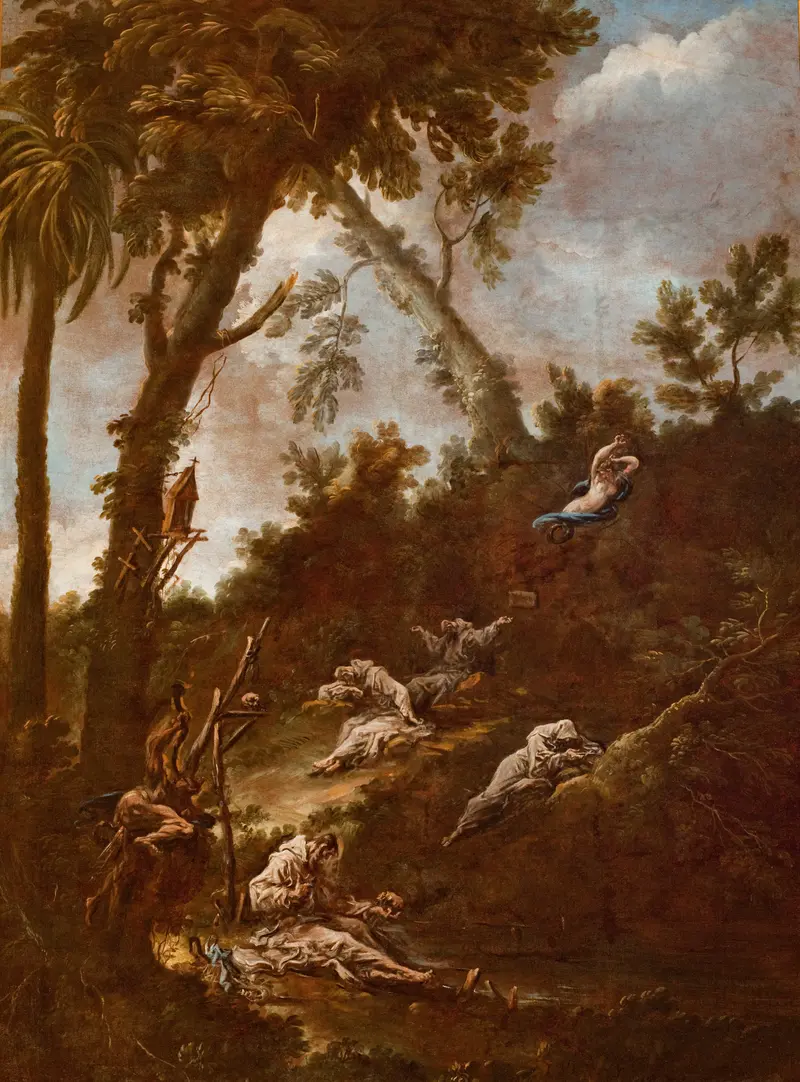
Hermits (Anachorets)
Alessandro Magnasco
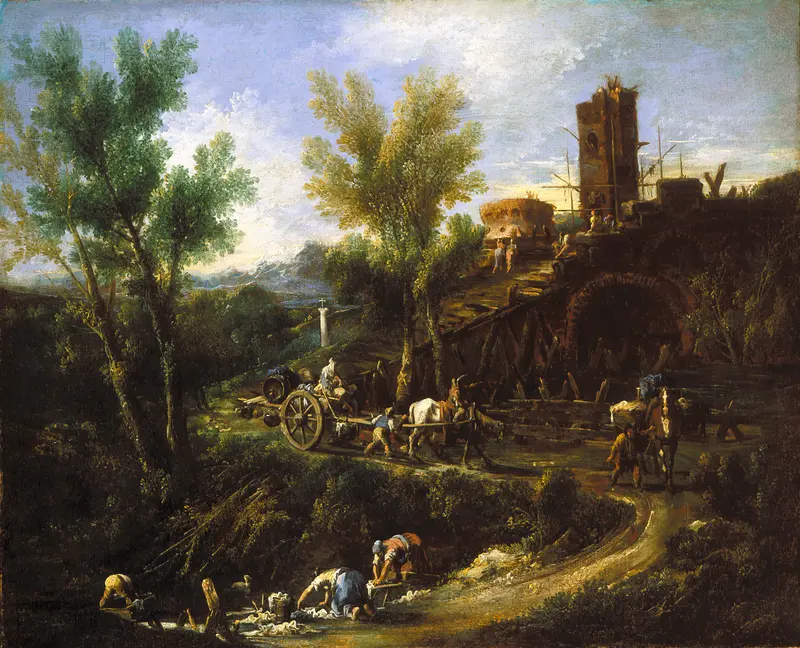
Landscape with Gypsies and Washerwomen
Alessandro Magnasco
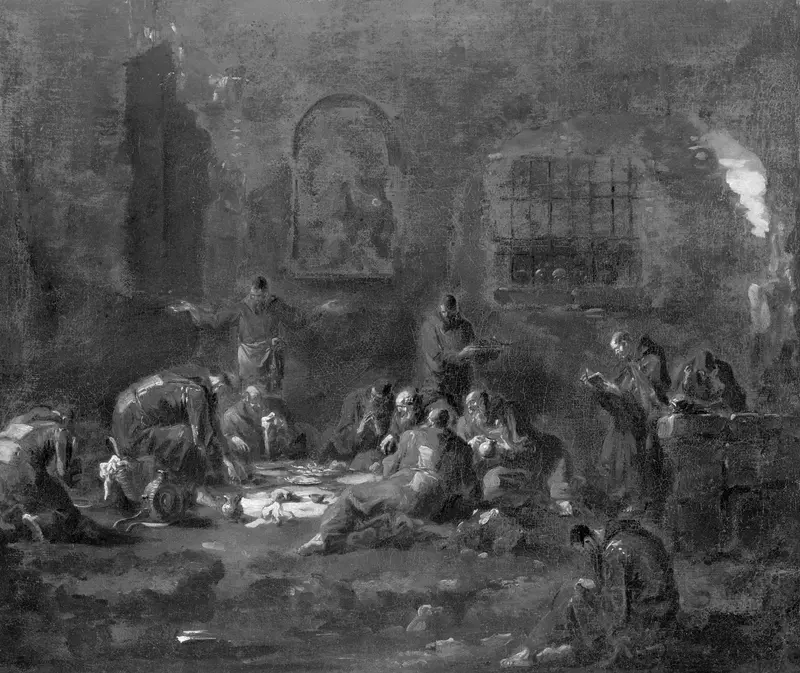
Monks at Supper
Alessandro Magnasco
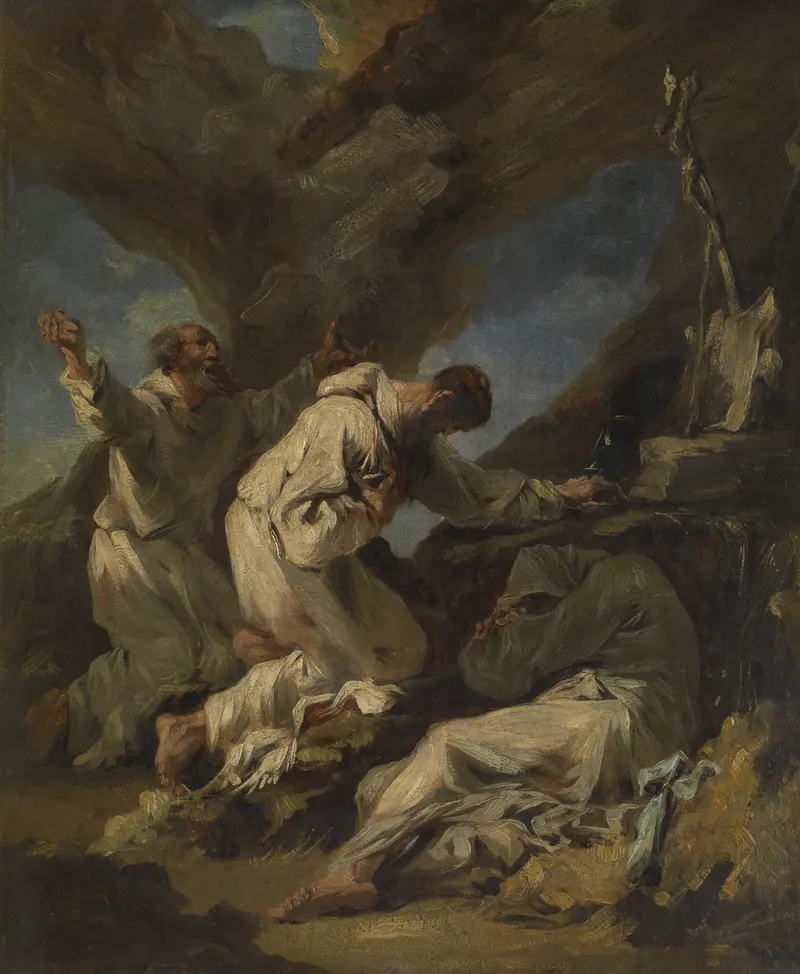
Praying Monks
Alessandro Magnasco
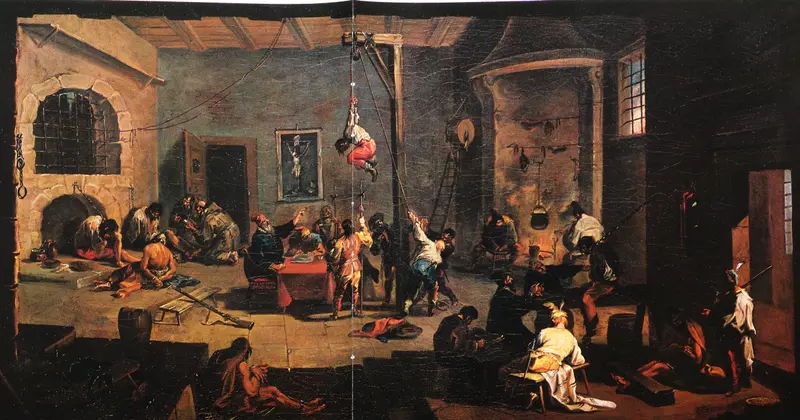
Torture Scene
Alessandro Magnasco
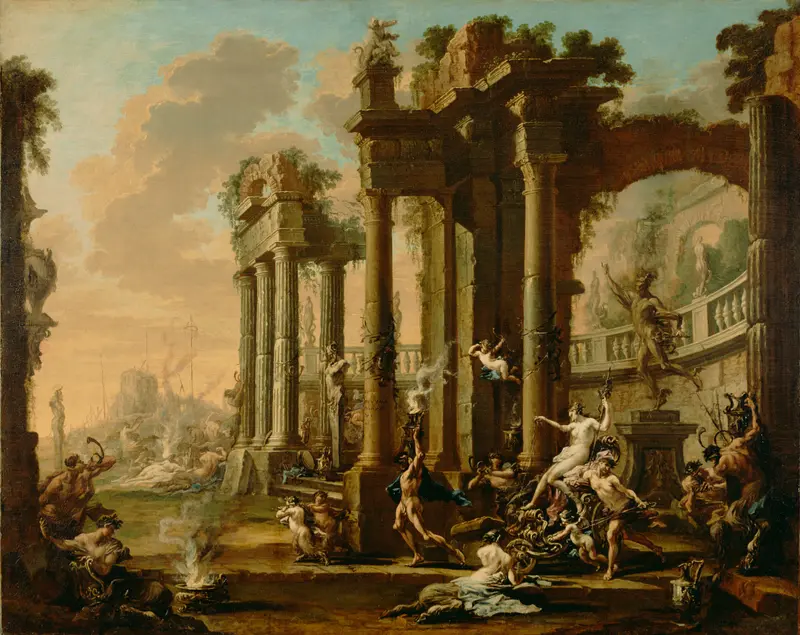
The Triumph of Venus
Alessandro Magnasco
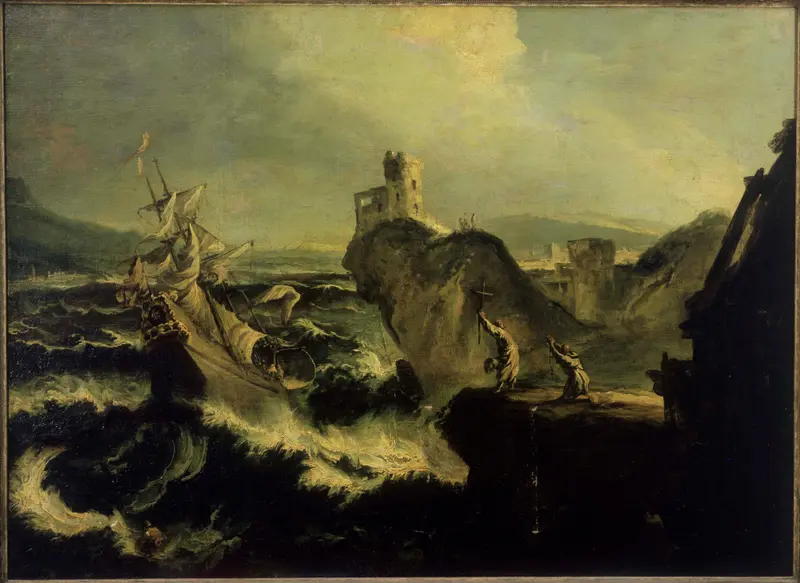
The Shipwreck
Alessandro Magnasco
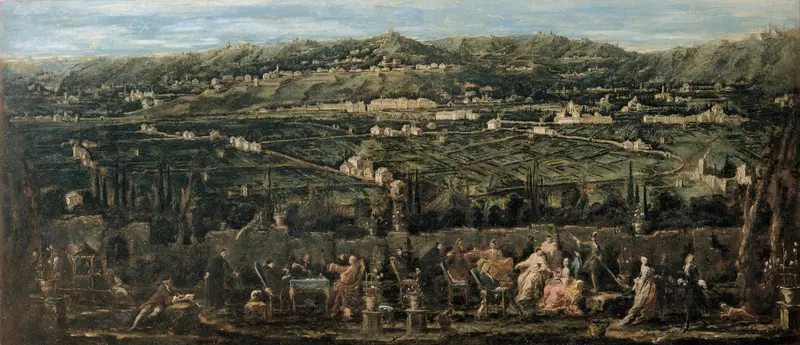
Garden Party in Albaro
Alessandro Magnasco
Saint Jerome in a Landscape
Alessandro Magnasco





