
Saint Jerome in a Landscape — History & Facts
What first draws the eye in Saint Jerome in a Landscape is not the figure, but the vast, wild sweep of nature that nearly engulfs him. Only after the viewer’s gaze has wandered through the tangled trees and luminous, cloud-streaked sky does Saint Jerome emerge, hunched in the shadowed foreground, almost swallowed by the earth itself. His bare back and bowed head speak of penance and humility, while the scattered skull and open book at his side signal the tools of his contemplation—reminders of mortality and the search for divine truth.
The landscape is not a mere backdrop but a living presence, its rough textures and restless brushwork echoing the saint’s own spiritual struggle. The light, breaking through the foliage and illuminating the distant mountains, draws a line between the world of the flesh and the realm of the spirit. Created by Alessandro Magnasco between 1701 and 1750, this painting belongs to a world where the wilderness was both threat and sanctuary—a fitting stage for the trials of saints and hermits. In early eighteenth-century Italy, such scenes of solitary devotion were favored by patrons seeking reminders of faith’s demands, and Magnasco’s restless, almost feverish style set him apart from his more classical contemporaries.
The painting now resides in the Royal Museum of Fine Arts Antwerp, a testament to the enduring fascination with images that pit the solitary human soul against the immensity of creation. Look again at that tiny, kneeling figure, and the landscape that seems to pulse around him: here, the wilderness is both adversary and companion, as alive as the saint’s own restless heart.
More Artworks by Alessandro Magnasco

The Synagogue
Alessandro Magnasco
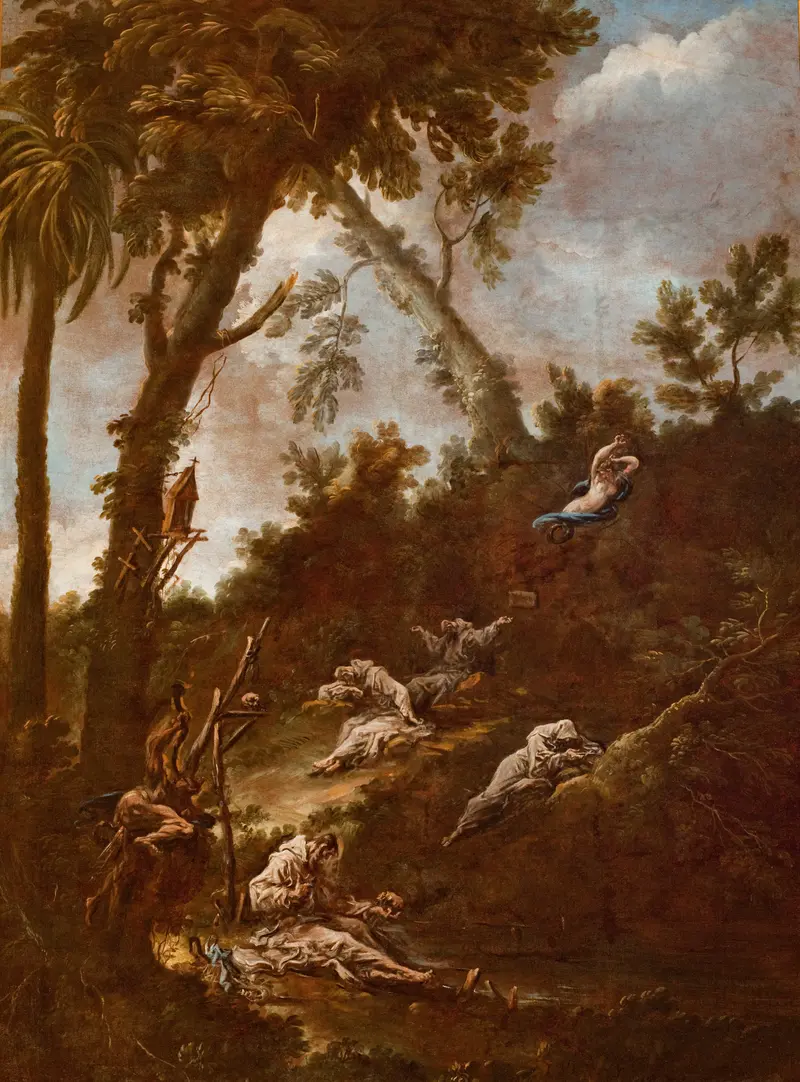
Hermits (Anachorets)
Alessandro Magnasco
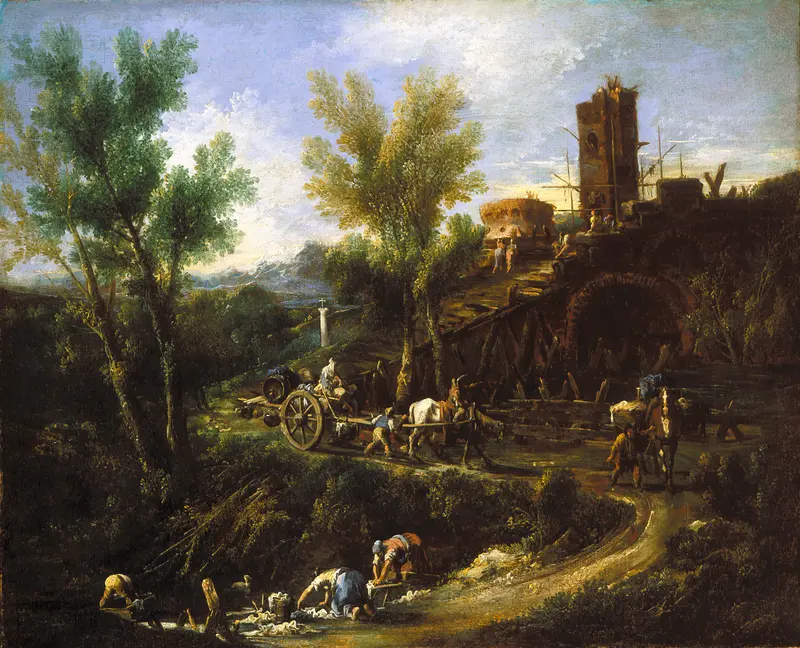
Landscape with Gypsies and Washerwomen
Alessandro Magnasco
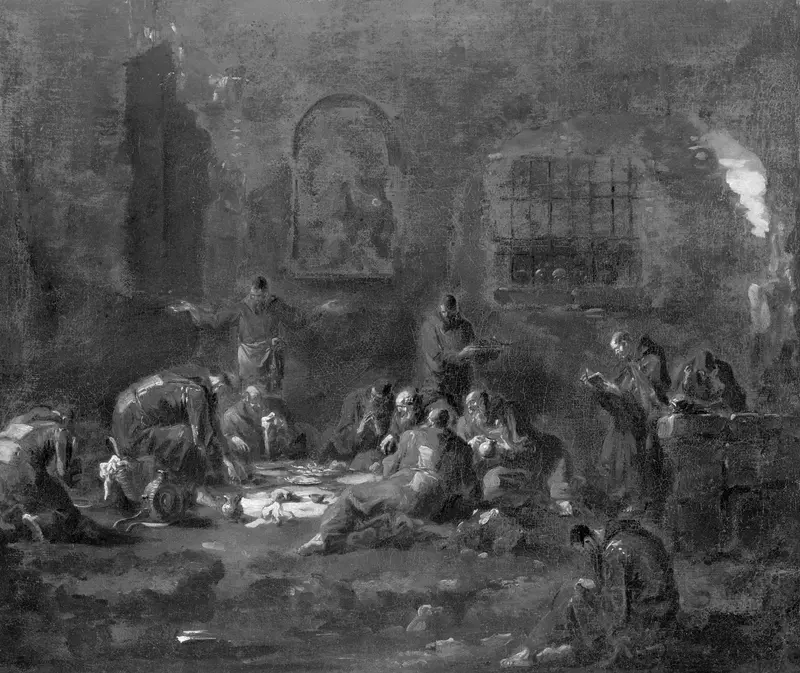
Monks at Supper
Alessandro Magnasco
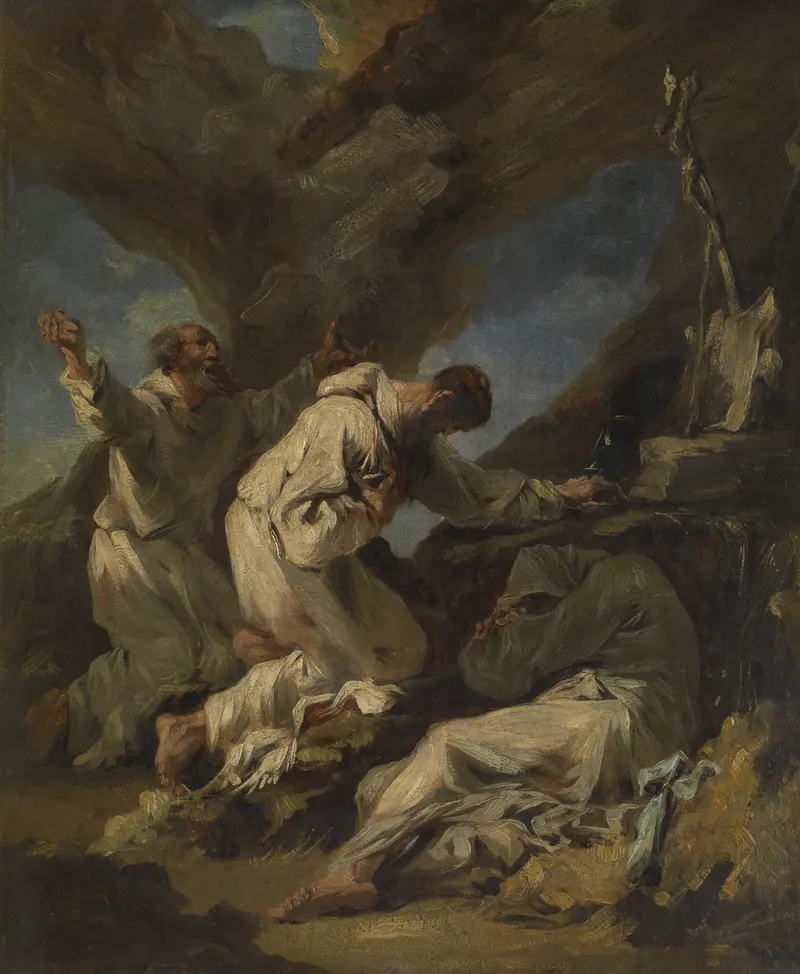
Praying Monks
Alessandro Magnasco
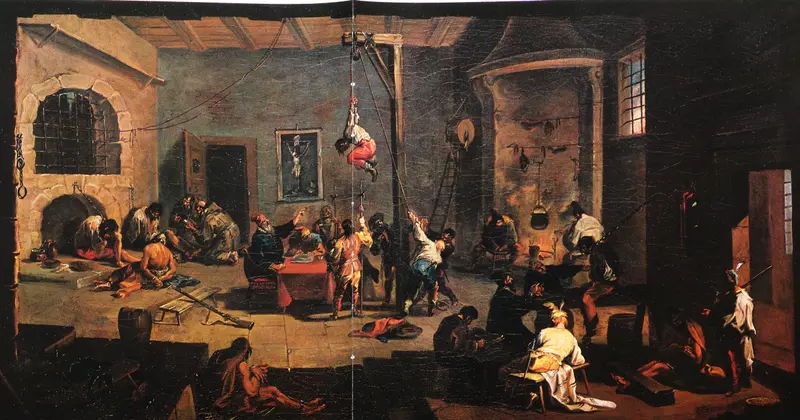
Torture Scene
Alessandro Magnasco
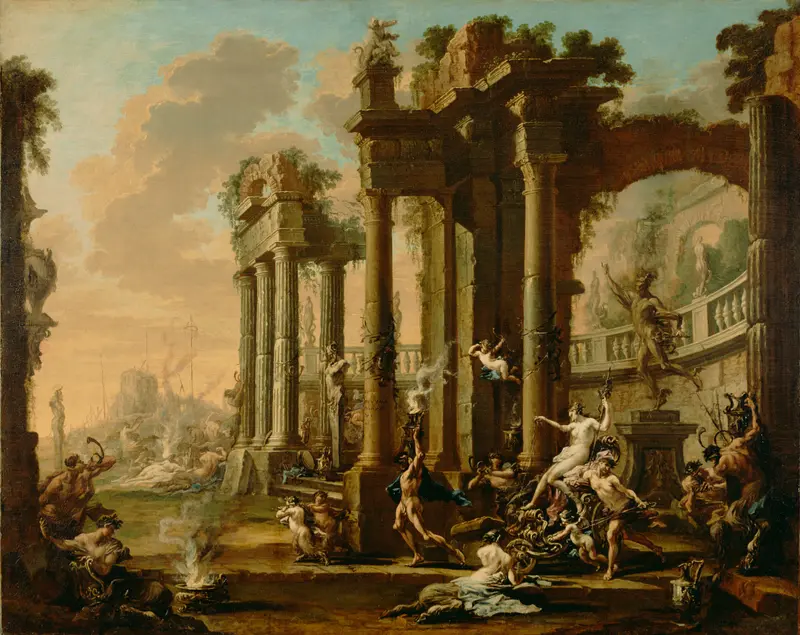
The Triumph of Venus
Alessandro Magnasco
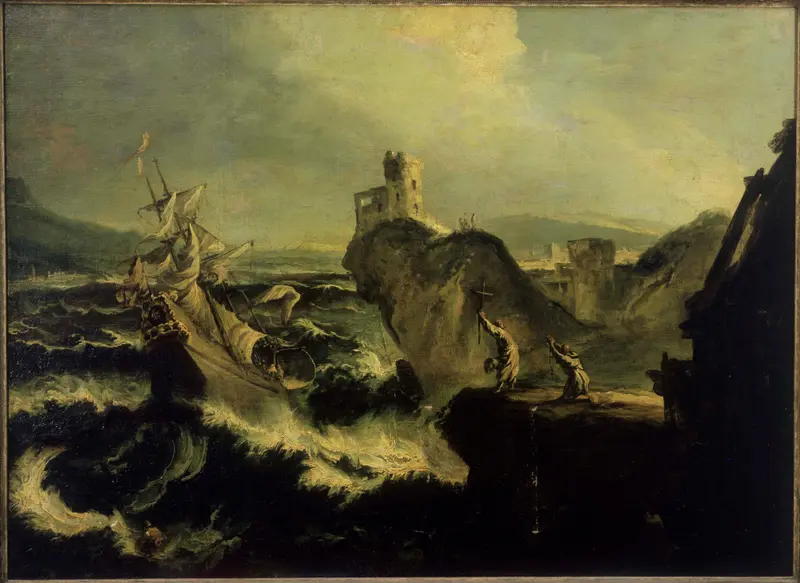
The Shipwreck
Alessandro Magnasco
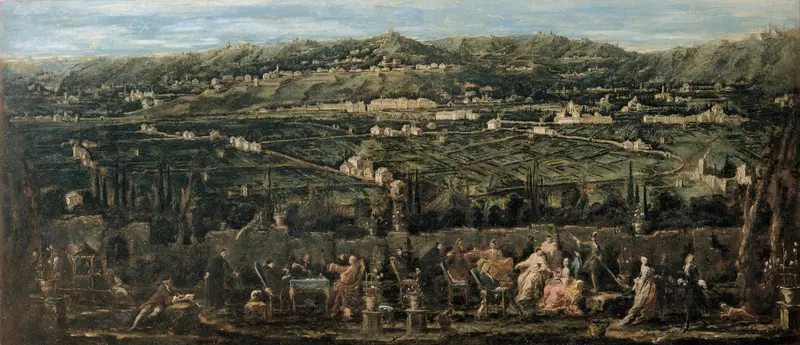
Garden Party in Albaro
Alessandro Magnasco
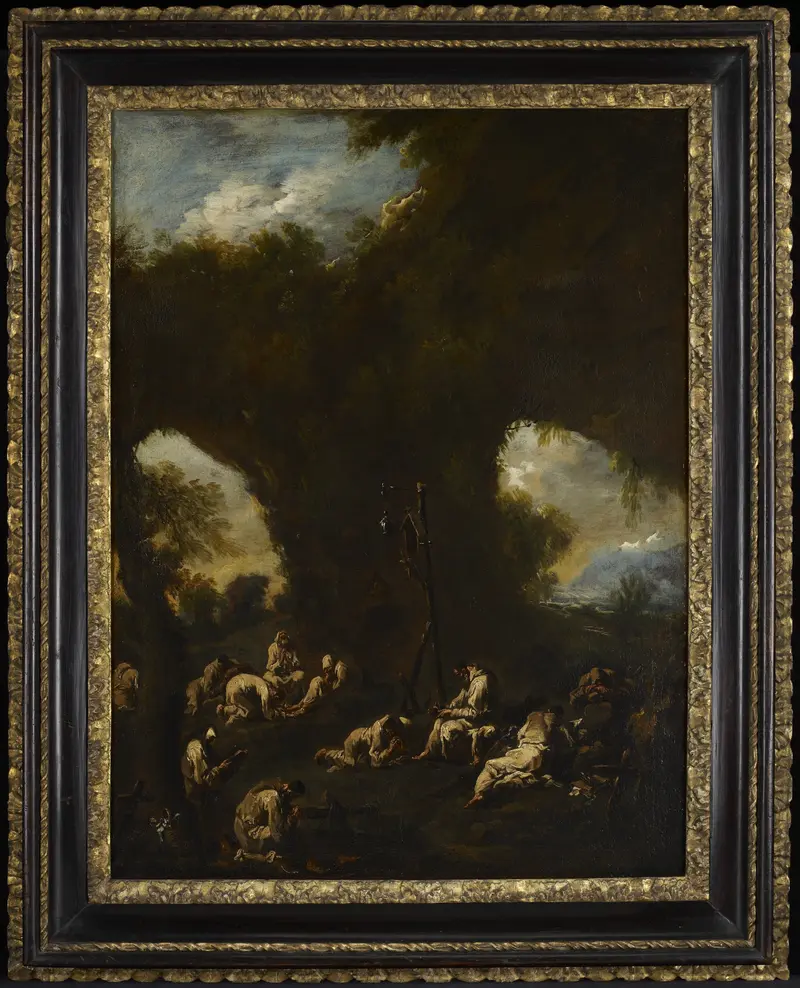
Monks Praying in a Grotto
Alessandro Magnasco





