
Praying Monks — History & Facts
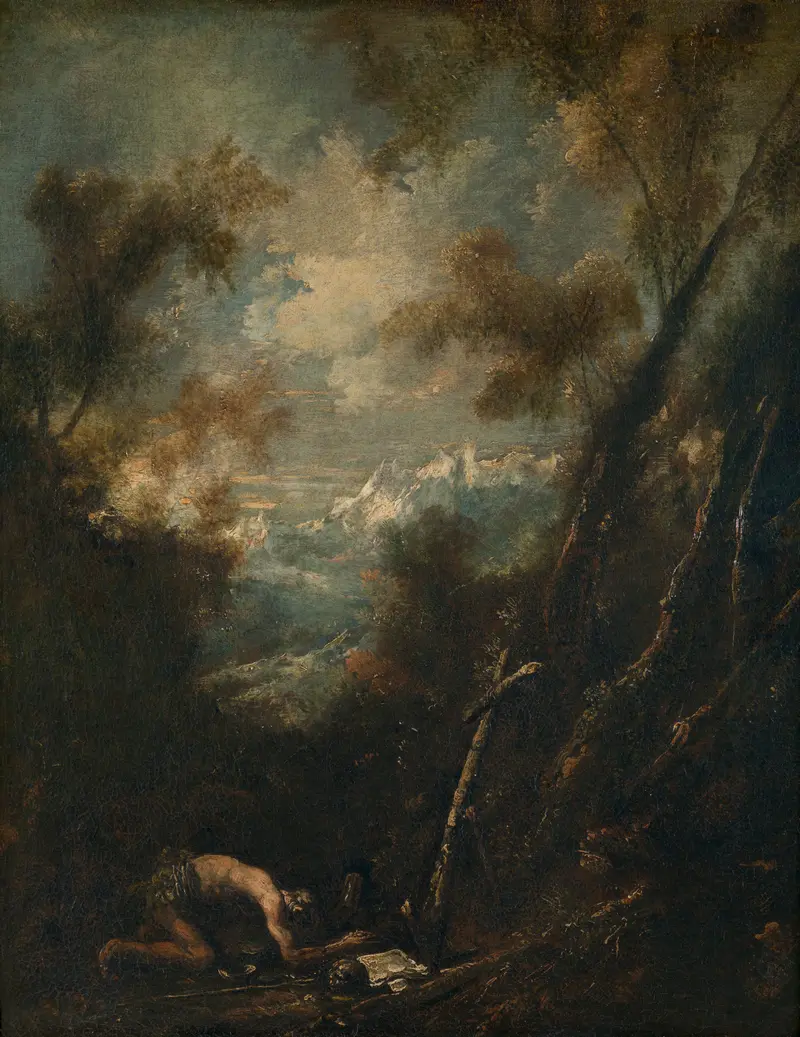
What first seizes the eye in Praying Monks is the wild, swirling energy that seems to animate even the shadows. Three figures, draped in rough white habits, are gathered in fervent prayer beneath a storm-dark sky. One monk throws his arms wide as if wrestling with the heavens, another bows so low his forehead nearly touches the stone altar, while the third collapses inward, face hidden, body curled tight in private agony or ecstasy.
The brushwork is restless, almost feverish; every fold of cloth and twist of limb catches the light in jagged streaks, as if the very act of devotion has unsettled the world around them. A crude wooden cross rises from the rocks, stark and skeletal, drawing the eye upward and anchoring the scene in its spiritual urgency. This is the world of eighteenth-century Italy, where artists like Alessandro Magnasco found drama not in grand cathedrals but in the rawness of human faith. Magnasco’s monks are not serene; their prayers are desperate, their bodies tense, their surroundings harsh and elemental.
Such paintings were often commissioned for private devotion or monastic spaces, meant to inspire contemplation of the extremes of spiritual experience. The date—mid-eighteenth century—places this work at the end of the Baroque era, when religious painting was shifting from theatrical spectacle to more personal, psychological realms. Today, Praying Monks resides in the collection of MSK Gent, a reminder that history has preserved not only the triumphs of faith, but also its struggles and storms.
Let your gaze linger on the restless hands and haunted faces—Magnasco invites you to feel the prayer, not just see it.
Sources: Wikidata Q21676545 · Image source (Wikimedia Commons)
More Artworks by Alessandro Magnasco

The Synagogue
Alessandro Magnasco
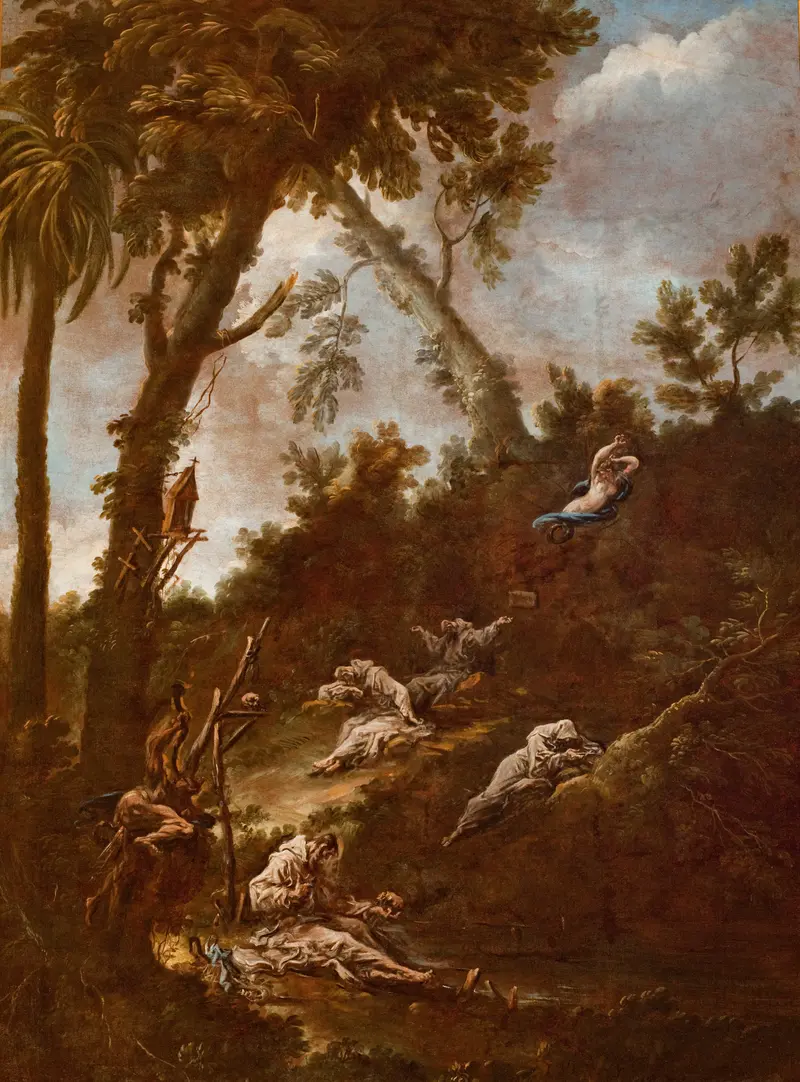
Hermits (Anachorets)
Alessandro Magnasco
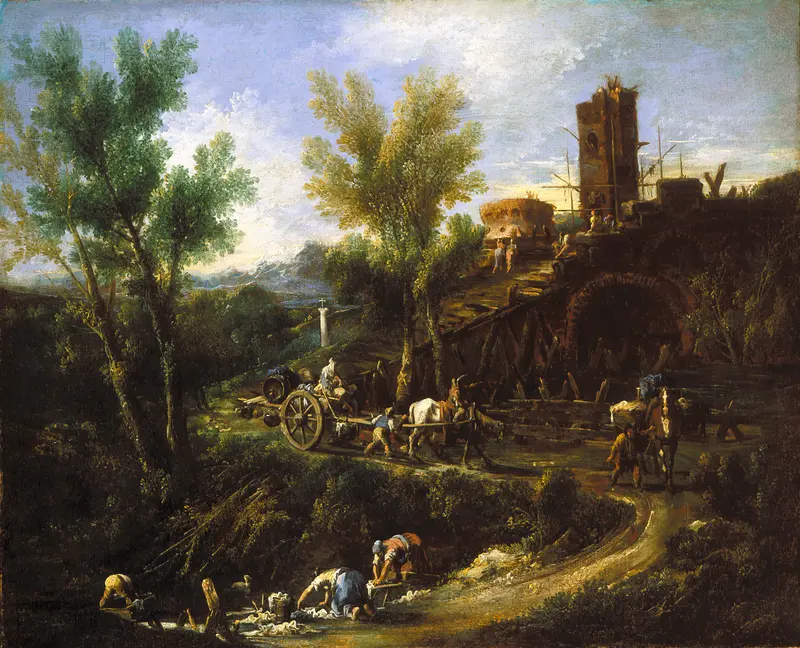
Landscape with Gypsies and Washerwomen
Alessandro Magnasco
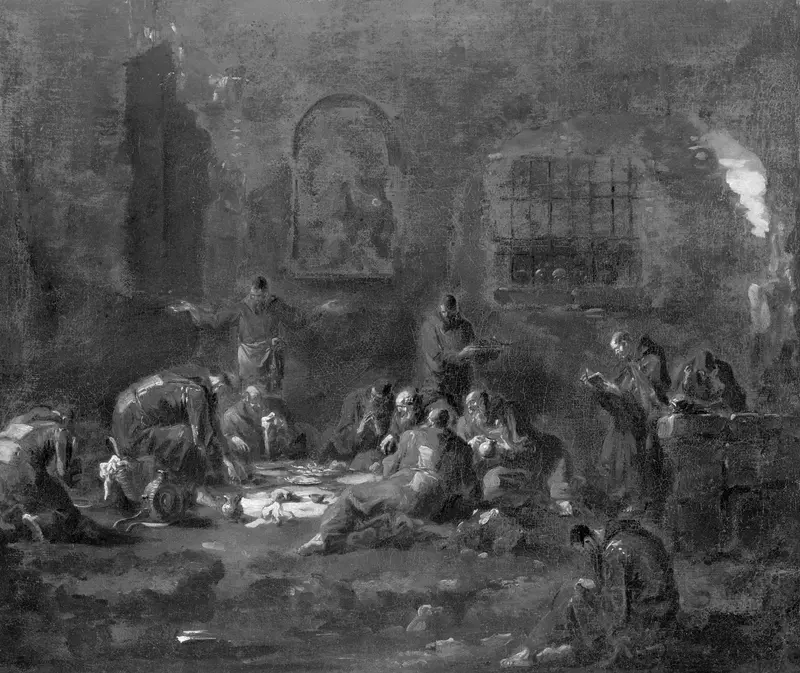
Monks at Supper
Alessandro Magnasco
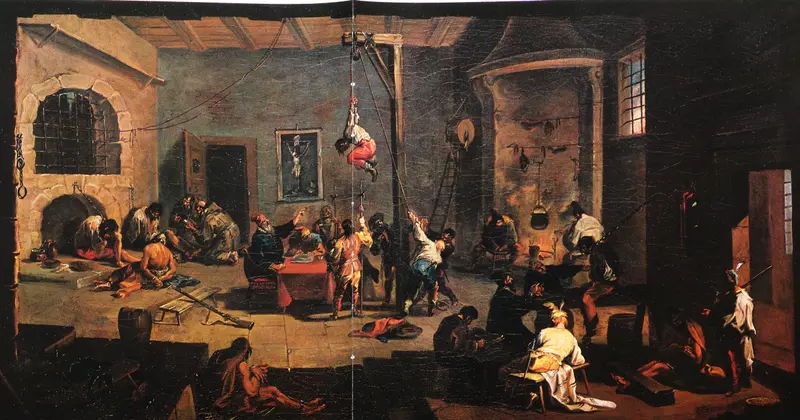
Torture Scene
Alessandro Magnasco
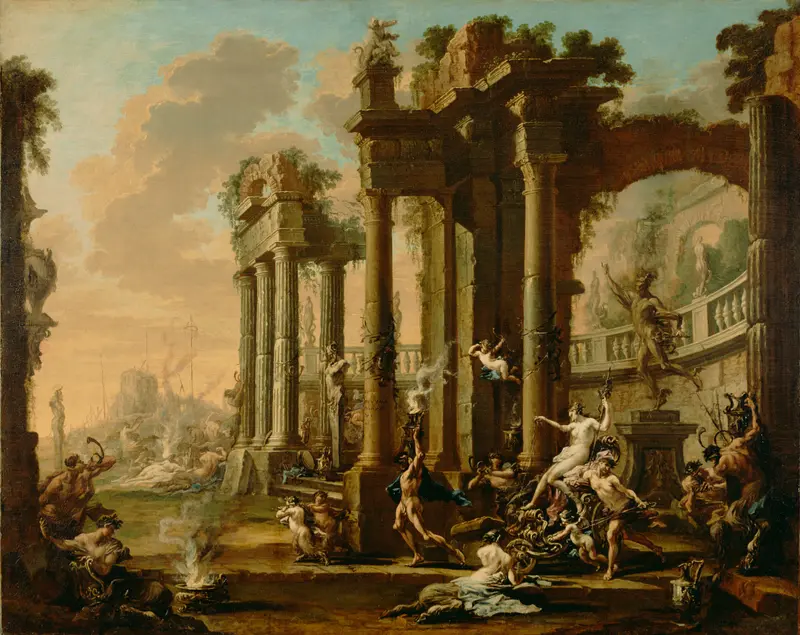
The Triumph of Venus
Alessandro Magnasco
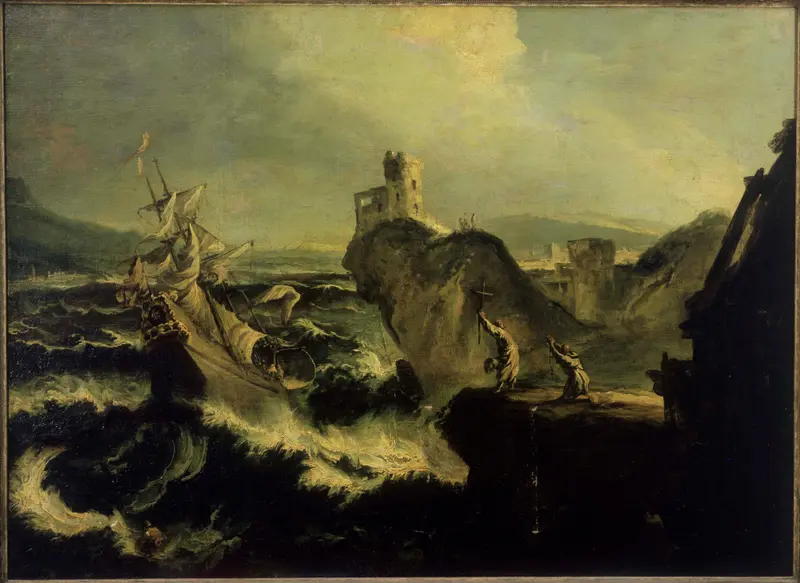
The Shipwreck
Alessandro Magnasco
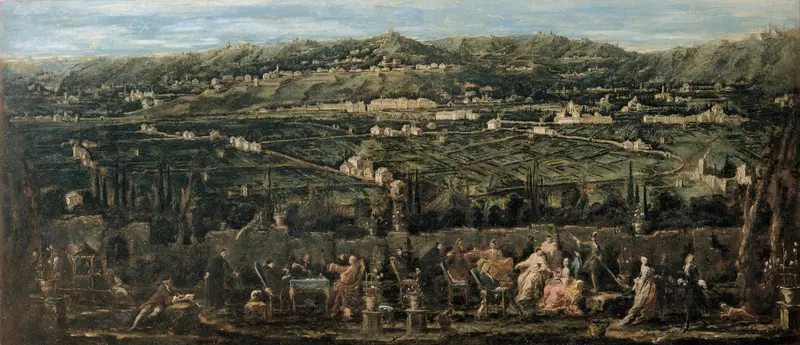
Garden Party in Albaro
Alessandro Magnasco
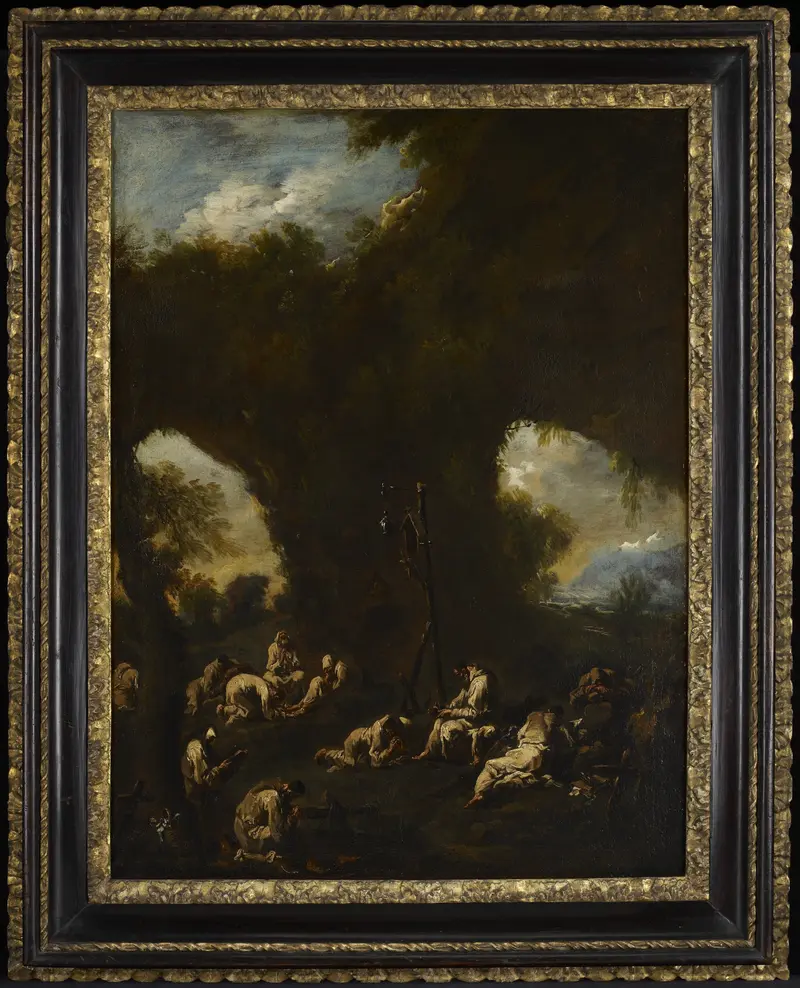
Monks Praying in a Grotto
Alessandro Magnasco
Saint Jerome in a Landscape
Alessandro Magnasco





