
Moonrise — History & Facts
In the stillness of twilight, the world holds its breath, cradling a beauty that transcends the mundane. It is in this quiet moment that we discover the transformative power of nature, an invitation to witness the delicate interplay between light and shadow. Focus your gaze on the ethereal glow of the moon as it rises, illuminating the landscape with a soft luminescence. The palette is rich yet subdued, with deep blues blending into the warm hues of the horizon.
Notice how the wispy clouds dance around the moon, their edges softly catching glimmers of light, while the dark silhouettes of trees frame the scene, creating a sense of depth and intimacy. The brushwork reveals a masterful technique; each stroke seems to echo the gentle rustle of leaves in the evening breeze. As you contemplate the scene, consider the emotional resonance of day giving way to night. The moon’s ascent symbolizes hope and the cyclical nature of life, a quiet reminder that beauty exists even in transition.
The contrast between the darkening foreground and the illuminated sky speaks to the duality of existence — tranquility amidst uncertainty. This delicate tension draws the viewer into a moment that feels both fleeting and eternal. In 1891, George Inness painted this work during a period marked by personal reflection and a deepening connection to nature. Living in New Jersey, he was inspired by the American landscape and influenced by the ideas of transcendentalism.
At a time when the art world was rapidly evolving, he sought to capture an essence of beauty that transcended mere representation, focusing instead on the spiritual and emotional experiences evoked by the natural world.
More Artworks by George Inness
Browse all →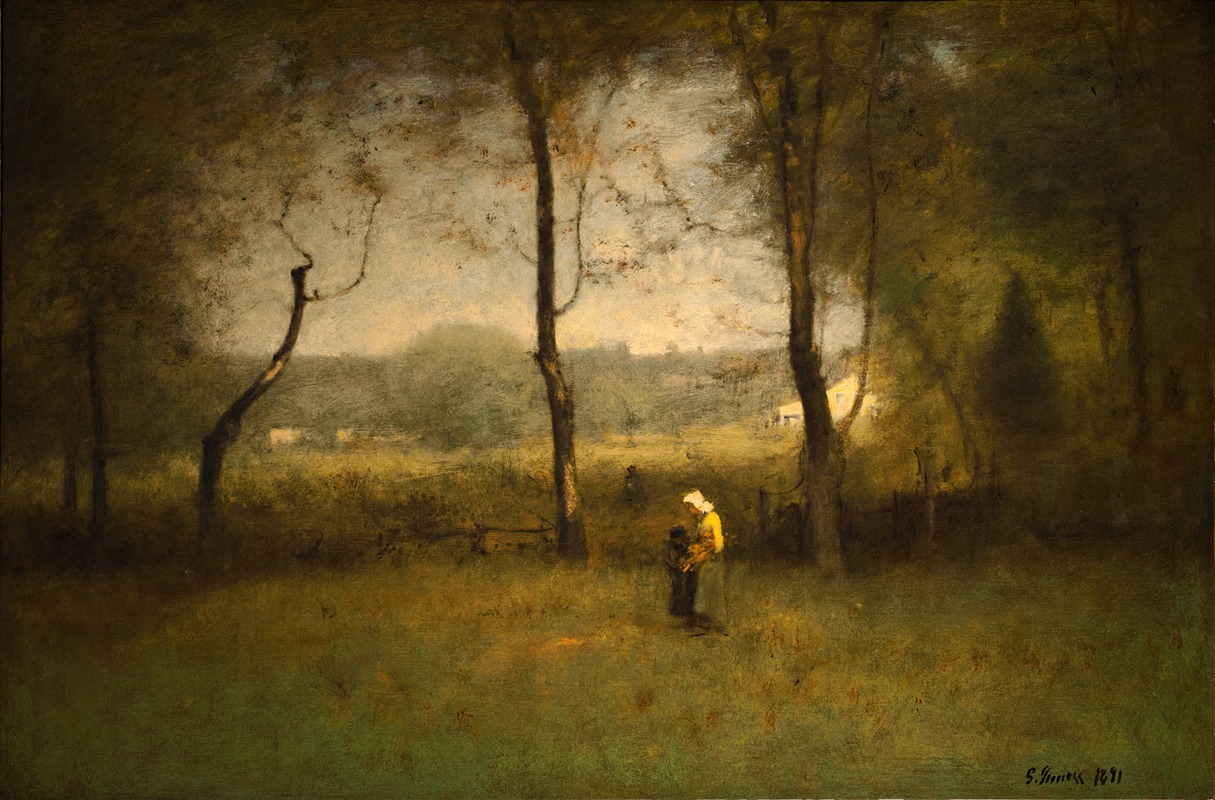
Autumn Woods
George Inness
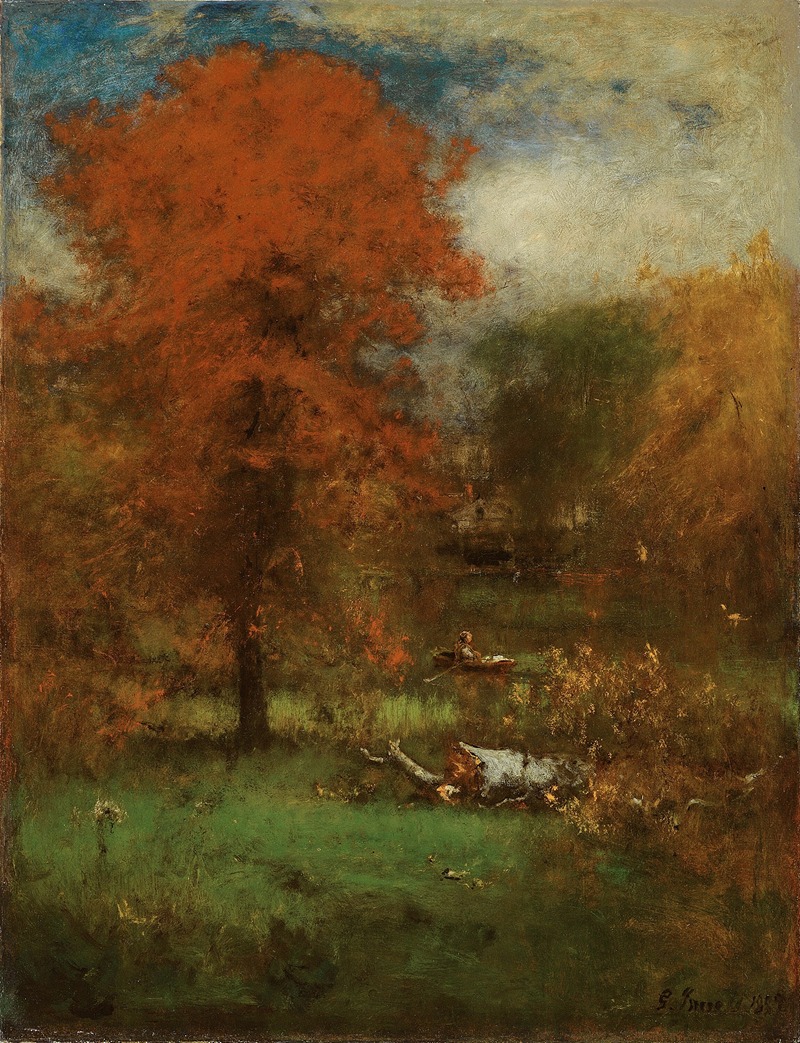
The Mill Pond
George Inness
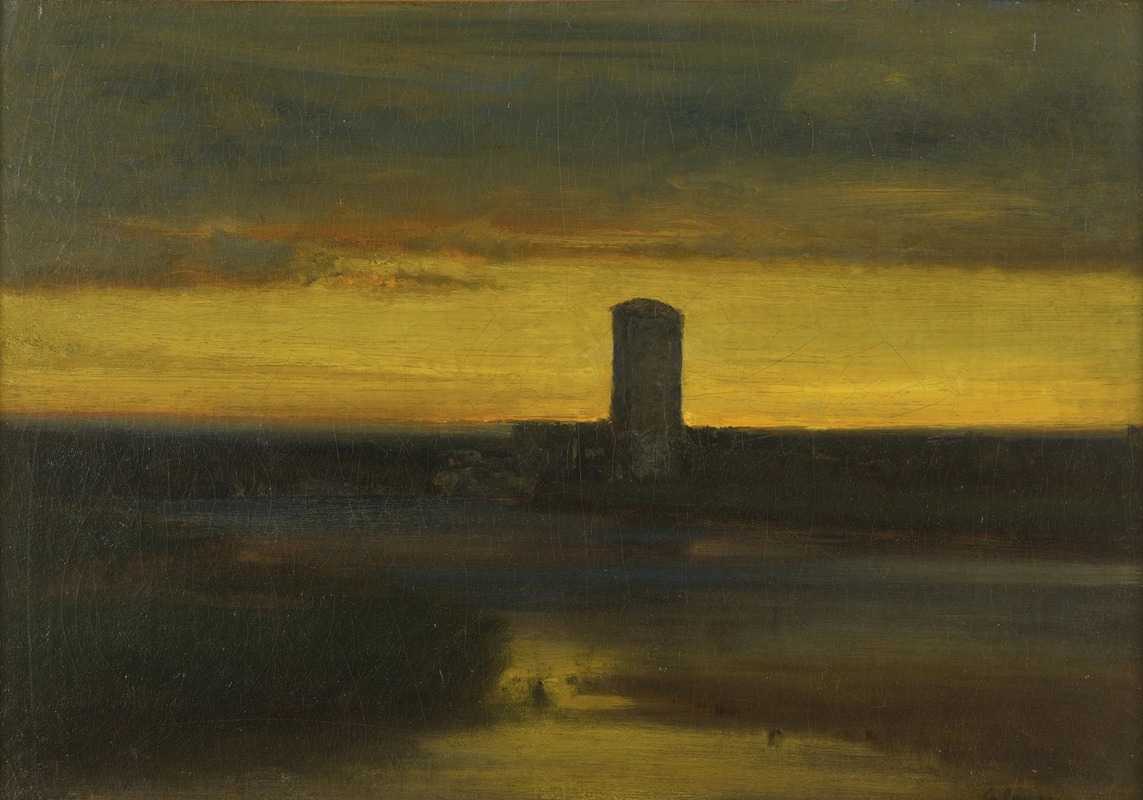
Afterglow
George Inness
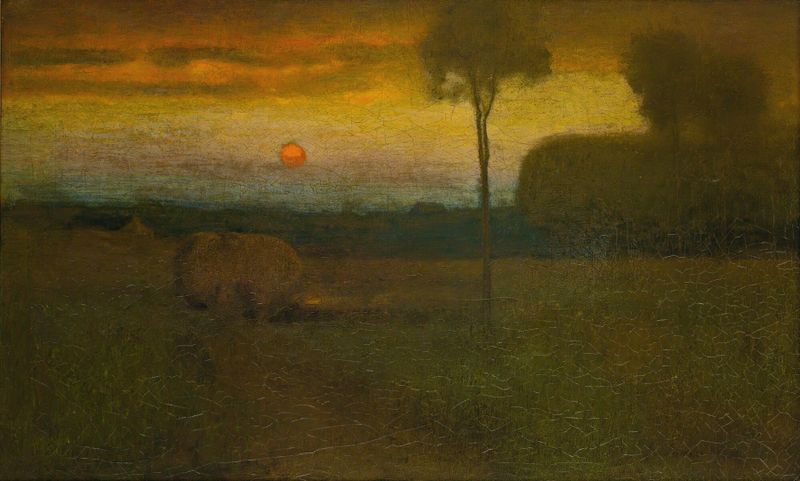
Landscape (Evening Landscape)
George Inness

Montclair
George Inness

View in Berkshire County, Massachusetts, Clearing Off after a September Storm
George Inness

October
George Inness
Landscape, Sunset
George Inness
Afterglow
George Inness
Catskill Mountains
George Inness





