Murnau – View over the Staffelsee — History & Analysis
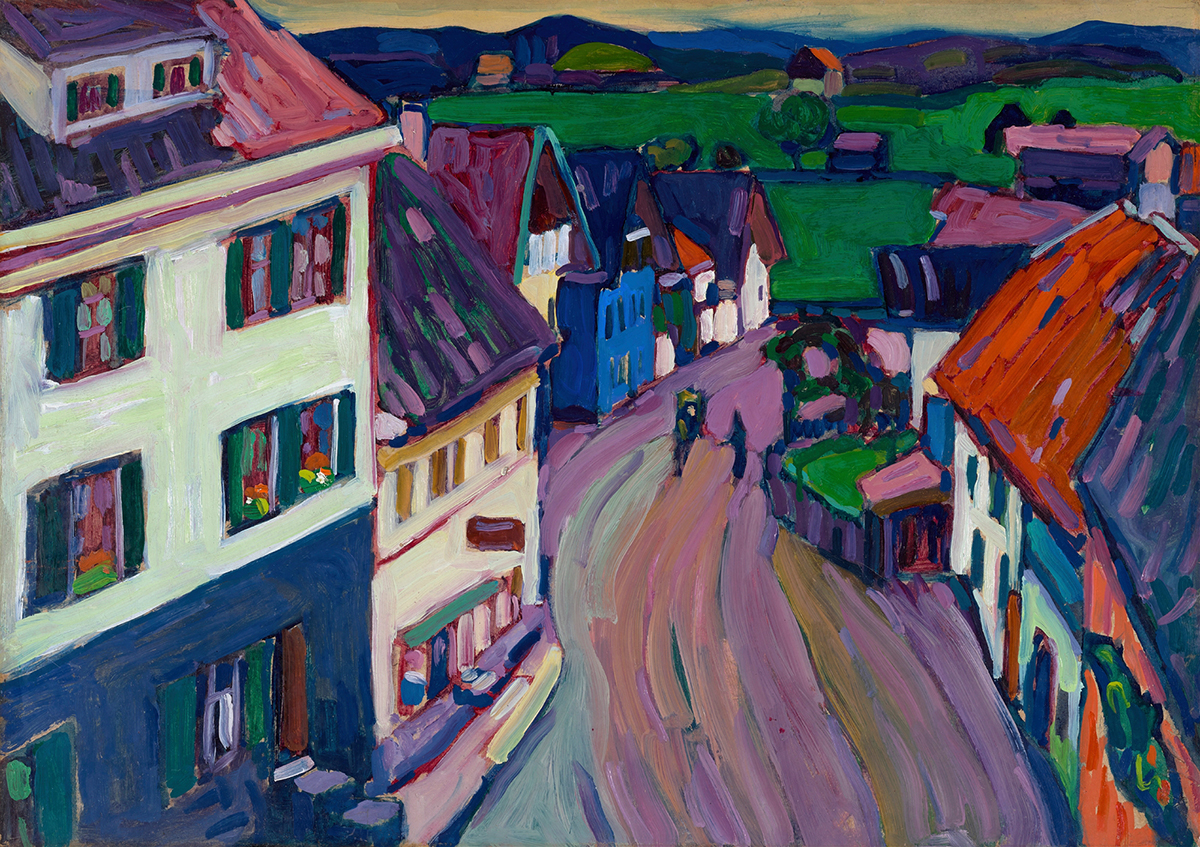
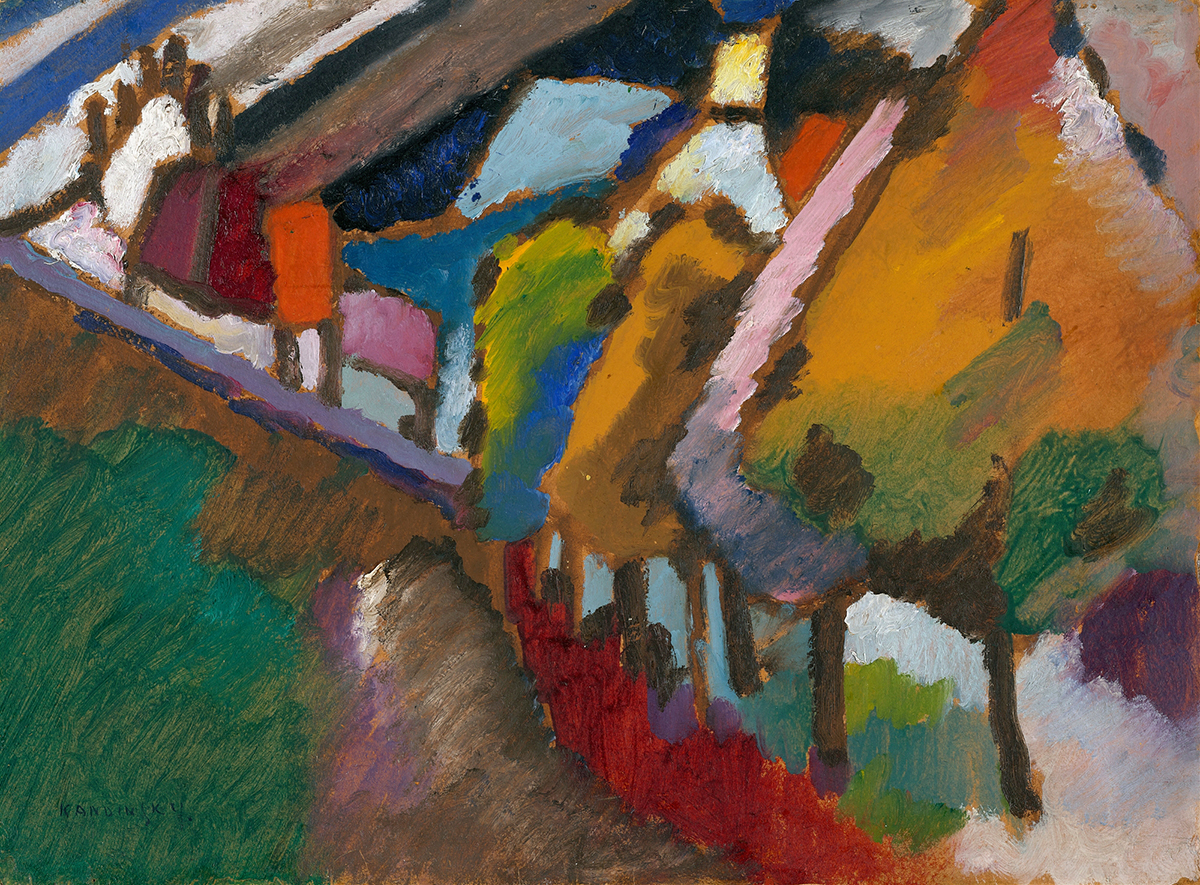
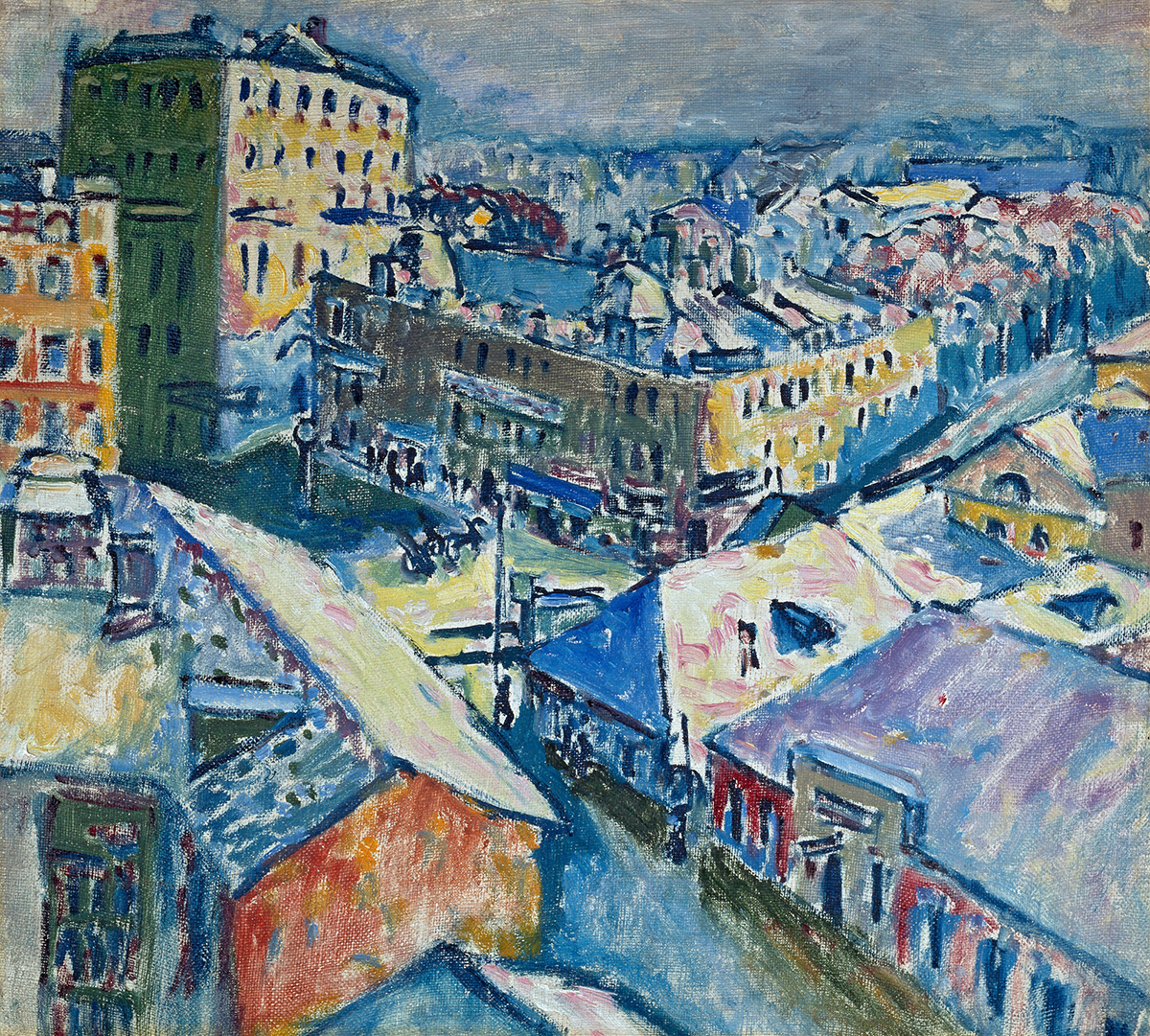
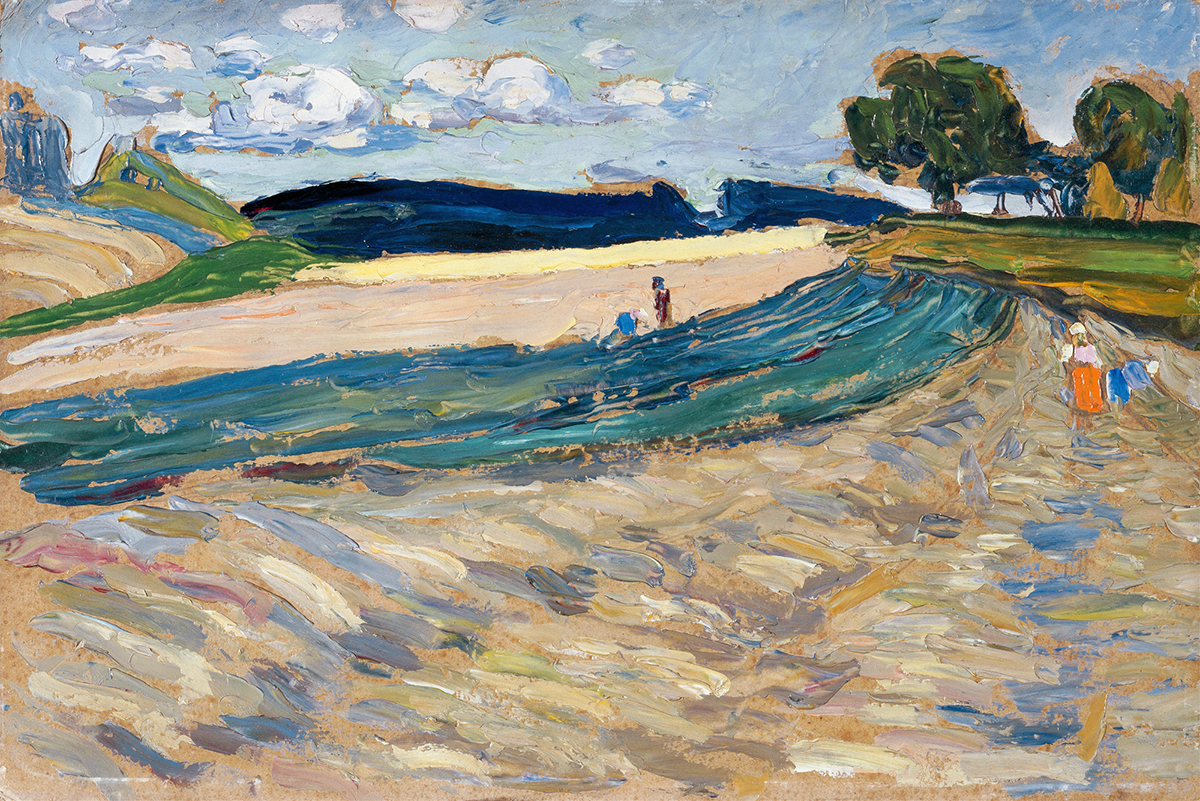
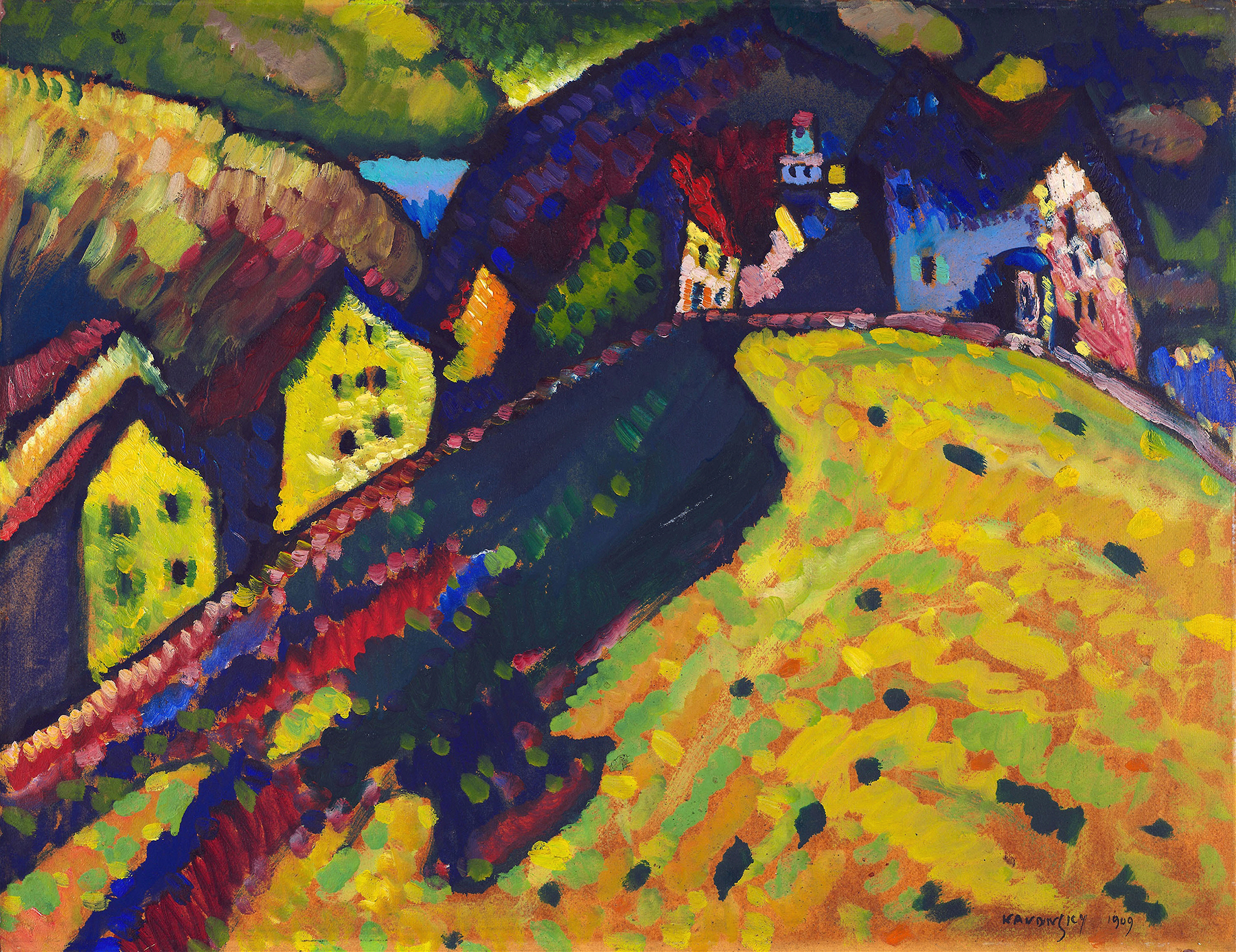
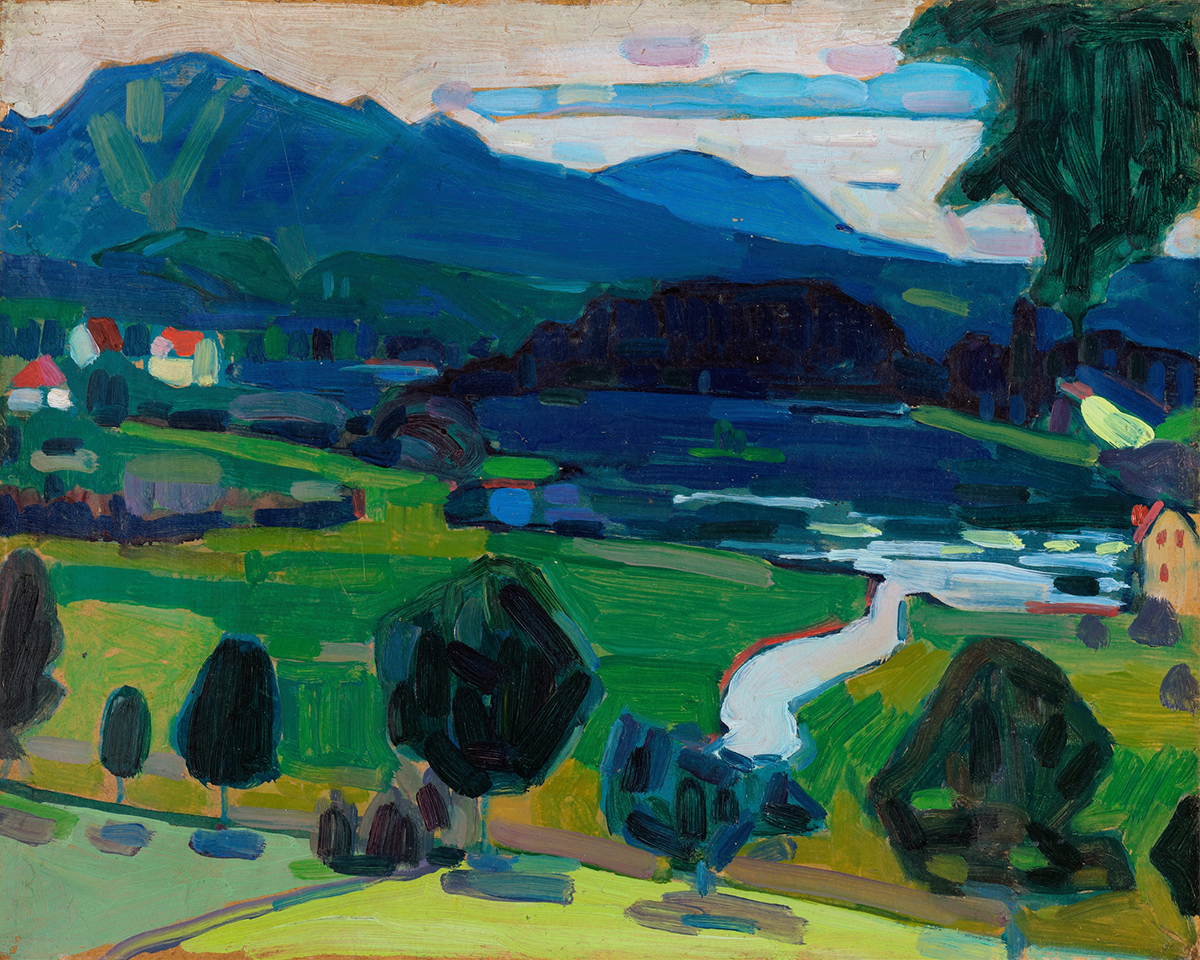
What secret hides in the quiet of the canvas? In Murnau – View over the Staffelsee, Kandinsky captures a moment of ecstatic stillness, inviting us to transcend the mundane and delve into the vibrancy of nature. Look to the left at the bold strokes of deep blue that form the tranquil waters of the Staffelsee, their rhythmic undulations echoing the serene landscape. Notice how the gentle rise of ochre hills meets the horizon, bathed in a warm golden light.
Each color pulsates with emotion, creating a symphony that draws the eye across the canvas, guiding us through the harmonious interplay of form and color. The layered textures and abstracted shapes suggest a dreamlike atmosphere, blending reality with a deeper resonance. Beneath the surface, the contrast between the stillness of water and the dynamic energy of the hills evokes an emotional tension, a dialogue between peace and excitement. The interplay of light and shadow not only reflects the landscape's physicality but also hints at the spiritual ecstasy Kandinsky experienced in nature.
This intermingling of abstraction and representation reveals a world where the viewer can lose themselves, suggesting that what is unseen can often be more profound than the visible. In 1908, Kandinsky painted this artwork in Murnau, a small town in Bavaria, while immersed in the burgeoning movement of abstraction. During this period, he was exploring the profound connections between color and emotional expression, laying the groundwork for his future innovations in abstract art. This painting marks a pivotal moment in his career, blending his fascination with nature and spiritual transcendence.