
Murnau – View with Railway and Castle — History & Facts
A black locomotive cuts across the foreground, its silhouette sharp and urgent against a riot of color that feels almost musical. The train’s shadowed bulk is thrown into relief by the bright, patchwork fields and the jagged, sunlit forms of a distant castle. Two telegraph poles stand sentinel, their white insulators echoing the dashes of clouds and the kinetic streaks of steam, as if the whole scene is caught in a rush of movement and invention.
The artist’s brushwork is bold and immediate, each stroke a signal of energy and transformation; the landscape itself seems to vibrate with the passing train, as if the world is being remade in its wake. Painted in 1909, this work belongs to a moment when artists like Wassily Kandinsky were pushing the boundaries of representation, searching for new ways to capture the pulse of modernity. The village of Murnau, with its medieval castle, becomes a stage where tradition and progress collide: the old world rendered in blazing yellows and greens, the new world racing past in inky silhouette. Such scenes were not made for aristocratic salons but for a public fascinated by speed, technology, and the changing face of Europe.
The painting’s vibrant palette and abstracted forms speak to the birth of Expressionism, a movement that sought to show not just what the eye sees, but what the spirit feels. The year and the artist’s restless experimentation invite us to look again, to see the landscape not as a backdrop, but as a living, surging force.
More Artworks by Wassily Kandinsky
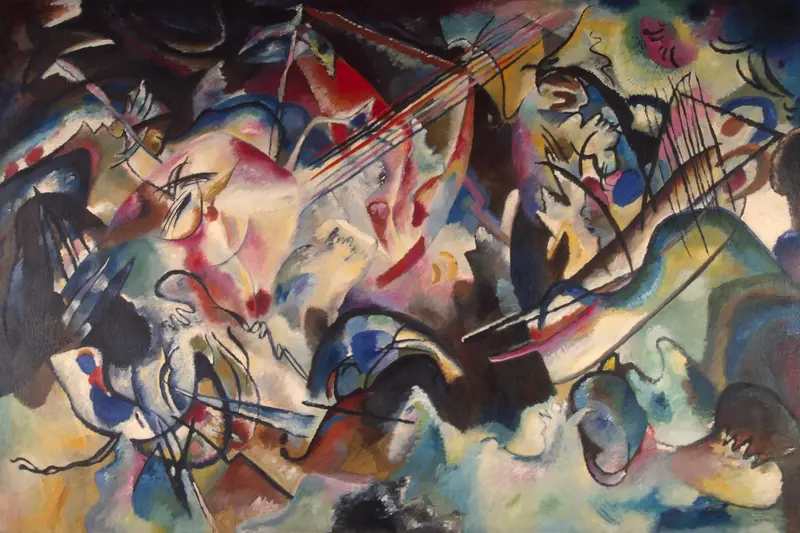
Composition VI
Wassily Kandinsky

Improvisation 35
Wassily Kandinsky
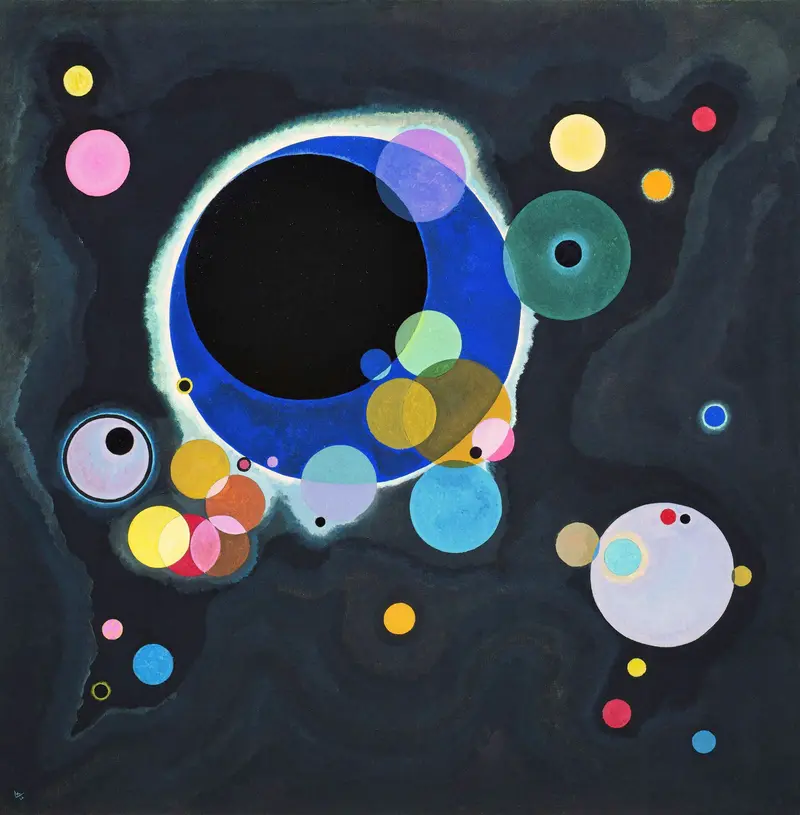
Several Circles
Wassily Kandinsky

Murnau
Wassily Kandinsky
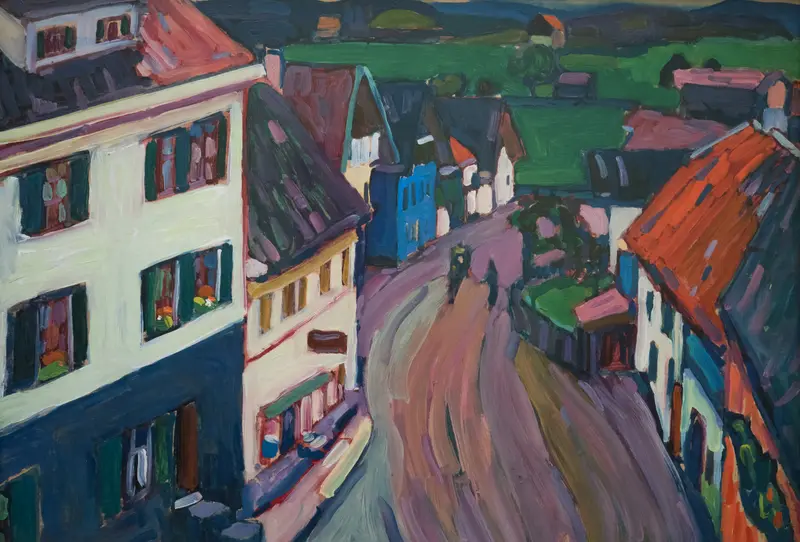
Murnau – View from the window of the Griesbräu
Wassily Kandinsky
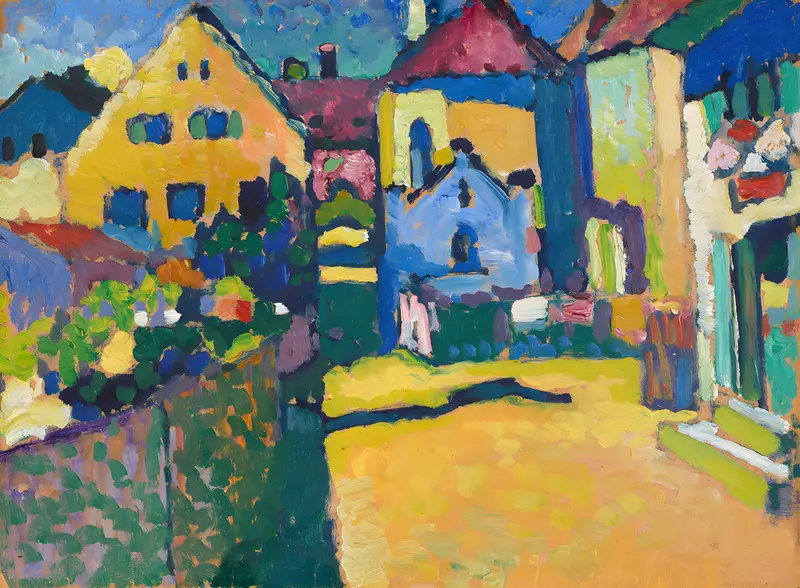
Green Lane in Murnau
Wassily Kandinsky
Jocular Sounds
Wassily Kandinsky

Zubovsky Platz
Wassily Kandinsky

Landscape with a yellow field
Wassily Kandinsky
Murnau – Castle and Church
Wassily Kandinsky
More Landscape Art

Starry Night
Vincent van Gogh

View of Delft
Johannes Vermeer

Water Lilies
Claude Monet

The Grand Canal, Venice, looking north-west from the Ca' Corner to the Ca' Contarini degli Scrigni, with the campanile of Santa Maria della Carità
Canaletto

Windsor Castle
Canaletto

The Grand Canal looking North-East from the Palazzo Dolfin-Manin to the Rialto Bridge
Canaletto