
Napoleon op St. Helena — History & Facts
A figure sits alone at dusk, nearly swallowed by shadow, while a handful of ducks drift quietly across a pool in the foreground. The last line of sunset glows faintly on the horizon, dividing the heavy, clouded sky from the darkening land. The sitter’s face is hidden beneath the brim of a hat, his posture slumped, hands resting in his lap—every detail conspires to draw the viewer into a mood of solitude and reflection.
The eye lingers on the contrast between the cool gloom enveloping the figure and the thin, persistent band of light, as if the day’s end holds some private reckoning. Even the ducks seem to move with a hushed awareness, their presence a gentle counterpoint to the figure’s stillness. Painted between circa 1826 and 1827, Napoleon op St. Helena by Alexandre-Gabriel Decamps belongs to a moment when Romantic artists sought to capture the psychological landscape as much as the physical one.
The early nineteenth century was an age obsessed with the fate of Napoleon, whose exile and death on St. Helena became a symbol of lost grandeur and the loneliness of power undone. Works like this, now in The Mesdag Collection, offered viewers a space to contemplate not only the fall of empires but the inner exile of the individual.
In this quiet scene, history’s thunder has faded, leaving only the hush of evening and the weight of memory—inviting us to look again, and perhaps to wonder what thoughts linger in the dusk.
More Artworks by Alexandre-Gabriel Decamps

Still Life with Herring, Bread, and Cheese
Alexandre-Gabriel Decamps
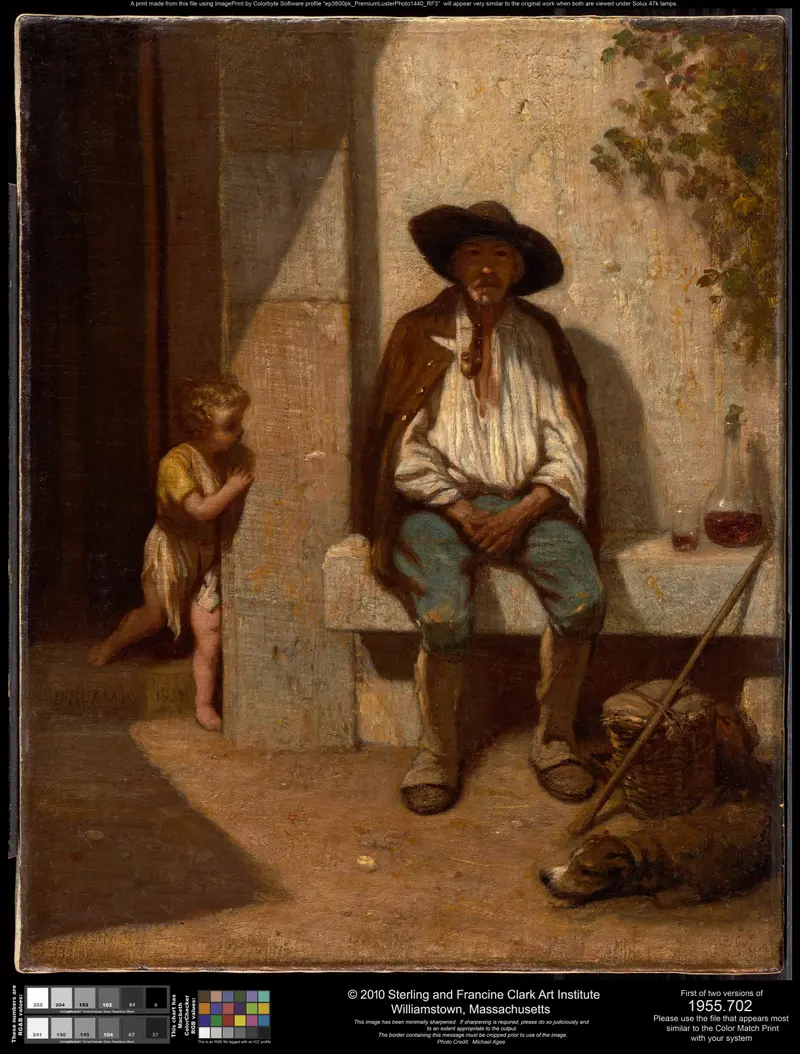
Italian Peasant
Alexandre-Gabriel Decamps
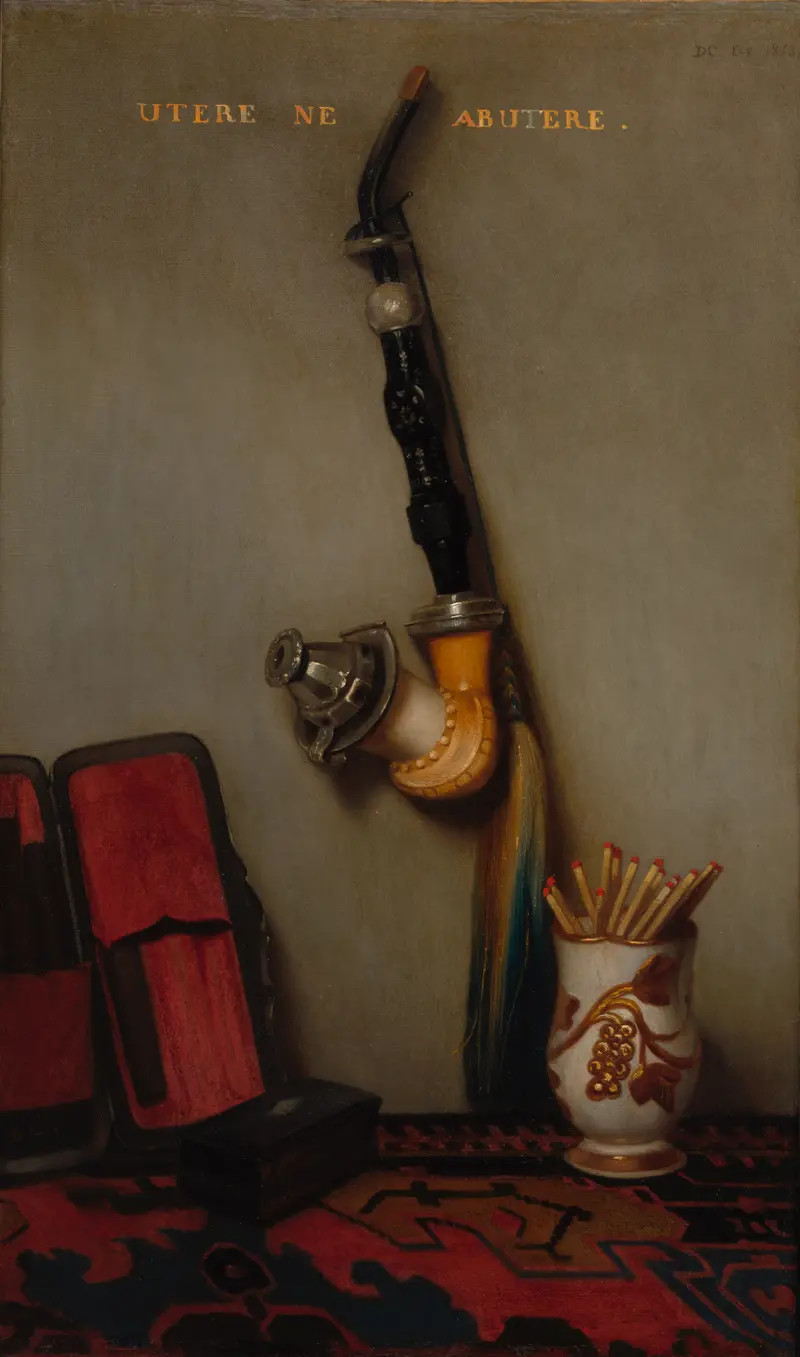
Still Life with Pipe and Matches
Alexandre-Gabriel Decamps
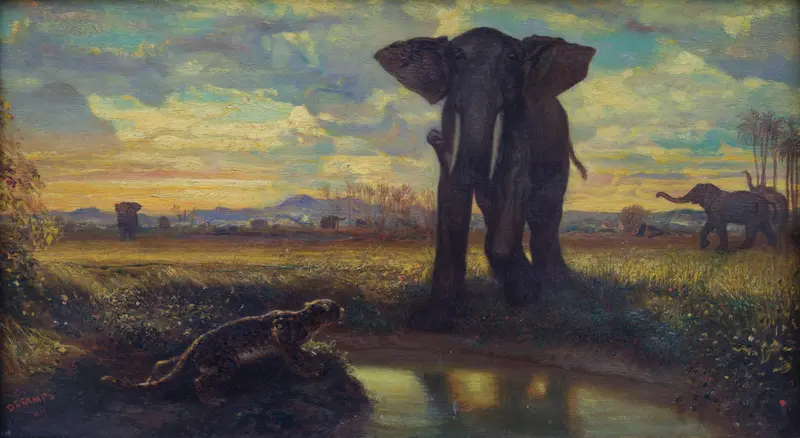
Tigre et éléphant à la source Musée du Louvre Peintures RF
Alexandre-Gabriel Decamps
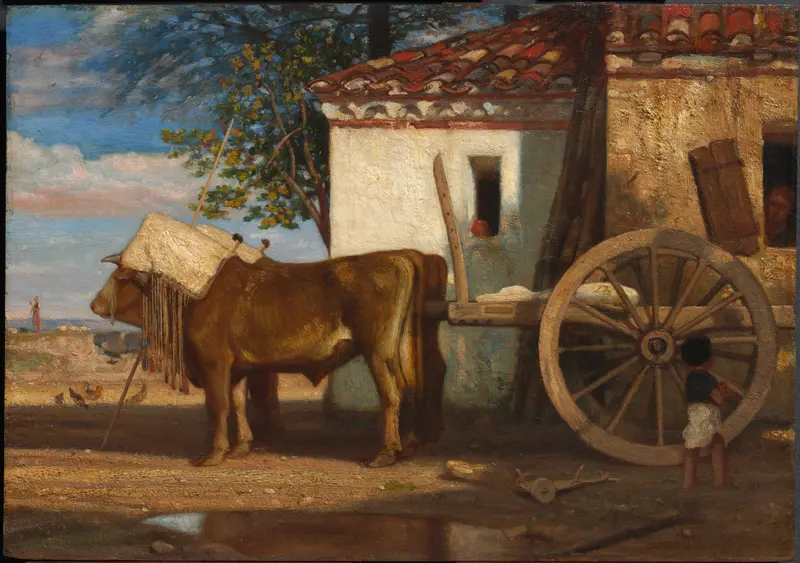
Oxen before a Farmhouse at Le Verrier
Alexandre-Gabriel Decamps
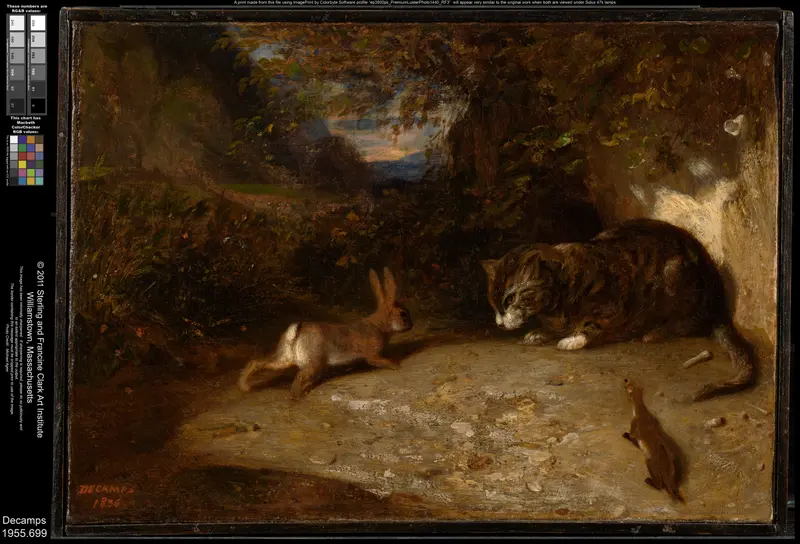
Cat, Weasel, and Rabbit
Alexandre-Gabriel Decamps
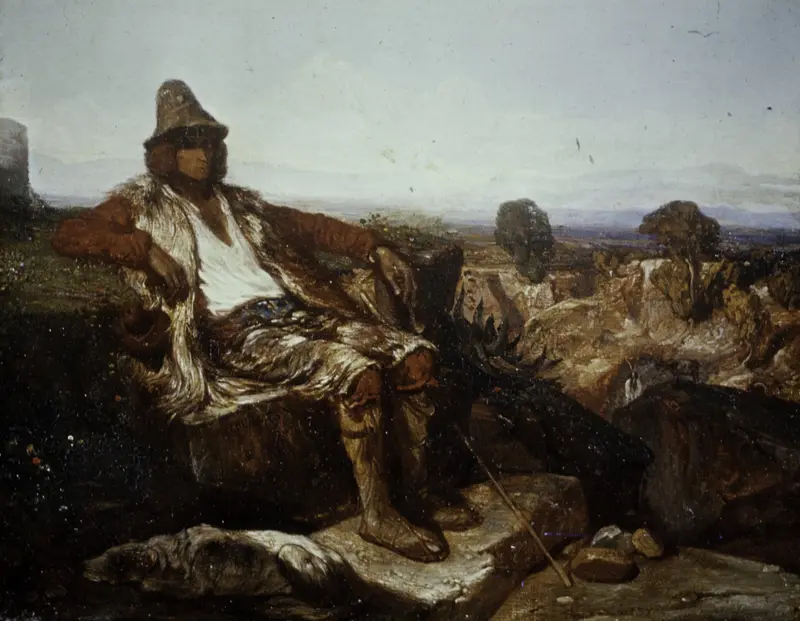
Goatherd of the Abruzzi
Alexandre-Gabriel Decamps
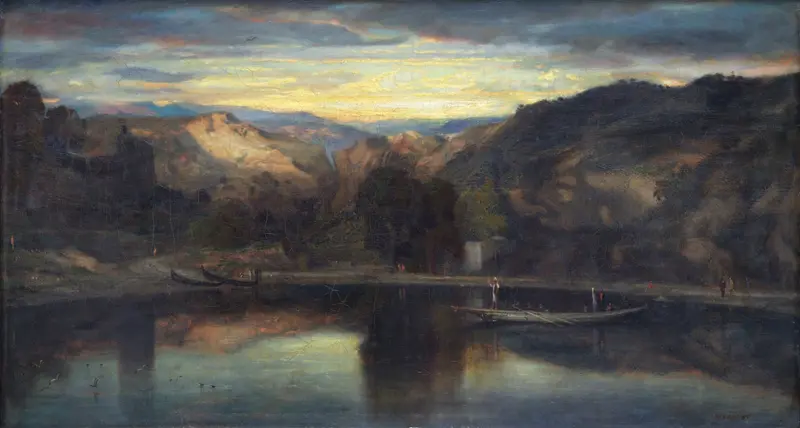
Jésus sur le lac de Génésareth Musée du Louvre Peintures RF
Alexandre-Gabriel Decamps

Espagnols jouant aux cartes Musée du Louvre Peintures RF
Alexandre-Gabriel Decamps
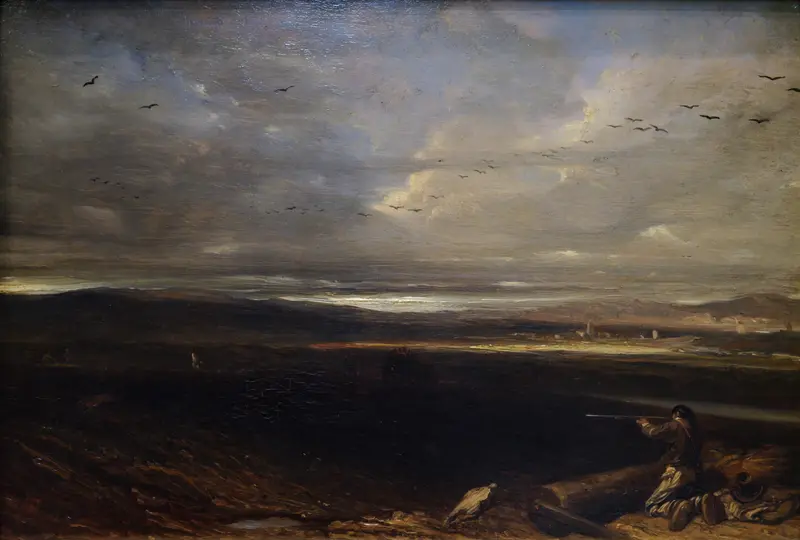
La battue en plaine Musée du Louvre Peintures RF
Alexandre-Gabriel Decamps
More Landscape Art

The Starry Night
Vincent van Gogh

View of Delft
Johannes Vermeer

Water Lilies
Claude Monet

The Grand Canal, Venice, looking north-west from the Ca' Corner to the Ca' Contarini degli Scrigni, with the campanile of Santa Maria della Carità
Canaletto

Windsor Castle
Canaletto

The Grand Canal looking North-East from the Palazzo Dolfin-Manin to the Rialto Bridge
Canaletto