
Noli Me Tangere — History & Facts
A shaft of golden light breaks over the crumbling arches, drawing the eye to a charged encounter at the painting’s heart. In Noli Me Tangere, Alessandro Magnasco sets the drama of recognition and restraint amid ancient ruins that seem to echo with lost voices. The risen Christ, half-shrouded, steps back with a gentle but unyielding gesture, while Mary Magdalene, her body twisted in longing and awe, reaches toward him but cannot touch.
The sweep of her arm and the tilt of her head capture a moment suspended between hope and command—her yearning met by his divine distance. The wild, almost feverish brushwork in the foliage and stone amplifies the tension, as if nature itself is caught in the shock of revelation. Magnasco’s vision is unmistakably his own, restless and theatrical. The ruins—vast, overgrown, and bathed in a restless light—suggest a world where the sacred erupts into the everyday, and the past presses in on the present.
Unlike the serene clarity of a Titian or the measured elegance of a Correggio in their treatments of the same subject, Magnasco’s figures are wiry, their gestures sharp, their setting almost apocalyptic. The angel hovering in the shadows, nearly lost among the stones, hints at the supernatural without dominating the scene. Every detail, from the broken tomb to the wild palm, serves to heighten the sense of a world on the edge of transformation—inviting the viewer to linger, to search for meaning in the ruins and the light.
More Artworks by Alessandro Magnasco

The Synagogue
Alessandro Magnasco
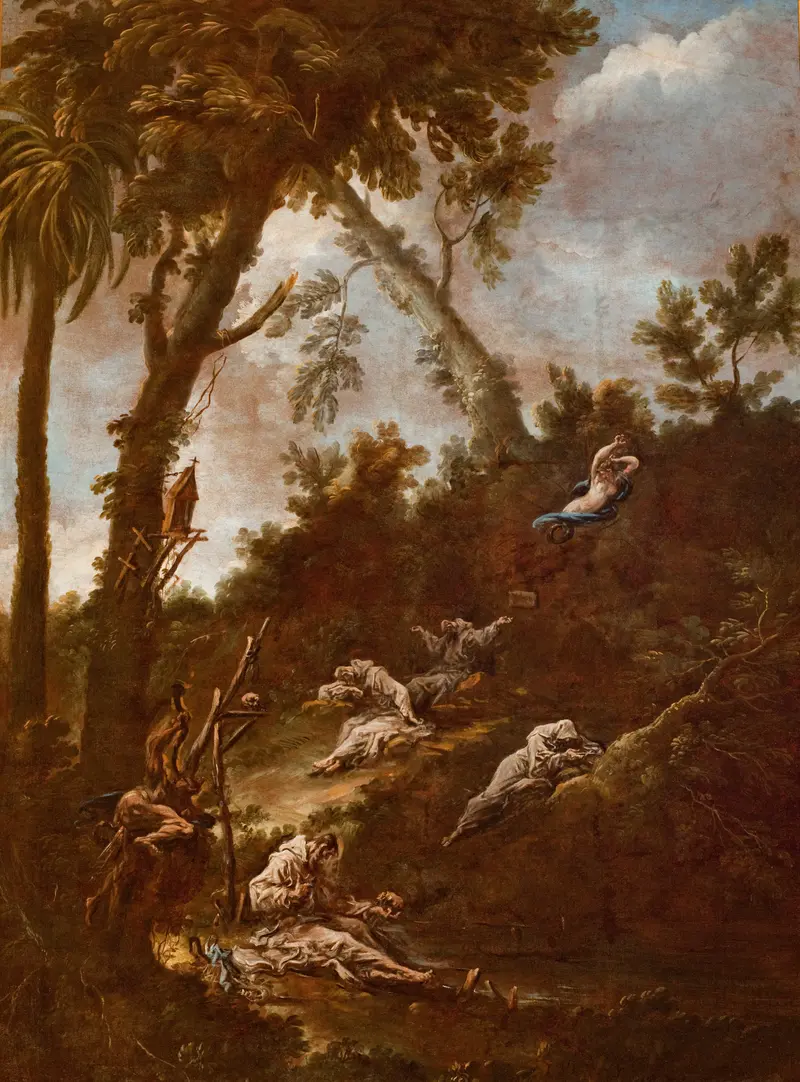
Hermits (Anachorets)
Alessandro Magnasco
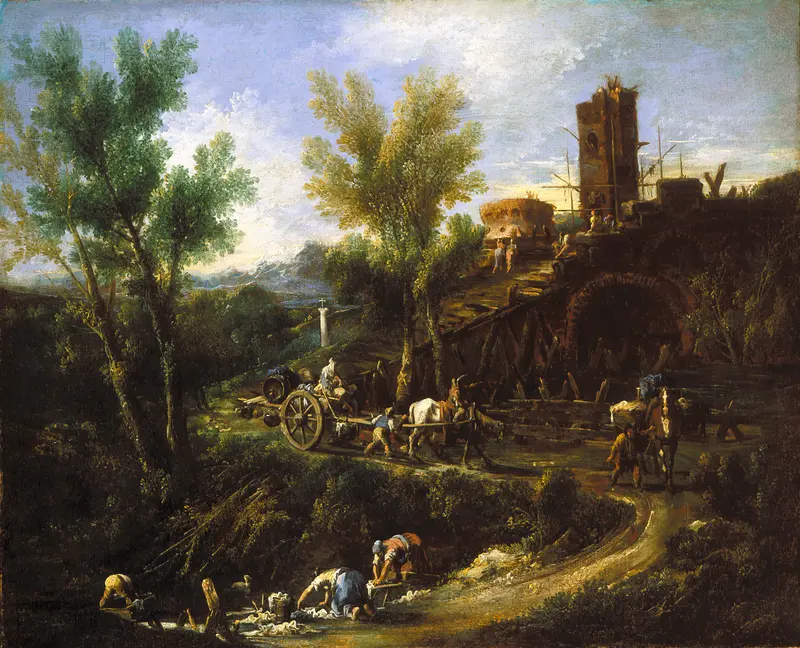
Landscape with Gypsies and Washerwomen
Alessandro Magnasco
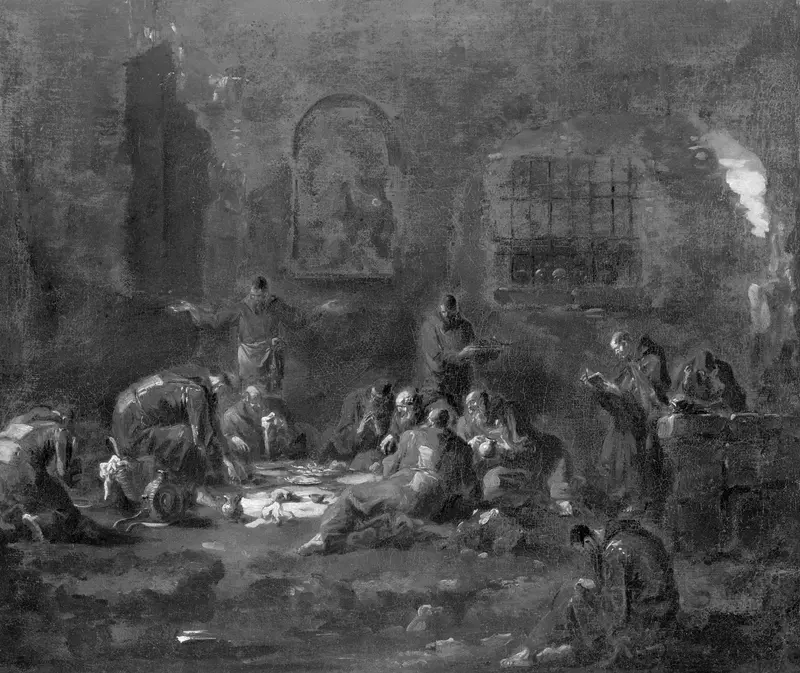
Monks at Supper
Alessandro Magnasco
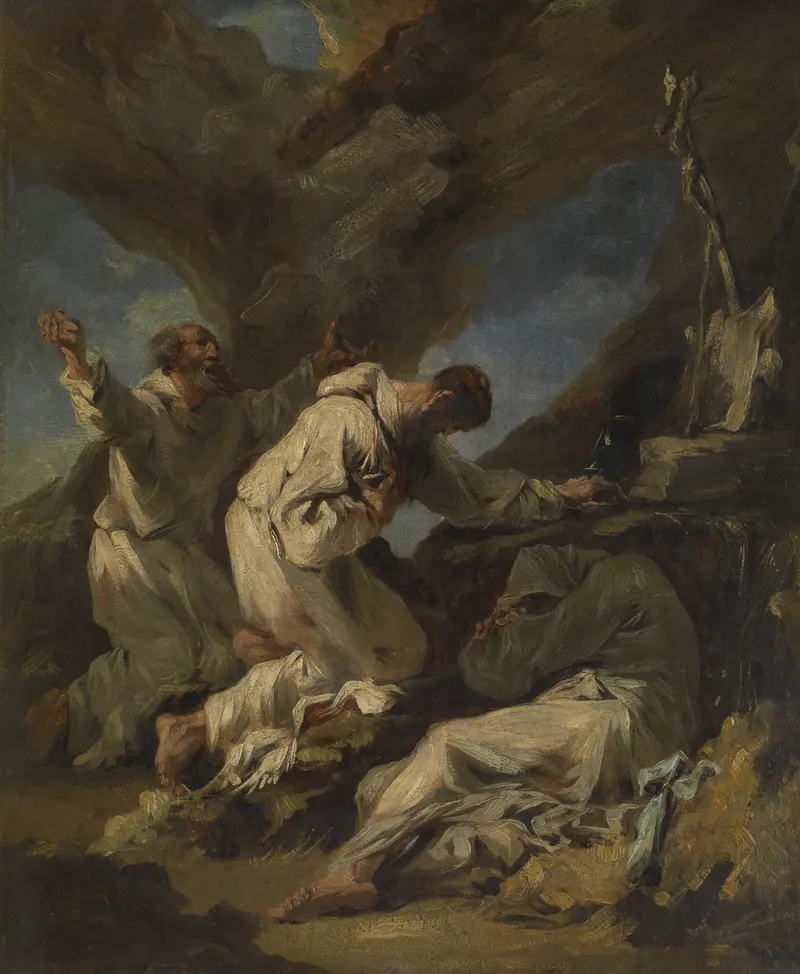
Praying Monks
Alessandro Magnasco
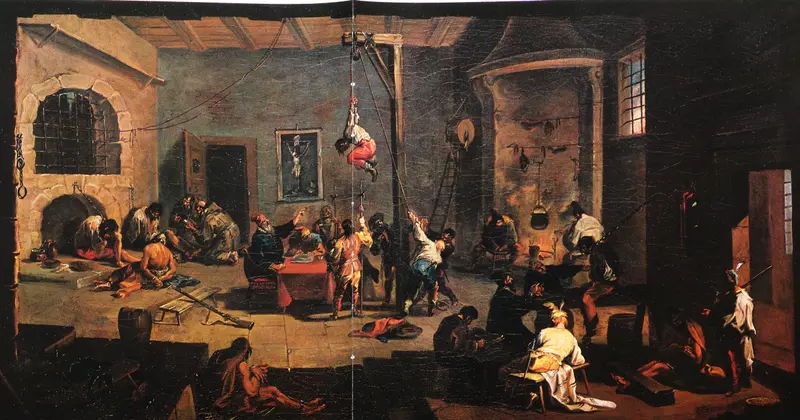
Torture Scene
Alessandro Magnasco
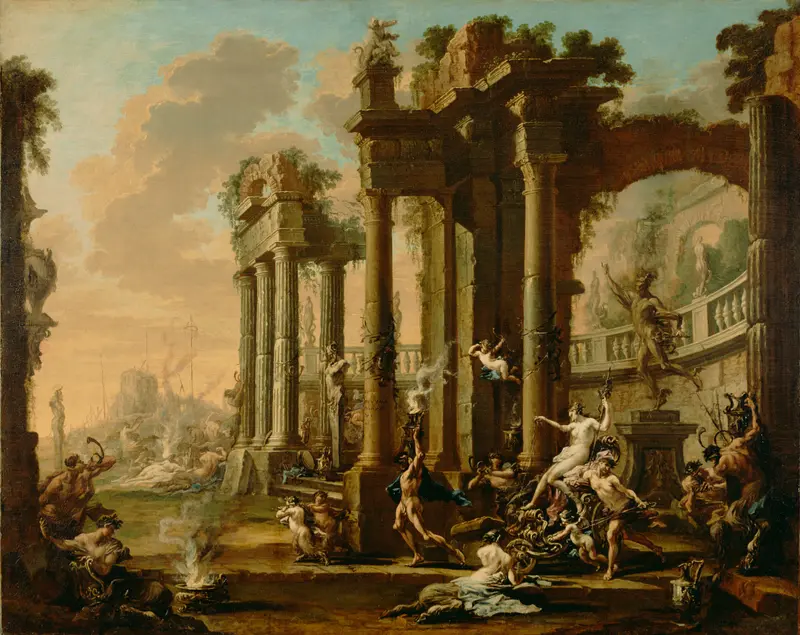
The Triumph of Venus
Alessandro Magnasco
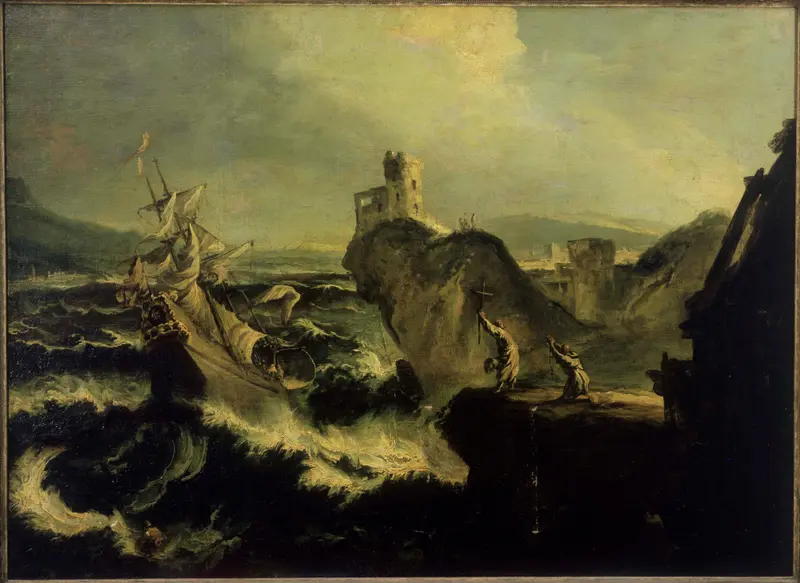
The Shipwreck
Alessandro Magnasco
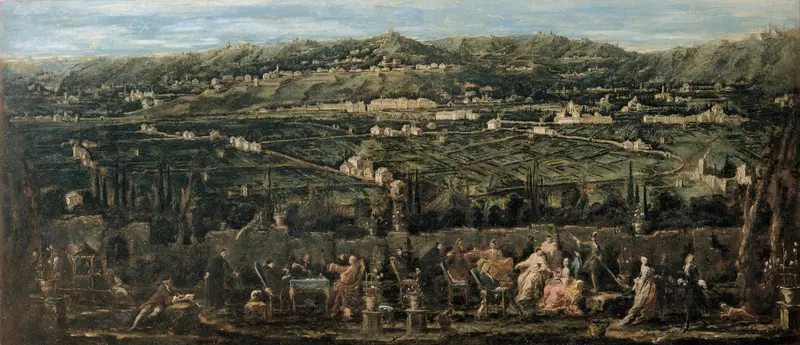
Garden Party in Albaro
Alessandro Magnasco
Monks Praying in a Grotto
Alessandro Magnasco





