
Nude Model in the Studio — History & Facts
What first seizes the eye in Nude Model in the Studio is not a figure at rest, but a jigsaw of forms that seem to pulse with mechanical energy. The human body, once the anchor of academic tradition, is here reimagined as a cascade of overlapping arcs, planes, and fragments, their edges outlined in assertive black. Each curve and angle jostles for space, the palette shifting from chalky whites and smoky blues to flashes of red and green, as if the model and her studio have fused into a single, restless machine.
The light, rather than describing flesh, ricochets across these surfaces, flattening and animating them at once. What appears at first as chaos soon reveals a deliberate architecture: the body is still present, but it has been rebuilt for a new, modern age. This painting belongs to the early 1910s, a moment when artists like Fernand Léger were tearing down the old rules and rebuilding them in the language of Cubism. In Paris, painters were no longer content to simply record what they saw; they wanted to capture the sensation of living in a world transformed by industry and speed.
The studio, once a place of quiet study, becomes here a crucible of invention. Léger’s fractured forms and bold colors echo the experiments of his contemporaries, but his vision is uniquely his own—less analytical than Braque or Picasso, more attuned to the rhythms of machines and the pulse of the city. Now part of the Solomon R.
Guggenheim Museum’s collection, this canvas invites viewers to look again and again, piecing together its forms as if deciphering a code left behind by the birth of the modern.
More Artworks by Fernand Léger

The Tugboat Bridge
Fernand Léger
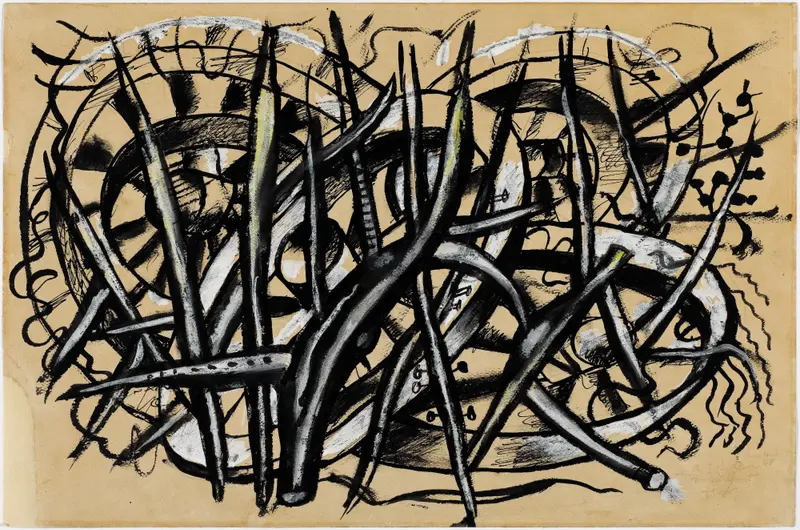
The Wheels
Fernand Léger

Le Cirque Médrano
Fernand Léger
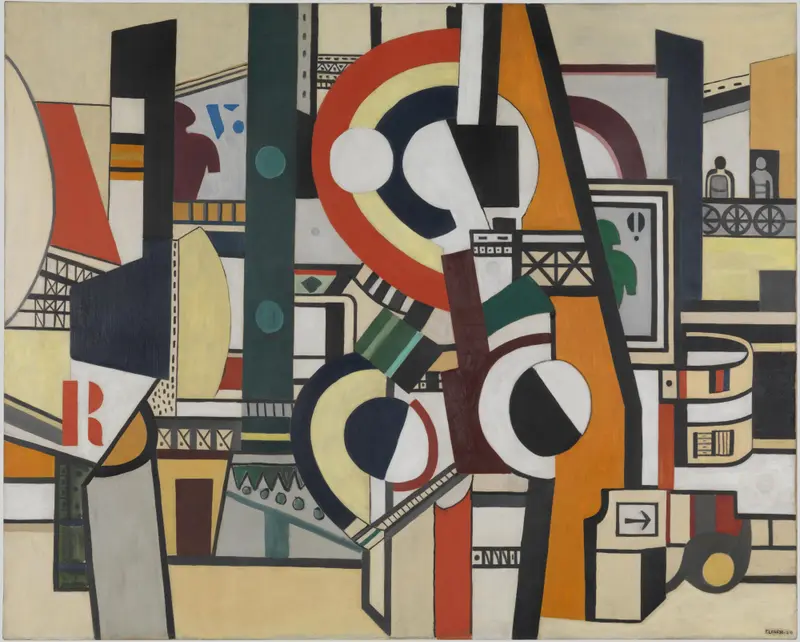
The Disks in the City
Fernand Léger
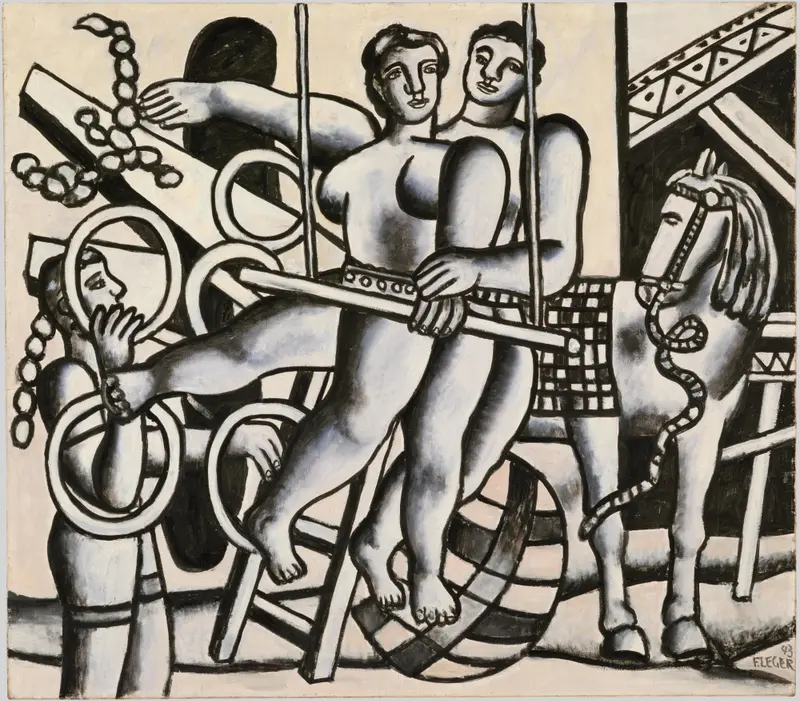
Le Jongleur et les acrobates
Fernand Léger
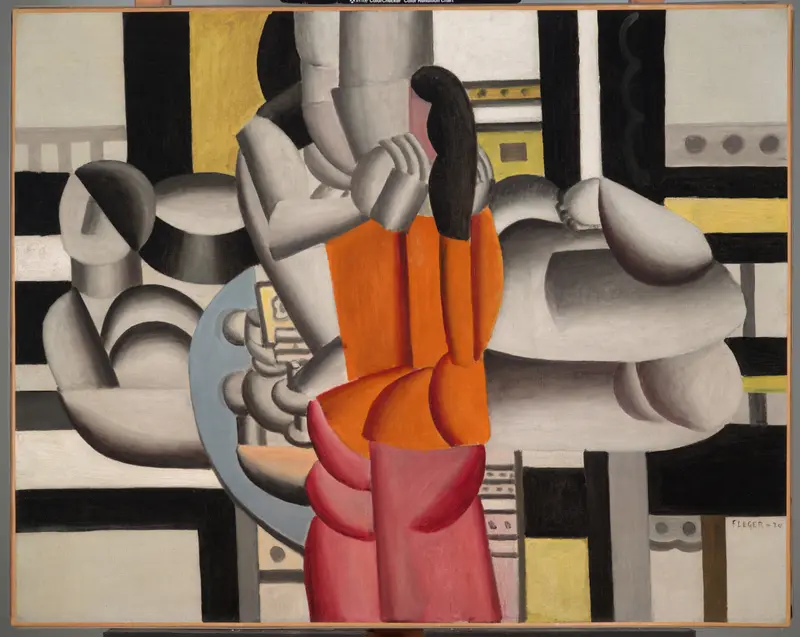
Three Women and Still Life (Déjeuner)
Fernand Léger
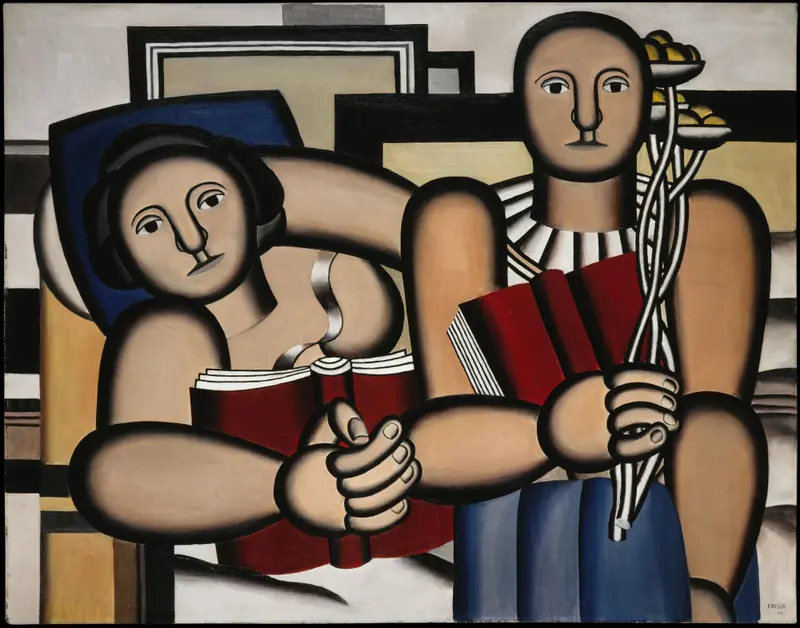
Reading
Fernand Léger
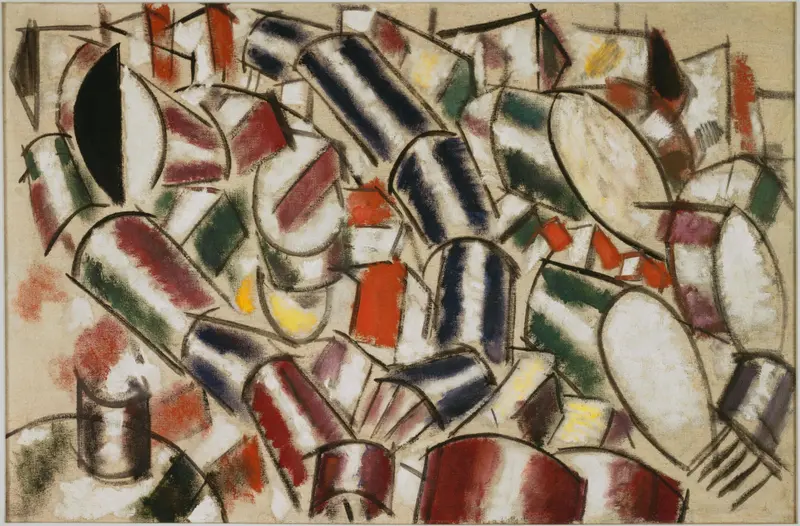
Femme couchée
Fernand Léger
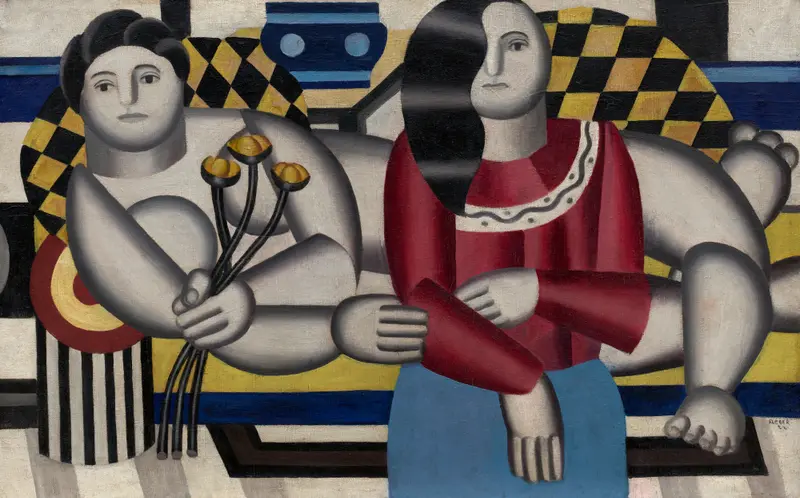
Woman holding flowers
Fernand Léger
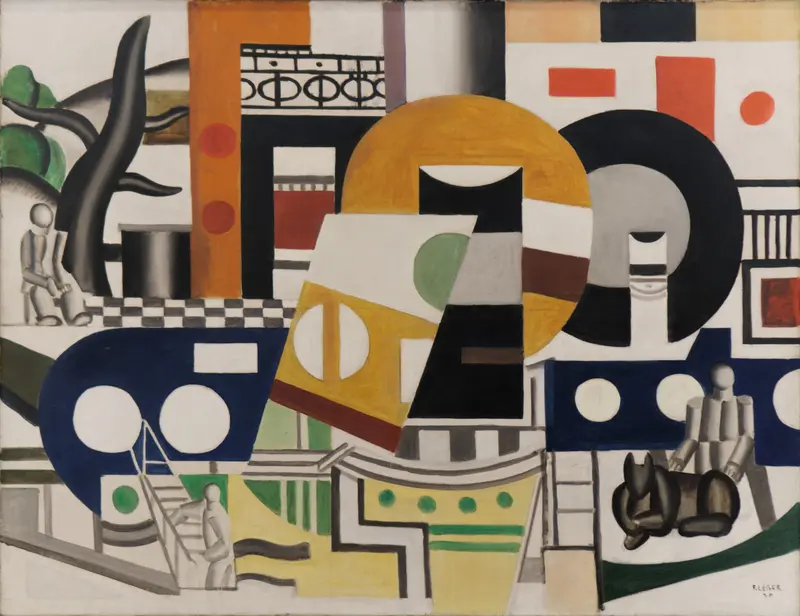
The Tug
Fernand Léger



