
Nymph with Flute — History & Facts
What draws the viewer first in Nymph with Flute is the figure’s gaze—direct, unhurried, and almost modern in its candor. The nymph’s eyes do not drift dreamily into the distance, as so many mythological muses do, but instead meet us with a gentle, questioning intelligence. The flute she holds is poised, not yet played, as if she has paused mid-thought, inviting us into her silent world.
Böcklin wraps her in a gauzy, golden veil that catches the light in delicate threads, softening the boundary between flesh and forest shadow. The background dissolves into deep, mossy greens and browns, pushing the nymph forward, her luminous skin and shimmering drapery a quiet beacon in the gloom. Painted in 1881, this work belongs to a late nineteenth-century moment when artists like Arnold Böcklin revived mythological subjects, not for grand public commissions but for private reverie and escape. The nymph—neither goddess nor mortal—was a favorite figure, embodying both nature’s allure and its mystery.
Böcklin’s treatment is intimate and psychological, worlds away from the heroic, crowded canvases of earlier Romanticism. Instead, he offers a solitary encounter, a moment suspended between music and silence, myth and reality. The painting’s presence today in a private collection, as documented by its source, reminds us how such images were cherished as personal portals to imagined worlds.
Let your eye linger on the nymph’s hands, the flute, the shimmer of her veil; Böcklin’s myth is spun from the quiet tension of anticipation.
More Artworks by Arnold Böcklin

Die Toteninsel III
Arnold Böcklin
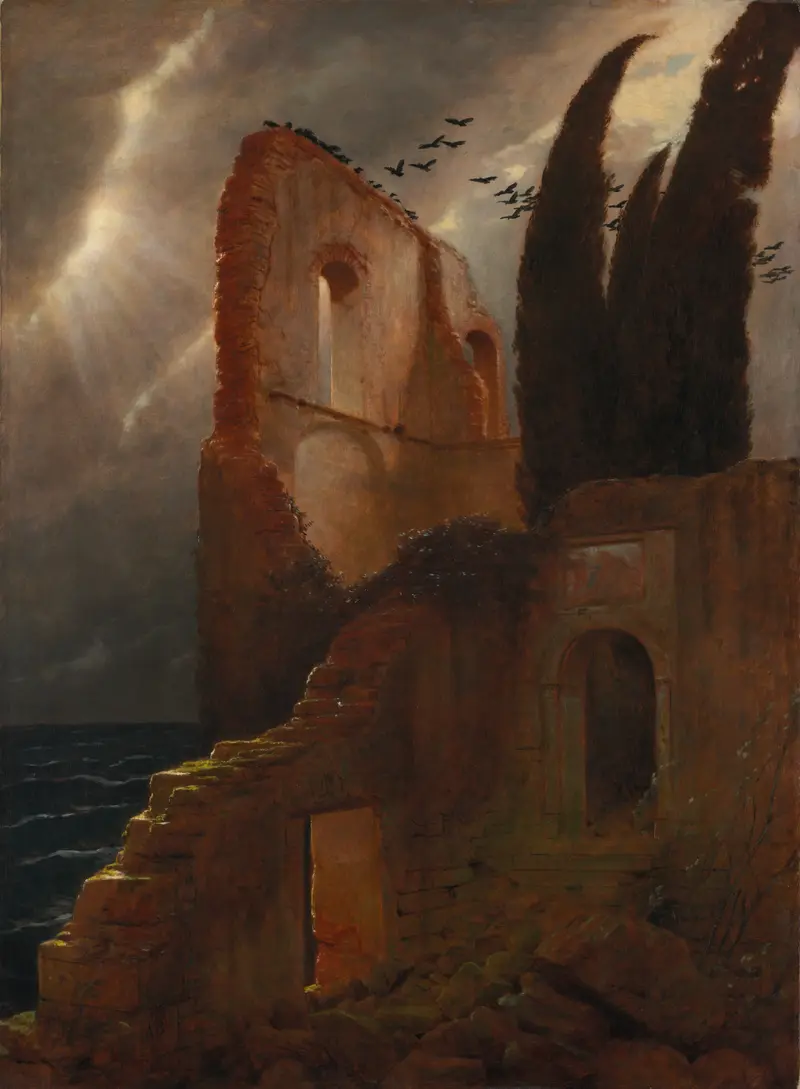
Ruin by the Sea
Arnold Böcklin
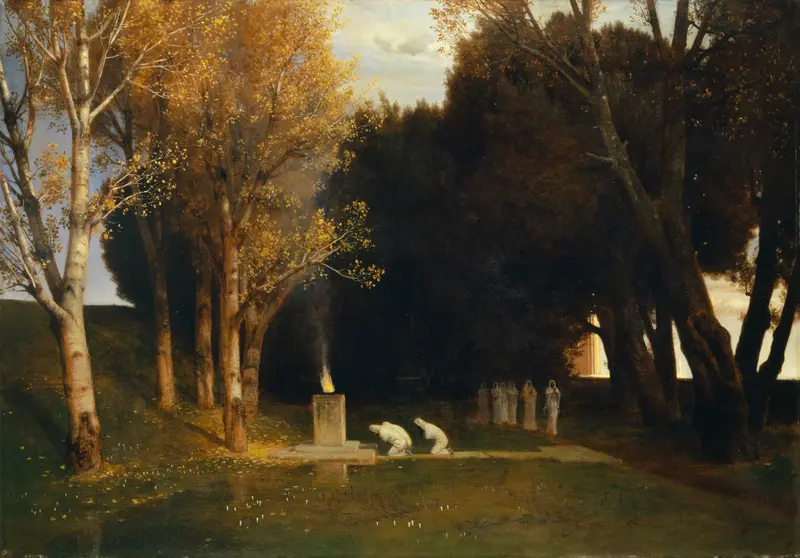
The Sacred Grove
Arnold Böcklin
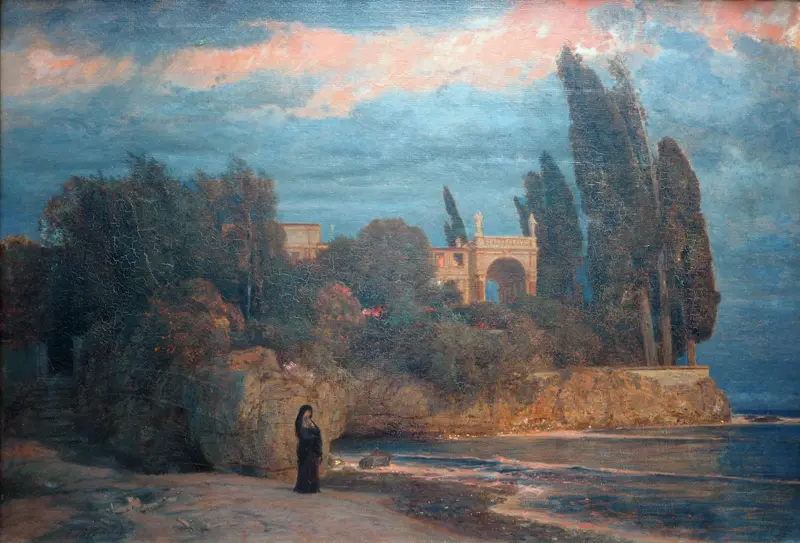
Villa by the Sea
Arnold Böcklin
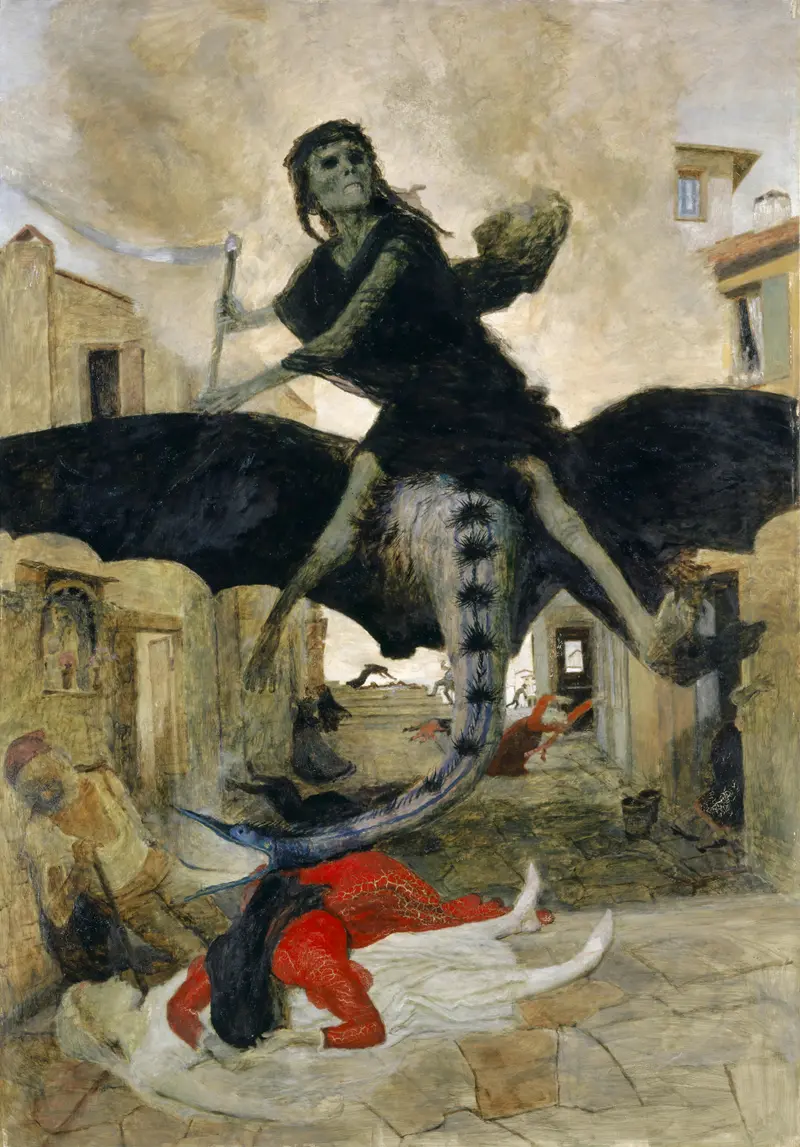
The Plague
Arnold Böcklin
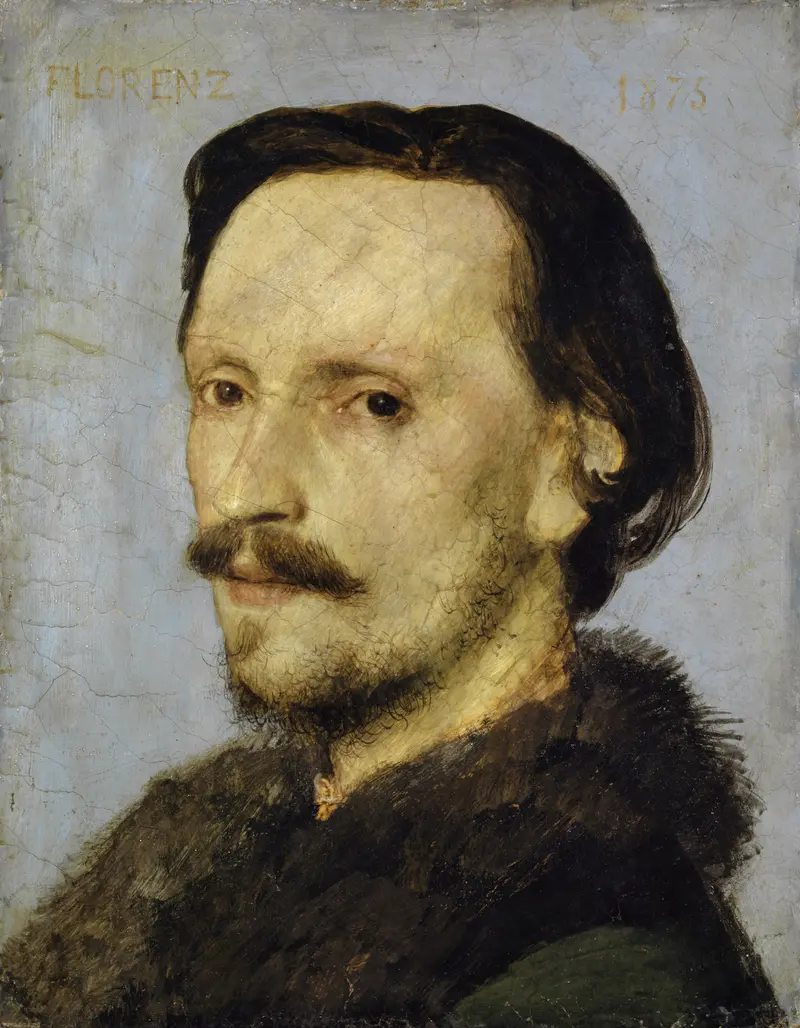
Böcklin Bildnis des Kunsthistorikers Adolph Bayersdorfer, 1875
Arnold Böcklin
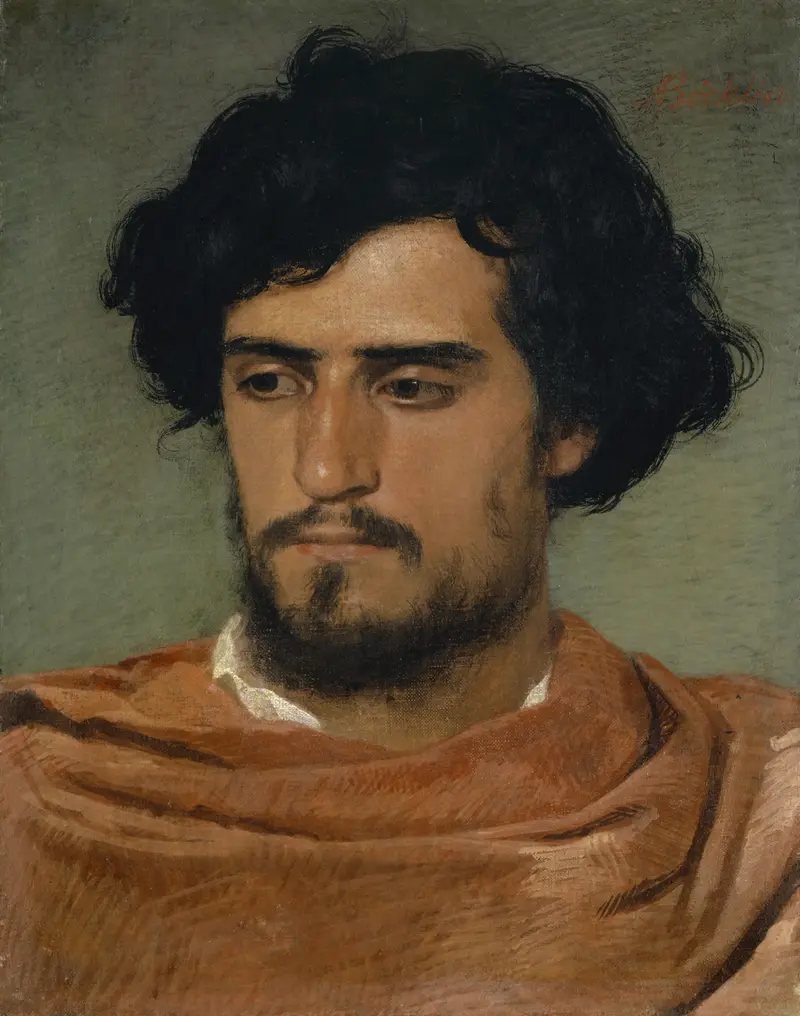
Head of a Roman
Arnold Böcklin
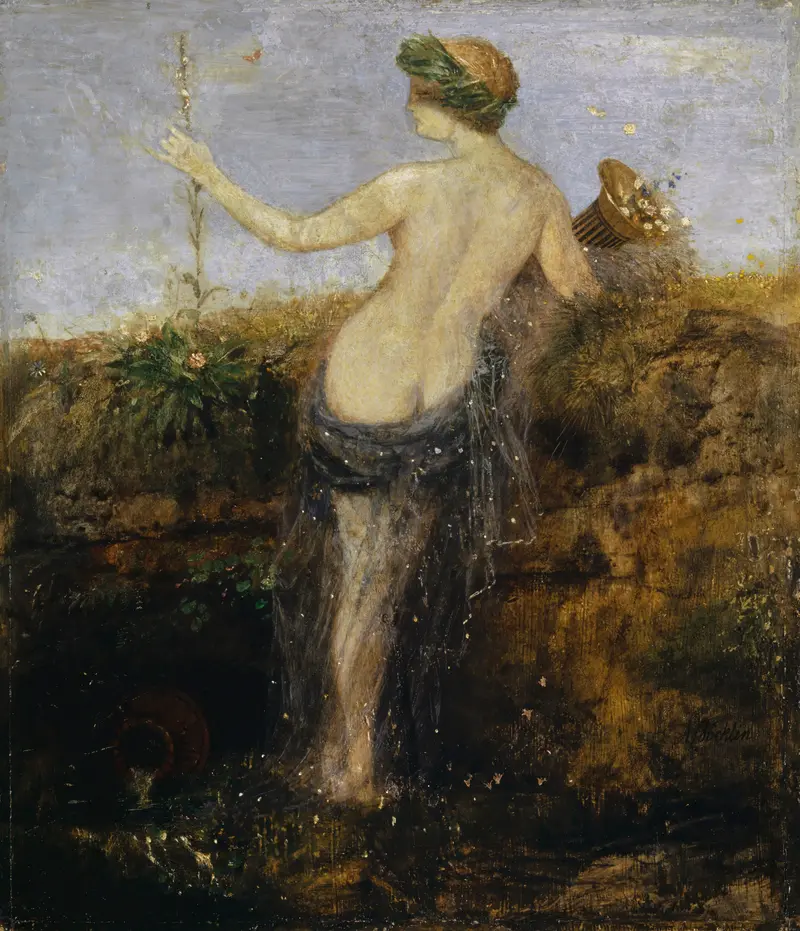
Nymphe with Horn of Plenty
Arnold Böcklin
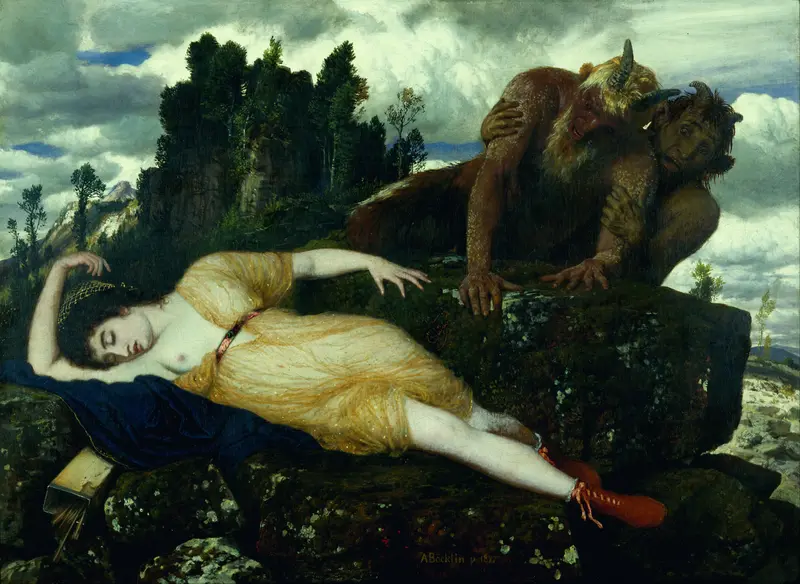
Sleeping Diana Watched by Two Fauns
Arnold Böcklin
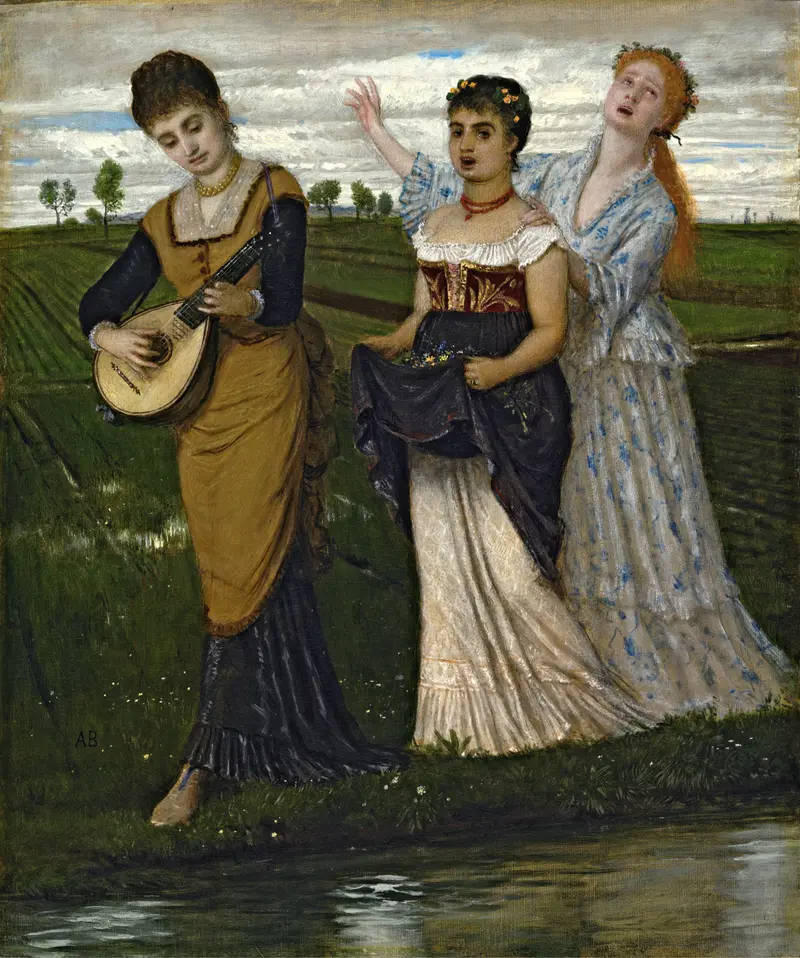
Spring (Songs of Spring)
Arnold Böcklin





