
Pale Face with Red Hair — History & Facts
No other work by Jules Schmalzigaug has sparked as much speculation as Pale Face with Red Hair. The painting’s date and medium remain unknown, and its very subject—an enigmatic, mask-like visage—has led to debate about whether it is a self-portrait, a portrait of a friend, or a symbolic study. What is certain is the painting’s singular place in Schmalzigaug’s output: it stands apart from his more familiar Futurist compositions, with their swirling motion and urban dynamism, as a rare, intimate portrayal.
Scholars have noted that the work’s haunting stillness contrasts sharply with the artist’s celebrated Venetian scenes, raising questions about the circumstances of its creation. The canvas freezes a moment of direct, almost confrontational gaze. The sitter’s pale, almost luminescent face emerges from a dark, indeterminate background, framed by a shock of vivid red hair that seems to pulse with energy. The stark color contrast draws the eye immediately to the face, while the absence of setting or adornment strips away narrative context, focusing attention on expression and mood.
The ambiguity of the figure’s identity—neither wholly masculine nor feminine, neither joyful nor mournful—invites comparison to Amedeo Modigliani’s elongated portraits, though Schmalzigaug’s treatment is more mask-like, less sensual. The result is a study in psychological tension, with the red hair serving as both a barrier and a beacon. The history of Pale Face with Red Hair is as shadowy as the painting itself. Its provenance is uncertain; it does not appear in early exhibition records or catalogues of Schmalzigaug’s work, and its first public appearance may have been decades after the artist’s death.
Some suggest it was painted during Schmalzigaug’s years in Antwerp, while others believe it belongs to his later, more isolated period. Today, the painting is recognized as a rare glimpse into the private, introspective side of an artist better known for his kinetic cityscapes and abstract experiments. Its survival and eventual recognition highlight the ongoing process of rediscovering Schmalzigaug’s legacy beyond the confines of the Futurist movement.
More Artworks by Jules Schmalzigaug

A View of Scheveningen
Jules Schmalzigaug
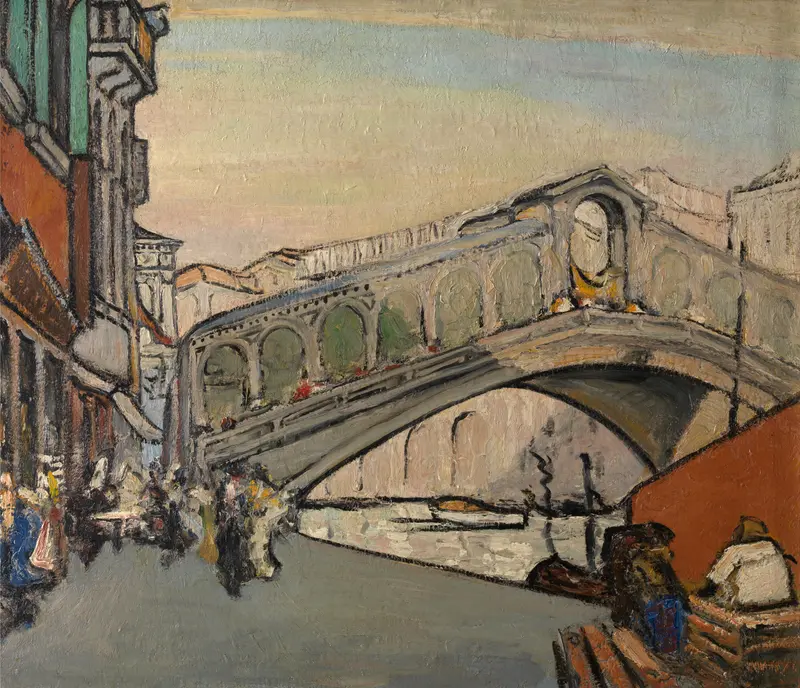
The Rialto Bridge in Venice
Jules Schmalzigaug

Abstract Bouquet
Jules Schmalzigaug
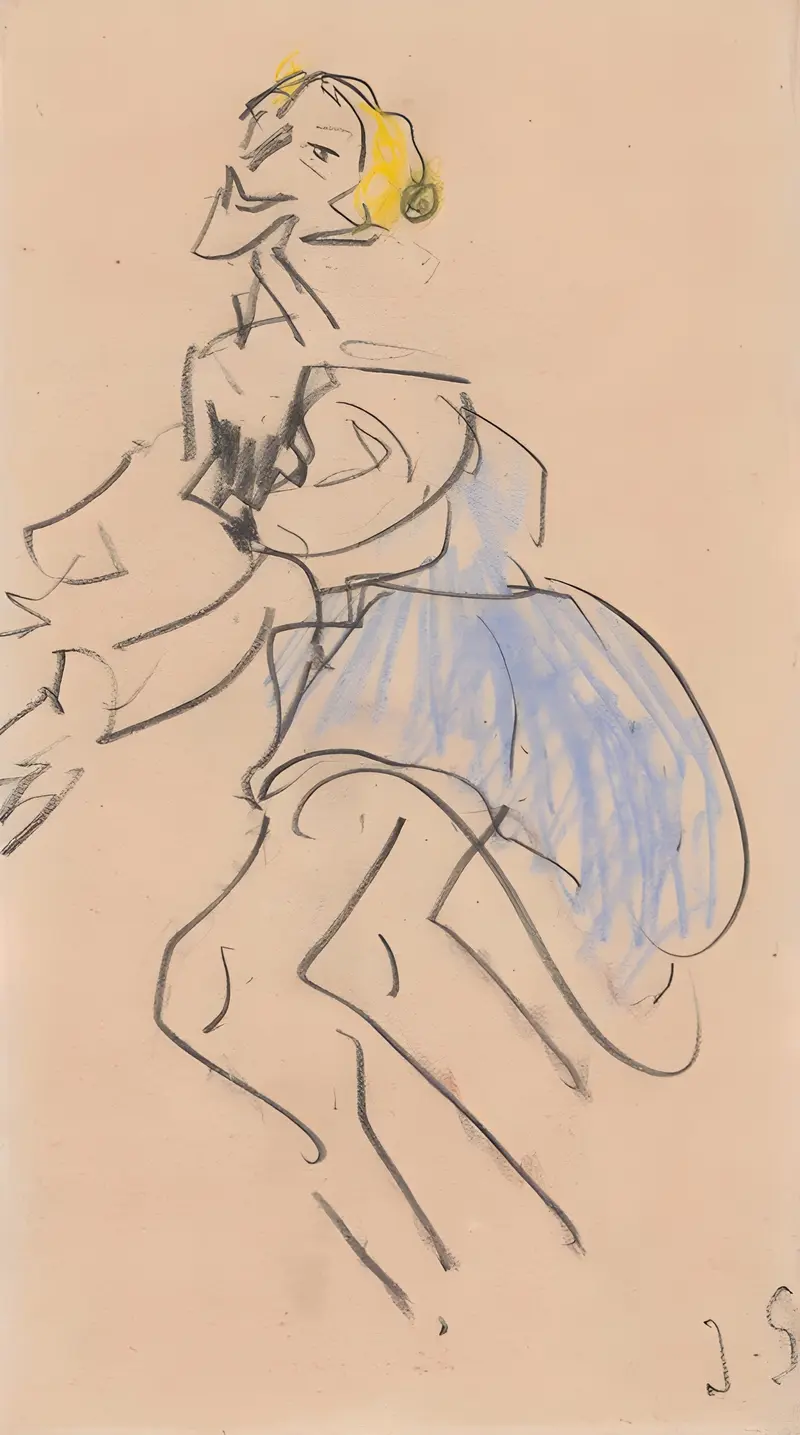
Dancer
Jules Schmalzigaug
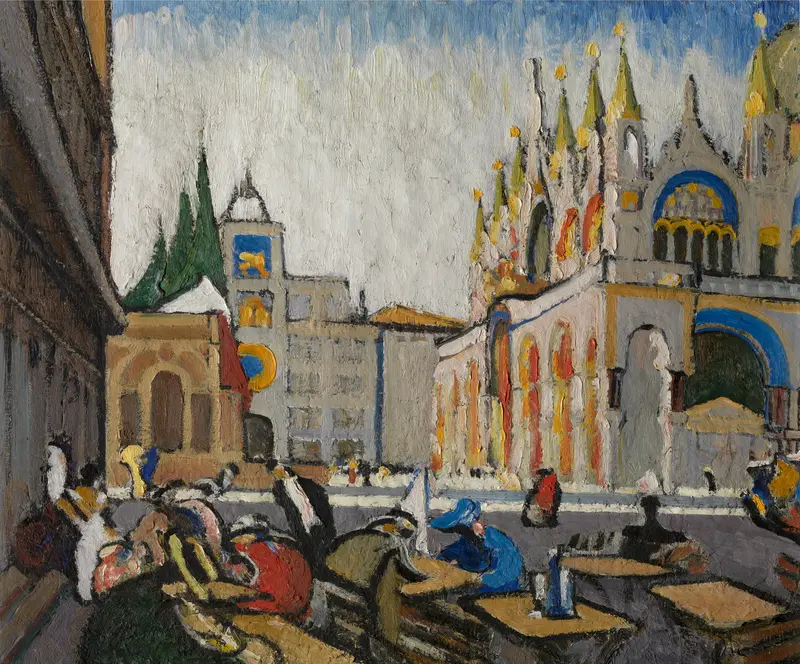
San Marco from the Piazetta
Jules Schmalzigaug
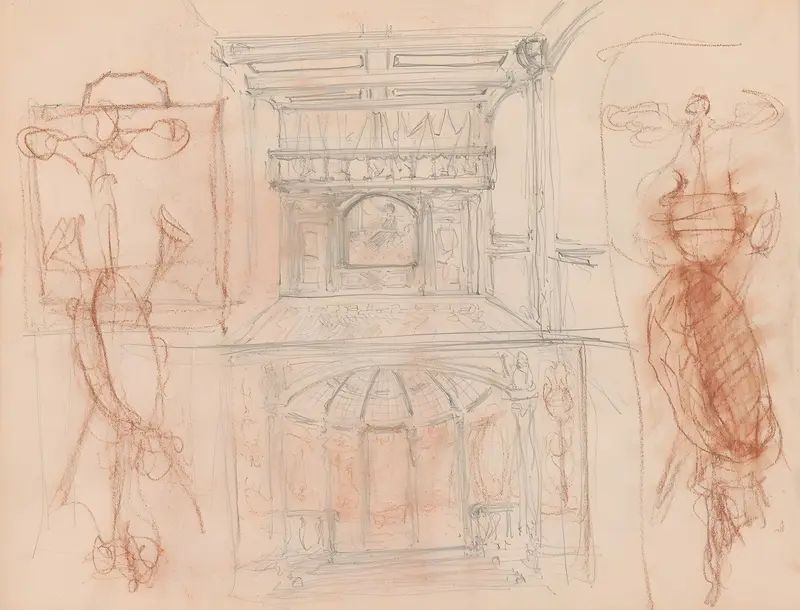
Architectural Elements
Jules Schmalzigaug
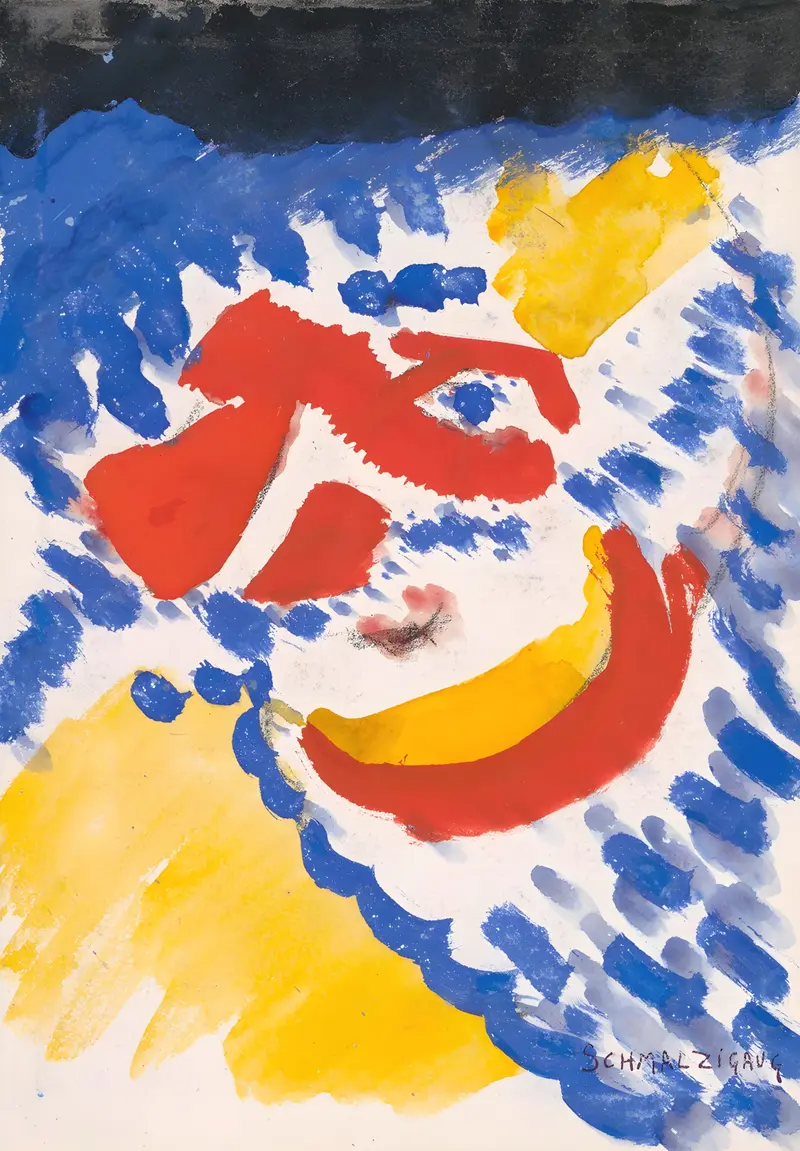
Blue, Red and Yellow Figures
Jules Schmalzigaug
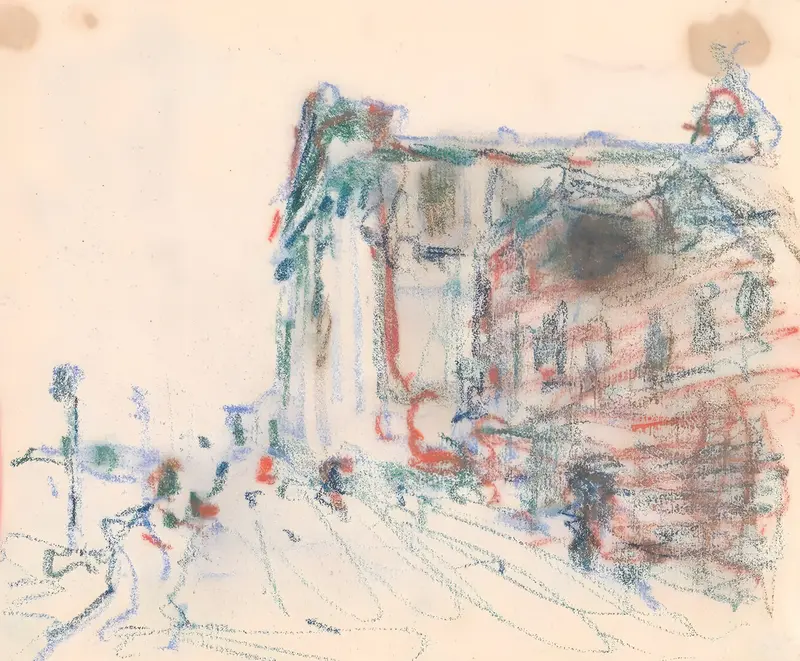
Chiesa dei Gesuati in Venice
Jules Schmalzigaug
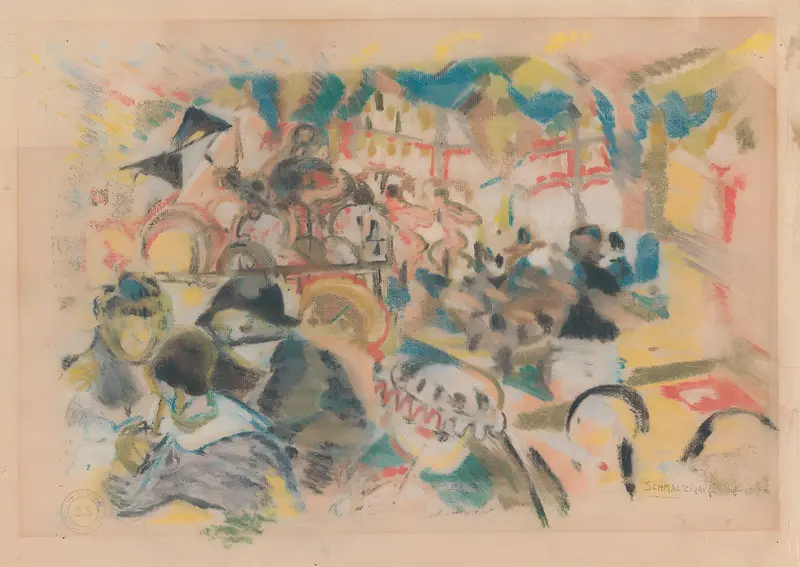
Café-chantant
Jules Schmalzigaug
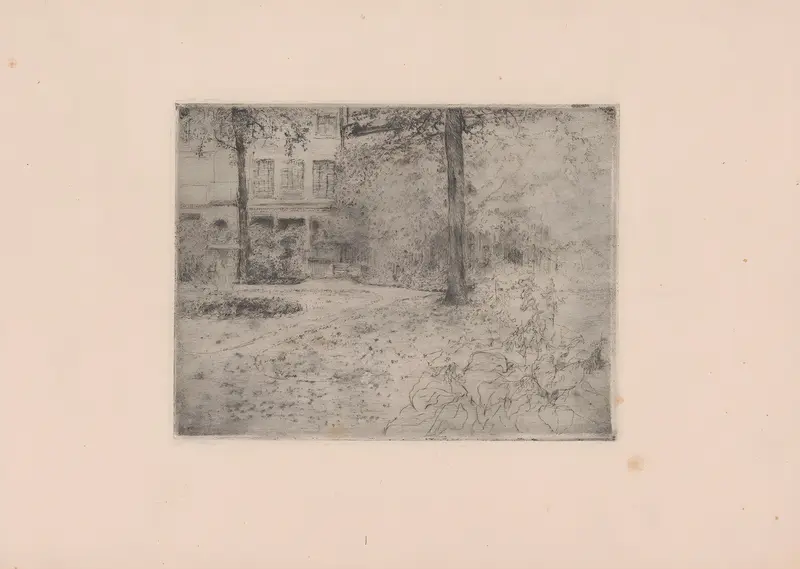
Backyard
Jules Schmalzigaug





