
Poll the Milkmaid — History & Facts
What first catches the eye in Poll the Milkmaid is the gentle choreography between the figures: a young woman, bucket in hand, pauses mid-step as a calf approaches, its head tilted in curiosity. The painter, Arthur Hughes, chooses a moment of quiet negotiation, the milkmaid’s raised hand both greeting and gentle command. Light catches the rim of her pail and the folds of her apron, guiding us from her poised gesture to the calf’s attentive gaze, and then outwards to the lush, blooming hedgerows.
The distant cow, half-submerged in a shaded stream, anchors the left edge, while the farmhouse, half-hidden by trees, suggests a world beyond the frame. The palette is fresh and crisp, the green of the meadow flecked with yellow, the sky a clear, inviting blue—each element working to create a sense of a lived, working landscape. Painted in 1872, this work belongs to a period when British artists, influenced by both Pre-Raphaelite detail and the broader Victorian fascination with rural life, often turned to the countryside for inspiration. Scenes like this—everyday, unsentimental, yet attentive to the rhythms of farm work—were prized by a public increasingly distant from agricultural labor but nostalgic for its perceived simplicity.
Arthur Hughes was known for his poetic realism, and here he balances narrative and observation with particular care. This painting, once offered at Sotheby’s in London, is a reminder of how the late nineteenth century valued such glimpses into the ordinary, and invites us to linger over the quiet drama of a single morning on the farm.
More Artworks by Arthur Hughes

Cecily Ursula, aged three years
Arthur Hughes

April Love
Arthur Hughes
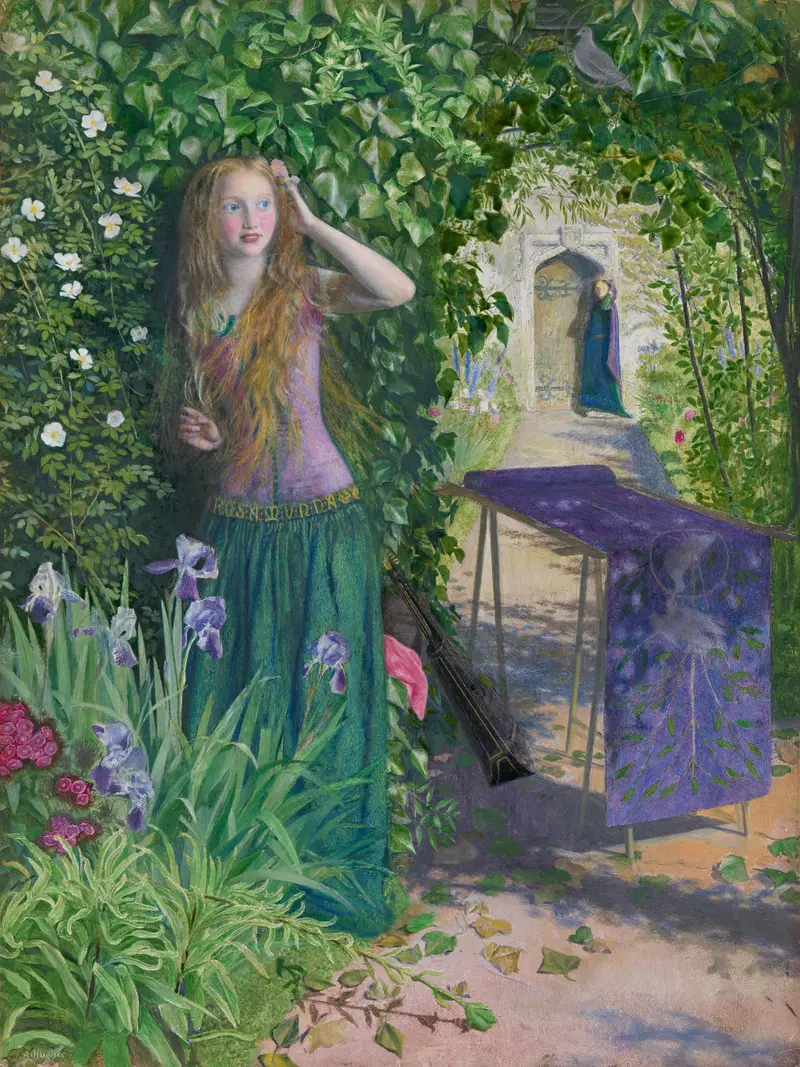
Fair Rosamund
Arthur Hughes
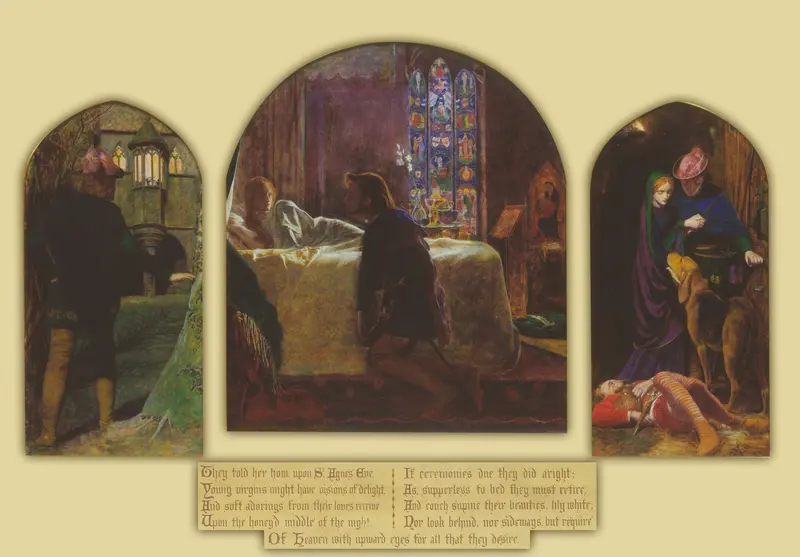
The Eve of St Agnes
Arthur Hughes
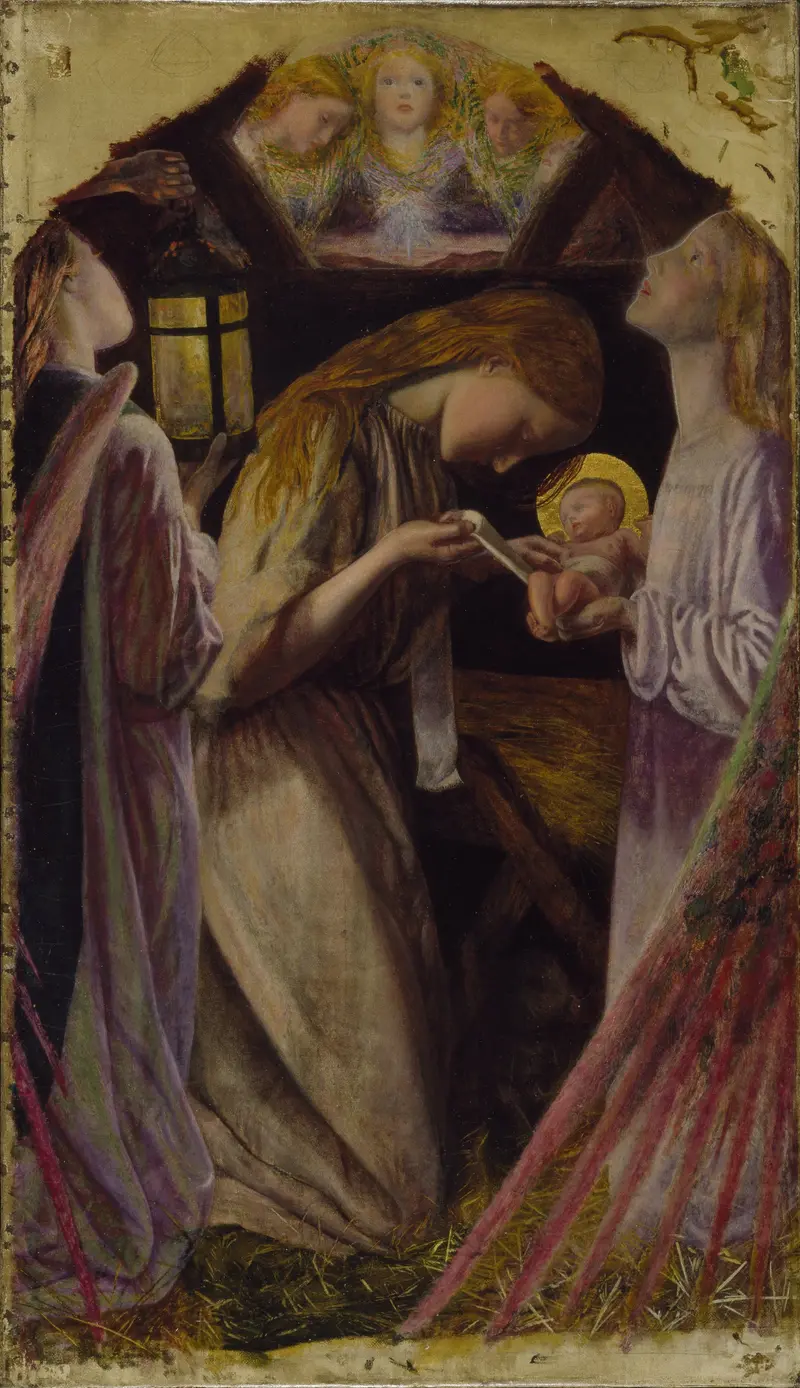
The Nativity
Arthur Hughes
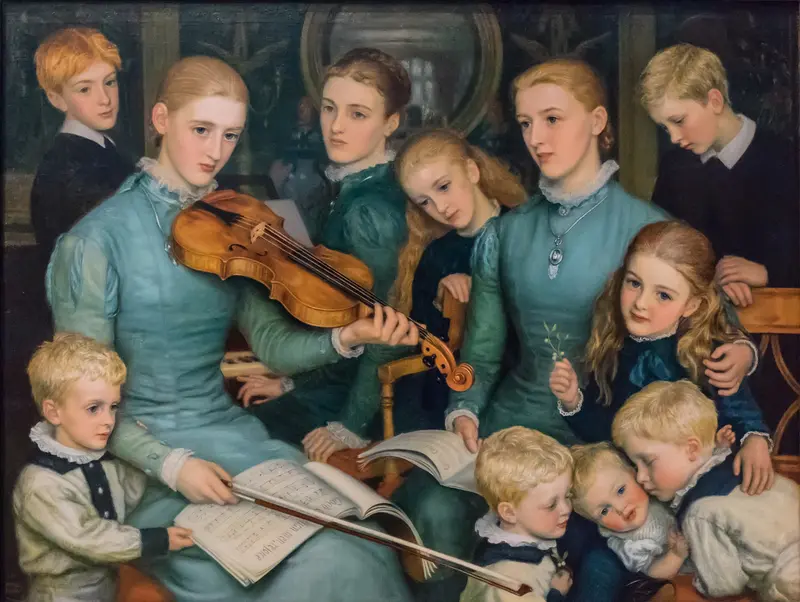
A Christmas Carol at Bracken Dene
Arthur Hughes
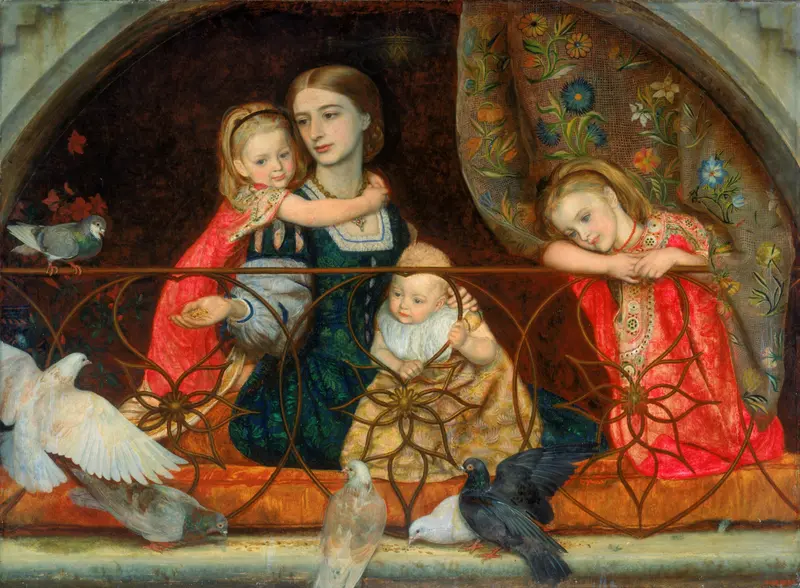
Mrs Leathart and Her Three Children
Arthur Hughes
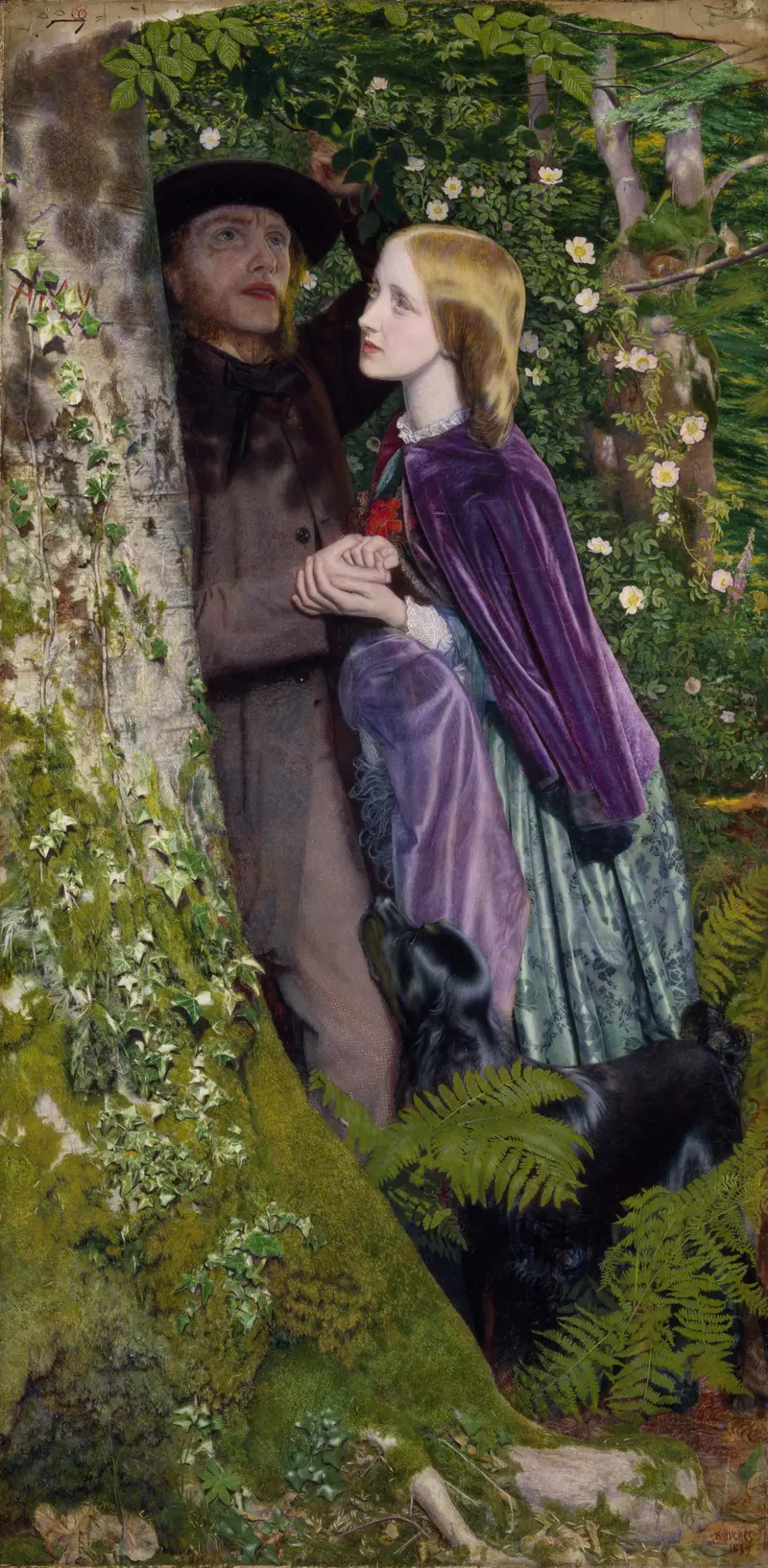
The Long Engagement
Arthur Hughes
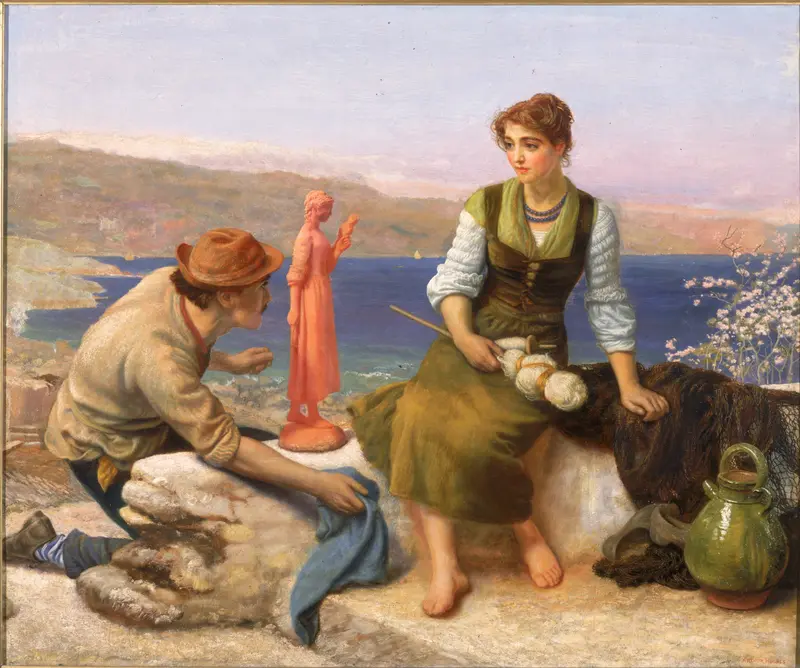
The Potter's Courtship
Arthur Hughes
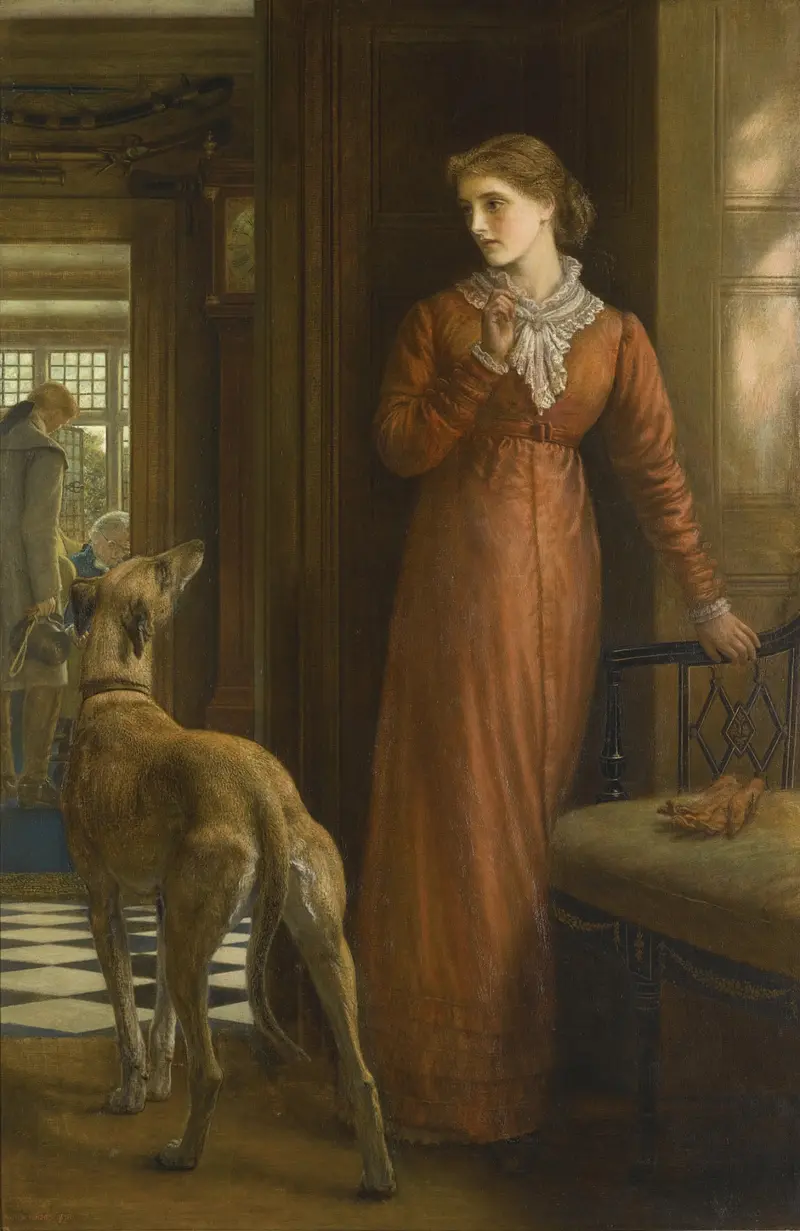
Uncertainty
Arthur Hughes
More Genre Scene Art

Banquet of the Officers of the St George Civic Guard
Frans Hals

Rembrandt and Saskia in the Scene of the Prodigal Son
Rembrandt van Rijn

Bal du moulin de la Galette
Pierre-Auguste Renoir

Quadrille at the Moulin Rouge
Henri de Toulouse-Lautrec

A Burial at Ornans
Gustave Courbet

When Will You Marry?
Paul Gauguin