
Polyptych of the Misericordia — History & Facts
When the citizens of Borgo San Sepolcro commissioned Piero della Francesca to create the Polyptych of the Misericordia in 1445, they could not have foreseen that the project would stretch over fifteen years, a delay so notable that town records document their repeated pleas for its completion. The work was intended as the altarpiece for the Confraternity of the Misericordia, a lay brotherhood dedicated to charity and mercy. This commission marks one of the earliest major undertakings for Piero della Francesca, who was still establishing his reputation.
The lengthy process, interrupted by other commissions and perhaps the artist’s own perfectionism, left the townspeople impatient, but the result would become a cornerstone of Renaissance painting in central Italy. At the heart of the polyptych, the Virgin Mary stands monumental and serene, her vast cloak unfurled to shelter a kneeling congregation of townsfolk—men, women, and children—beneath its folds. This is the moment of intercession: Mary, embodying the spirit of mercy, gathers the faithful under her protection, her hands gently holding the edges of her cloak as a symbolic gesture of maternal care and divine grace. The figures are rendered with a quiet solidity, their faces individualized yet unified in devotion.
The gold background, a lingering echo of Gothic tradition, contrasts with the calm geometry of the figures, signaling the transition from medieval to Renaissance sensibilities. Unlike the emotional drama of Rogier van der Weyden’s depictions of the Virgin, Piero’s Mary is a pillar of stillness, her presence anchoring the composition in rational order and silent compassion. After its long-awaited installation in the church of Sansepolcro, the Polyptych of the Misericordia remained in its original home for centuries, surviving wars and the shifting tides of religious reform. The identity of the individual donors depicted under Mary’s cloak remains uncertain, a reminder of the community’s collective spirit rather than personal fame.
Today, the panels are housed in the Museo Civico of Sansepolcro, not far from where Piero della Francesca was born and worked. The altarpiece stands as both a testament to the artist’s early mastery of perspective and human form, and as a symbol of the town’s enduring faith in art as an act of mercy.
More Artworks by Piero Della Francesca

Portrait of the Duchess of Urbino, Battista Sforza
Piero Della Francesca

Portrait of Federico da Montefeltro
Piero Della Francesca

Federico da Montefeltro, Duke of Urbino
Piero Della Francesca
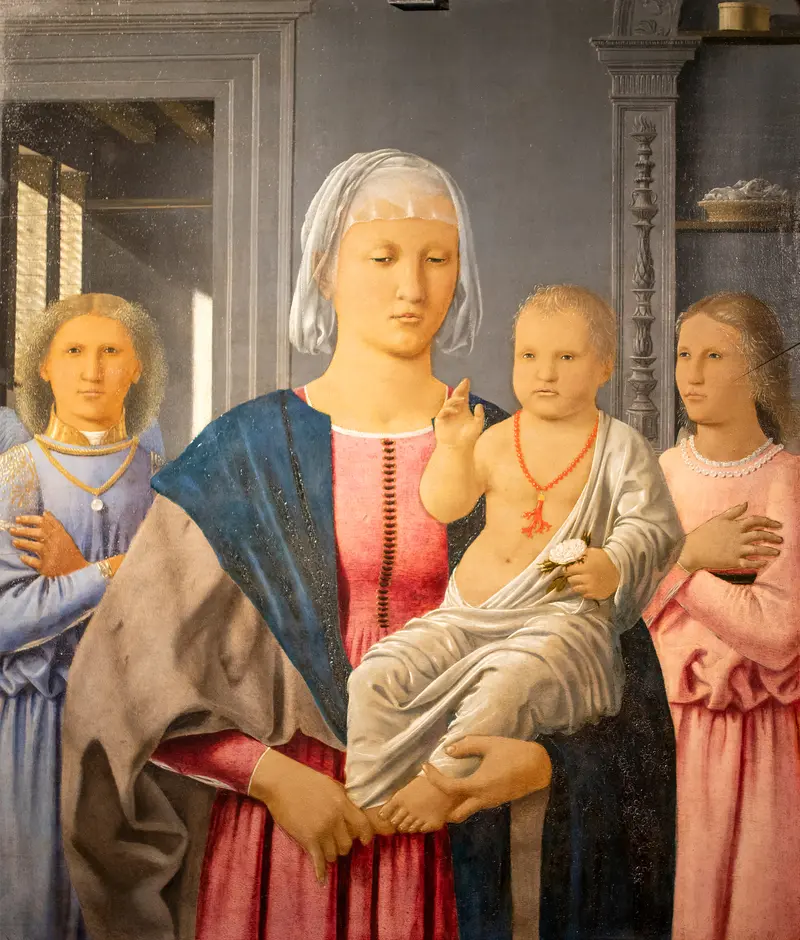
Madonna di Senigallia
Piero Della Francesca
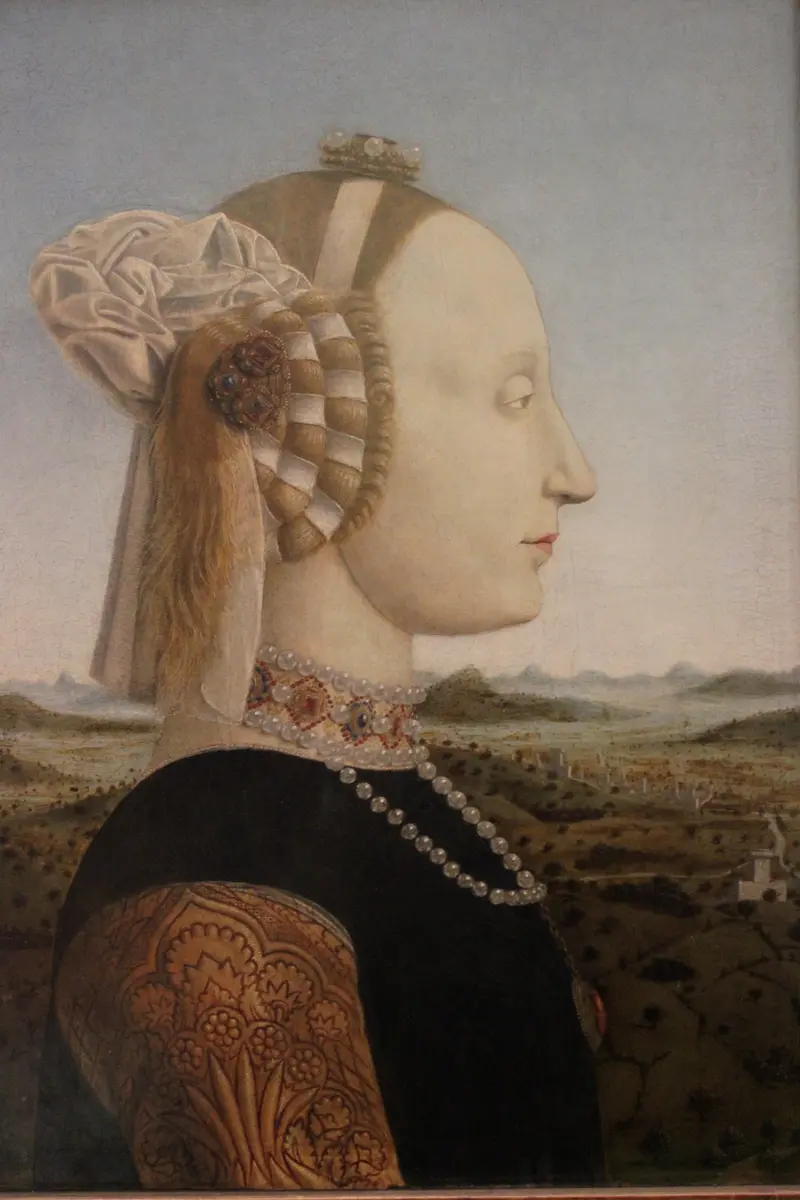
Portrait of Battista Sforza
Piero Della Francesca
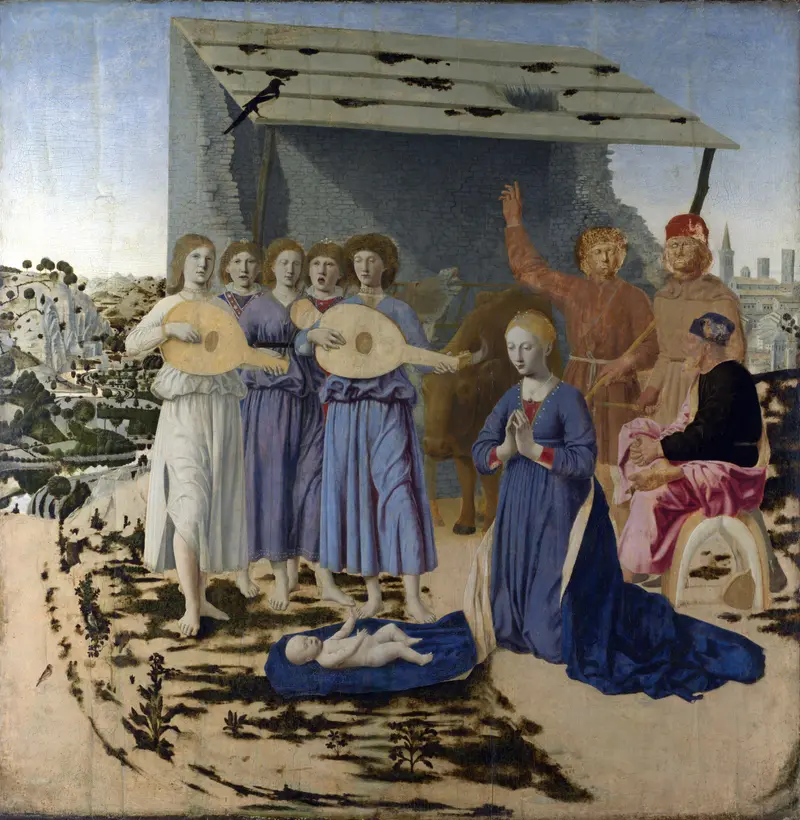
The Nativity
Piero Della Francesca

Diptych of Federico da Montefeltro and Battista Sforza
Piero Della Francesca
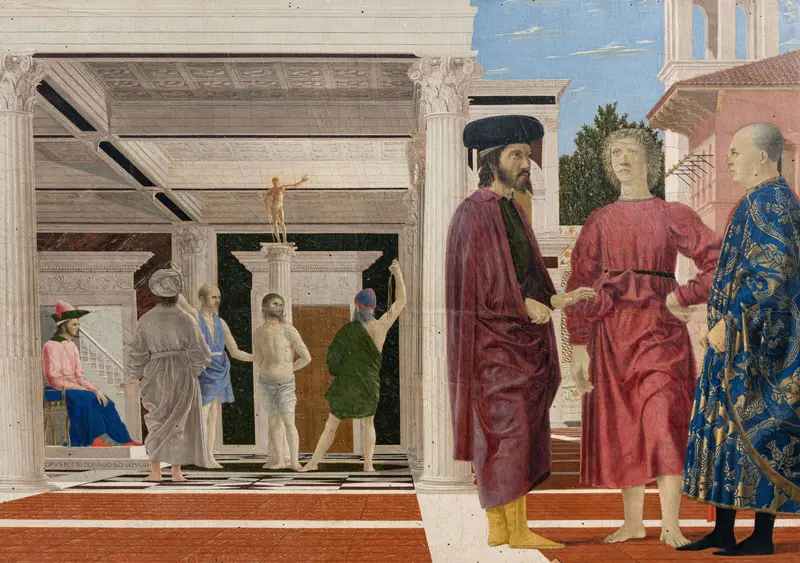
Flagellation of Christ
Piero Della Francesca
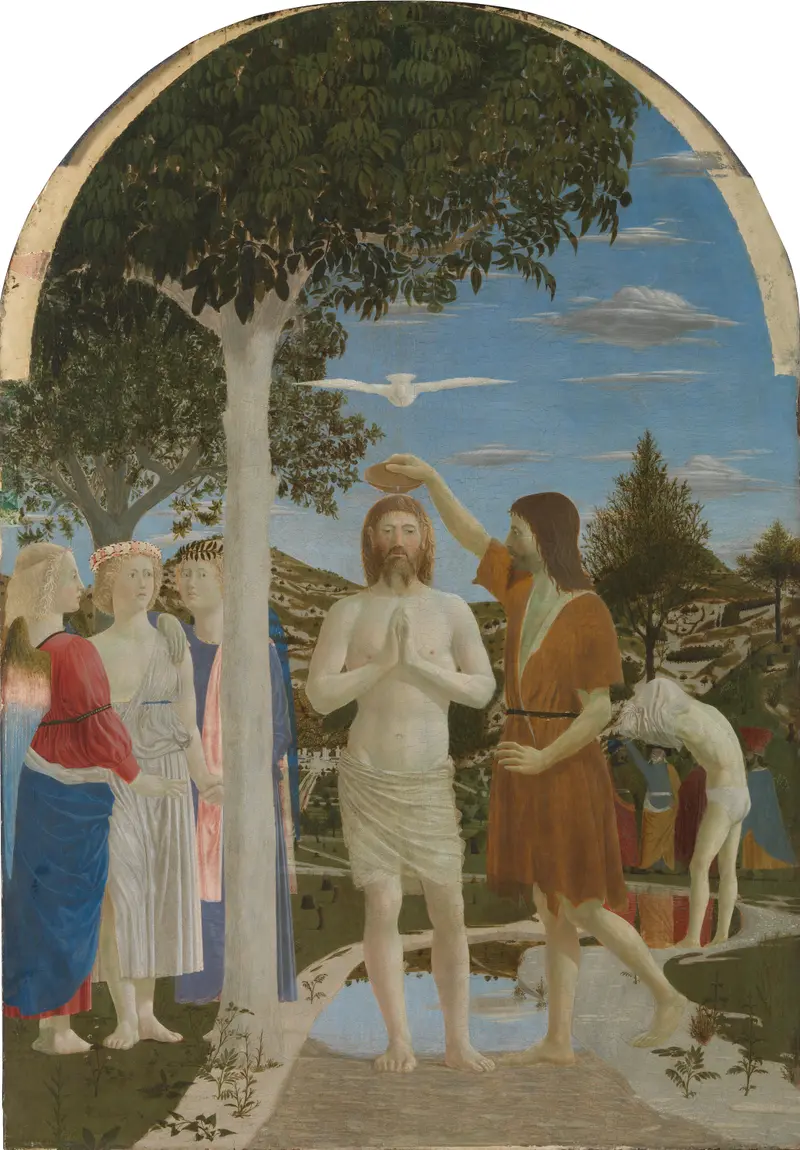
The Baptism of Christ
Piero Della Francesca
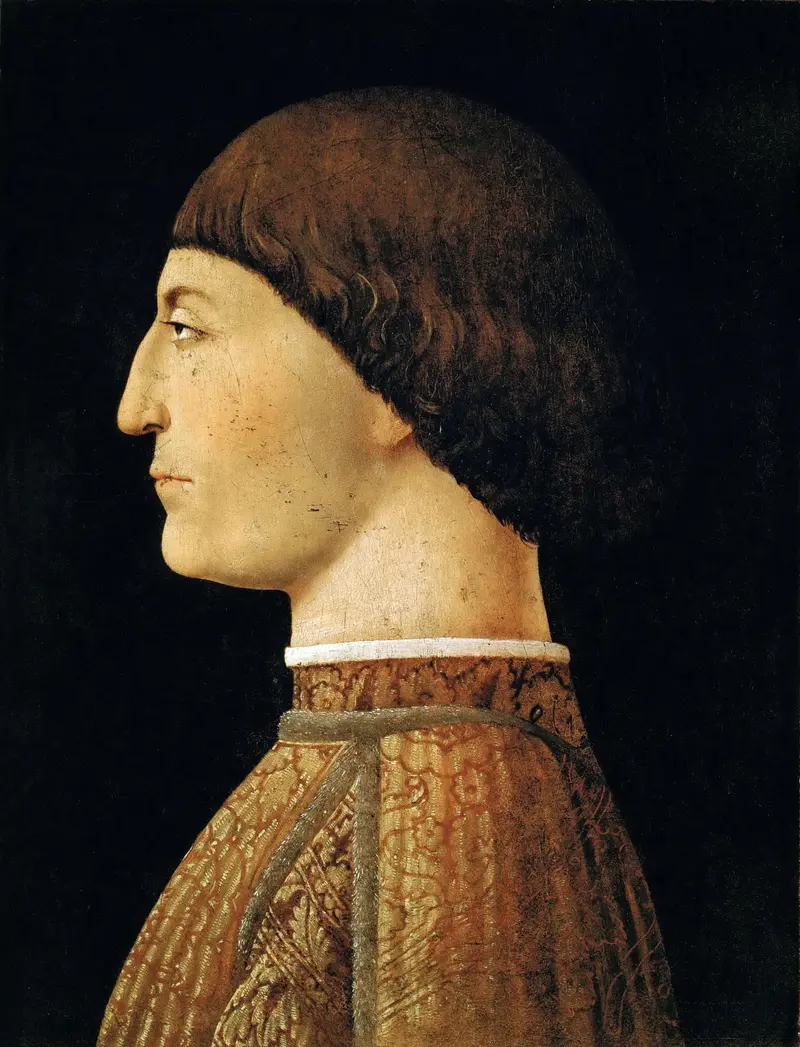
Portrait of Sigismondo Pandolfo Malatesta
Piero Della Francesca





