
Portrait of a Young Woman — History & Facts
No one knows the true identity of the sitter in Portrait of a Young Woman by Johannes Vermeer, and this mystery has fueled centuries of speculation. Painted around 1665, the work is sometimes linked to Vermeer’s more famous Girl with a Pearl Earring, with some suggesting it may be a study or pendant piece, but no documents from the period confirm this. The lack of a signature and the unknown medium—unusual for Vermeer—have only deepened the enigma.
Some art historians have even questioned whether it is truly by Vermeer, though technical analysis of the painting’s style and pigments has largely supported the attribution. The young woman gazes out with a directness rare in Dutch portraiture of the era, her face softly illuminated against a dark background. She wears a pale veil and a yellow jacket trimmed with ermine, simple yet elegant, her lips parted as if about to speak. The absence of identifiable attributes—no jewelry, no family crest—invites viewers to focus on her expression and the subtle play of light on her skin.
This quiet immediacy recalls the intimacy of Rembrandt’s Portrait of a Young Woman from the same period, but where Rembrandt uses thick impasto and dramatic shadow, Vermeer achieves a sense of presence through delicate glazes and a luminous surface. The effect is both personal and universal, as if the sitter could step out of the shadows at any moment. The painting’s provenance is as shadowy as its subject. It surfaced in the 20th century, passing through private collections before entering the care of the Metropolitan Museum of Art in New York, where it remains today.
Its attribution to Vermeer was debated for decades, with some experts noting differences in technique and materials compared to his other works. However, recent technical studies have confirmed the use of pigments and methods consistent with Vermeer’s Delft studio. As with many of his paintings, the sitter’s identity and the circumstances of the commission remain unknown, but the portrait stands as a testament to Vermeer’s enduring fascination with the quiet drama of everyday life.
More Artworks by Johannes Vermeer

View of Delft
Johannes Vermeer

Girl with a Pearl Earring
Johannes Vermeer
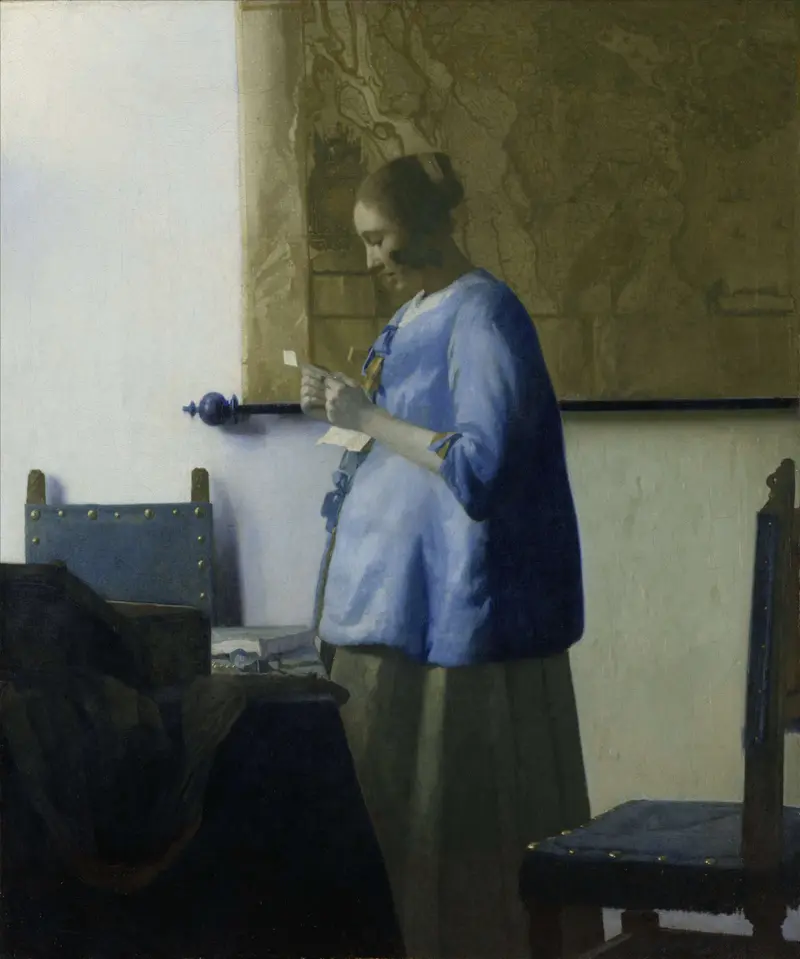
Woman in Blue Reading a Letter
Johannes Vermeer
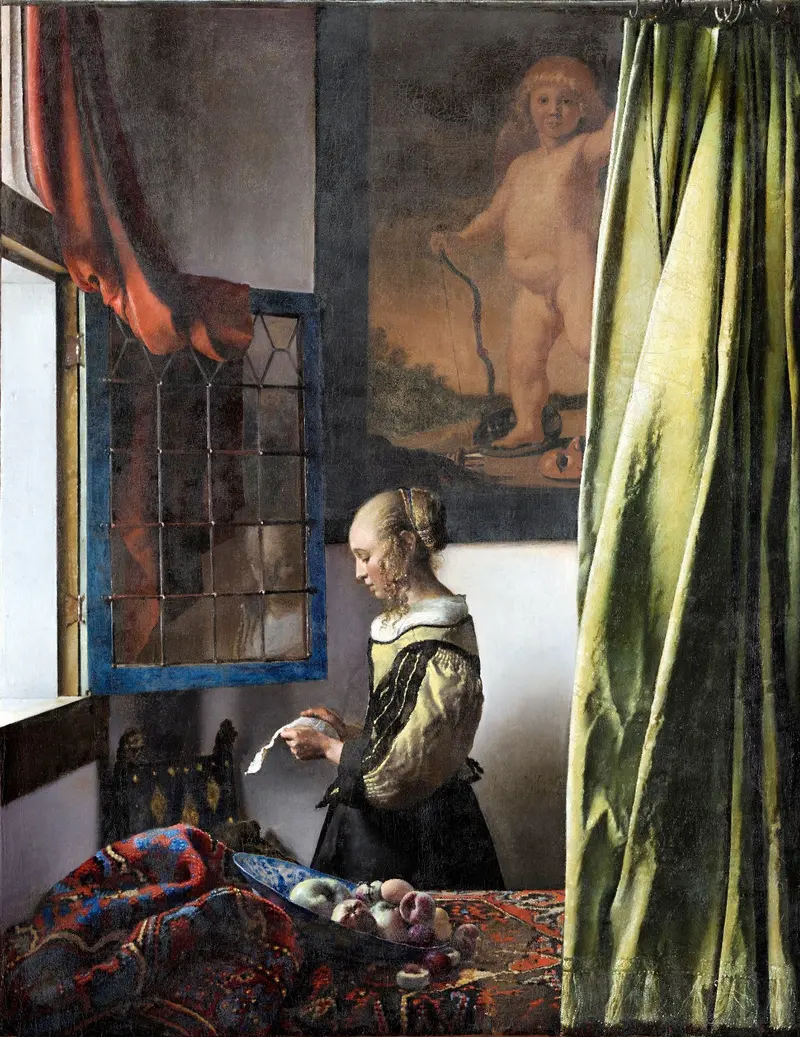
Girl Reading a Letter at an Open Window
Johannes Vermeer
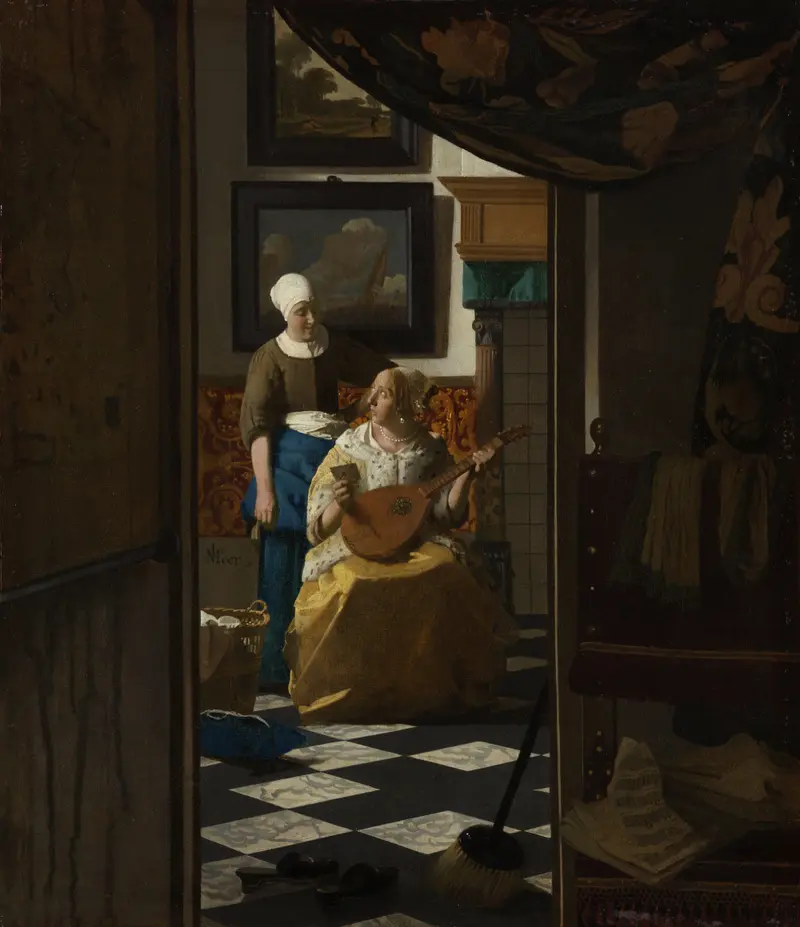
The Love Letter
Johannes Vermeer

The Music Lesson
Johannes Vermeer

A Girl Asleep
Johannes Vermeer
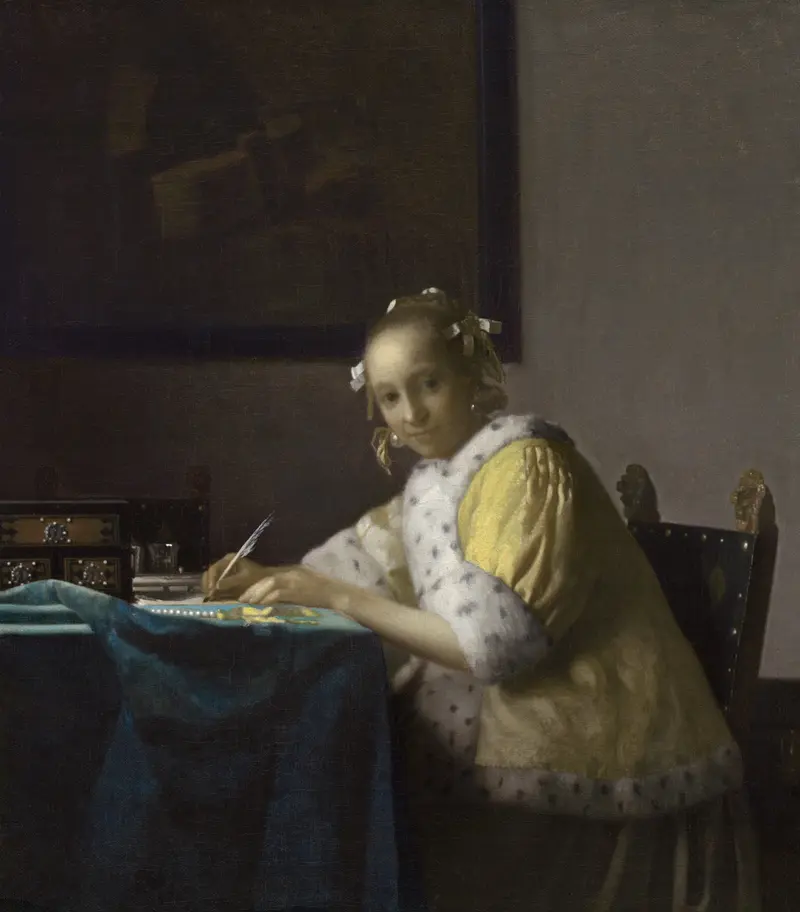
A Lady Writing a Letter
Johannes Vermeer
The Astronomer
Johannes Vermeer
The Lacemaker
Johannes Vermeer




