
The Lacemaker — History & Facts
She wears a yellow bodice with a white lace collar, the light catching the textured surface of her sleeve and the intricate pattern of her collar. The girl sits at a wooden table, its edge visible in the lower right, with a blue-green cloth draped over it, decorated with embroidered flowers and bright red and white threads spilling out in tangled skeins. The background is a blank, pale wall, free of any detail, so that all attention falls on the figure and her work.
The composition is tightly cropped, focusing closely on the act of lacemaking and the concentration of the sitter, with the edges of the table and her body barely contained within the frame. Vermeer renders the threads and lace in the foreground with a blur, creating a sense of depth and suggesting the optical effects of a lens or camera obscura. The paint surface varies from the smooth, luminous skin tones to the textured, almost liquid appearance of the tangled threads, contrasting the discipline of the finished lace with the chaos of the working materials.
The girl's brown hair is parted in the center and styled in two smooth rolls, each tied with a black ribbon. The light source comes from the left, casting a shadow on the right side of her face and arm, and creating a subtle glow along the edge of her sleeve and collar. The lower left corner of the painting features large, loosely painted green leaves and red flowers on the cloth, their outlines softly blurred.
The background wall is painted with a thin, even layer, allowing the texture of the canvas to show through. The Lacemaker is a work by Johannes Vermeer, produced circa 1669–1671 during the period known as the Dutch Golden Age of painting. The subject is depicted with remarkable accuracy, reflecting the artist’s close study of the craft of lacemaking.
Sources: Wikidata Q1216387 · Wikipedia: The Lacemaker (Vermeer) · Image source (Wikimedia Commons)
More Artworks by Johannes Vermeer

View of Delft
Johannes Vermeer

Girl with a Pearl Earring
Johannes Vermeer
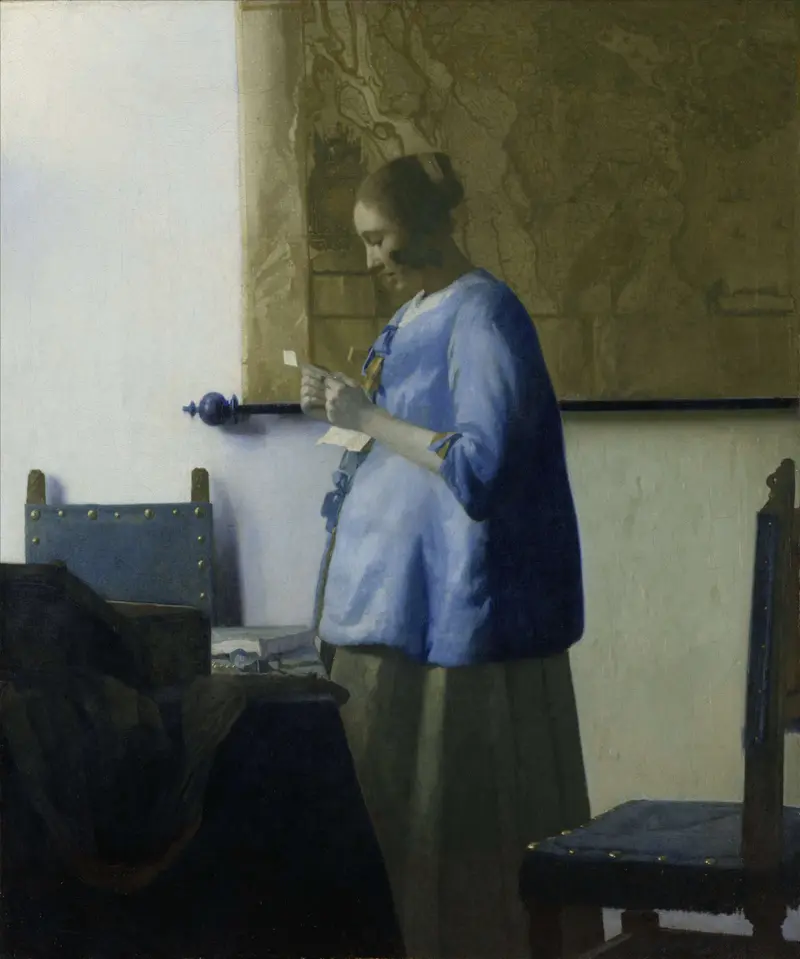
Woman in Blue Reading a Letter
Johannes Vermeer
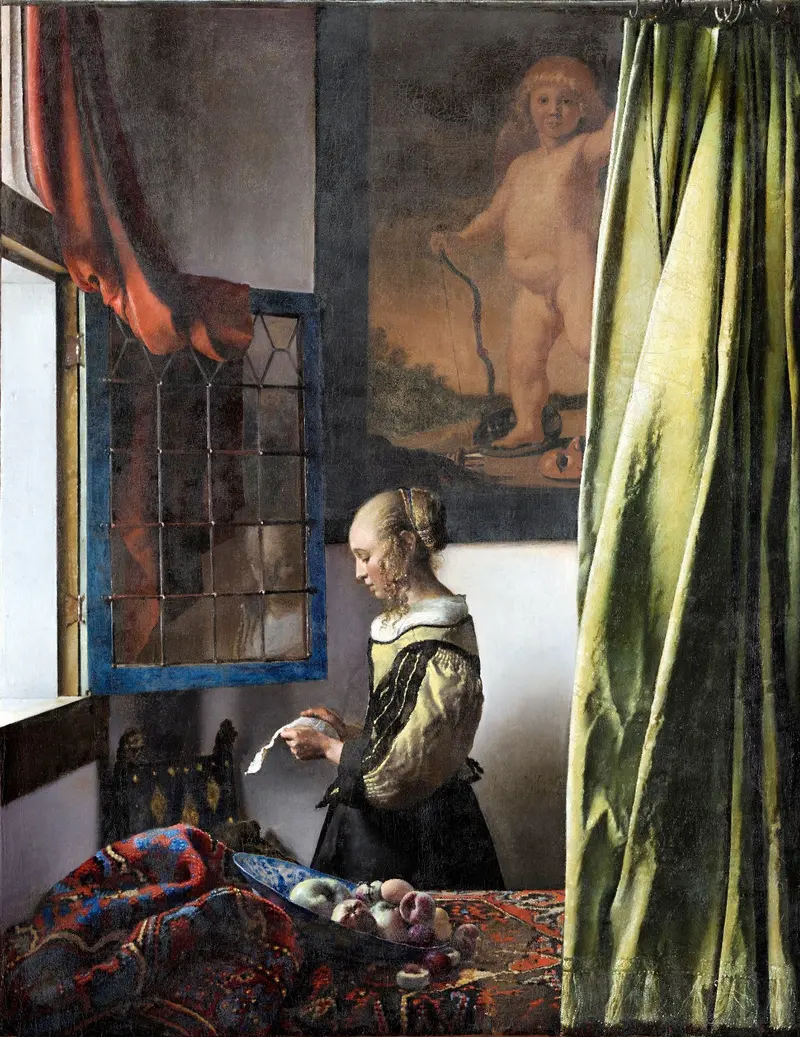
Girl Reading a Letter at an Open Window
Johannes Vermeer
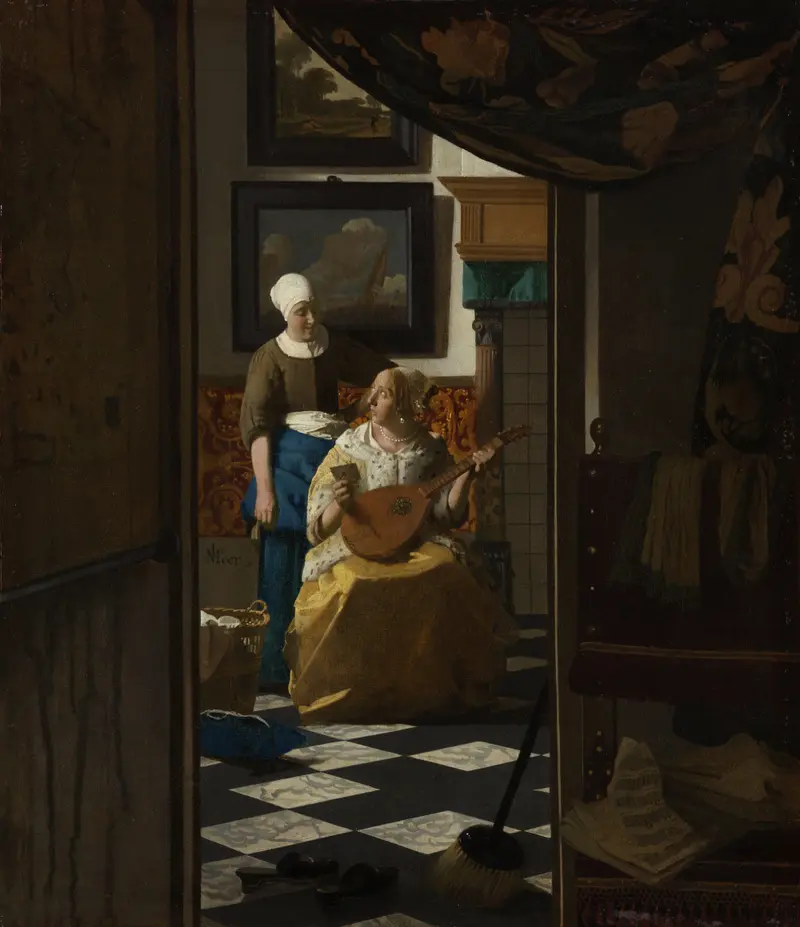
The Love Letter
Johannes Vermeer

The Music Lesson
Johannes Vermeer

A Girl Asleep
Johannes Vermeer
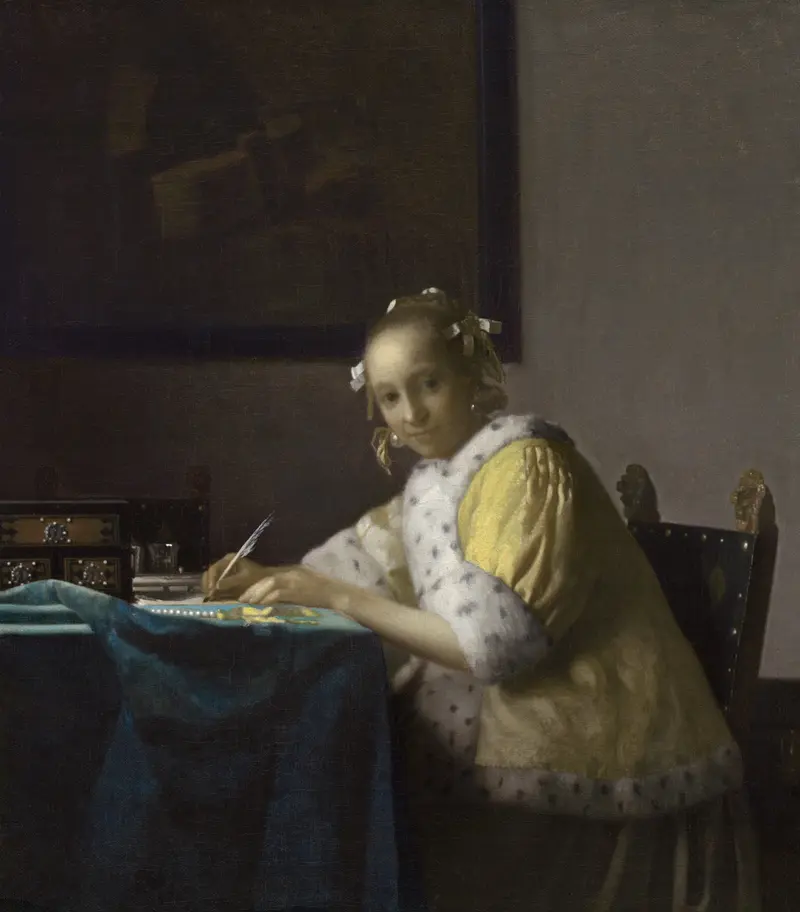
A Lady Writing a Letter
Johannes Vermeer
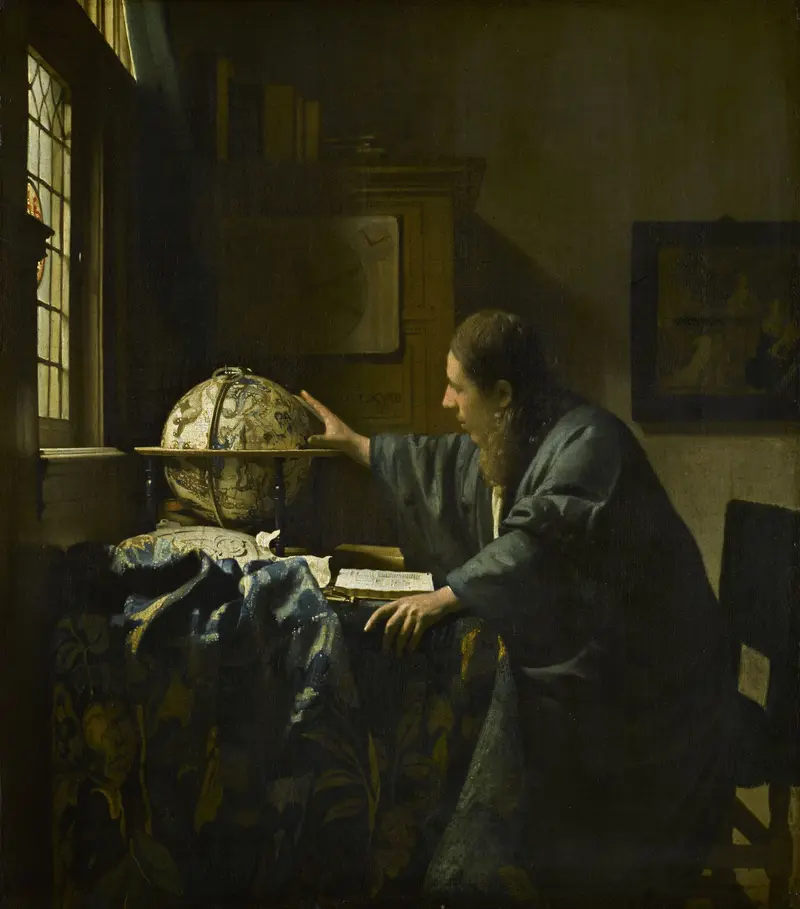
The Astronomer
Johannes Vermeer
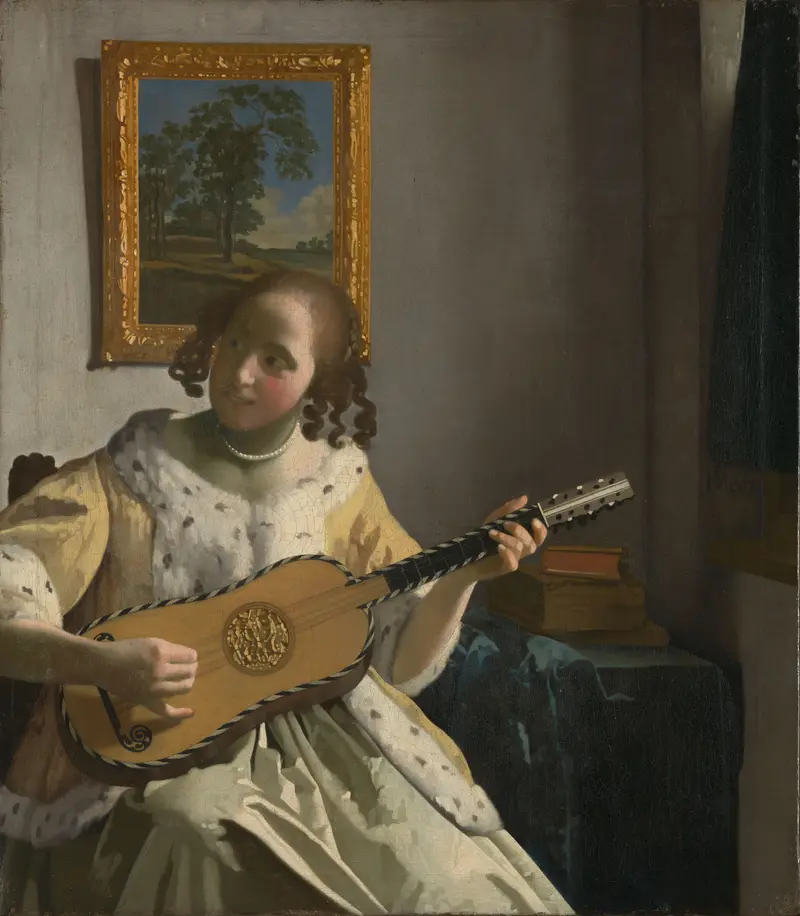
The Guitar Player
Johannes Vermeer
More Genre Scene Art

Banquet of the Officers of the St George Civic Guard
Frans Hals

Rembrandt and Saskia in the Scene of the Prodigal Son
Rembrandt van Rijn

Bal du moulin de la Galette
Pierre-Auguste Renoir

Quadrille at the Moulin Rouge
Henri de Toulouse-Lautrec

A Burial at Ornans
Gustave Courbet

When Will You Marry?
Paul Gauguin