
Woman in Blue Reading a Letter — History & Facts
A woman stands absorbed in reading a letter, her figure placed close to the center of the scene, facing left in profile. She wears a blue jacket with ribbons at the sleeves, and a full skirt that falls to her feet; her hair is gathered back from her face. The light falls from the left, illuminating her jacket and the side of her face while casting the rest of the room in gentle shadow.
Behind her, a large map fills the upper right of the wall, its intricate network of lines and landforms rendered in muted tones. A blue chair with brass studs stands beside the table, its back facing the viewer, while another chair is partly visible to the right. The composition is tightly framed, with no floor or ceiling in view, focusing attention on the woman and her immediate surroundings.
Vermeer arranges the scene so that the woman's gesture—her hands delicately holding the letter—becomes the quiet focal point. The brushwork is smooth and subtle, with soft transitions in the folds of fabric and the play of light across the wall and objects. The palette is dominated by cool blues and creamy whites, with touches of gold and brown in the map and furniture. Woman in Blue Reading a Letter was created by Johannes Vermeer around 1663, during the era known as the Dutch Golden Age of painting.
The painting has been associated with the City of Amsterdam since the Van der Hoop bequest in 1854 and has been in the Rijksmuseum since 1885. A map of Holland and West Friesland, published in the early seventeenth century, appears on the back wall and may suggest a connection between the letter and travel. Woman in Blue Reading a Letter is considered a key example of genre art from the Dutch Golden Age, notable for its intimate depiction of a private moment and its refined use of light and color.
Sources: Rijksmuseum, record SK-C-251 · Wikidata Q166937 · Wikipedia: Woman Reading a Letter (Vermeer) · Image source (Wikimedia Commons)
More Artworks by Johannes Vermeer

View of Delft
Johannes Vermeer

Girl with a Pearl Earring
Johannes Vermeer
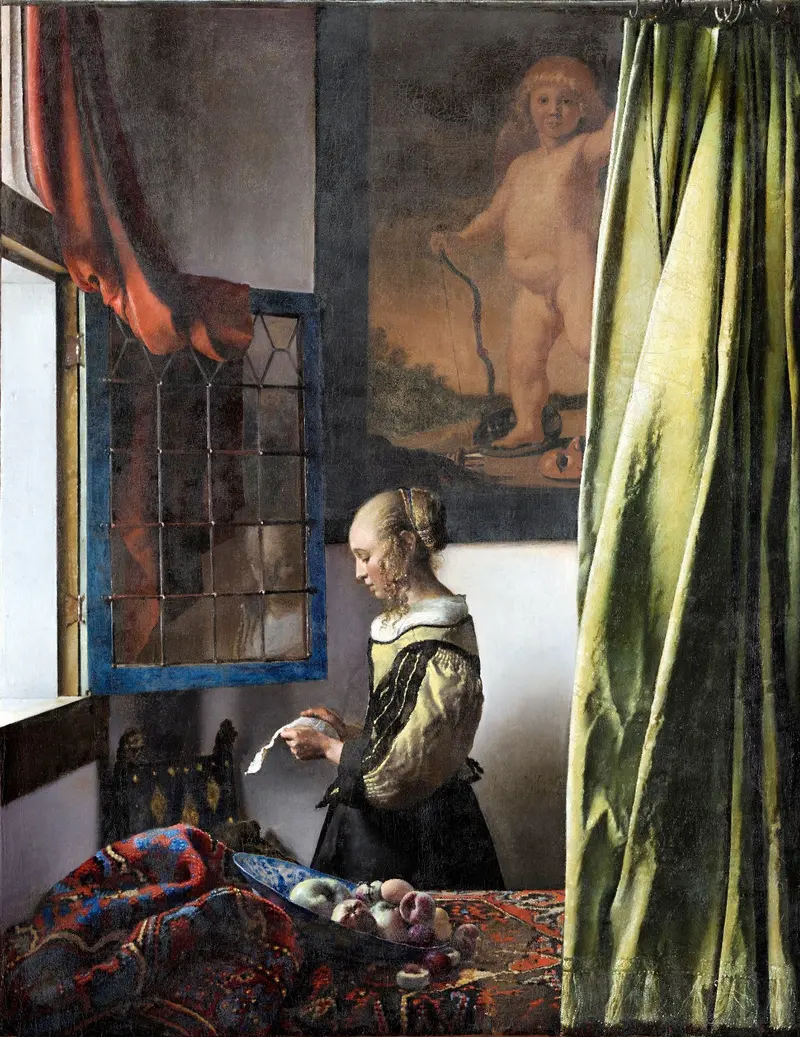
Girl Reading a Letter at an Open Window
Johannes Vermeer
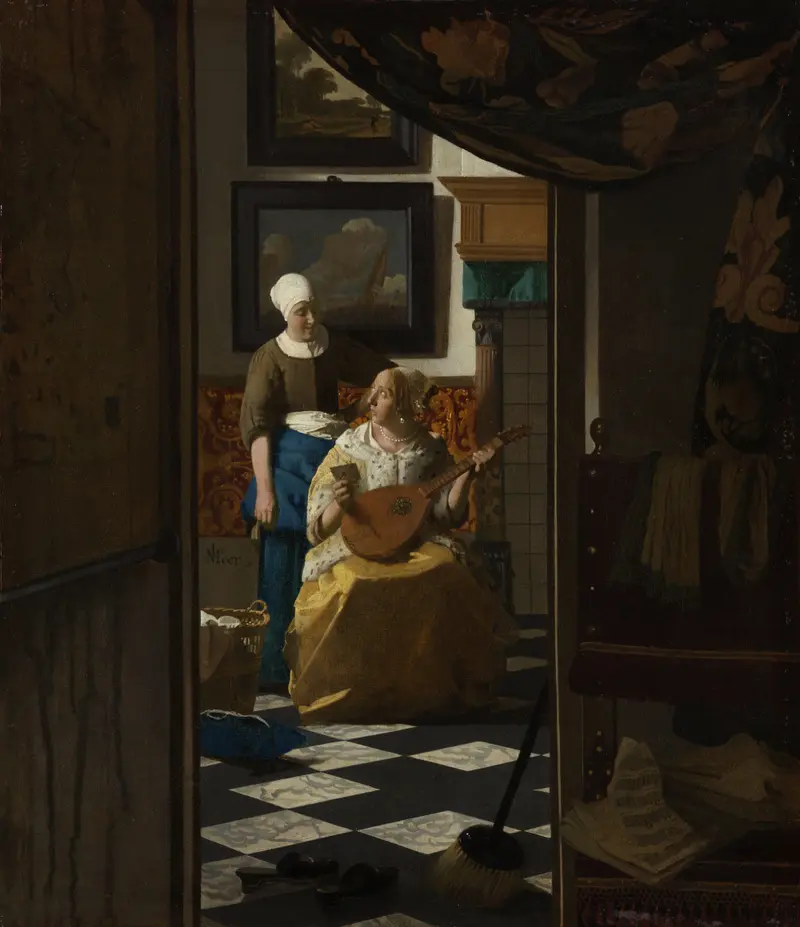
The Love Letter
Johannes Vermeer

The Music Lesson
Johannes Vermeer

A Girl Asleep
Johannes Vermeer
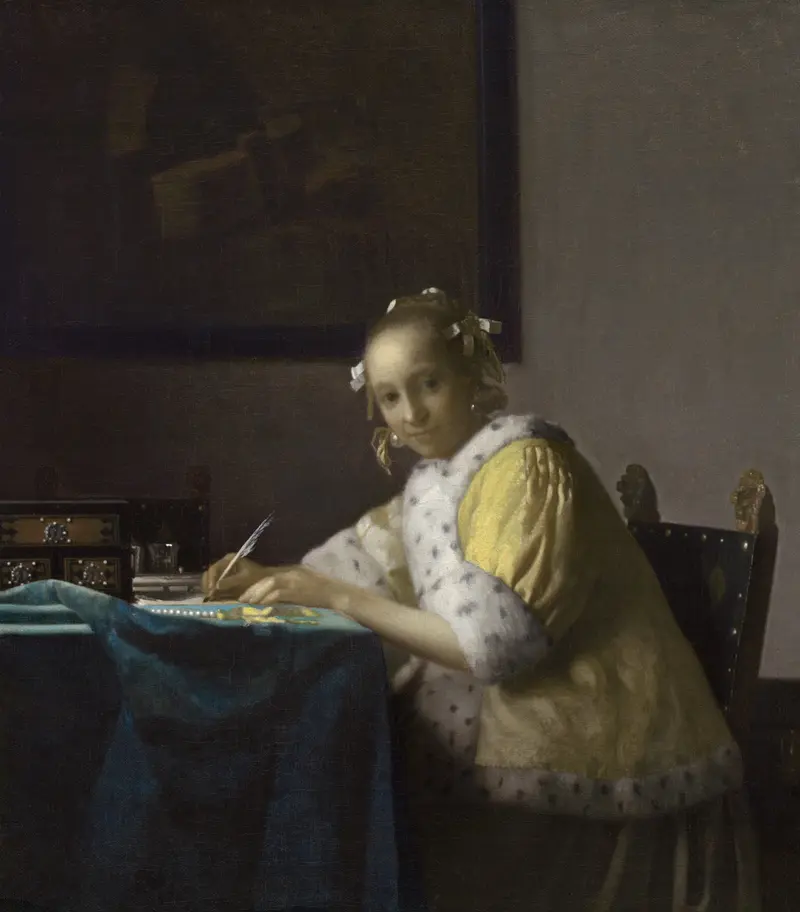
A Lady Writing a Letter
Johannes Vermeer
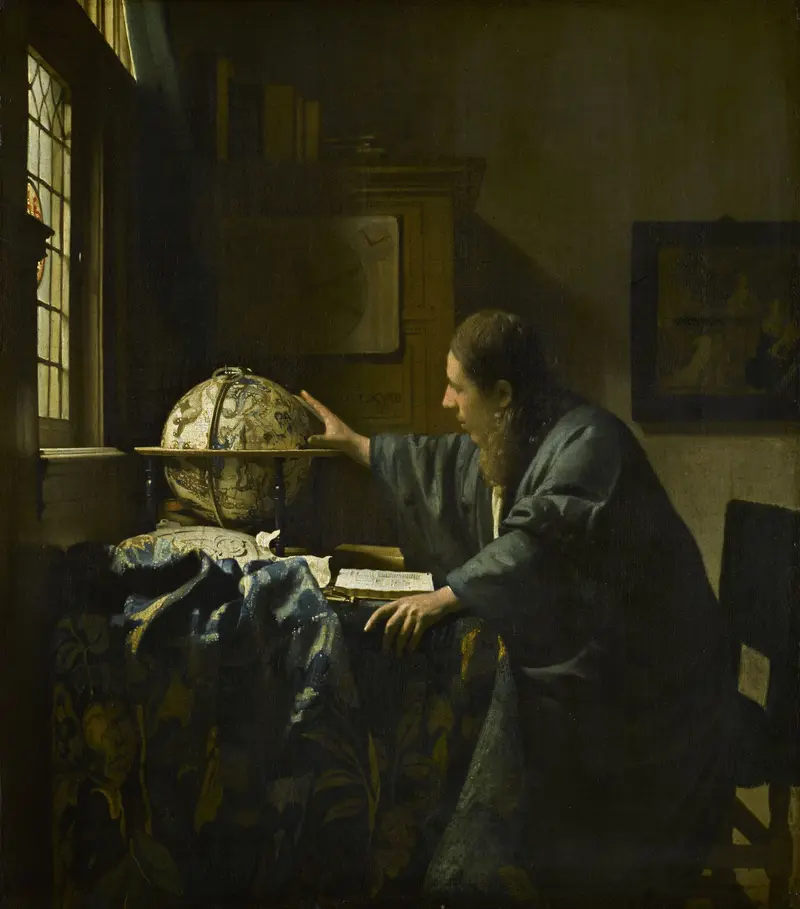
The Astronomer
Johannes Vermeer
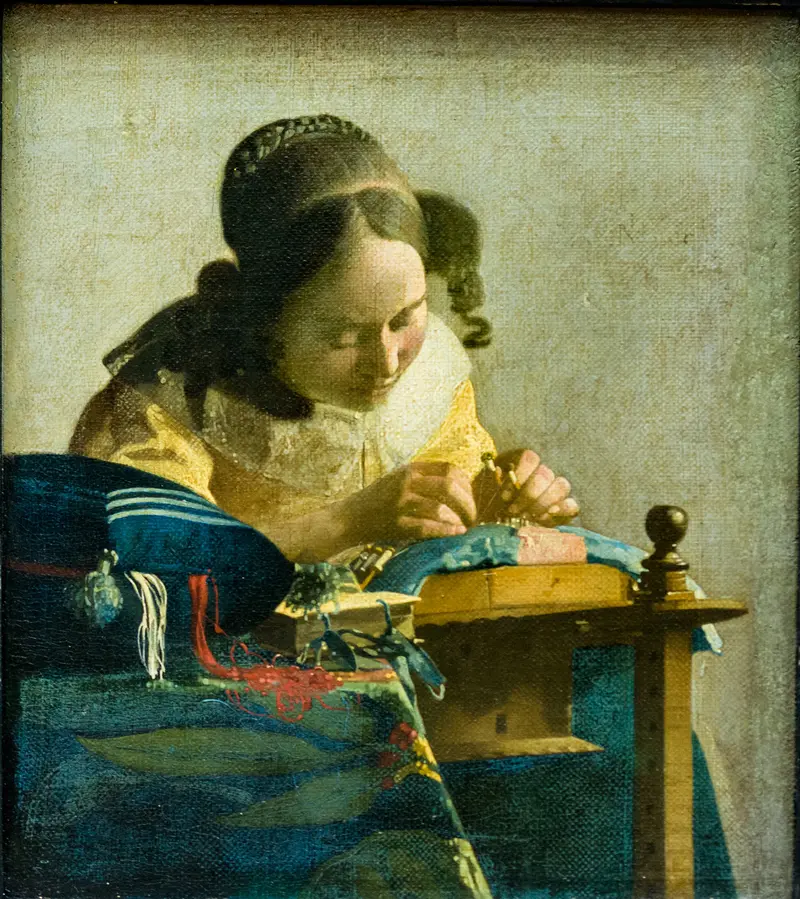
The Lacemaker
Johannes Vermeer
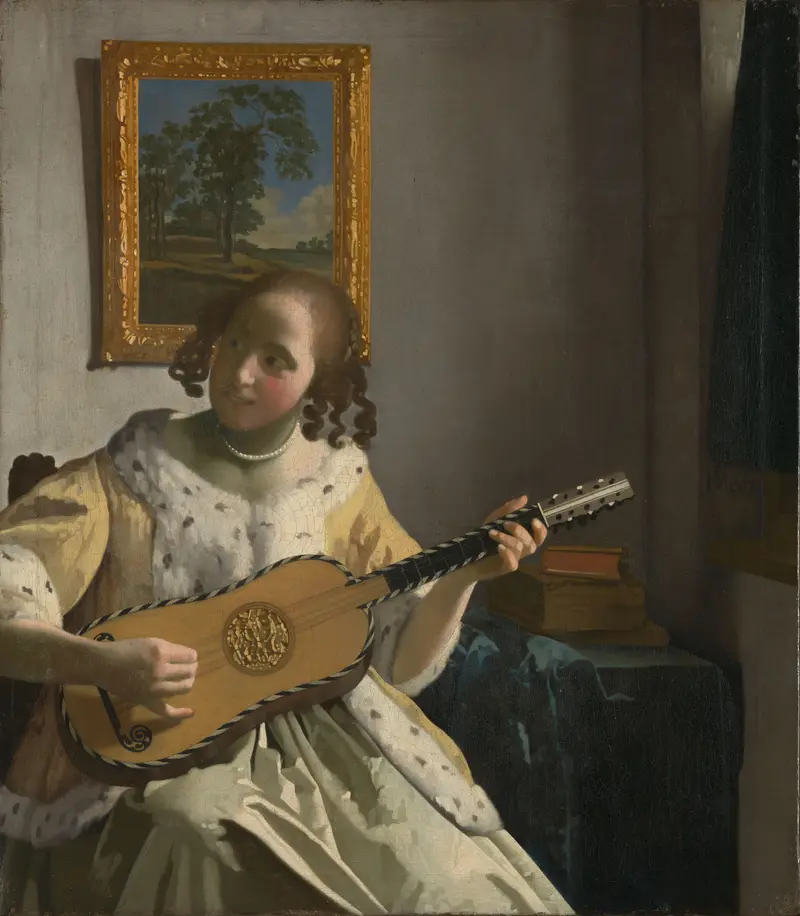
The Guitar Player
Johannes Vermeer
More Genre Scene Art

Banquet of the Officers of the St George Civic Guard
Frans Hals

Rembrandt and Saskia in the Scene of the Prodigal Son
Rembrandt van Rijn

Bal du moulin de la Galette
Pierre-Auguste Renoir

Quadrille at the Moulin Rouge
Henri de Toulouse-Lautrec

A Burial at Ornans
Gustave Courbet

When Will You Marry?
Paul Gauguin