
A Girl Asleep — History & Facts
A young woman in a red dress sits slumped at a table, her head propped on her hand and her eyes closed in sleep. She occupies the left side of the scene, framed by a wall and a partly open door that reveals a quiet, sparsely furnished room beyond. A thick, patterned carpet in vivid reds and blues covers the table in front of her, its intricate design rendered with careful, textured brushwork.
On the table, a white ewer and a blue-and-white bowl filled with fruit sit beside a glass tipped on its side, a knife, and a gauzy cloth draped loosely over the objects. The woman’s face is softly illuminated, with light falling from the left and catching the folds of her dress and the white collar around her neck. A sturdy chair with brass studs faces the viewer in the foreground, its back turned and angled toward the table.
The overall palette is warm and subdued, with deep reds, golden browns, and creamy whites dominating the composition. The paint surface shows Vermeer’s characteristic smoothness, with subtle transitions of light and shadow and a meticulous attention to the play of textures, from the sheen of the jug to the softness of the tablecloth. The composition is carefully balanced, with the diagonal of the tablecloth leading toward the woman's resting figure and the open doorway providing depth and a sense of narrative pause. A Girl Asleep was painted by Johannes Vermeer in 1657, during the height of the Dutch Golden Age.
The painting is recognized as genre art, depicting a domestic interior and the quiet moment of a woman lost in sleep. In 1913, Benjamin Altman bequeathed the work to the Metropolitan Museum of Art, where it remains on view.
Sources: Metropolitan Museum of Art, record 14.40.611 · Wikidata Q684935 · Wikipedia: A Girl Asleep · Image source (Wikimedia Commons)
More Artworks by Johannes Vermeer

View of Delft
Johannes Vermeer

Girl with a Pearl Earring
Johannes Vermeer
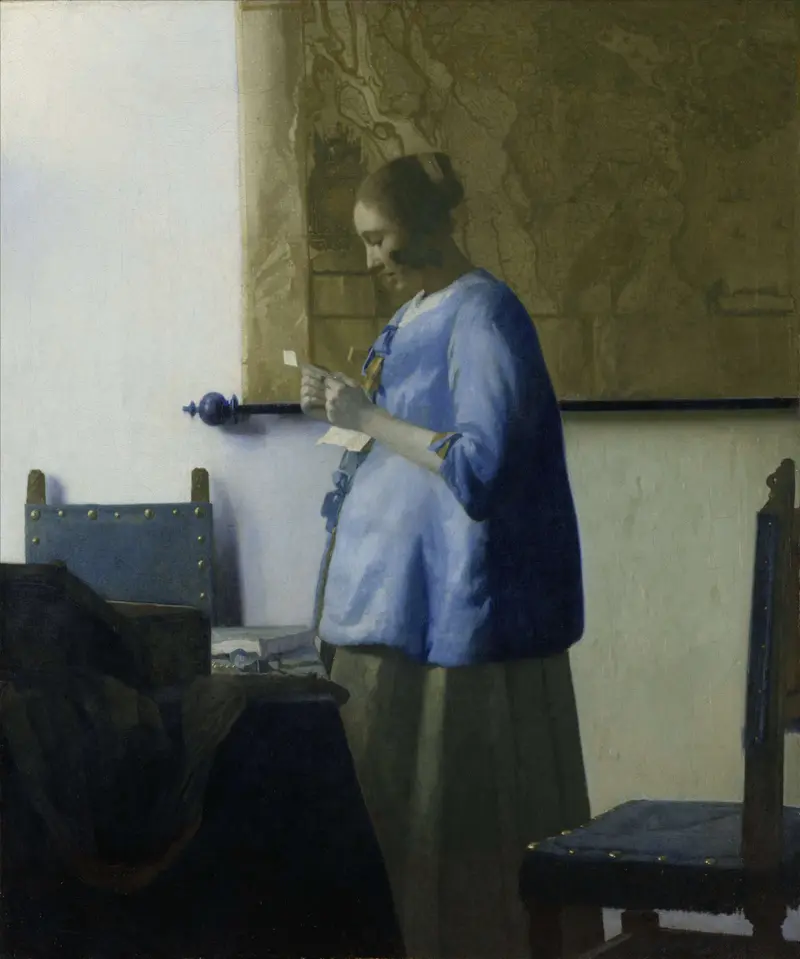
Woman in Blue Reading a Letter
Johannes Vermeer
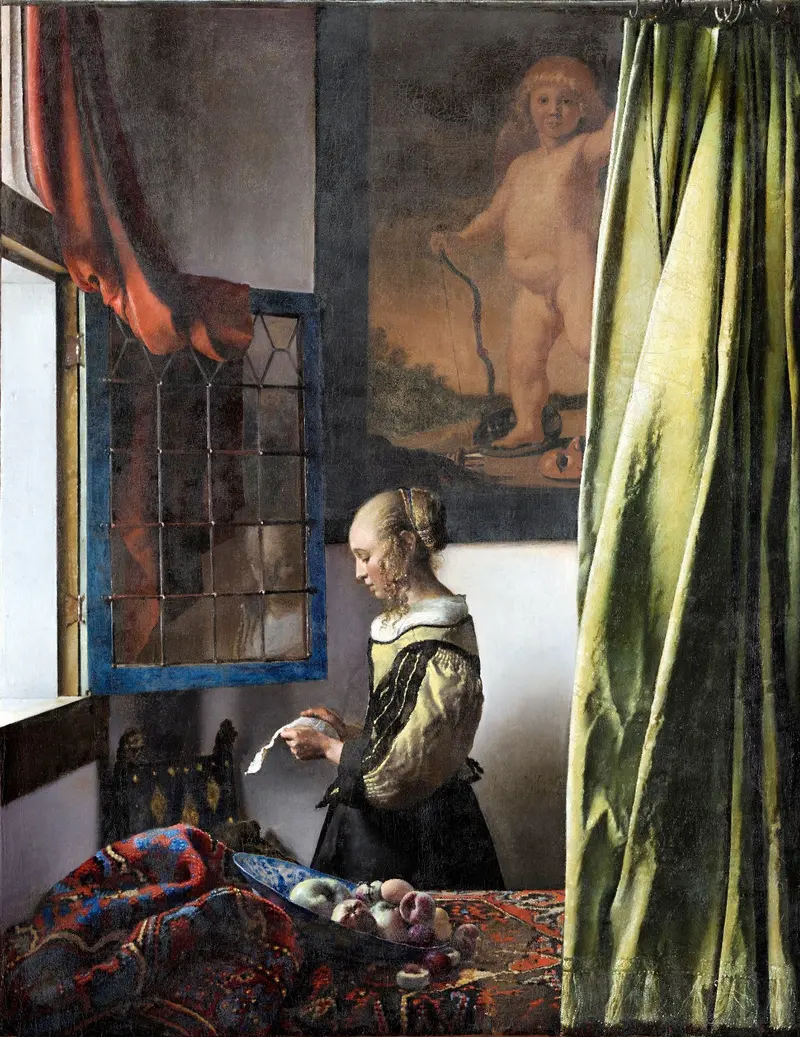
Girl Reading a Letter at an Open Window
Johannes Vermeer
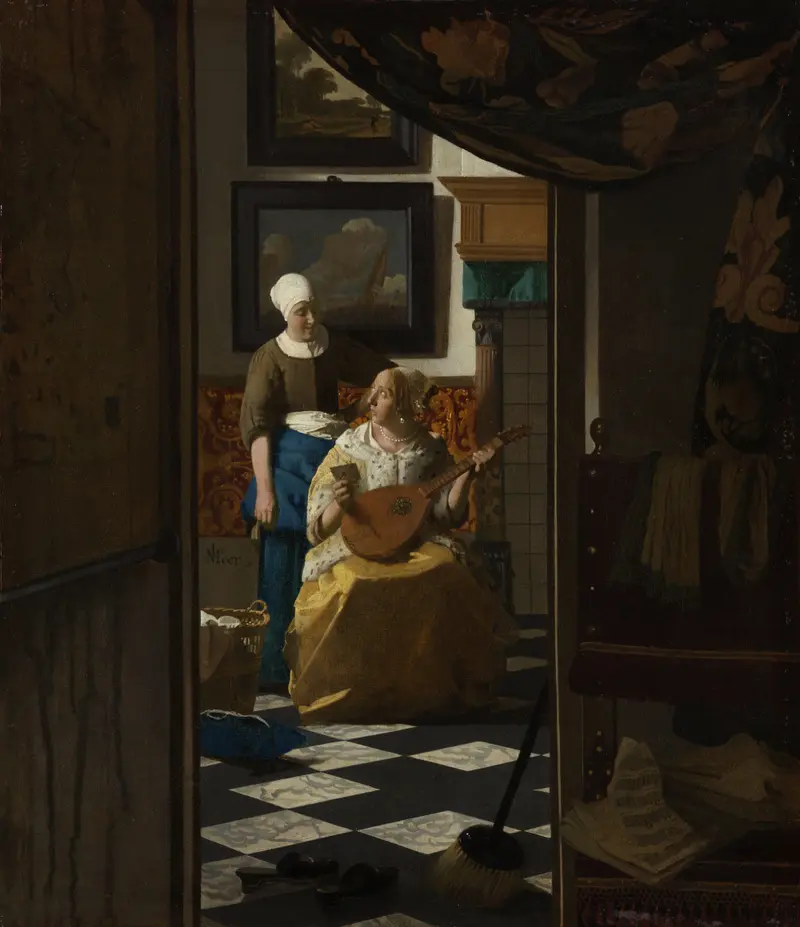
The Love Letter
Johannes Vermeer

The Music Lesson
Johannes Vermeer
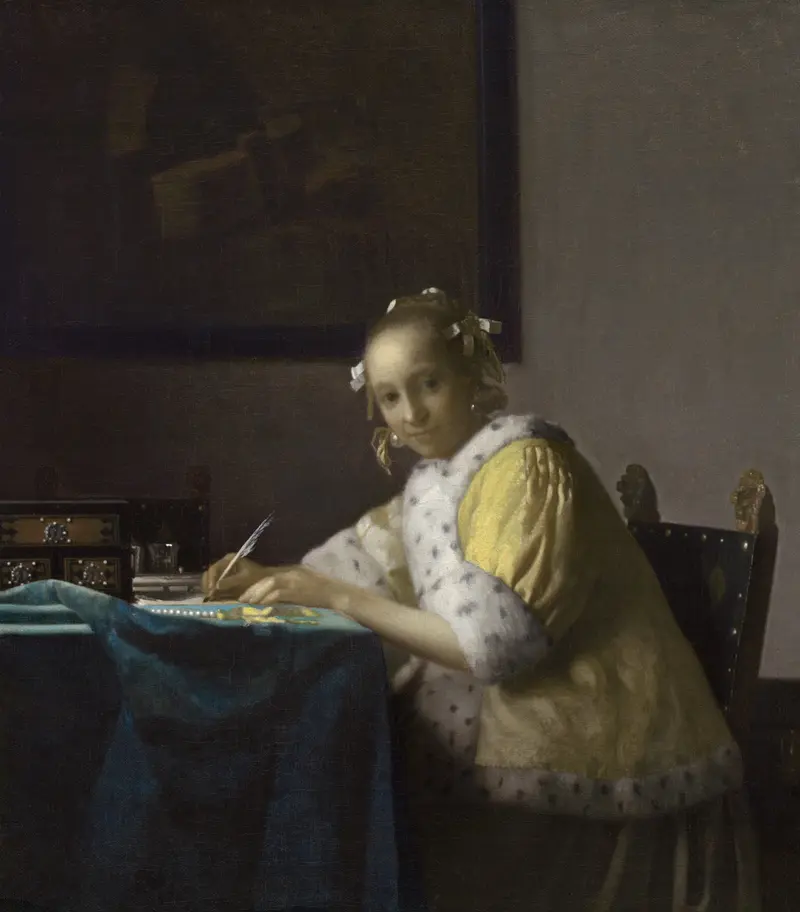
A Lady Writing a Letter
Johannes Vermeer
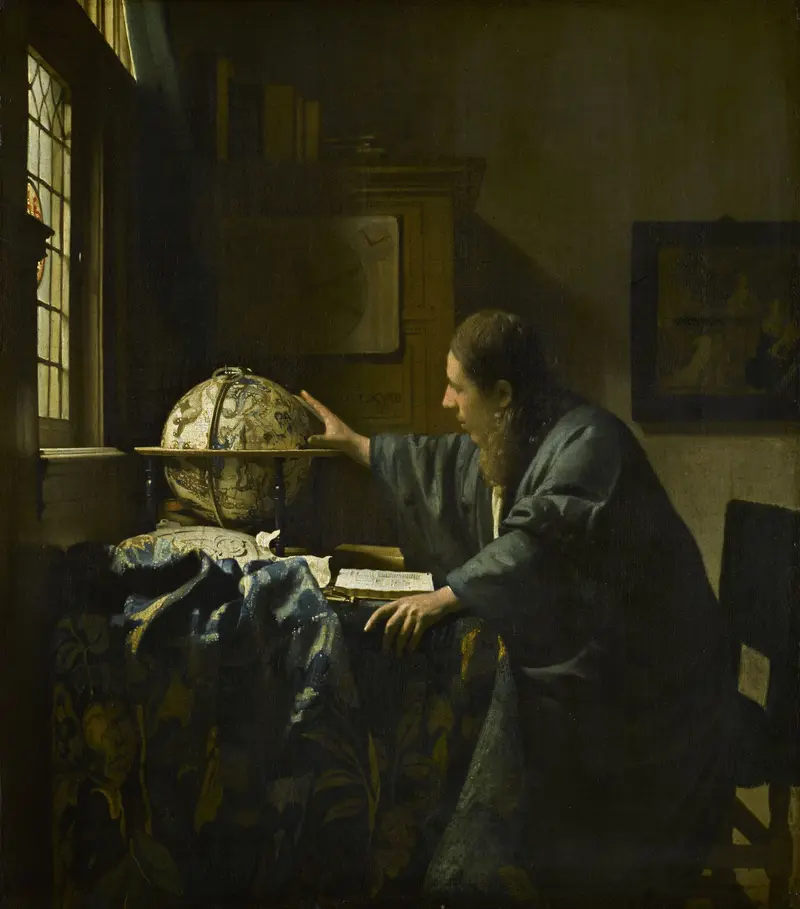
The Astronomer
Johannes Vermeer
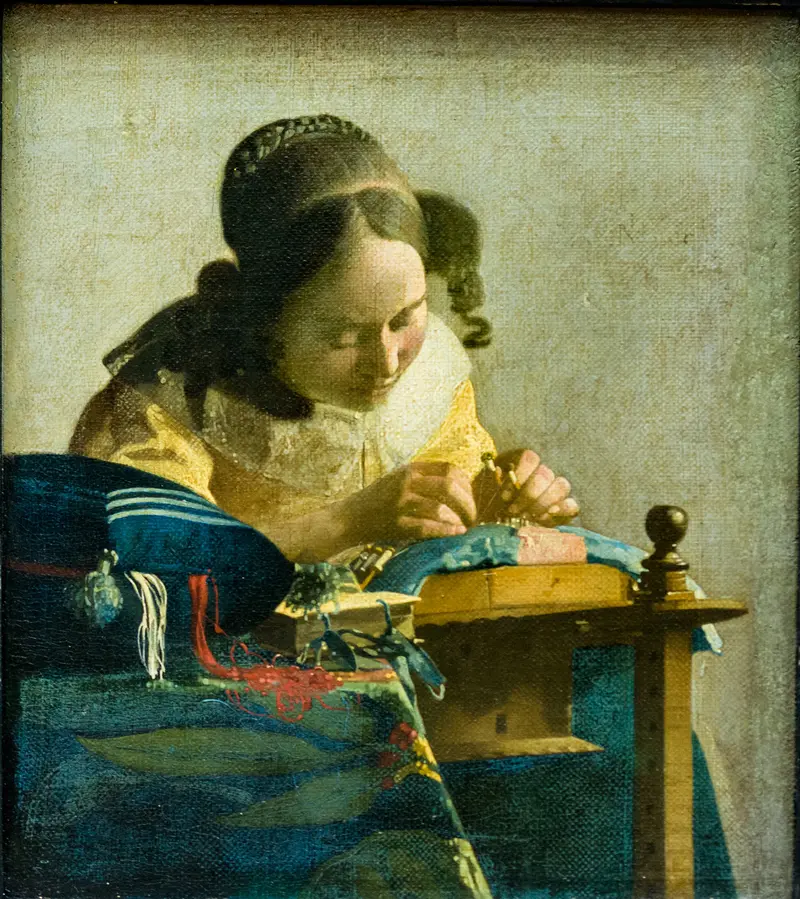
The Lacemaker
Johannes Vermeer
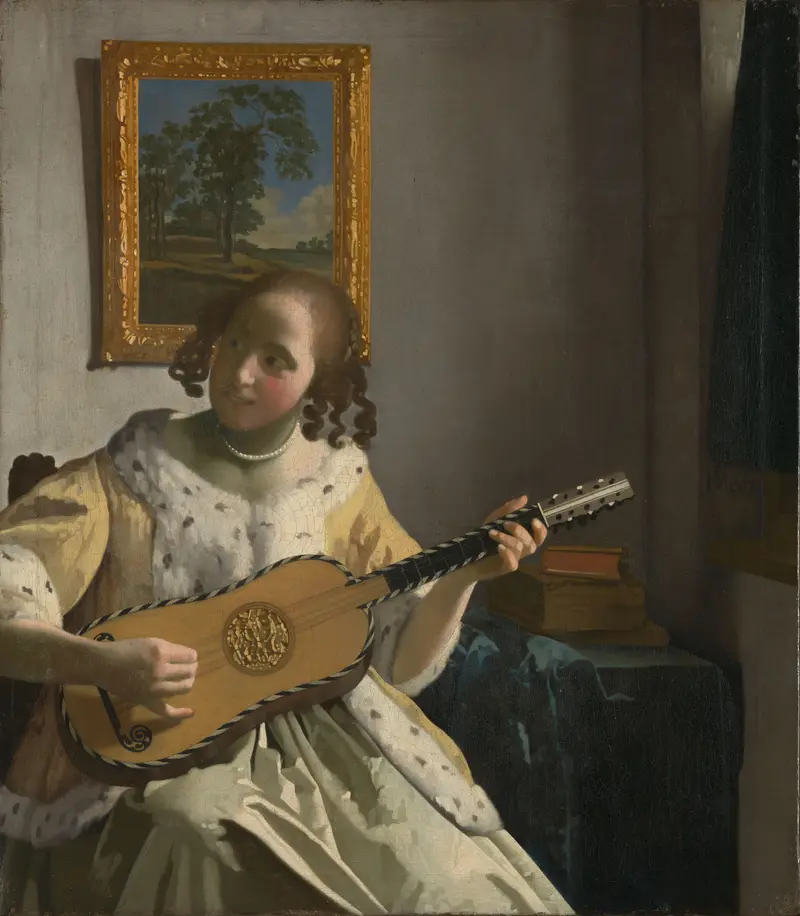
The Guitar Player
Johannes Vermeer
More Genre Scene Art

Banquet of the Officers of the St George Civic Guard
Frans Hals

Rembrandt and Saskia in the Scene of the Prodigal Son
Rembrandt van Rijn

Bal du moulin de la Galette
Pierre-Auguste Renoir

Quadrille at the Moulin Rouge
Henri de Toulouse-Lautrec

A Burial at Ornans
Gustave Courbet

When Will You Marry?
Paul Gauguin