
Portrait of Anton Ivanovich — History & Facts
In 1838, a young Taras Shevchenko—then still a serf—created Portrait of Anton Ivanovich while studying at the Imperial Academy of Arts in St. Petersburg. This portrait is one of the earliest surviving works from Shevchenko’s formative years, painted just before he gained his freedom through the famous lottery organized by Russian artists and intellectuals.
The sitter, Anton Ivanovich, remains a somewhat mysterious figure, yet the portrait is often cited as evidence of Shevchenko’s emerging talent and the support he received from influential circles at a pivotal moment in his life. The painting captures Anton Ivanovich in a moment of quiet introspection, his gaze turned slightly away from the viewer, suggesting thoughtfulness or perhaps reserve. Shevchenko’s attention to the sitter’s features—the furrowed brow, the careful rendering of hair and clothing—signals both respect and psychological curiosity. The soft modeling of light across Anton’s face draws the eye to his expression, inviting us to wonder about his inner world.
Unlike the more formal, courtly portraits of the Russian academic tradition, such as those by Karl Bryullov, Shevchenko’s approach feels intimate and immediate, focusing on character rather than status. The physical history of Portrait of Anton Ivanovich is not fully documented, and the medium remains uncertain, though it is likely to be oil or watercolor, as was typical for Shevchenko’s early portraits. The work stands as a testament to his years of artistic apprenticeship, before he became a celebrated poet and a leading figure in Ukrainian culture. Today, the portrait is held in a Ukrainian museum collection, where it is valued not only for its artistic qualities but also as a rare witness to Shevchenko’s journey from serfdom to national icon.
More Artworks by Taras Shevchenko
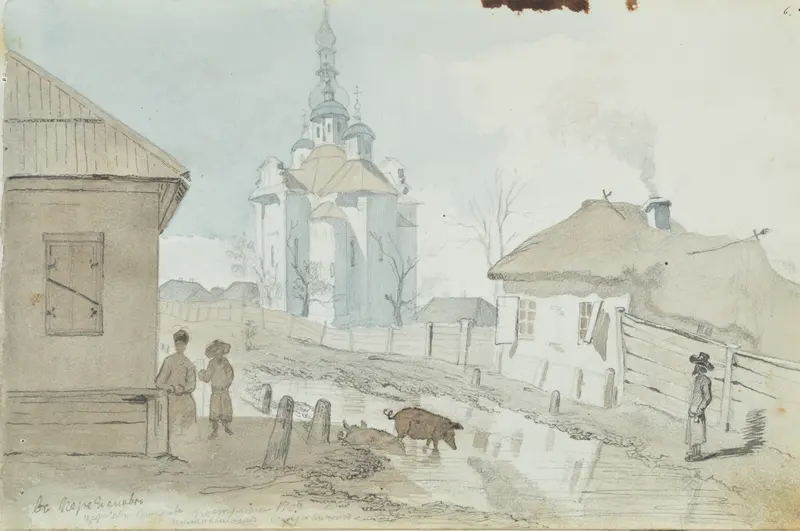
1845 Sh Sketchbook f.06r
Taras Shevchenko

1845 Sh Sketchbook f.04r
Taras Shevchenko

1848 Bilia vohnu
Taras Shevchenko
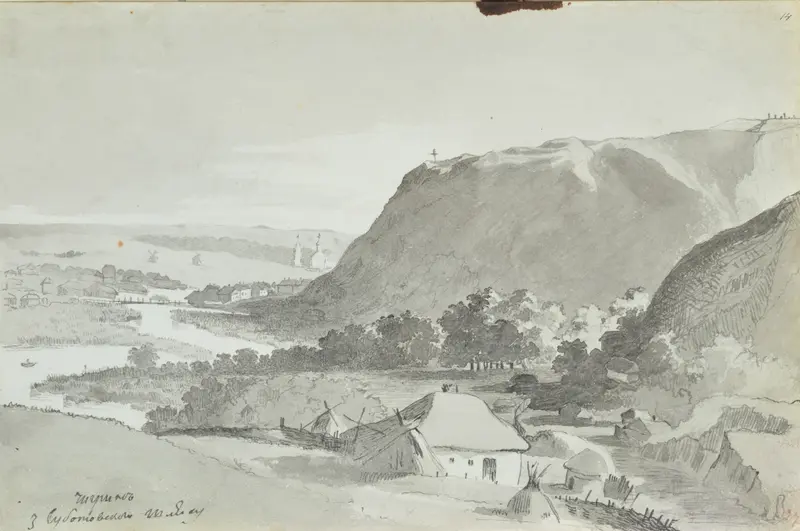
1845 Sh Sketchbook f.14r
Taras Shevchenko
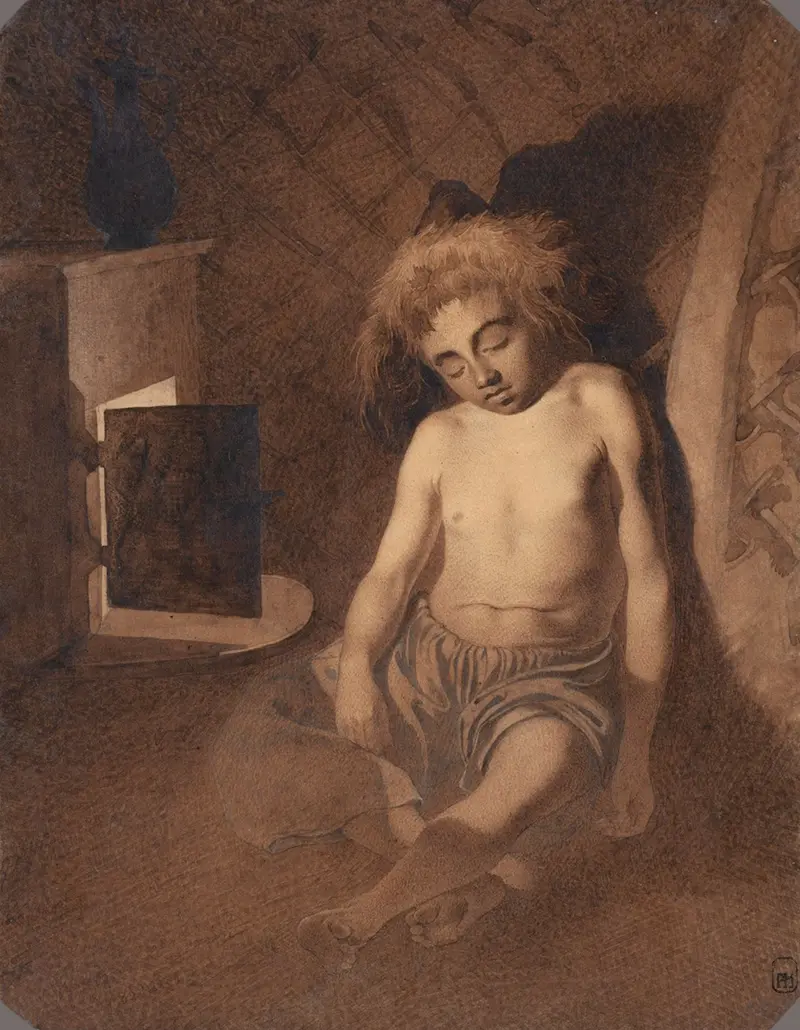
1848 Hlopcyk zasnuv
Taras Shevchenko
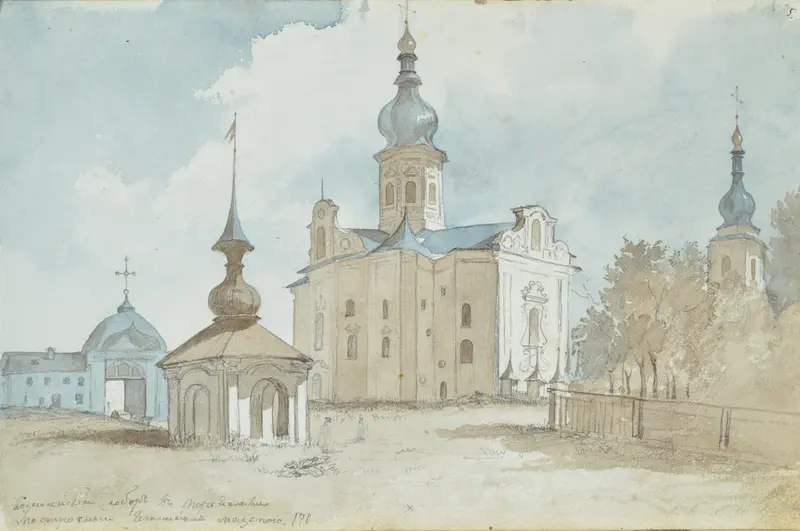
1845 Sh Sketchbook f.05r
Taras Shevchenko
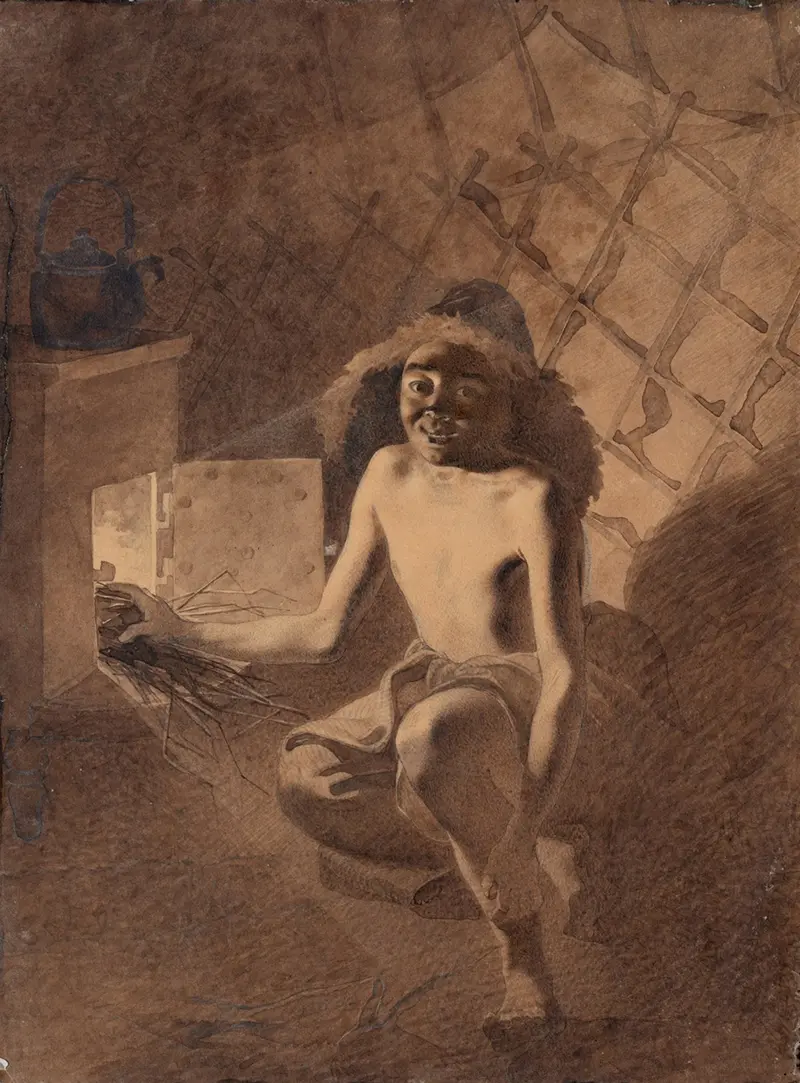
1848 Hlopcyk rozpalije
Taras Shevchenko
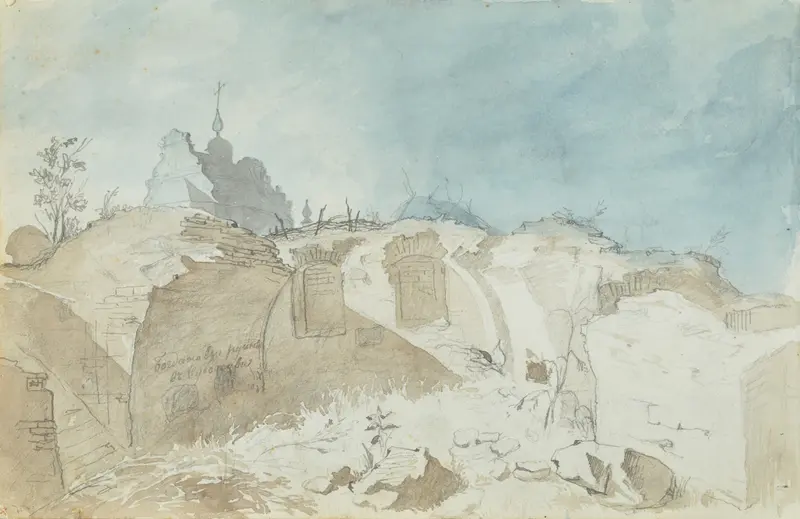
1845 Sh Sketchbook f.12v
Taras Shevchenko
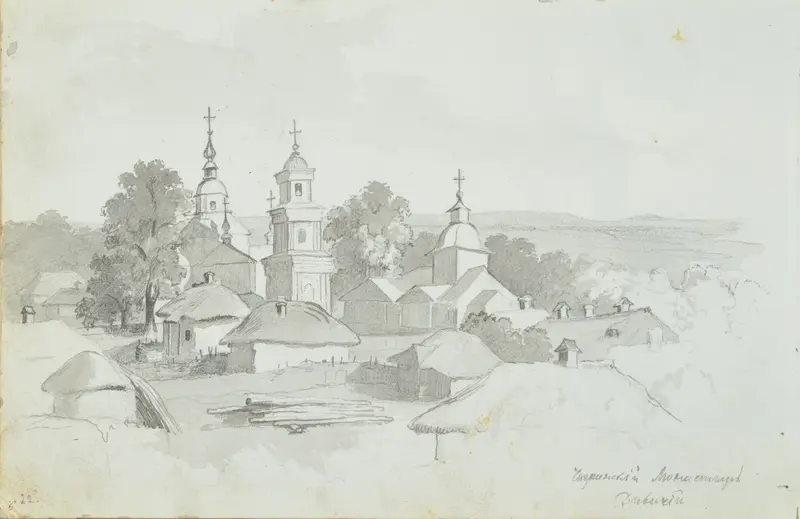
1845 Sh Sketchbook zz f.11v
Taras Shevchenko
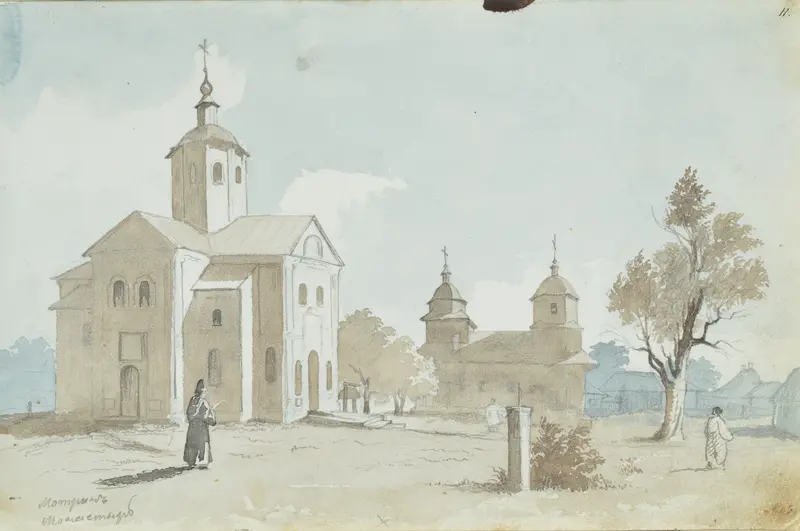
1845 Sh Sketchbook f.11r
Taras Shevchenko





