
Portrait of Charlotte Cuhrt — History & Facts
It is the boldness of color that first seizes the eye in Portrait of Charlotte Cuhrt by Hermann Max Pechstein. The sitter’s vivid red dress slices through the space, commanding attention and setting her apart from the swirling, almost abstract background of yellow and green. Her gaze is steady, direct, and unflinching, while her posture—one arm draped over the chair, the other resting in her lap—suggests both composure and a subtle readiness.
The black hat frames her face like a halo, its shadow intensifying the pallor of her skin and the sharpness of her features. The angular lines of the chair and the patterned carpet beneath her feet echo the energy of her presence, drawing the viewer into a world where color and form speak as loudly as expression. Painted in 1910, this work stands at the crossroads of German Expressionism, a moment when artists like Pechstein broke from tradition to capture psychological depth through radical simplification and heightened palette. Portraits of this era were often commissioned by the bourgeoisie, eager to see themselves reflected in the new language of modern art.
The painting’s documented exhibition at the Neue Sezession in Berlin situates it firmly within the avant-garde circles of its time, when artists and patrons alike were challenging the old order. Though history has kept only scattered records of Charlotte Cuhrt herself, the painting’s journey—from private commission, through family hands, to modern collections—invites us to look again, searching for the individual behind the mask of color and line.
More Artworks by Hermann Max Pechstein
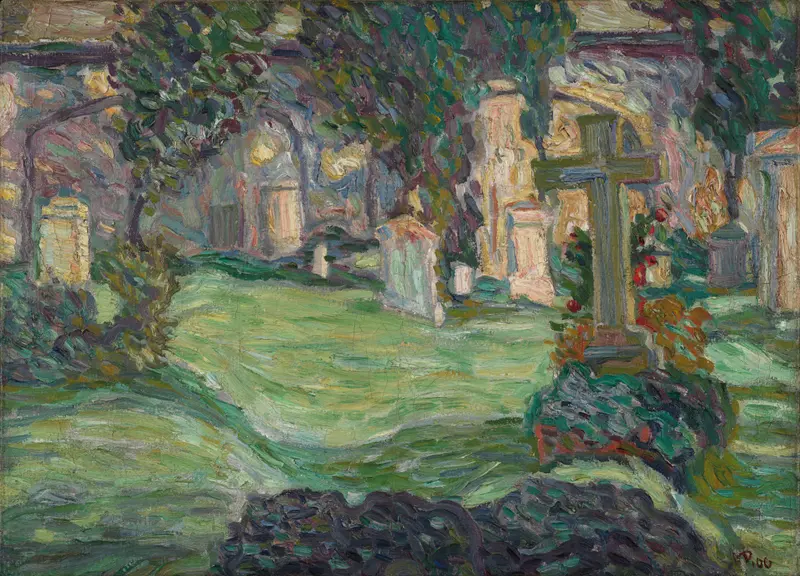
Max Pechstein Eliasfriedhof in Dresden
Hermann Max Pechstein

Früchte
Hermann Max Pechstein
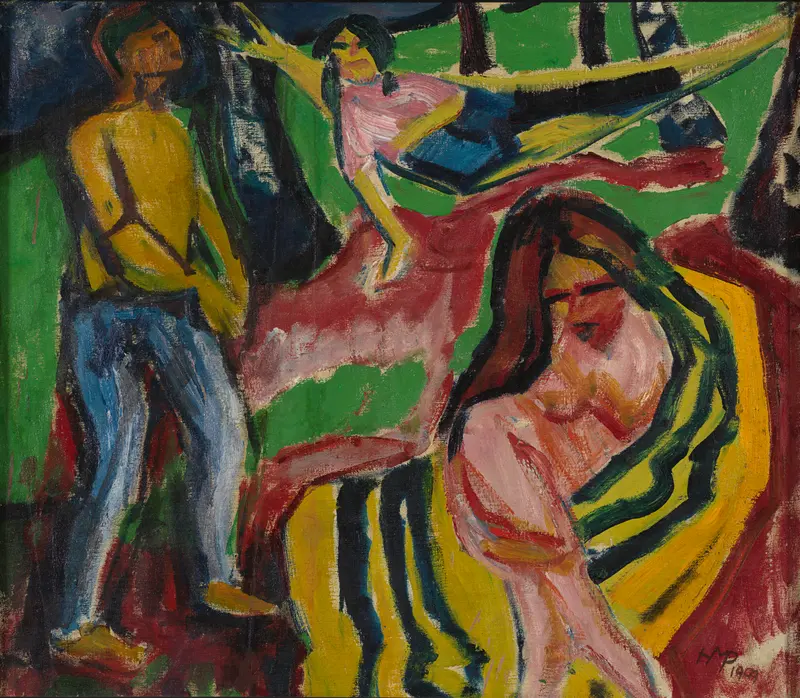
Im Wald bei Moritzburg
Hermann Max Pechstein
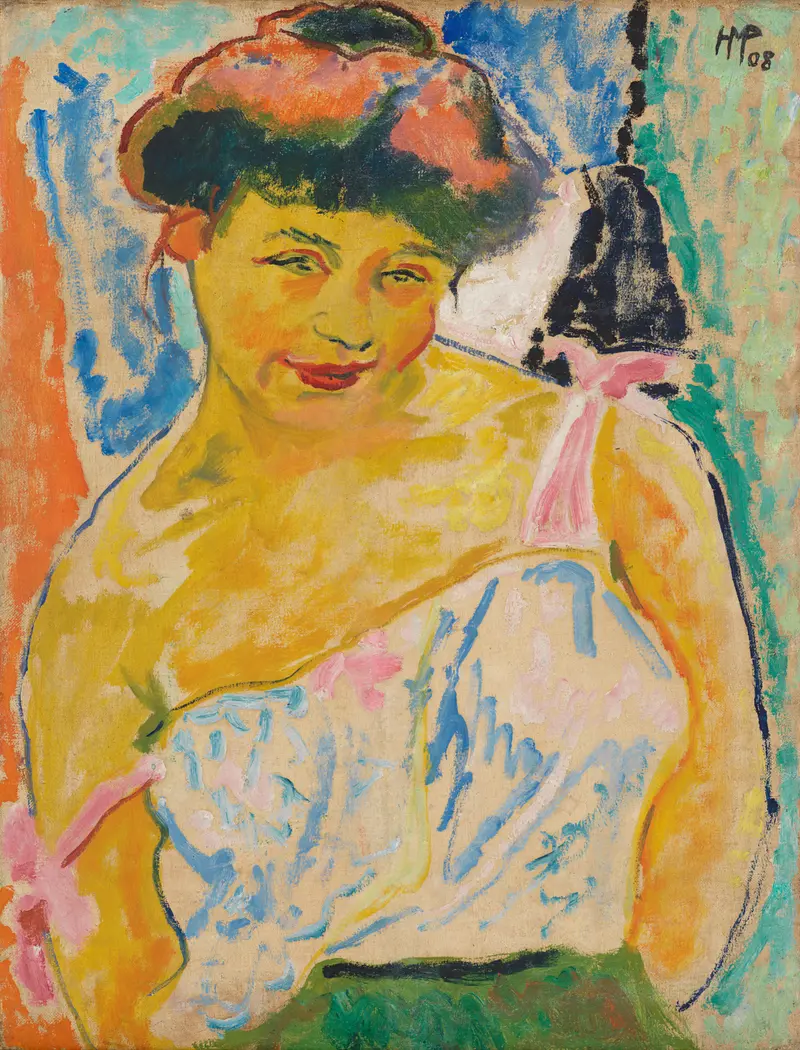
Junges Mädchen
Hermann Max Pechstein
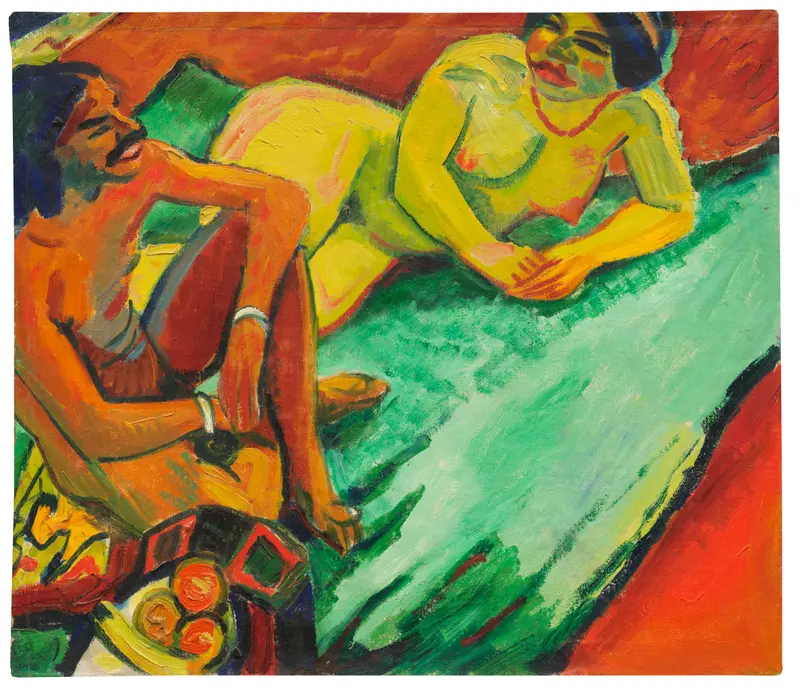
Weib mit Inder auf Teppich
Hermann Max Pechstein
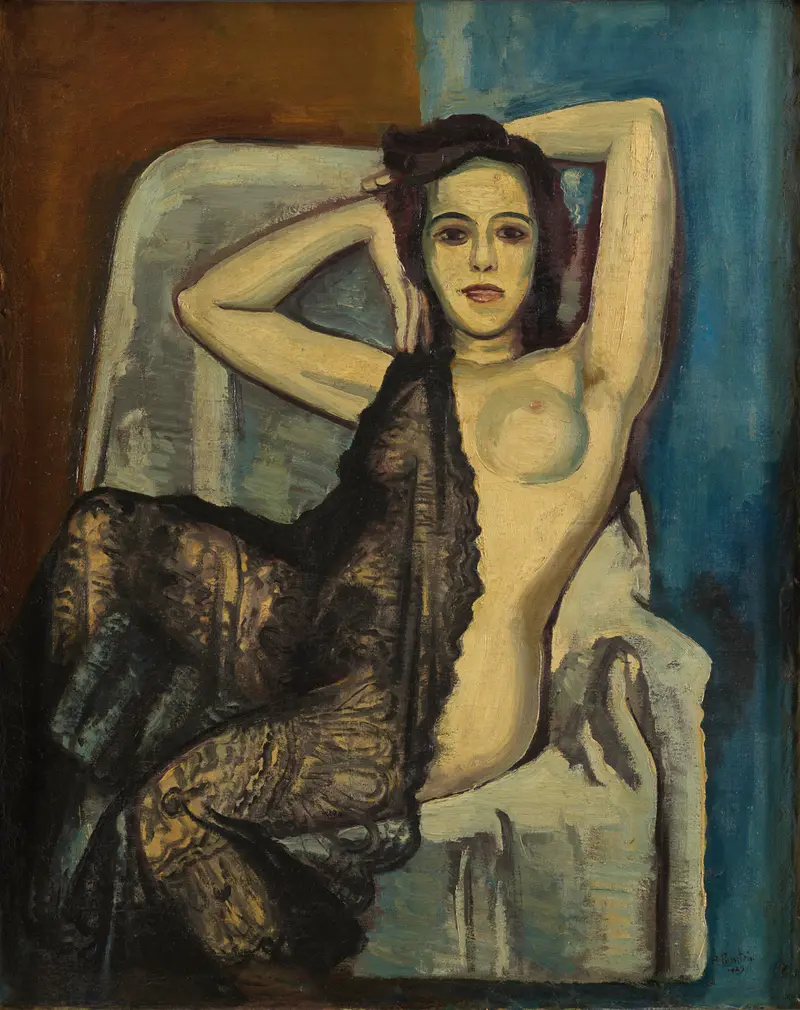
Max Pechstein Mädchen mit Schleier
Hermann Max Pechstein
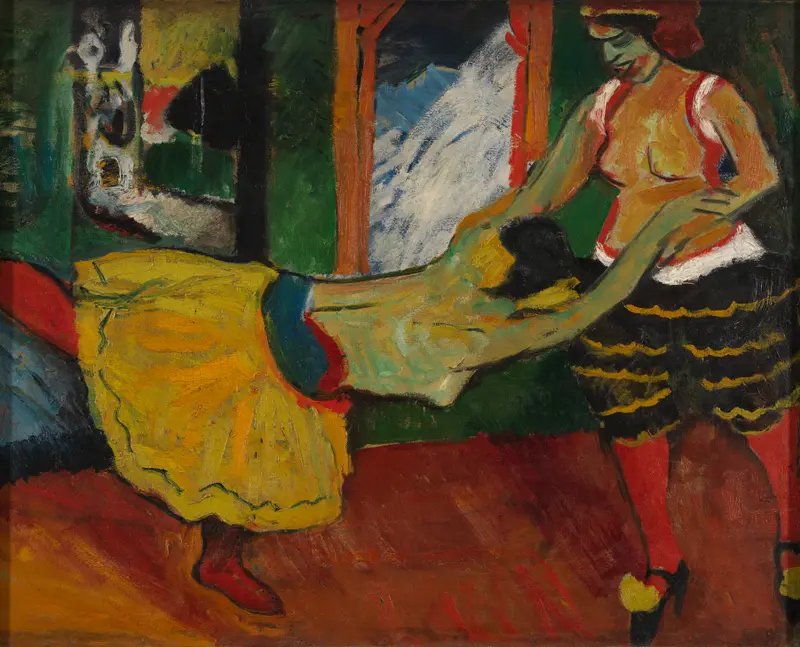
Max Pechstein Tanz
Hermann Max Pechstein
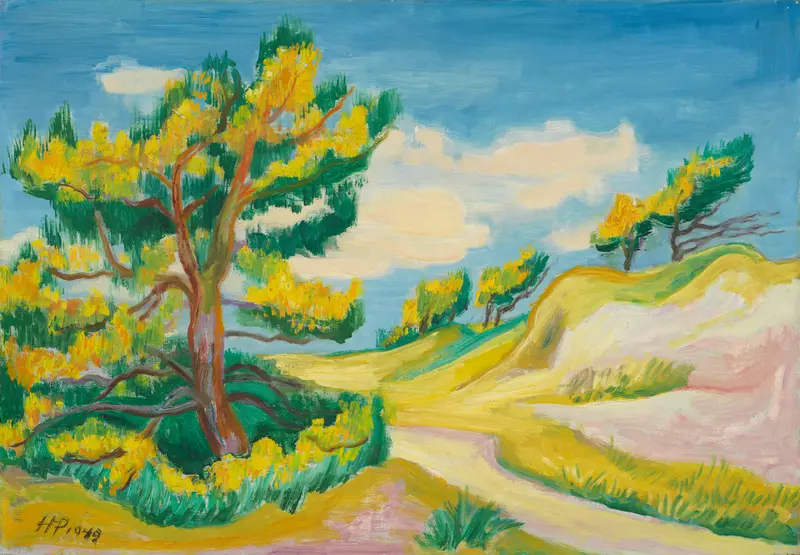
Blühende Kiefern in den Dünen
Hermann Max Pechstein

Die Quelle
Hermann Max Pechstein
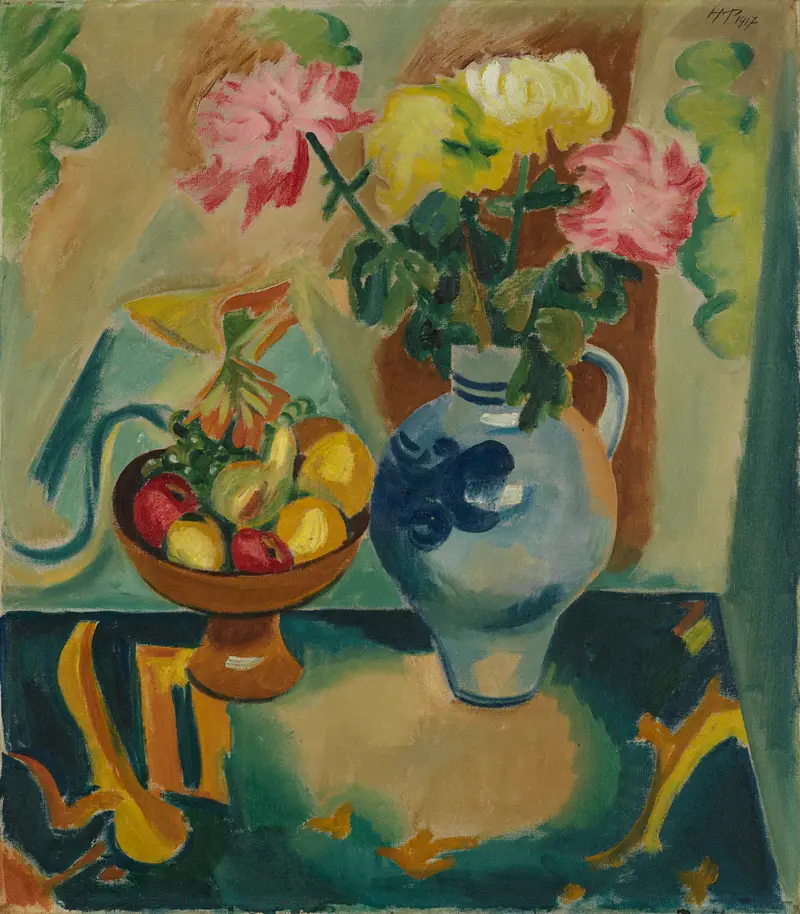
Stilleben mit Chrysanthemen und Früchten
Hermann Max Pechstein





