
Portrait of Sigurd Wettenhovi-Aspa — History & Facts
What first catches the eye in Portrait of Sigurd Wettenhovi-Aspa is not the subject’s formidable beard or the bottle that anchors the foreground, but the riot of flowers that erupts behind him. Their wild, thick brushstrokes seem to pulse with a life of their own, crowding around the sitter’s head like a halo of restless thought. The man’s hand props up his cheek in a gesture of weary contemplation, his blue eyes drifting off to the side, lost in a reverie that feels both private and familiar.
The objects before him—a bottle, a decanter—suggest the remnants of conversation or solitude, while the bold diagonal of his striped sleeve draws the viewer’s gaze back to the face, the true center of gravity. Painted in 1919 by Akseli Gallen-Kallela, this portrait belongs to a moment when Finnish art was searching for new forms of expression after the upheavals of war and independence. Portraits like this, often commissioned to honor intellectuals or public figures, became sites where artists could experiment with color, brushwork, and psychological depth. The thick, expressive paint and the almost Impressionist handling of light and shadow reveal a world in flux, where tradition meets the modern.
This work now resides in the Finnish National Gallery, a testament to an era when artists and their sitters alike were caught between old certainties and new possibilities. The restless flowers, the distracted gaze—each detail invites the viewer to linger, to wonder what thoughts might be blooming just out of sight.
More Artworks by Akseli Gallen-Kallela
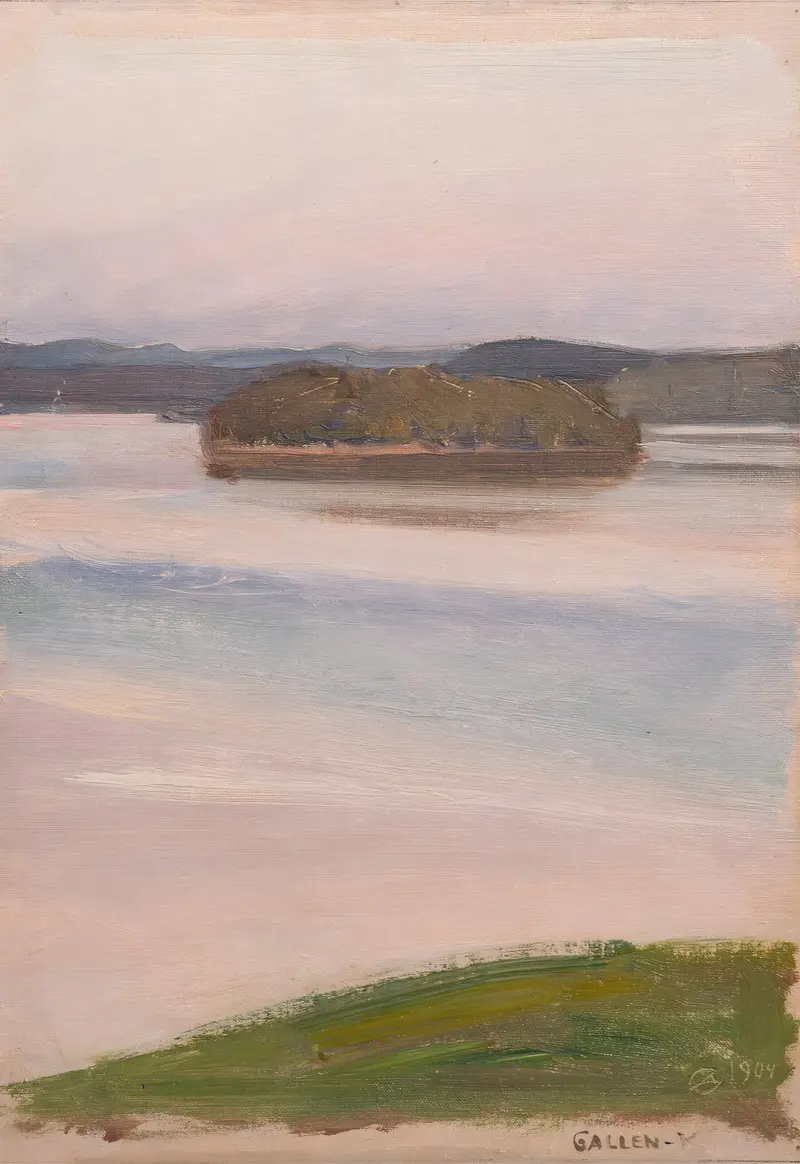
Lake Keitele
Akseli Gallen-Kallela
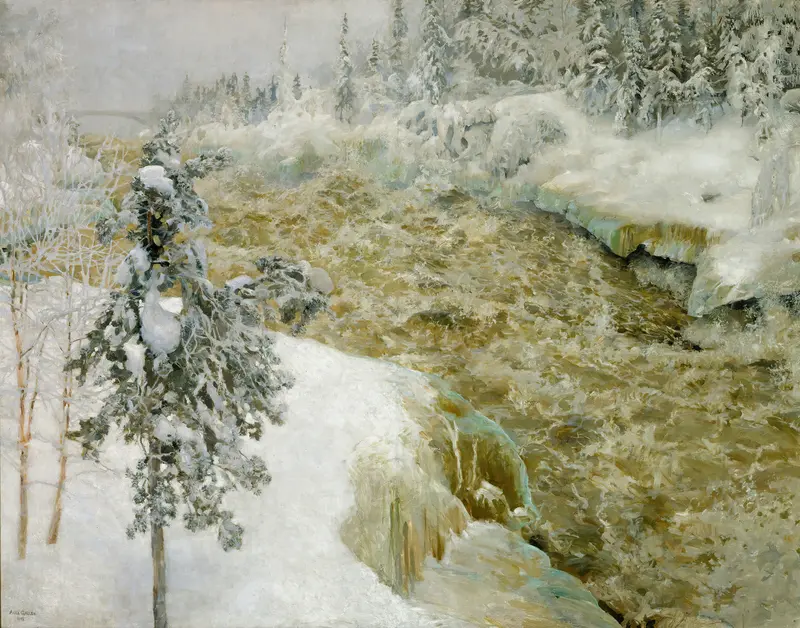
Imatra Falls in Snow ; Imatra in Winter
Akseli Gallen-Kallela
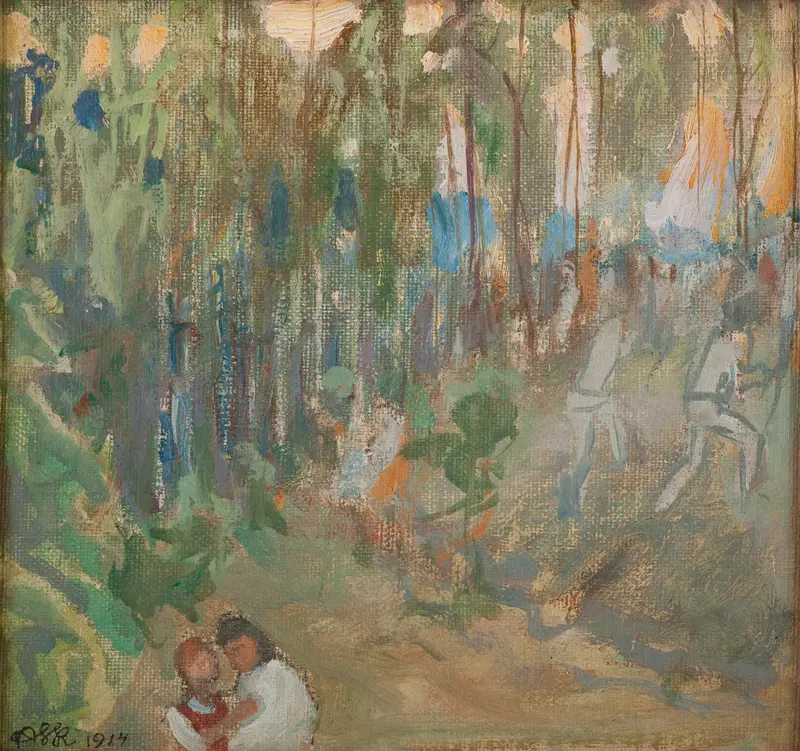
Vainovalkeat
Akseli Gallen-Kallela
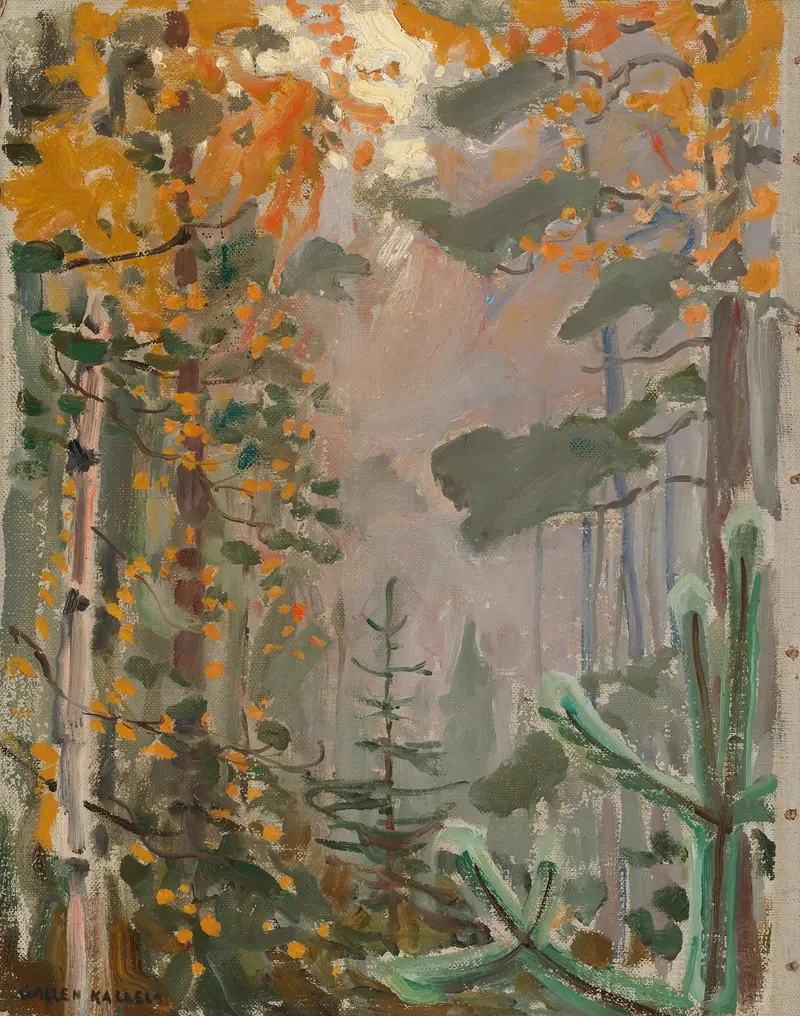
Autumn Landscape
Akseli Gallen-Kallela
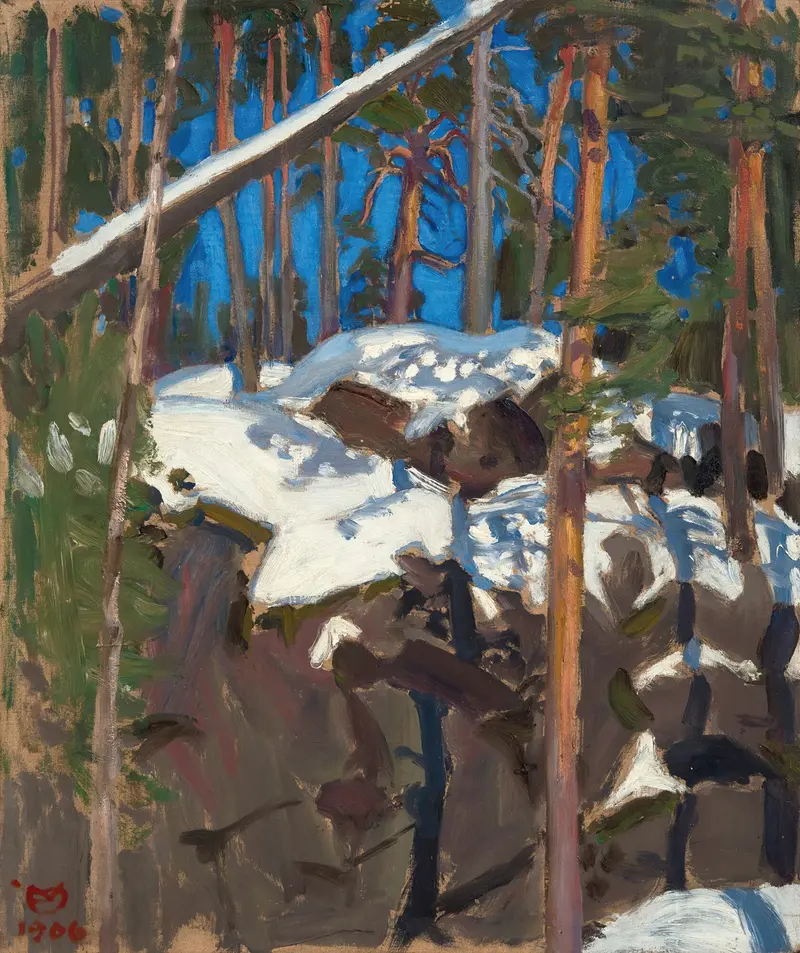
Spring Sun At Konginkangas
Akseli Gallen-Kallela
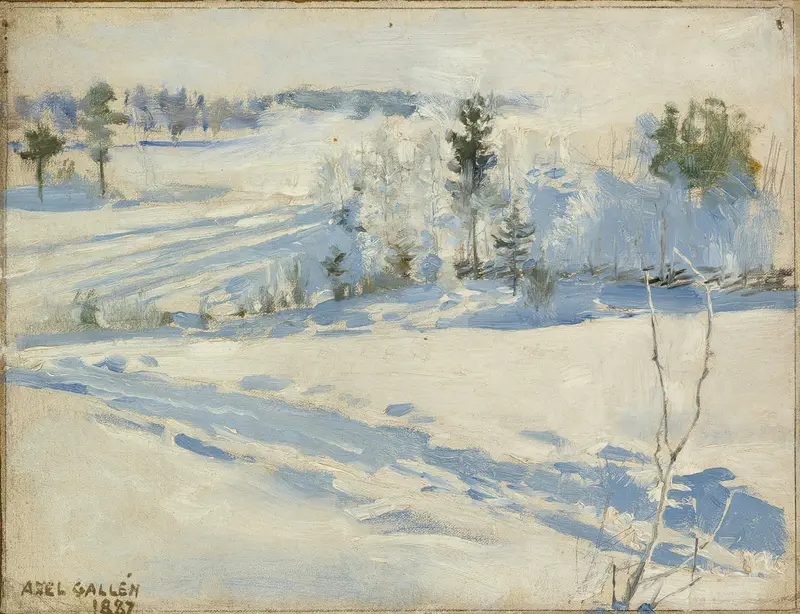
Winter Landscape
Akseli Gallen-Kallela

First Snow
Akseli Gallen-Kallela
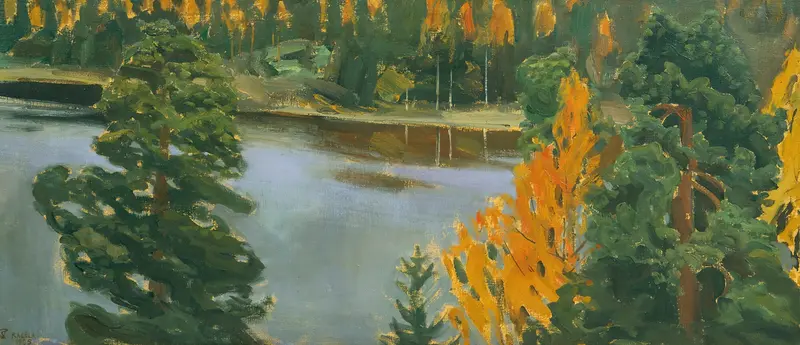
Lake View In Autumn
Akseli Gallen-Kallela
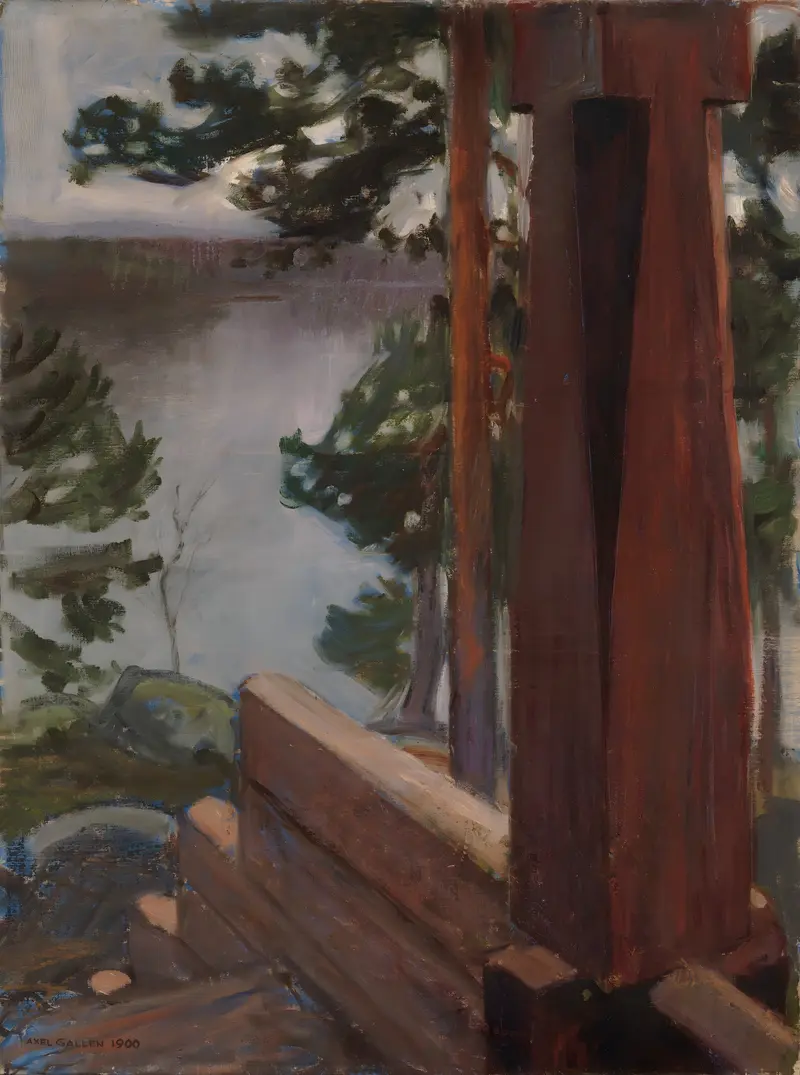
The Kalela Porch
Akseli Gallen-Kallela

Light Behind The Clouds
Akseli Gallen-Kallela





