
Praying Friar — History & Facts
A single shaft of light falls across the friar’s clasped hands, drawing the viewer into a moment of private devotion so intense it feels almost overheard. The friar’s head is bowed, his features carved by shadow and care, while his fingers knot together in a gesture of both humility and supplication. The rough texture of his habit and the stark skull at the bottom edge speak of renunciation and the ever-present reminder of mortality.
Magnasco’s brushwork is restless and alive, the paint itself seeming to flicker like candlelight, animating the darkness that crowds around the figure. The composition’s tight focus—framed in an unusual octagon—forces us into intimacy, as if we too must pause and reflect. Works like this emerged from a world where religious contemplation was both a personal duty and a public ideal. In Italy between 1600 and 1800, images of praying monks and hermits were sought after for private devotion, especially among those who wished to model their own piety on the austerity of the saints.
Alessandro Magnasco, active in this period, was known for his dramatic, almost feverish religious scenes, which often set solitary figures against turbulent backgrounds. This painting, now in the collection of Museum Boijmans Van Beuningen, is a testament to that tradition: history has kept few traces of its early journey, but its somber palette and urgent brushwork still invite us to linger in the quiet drama of a soul at prayer.
More Artworks by Alessandro Magnasco

The Synagogue
Alessandro Magnasco
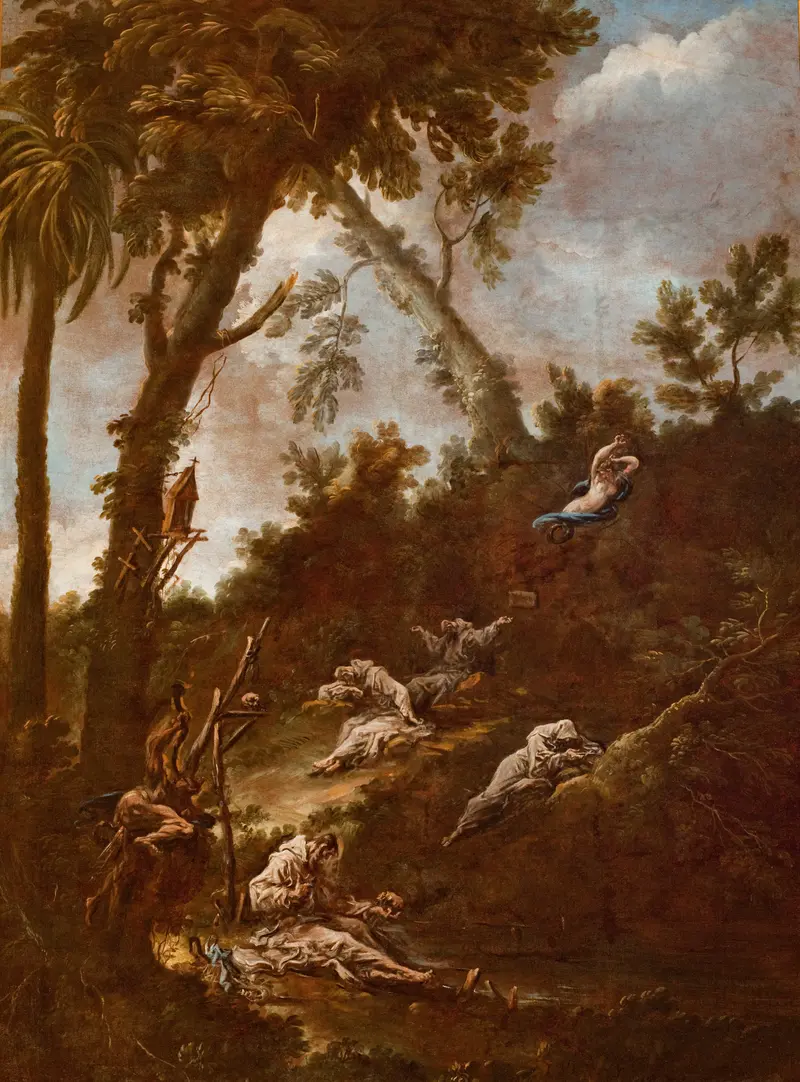
Hermits (Anachorets)
Alessandro Magnasco
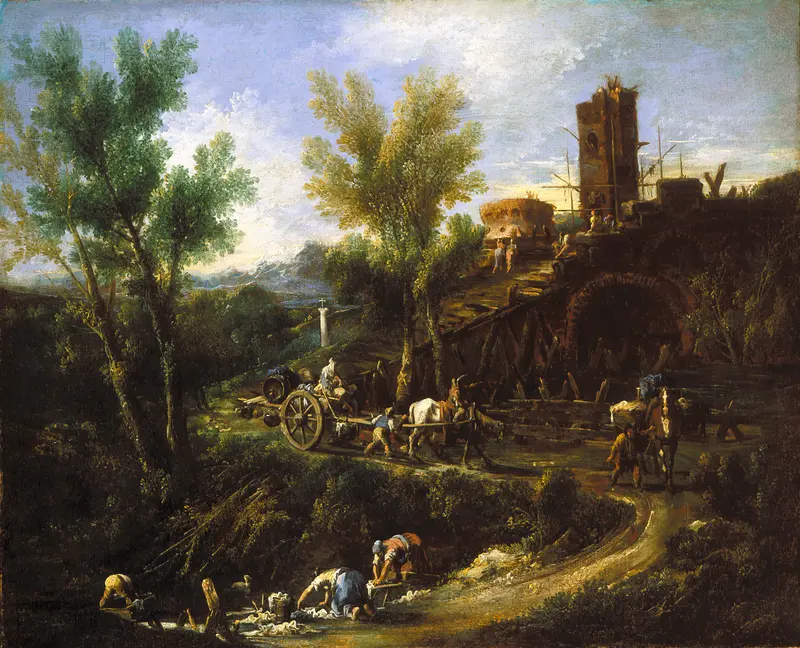
Landscape with Gypsies and Washerwomen
Alessandro Magnasco
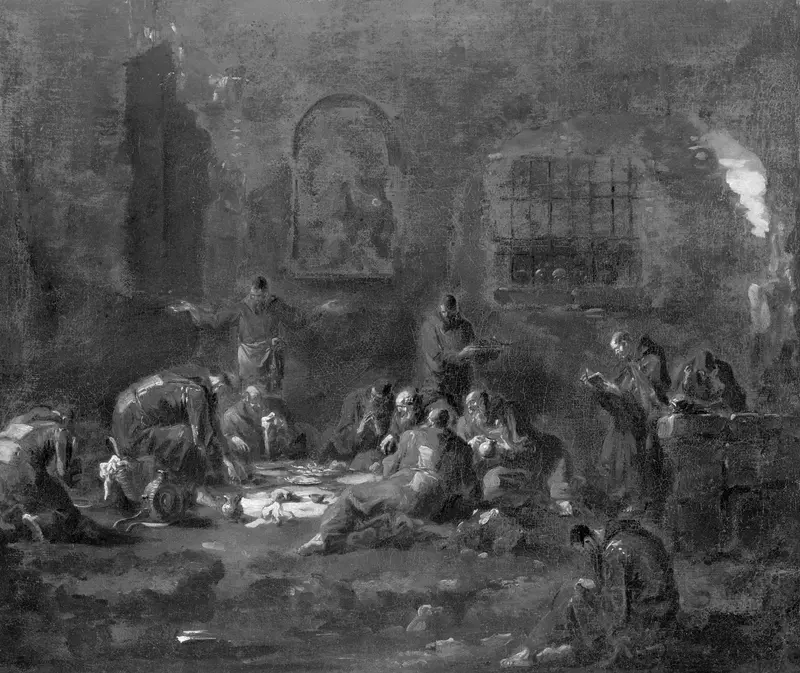
Monks at Supper
Alessandro Magnasco
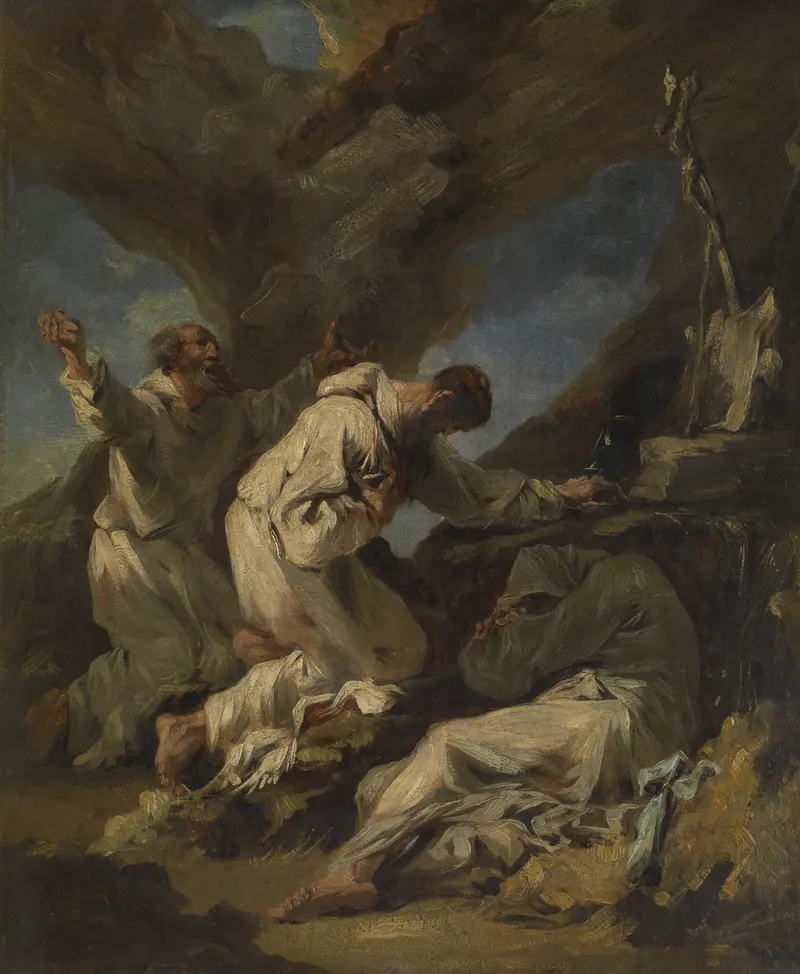
Praying Monks
Alessandro Magnasco
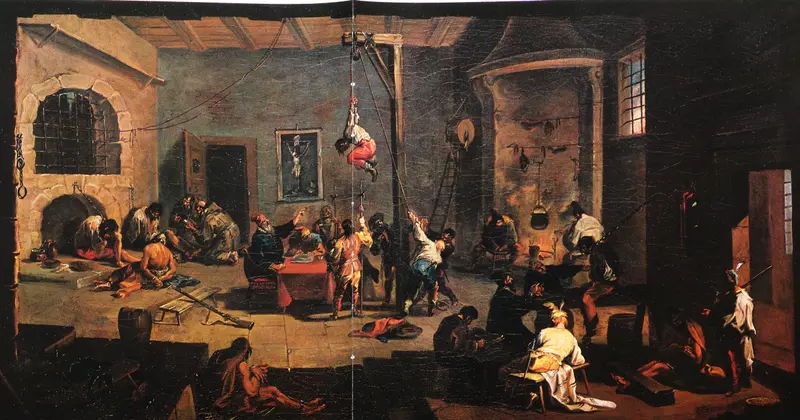
Torture Scene
Alessandro Magnasco
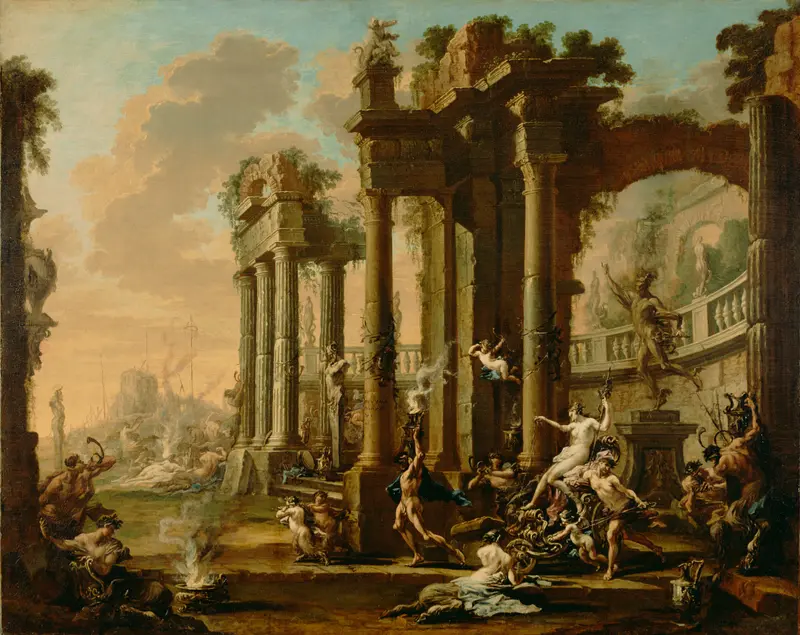
The Triumph of Venus
Alessandro Magnasco
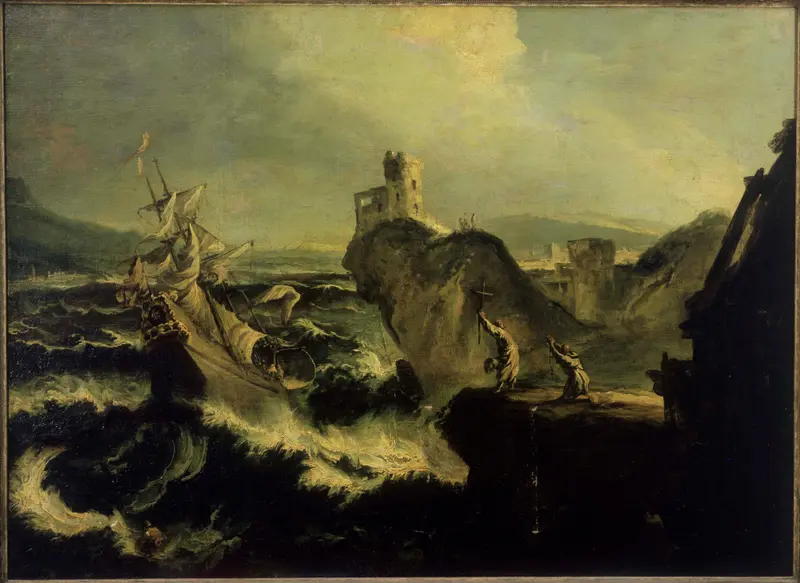
The Shipwreck
Alessandro Magnasco
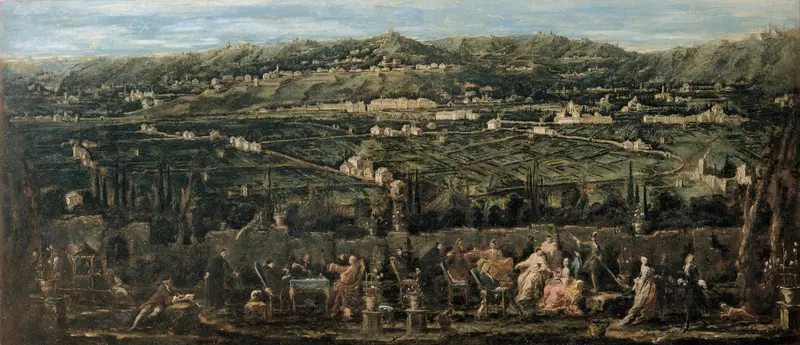
Garden Party in Albaro
Alessandro Magnasco
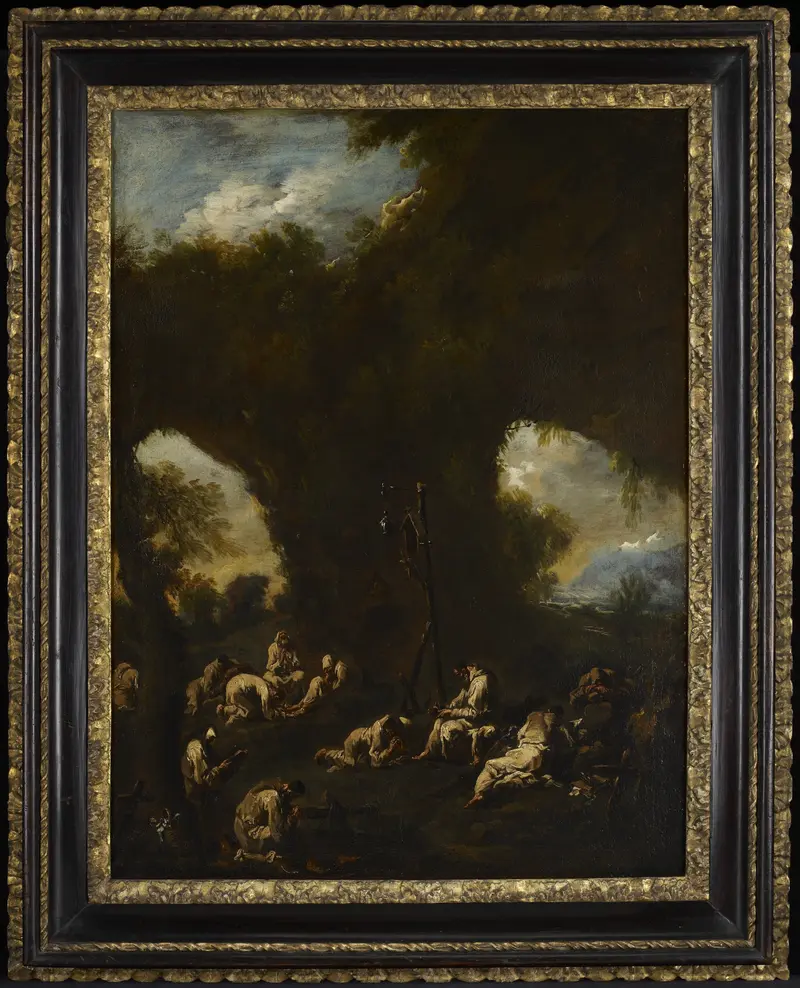
Monks Praying in a Grotto
Alessandro Magnasco





