
Pygmalion and Galatea — History & Facts
Pygmalion and Galatea was painted in 1819 by Anne Louis Girodet-Trioson, a leading figure in early nineteenth-century French painting. The work takes its subject from the classical myth of Pygmalion, the sculptor who falls in love with a statue he has carved, which is then brought to life by the goddess Venus. This painting was created during the mature phase of Girodet’s career, when he was known for his refined technique and interest in mythological and literary themes. The composition centers on the moment of Galatea’s transformation, with the sculptor Pygmalion gazing in awe as his creation comes to life.
Galatea stands on a pedestal, her body rendered with a pale, luminous quality that contrasts with the warm flesh tones of Pygmalion, who is draped in a red garment. Cupid hovers between them, holding Galatea’s hand, symbolizing divine intervention. The background features classical architectural elements and a distant landscape, while a statue of Venus appears in shadow to the left, reinforcing the mythological context.
The painting is characterized by precise draftsmanship, smooth brushwork, and a delicate use of light to emphasize the miraculous event. Pygmalion and Galatea has been recognized as a significant example of French Neoclassicism, reflecting contemporary fascination with antiquity and the idealized human form. The painting has been widely exhibited and reproduced, and it is held today in a public collection. Its reception has contributed to the enduring reputation of Girodet-Trioson as a master of mythological narrative and refined academic technique.
More Artworks by Anne Louis Girodet-Trioson
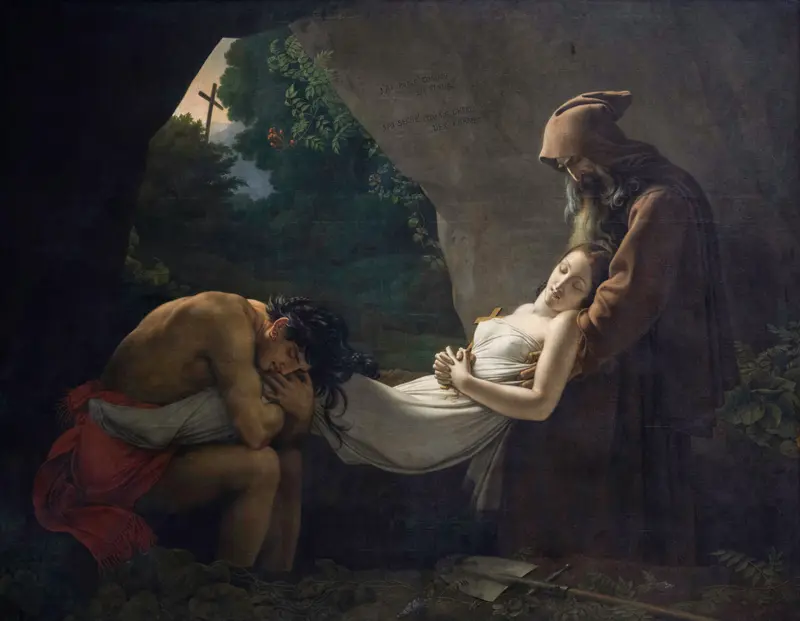
The Entombment of Atala
Anne Louis Girodet-Trioson
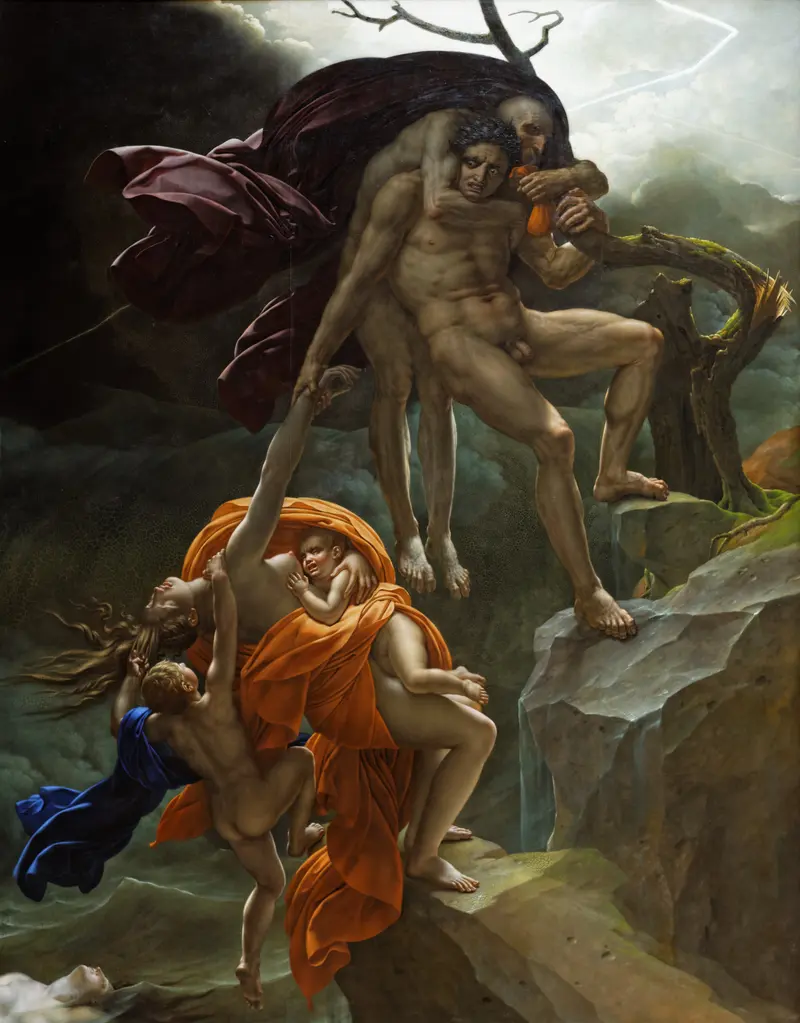
Scene of the Flood
Anne Louis Girodet-Trioson
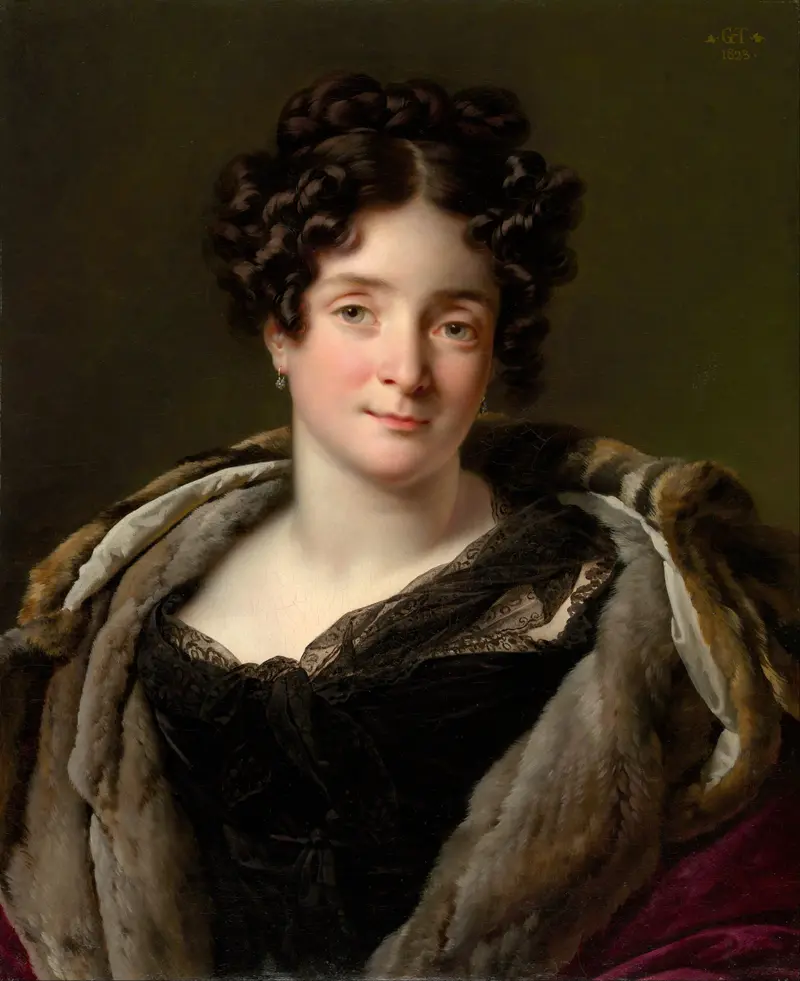
Madame Jacques-Louis-Étienne Reizet (Colette-Désirée-Thérèse Godefroy, 1782–1850)
Anne Louis Girodet-Trioson

Pygmalion And Galatea
Anne Louis Girodet-Trioson
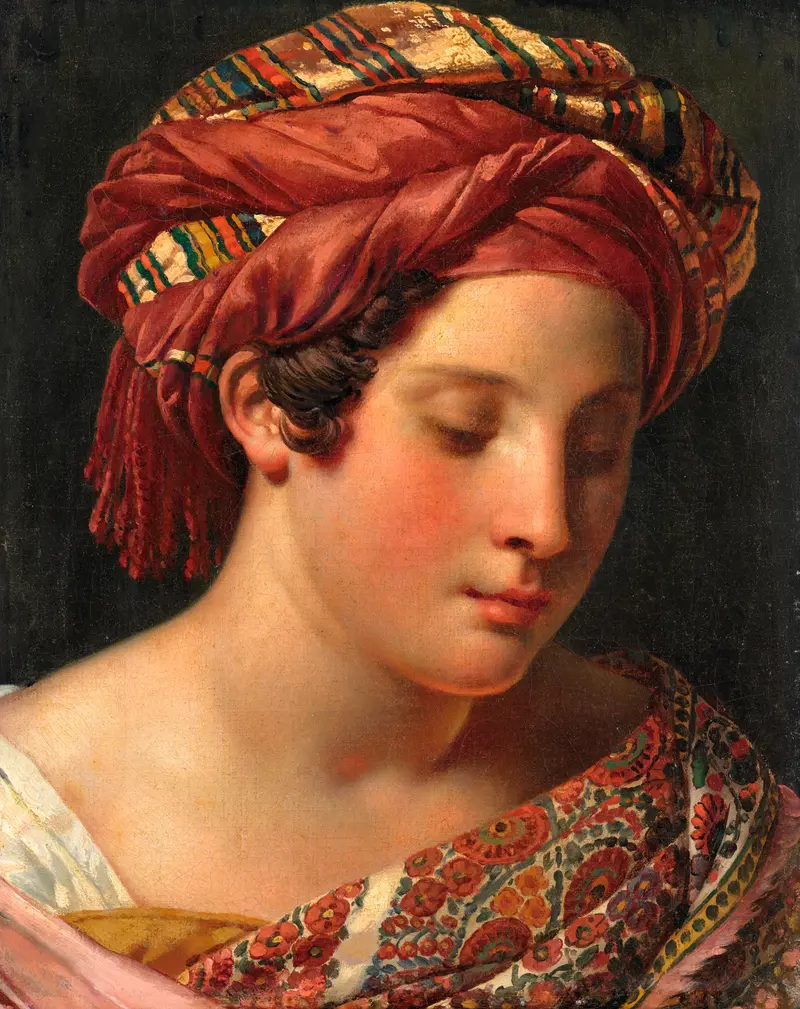
L’Odalisque
Anne Louis Girodet-Trioson
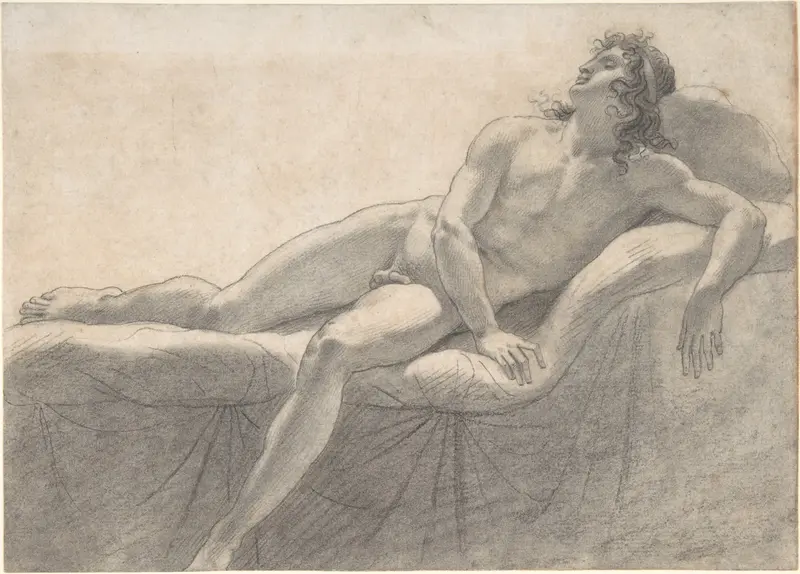
Male Nude Reclining on a Divan
Anne Louis Girodet-Trioson
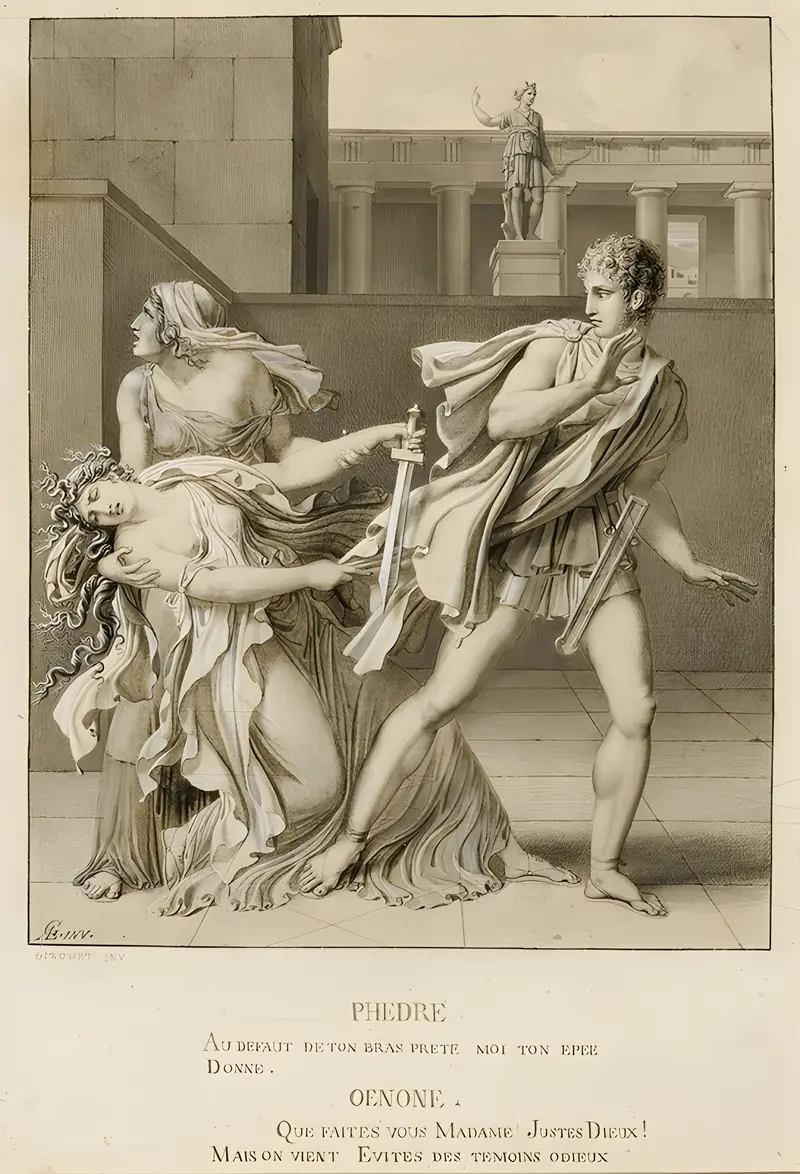
Phaedre, Having Declared Her Passion, Attempts to Kill Herself with the Sword of Hippolytus
Anne Louis Girodet-Trioson
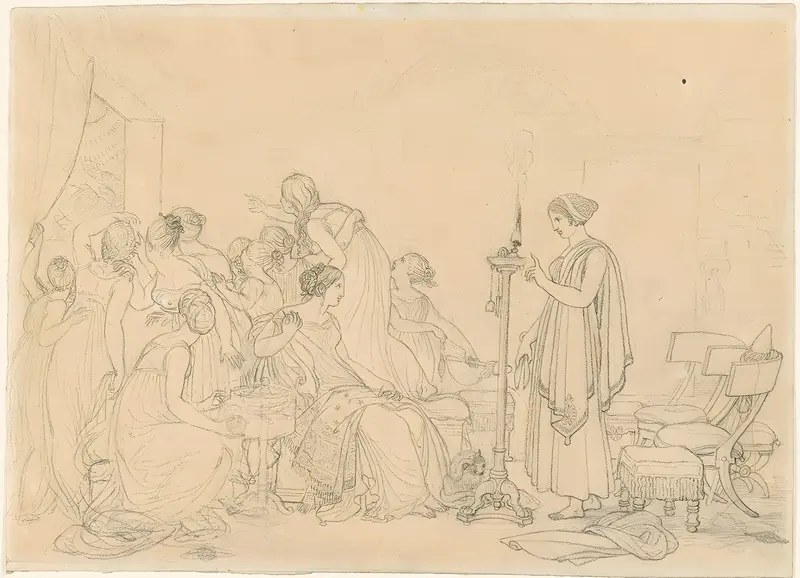
Les Présages de pluie
Anne Louis Girodet-Trioson

The Death of Pyrrhus
Anne Louis Girodet-Trioson

Invocation to the Divinities who preside over Agriculture from Virgil’s “Georgics”
Anne Louis Girodet-Trioson





