Rapallo – Bucht — History & Analysis
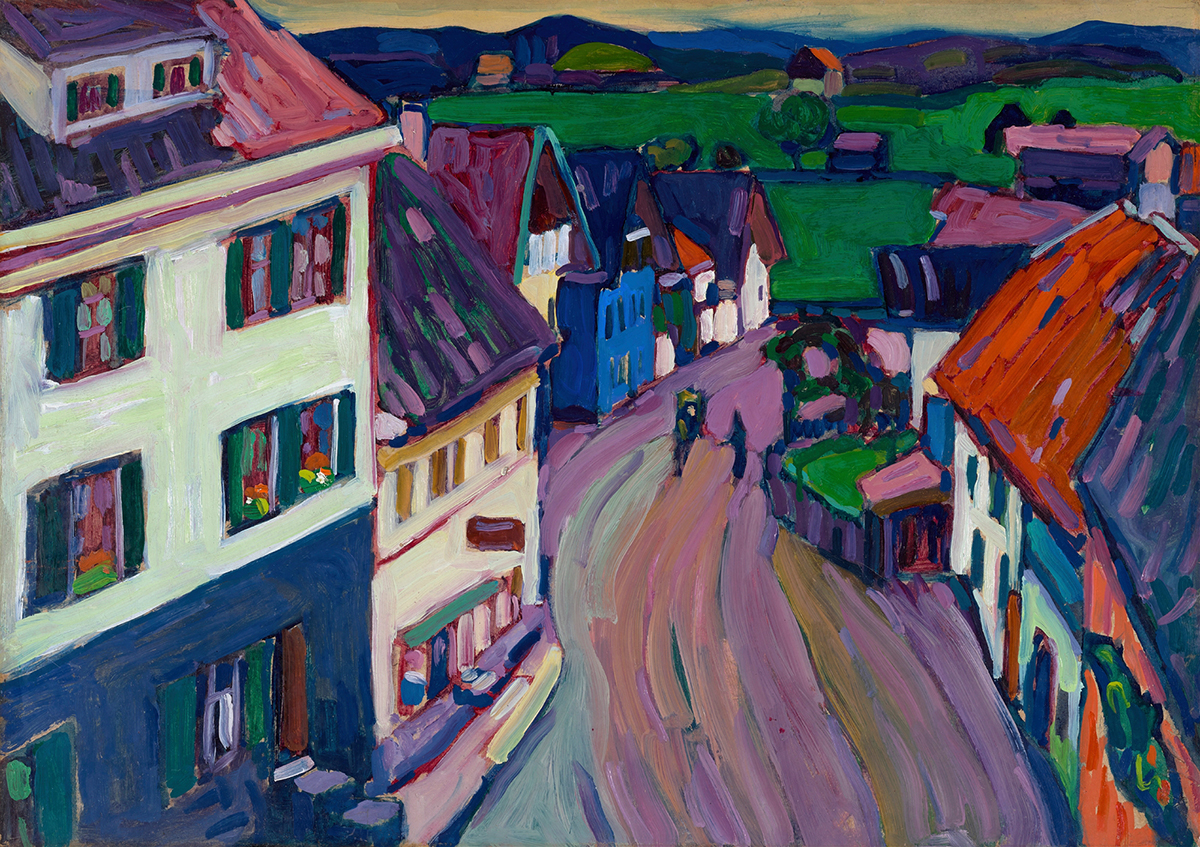
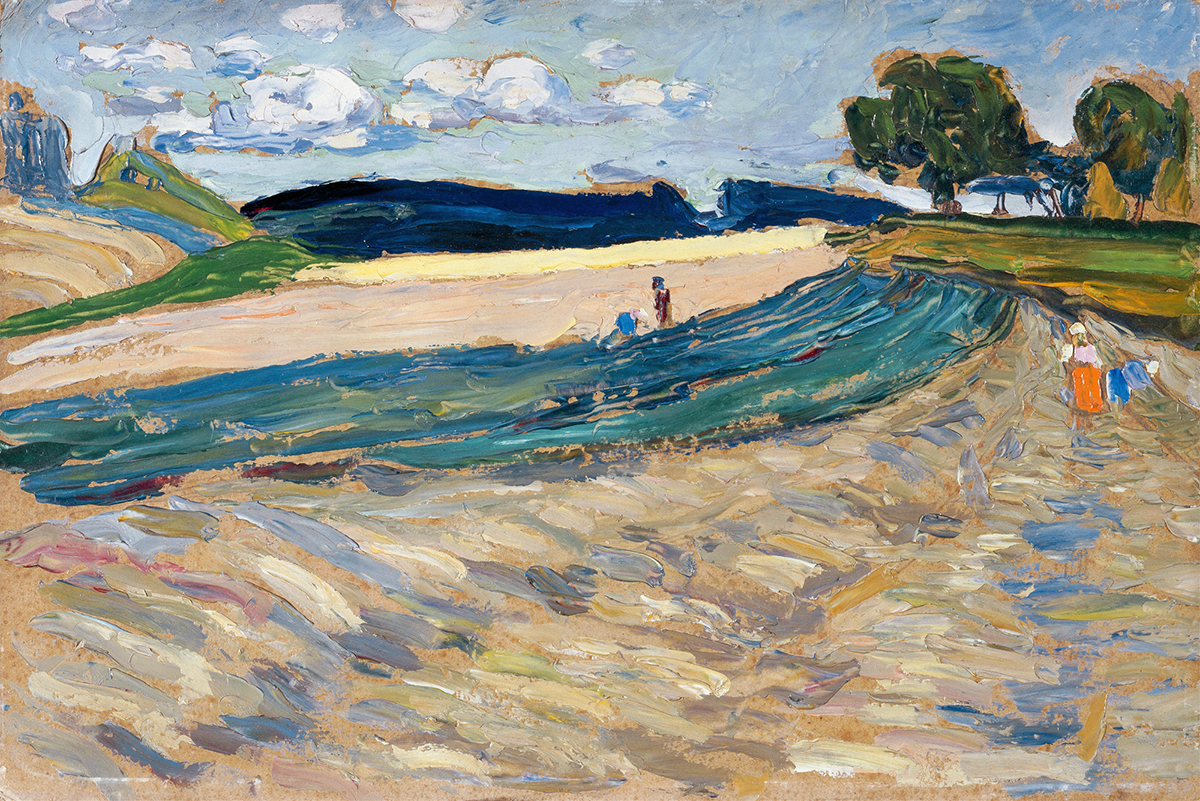
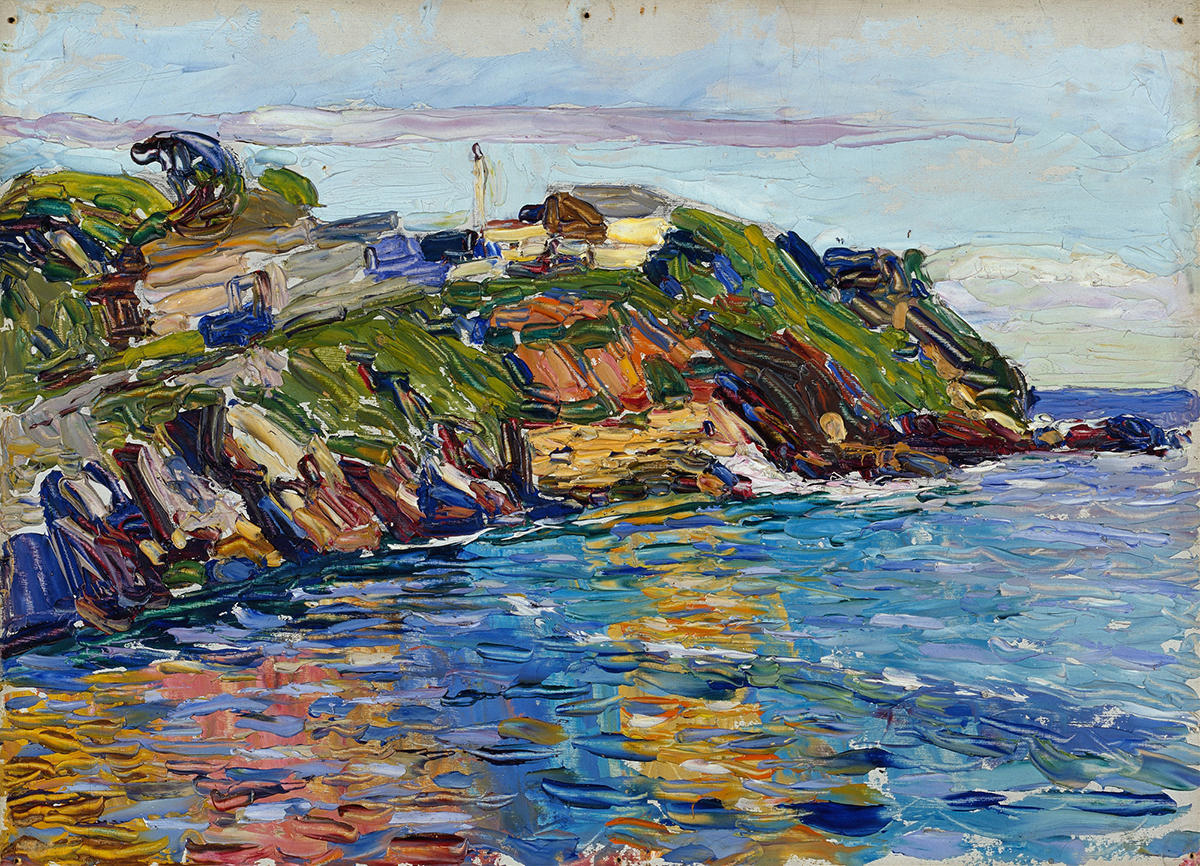
What if beauty was never meant to be finished? In a world filled with unfinished thoughts and unspoken desires, Wassily Kandinsky’s Rapallo – Bucht captures the essence of longing through vibrant color and fluid form. Focus on the swirling blues and greens that dominate the canvas. They dance together, conveying movement and life, while subtle strokes of warmer hues peek through, inviting the viewer to explore deeper. Notice the way the horizon line bends, defying reality, and leading your eye across the composition like a gentle breeze guiding a sailboat.
The interplay of light and shadow creates a sense of depth, drawing you into an ethereal landscape where the familiar blurs with the fantastical. Upon closer inspection, the layered textures reveal a contrast between chaos and harmony. The flowing lines suggest an emotional current, hinting at an inner struggle or a yearning for connection. Shapes emerge and dissolve, echoing the transient nature of beauty itself.
The tension between the abstract and the real speaks to a universal longing—an escape, a search for belonging, or perhaps the desire for artistic perfection that eludes us all. In 1906, Kandinsky painted Rapallo – Bucht during a pivotal time in his life, as he transitioned from a career in law to full-time artistry. Living in Germany and influenced by the vibrant art movements of the time, he began to explore abstraction, seeking to express the spiritual and emotional essence of his subjects. This period marked a significant evolution in his work, paving the way for his pivotal contributions to modern art.