
Reception of the Jews A.D. — History & Facts
When Jan Matejko unveiled Reception of the Jews A.D. in 1889, he did so at a time when Poland’s own national story was under threat, and the painting became an immediate talking point for its bold depiction of a little-known episode: the legendary welcome of Jewish settlers by the Polish ruler Bolesław the Pious in the 13th century. The event, dated to 1264, marks the granting of the Statute of Kalisz, a charter that offered unprecedented protections and privileges to Jews in medieval Europe. Matejko’s choice to paint this moment was both a celebration of Poland’s tradition of tolerance and a subtle commentary on the social tensions of his own day. The scene unfolds at the heart of a medieval Polish court, with Bolesław the Pious standing at center, arm outstretched in a gesture of open acceptance.
The Jewish envoys, distinguished by their distinctive robes and solemn expressions, present a Torah scroll—a symbol of their faith and identity. The king’s retinue, some curious and others wary, cluster behind him, while the light falls deliberately on the meeting of hands, underscoring the act of welcome. Matejko’s attention to costume and heraldry roots the painting in historical detail, while his dramatic composition recalls the narrative sweep of Rembrandt’s biblical scenes, though here the focus is on coexistence rather than conflict. The exact medium of Reception of the Jews A.D. is not widely documented, but it is consistent with Matejko’s large-scale historical canvases, most of which are oil on canvas.
The painting was created late in Matejko’s career, at a time when he was increasingly concerned with Poland’s multicultural heritage. Like many of his works, it was intended for public exhibition and national edification rather than private collection. Today, it remains a key piece in discussions of Polish-Jewish history, though its precise provenance after Matejko’s death is not fully traced; it is often reproduced in textbooks and exhibitions on tolerance and the history of Jews in Poland.
More Artworks by Jan Matejko
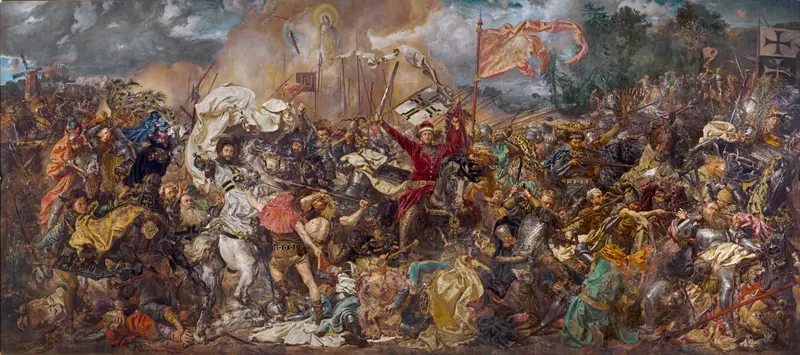
Battle of Grunwald
Jan Matejko

Stańczyk
Jan Matejko

Battle of Raclawice
Jan Matejko
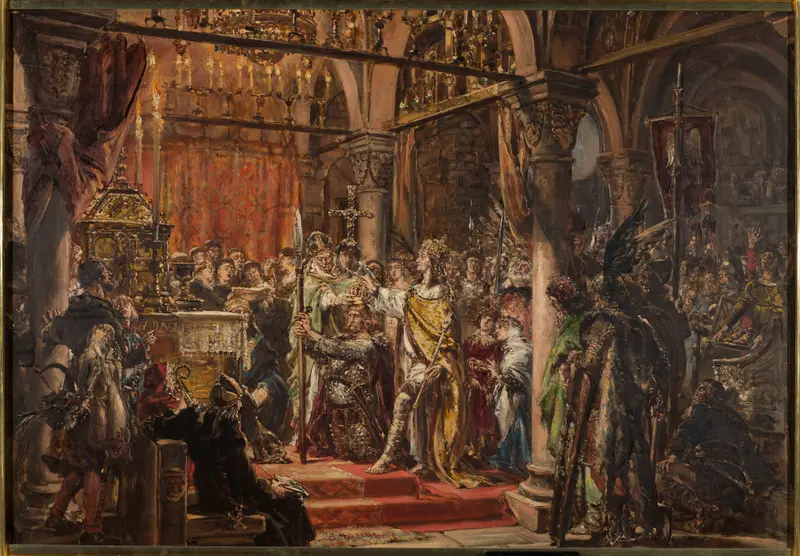
Coronation of the First King, 1001 AD, from the series “History of Civilization in Poland”
Jan Matejko
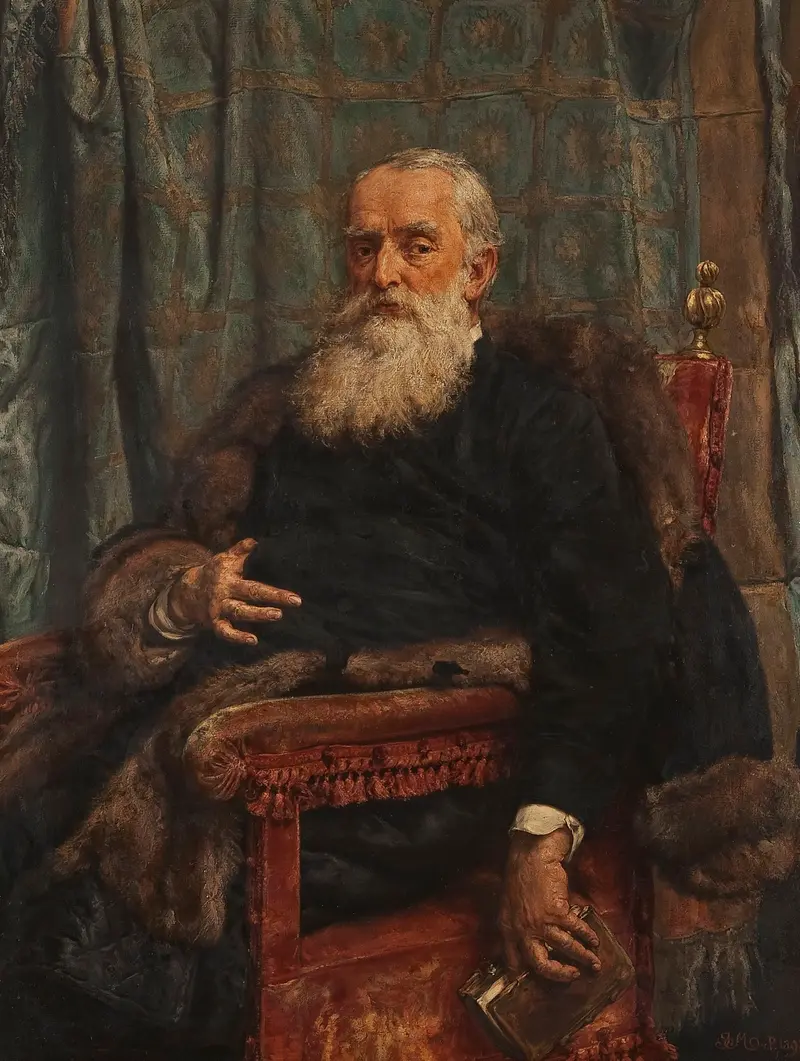
Portrait of Henryk Krajewski
Jan Matejko
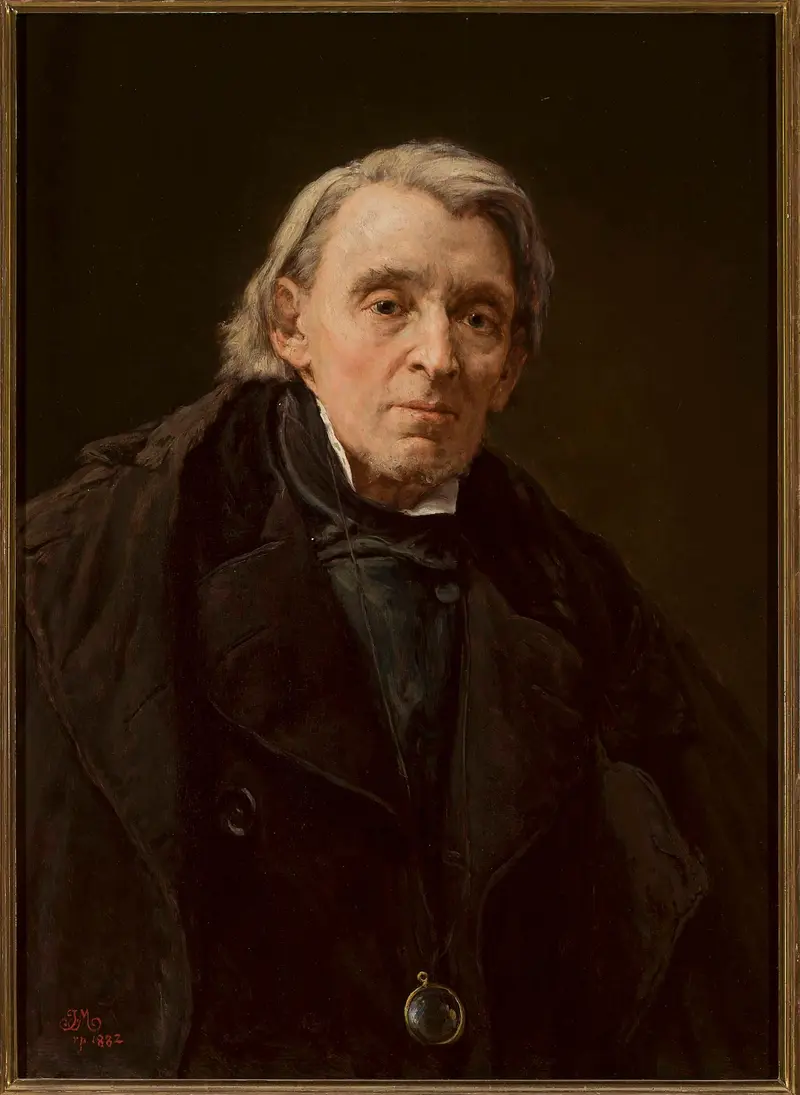
Portrait of Karol Podlewski
Jan Matejko
Portrait of Potocki and Poninski
Jan Matejko
Portrait of the artist's four children
Jan Matejko
Introduction of Christianity in Poland
Jan Matejko
Prussian Homage
Jan Matejko





