
Réunion au château — History & Facts
The first thing to catch the eye in Réunion au château by Adolphe Joseph Thomas Monticelli is the way the figures seem to emerge from the shadows, their forms built from thick, almost sculpted strokes of paint. The scene glows with a hidden energy: a gathering of elegantly dressed figures, their costumes rendered in flashes of scarlet, ochre, and emerald, clustered beneath a canopy of dark, swirling foliage. The painter’s brushwork is restless, never quite settling, so that each figure flickers between clarity and mystery—a woman in red leans forward, perhaps in conversation, while a standing man in green appears poised mid-gesture.
The light, falling from the right, pools around them and picks out the playful forms of dogs at their feet, suggesting both opulence and intimacy. Every detail—the shimmer of fabric, the glint of a collar, the suggestion of laughter—serves to pull the viewer into this moment of aristocratic leisure. This painting belongs unmistakably to the world of nineteenth-century France, when artists like Monticelli revived the spirit of eighteenth-century fêtes galantes, those scenes of courtly pleasure and outdoor gatherings. These works were often collected by the rising bourgeoisie, eager to evoke the elegance of a vanished aristocratic age, and Monticelli’s technique—bold, impastoed, and lush with color—was admired by later painters for its daring.
Little is recorded about this specific Réunion au château, now in a private collection, but its atmosphere and style speak volumes about the tastes and aspirations of its era. The painting invites us to linger, as if we too might step into the golden half-light and join the conversation.
More Artworks by Adolphe Monticelli

Portrait of a Lady
Adolphe Monticelli
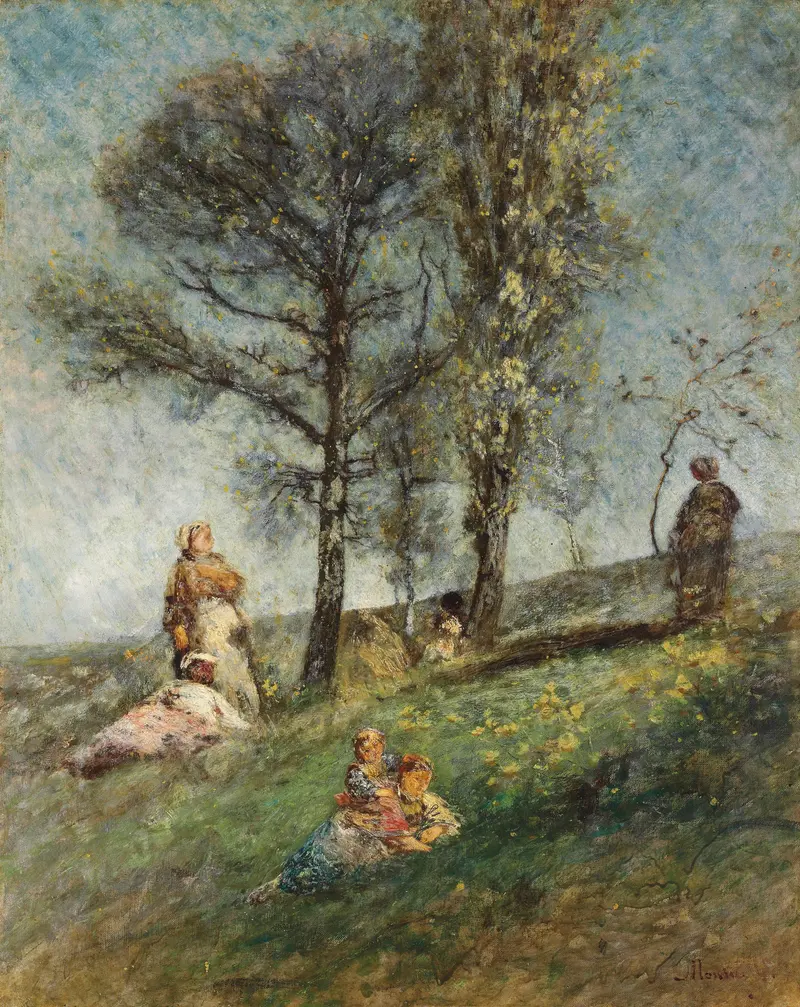
A Young Family Under Trees On A Hill
Adolphe Monticelli

Fête d'Après-Midi
Adolphe Monticelli
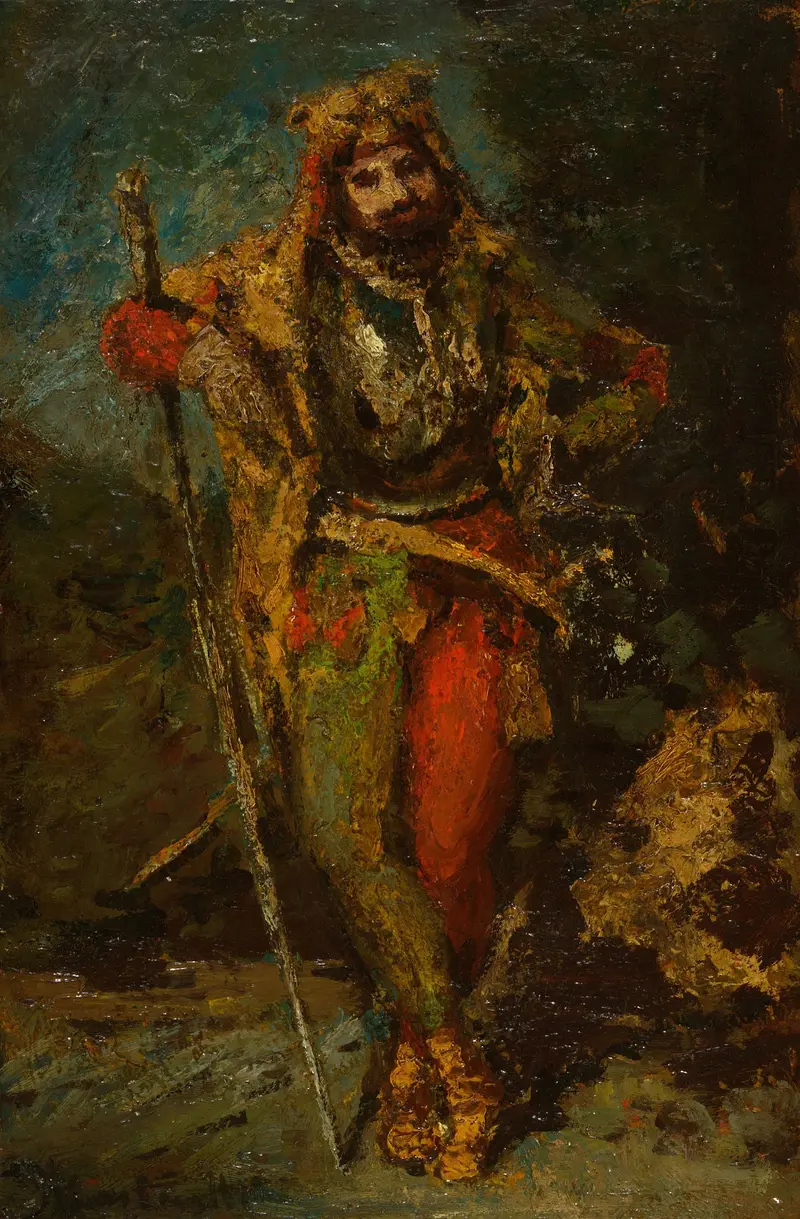
Mephisto from the Opera Faust
Adolphe Monticelli
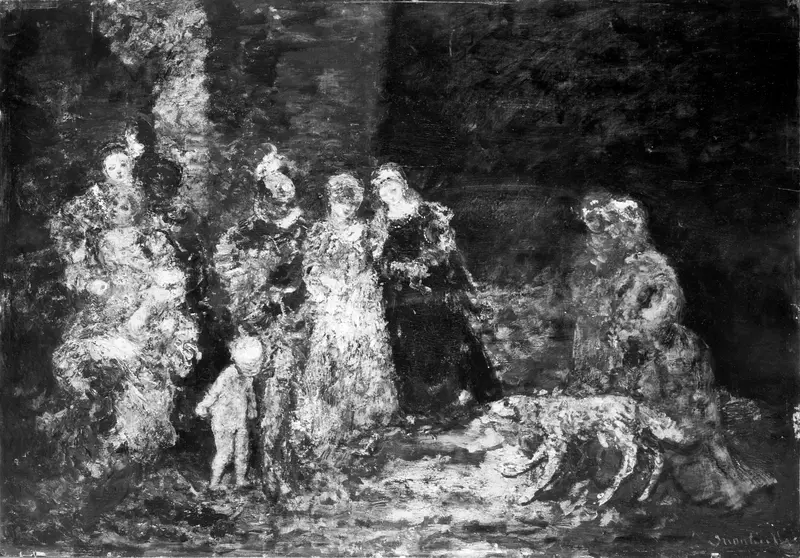
The Fairies
Adolphe Monticelli
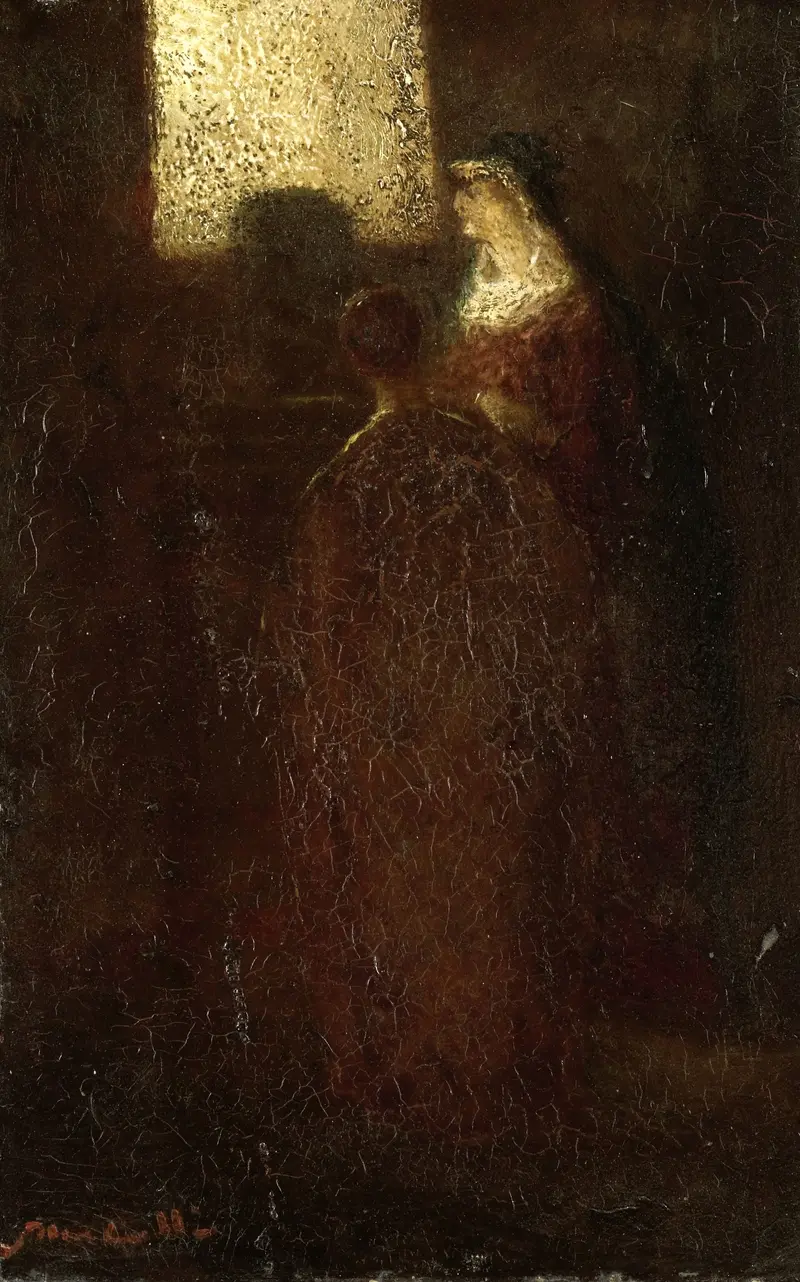
Aan het altaar
Adolphe Monticelli
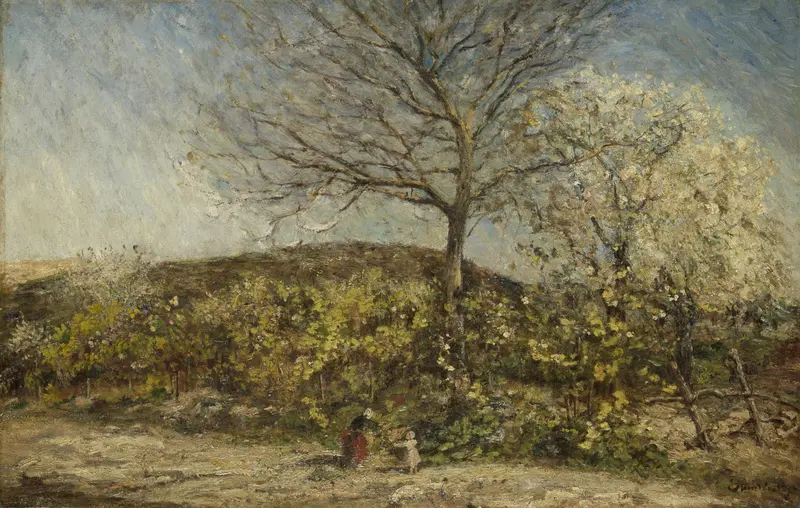
Landschap met bloeiende boomgaard
Adolphe Monticelli
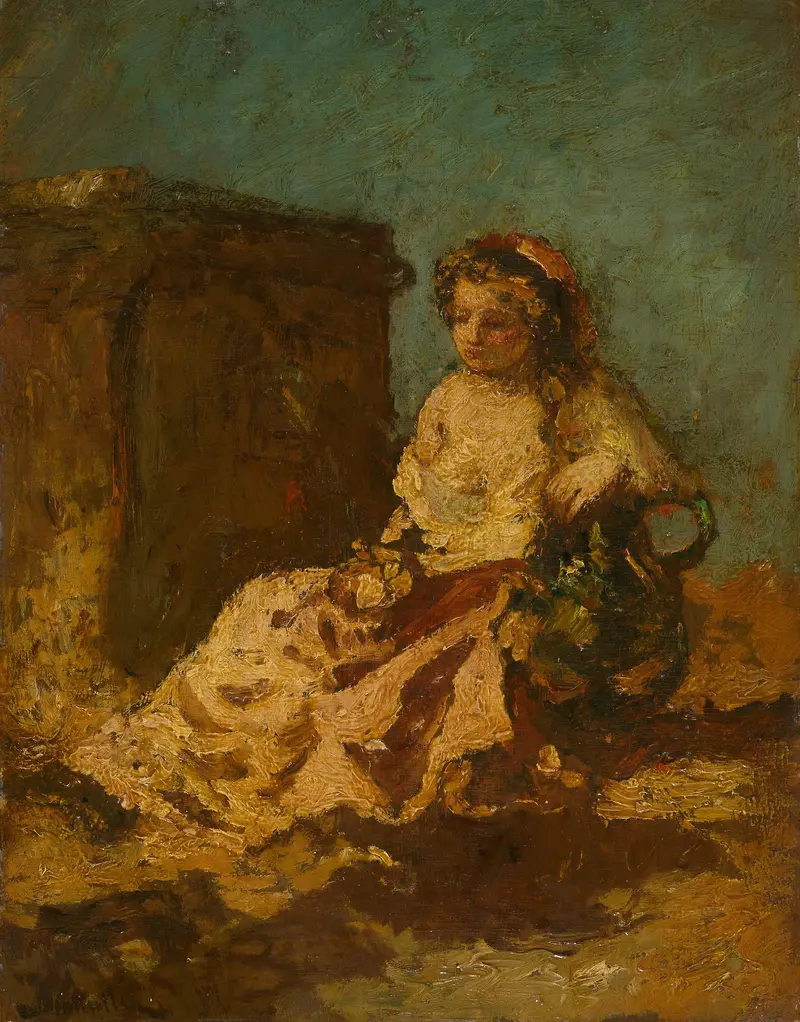
Meditation (Seated Woman)
Adolphe Monticelli
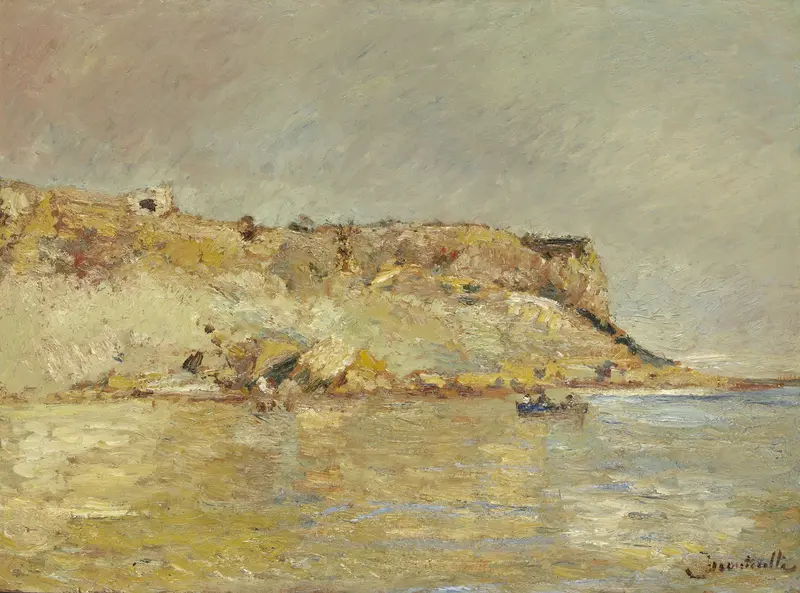
Coastal Mountains
Adolphe Monticelli
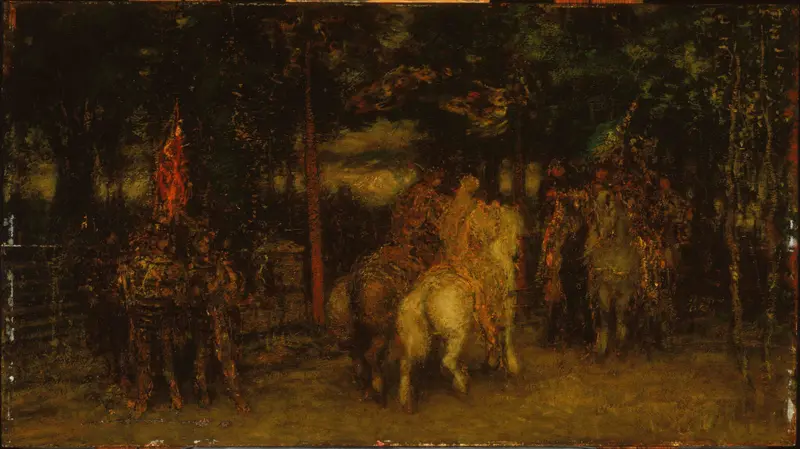
Landscape with Figures
Adolphe Monticelli
More Genre Scene Art

Banquet of the Officers of the St George Civic Guard
Frans Hals

Rembrandt and Saskia in the Scene of the Prodigal Son
Rembrandt van Rijn

Bal du moulin de la Galette
Pierre-Auguste Renoir

Quadrille at the Moulin Rouge
Henri de Toulouse-Lautrec

A Burial at Ornans
Gustave Courbet

When Will You Marry?
Paul Gauguin