
Riders near an inn — History & Facts
A shaft of late-day light breaks through the trees, catching on the white horse at the center of Riders near an inn and turning its rider’s red plume and sash into a beacon amid the shadows. The eye is drawn first to this moment of poised energy—the horse rearing, the rider upright and composed—before wandering to the quieter bustle beneath the trees. Figures gather in small knots, some tending to their mounts, others deep in conversation, while dogs dart and sniff at the edges.
The architecture of the inn, half-lost in the shade, anchors the left side, its arched doorway suggesting both welcome and enclosure. The whole scene is balanced between movement and pause, the golden haze on the distant hills hinting at journeys just begun or nearly ended. This painting belongs to the world of the Dutch Golden Age, when scenes of everyday life—especially those involving travel, leisure, and the countryside—were eagerly collected by a rising class of prosperous citizens. Between 1665 and 1722, when Abraham Van Calraet created this work, such images offered viewers a blend of aspiration and familiarity: the pleasures of the open road, the camaraderie of the inn, the elegance of fine horses.
History has kept few traces of this particular painting’s early life, but today it resides in the Dordrechts Museum, a quiet witness to a time when the boundaries between landscape, genre, and portrait blurred into a single, inviting world. Let your gaze linger on the interplay of light and shade, and imagine the stories waiting just beyond the frame.
More Artworks by Abraham Van Calraet
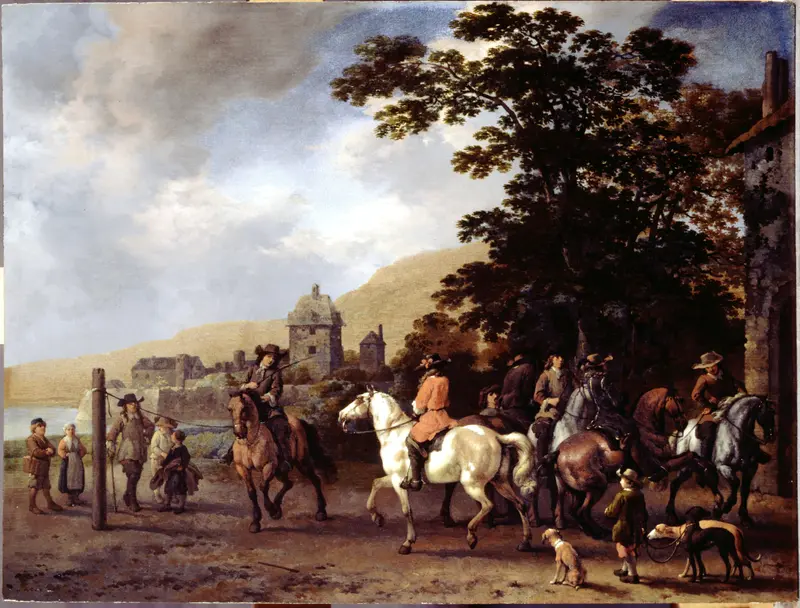
A Riding School in the Open Air
Abraham Van Calraet
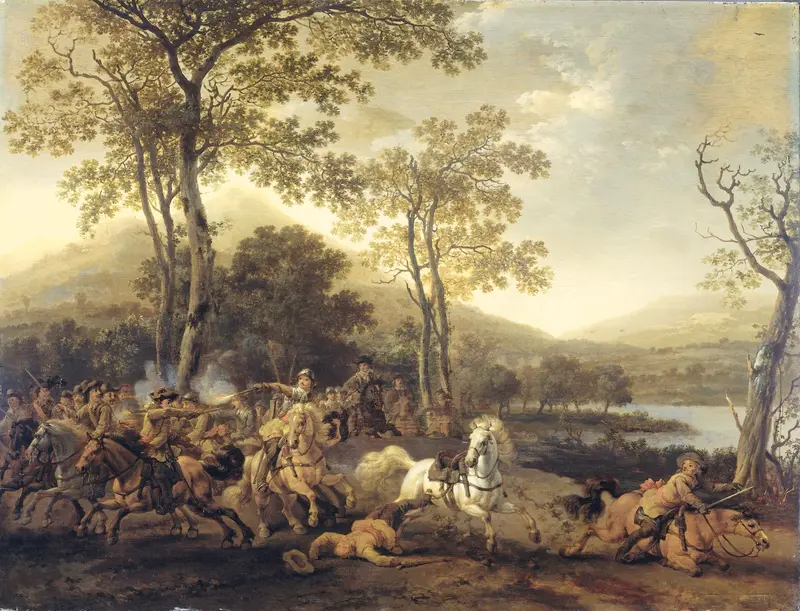
Cavalry Skirmish
Abraham Van Calraet
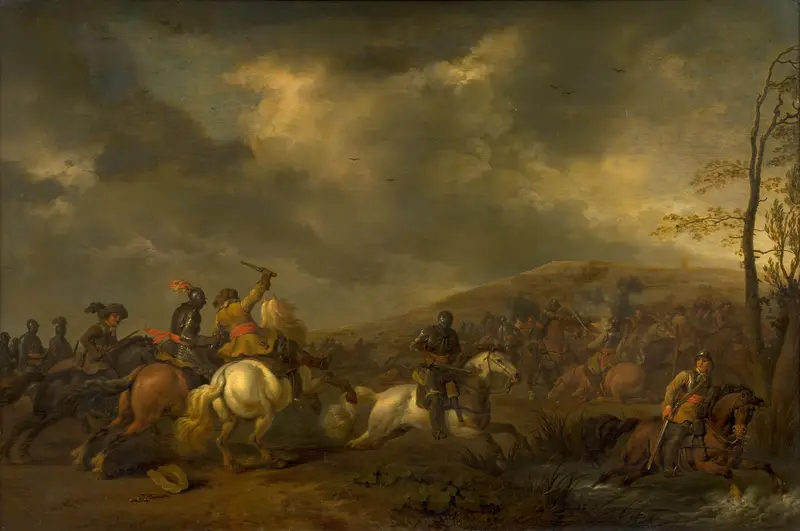
Choc de cavalerie
Abraham Van Calraet
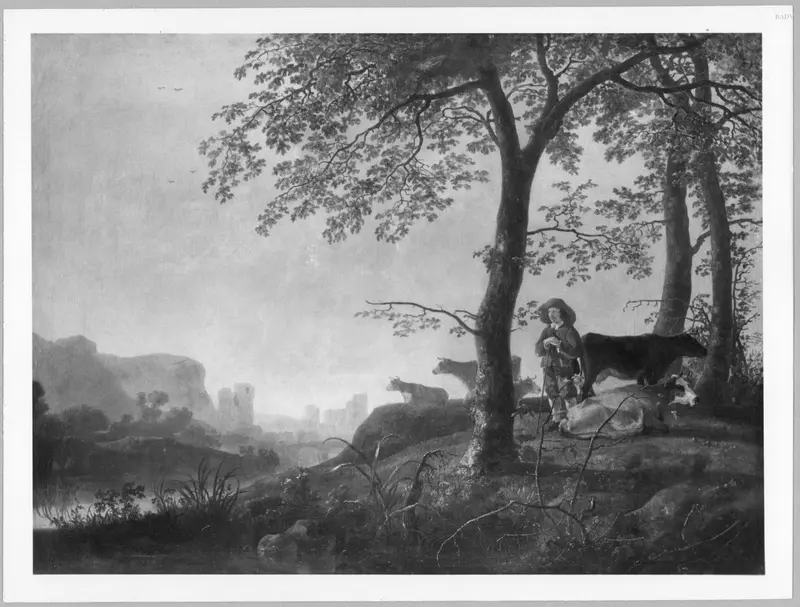
Herder and Cattle under Trees
Abraham Van Calraet
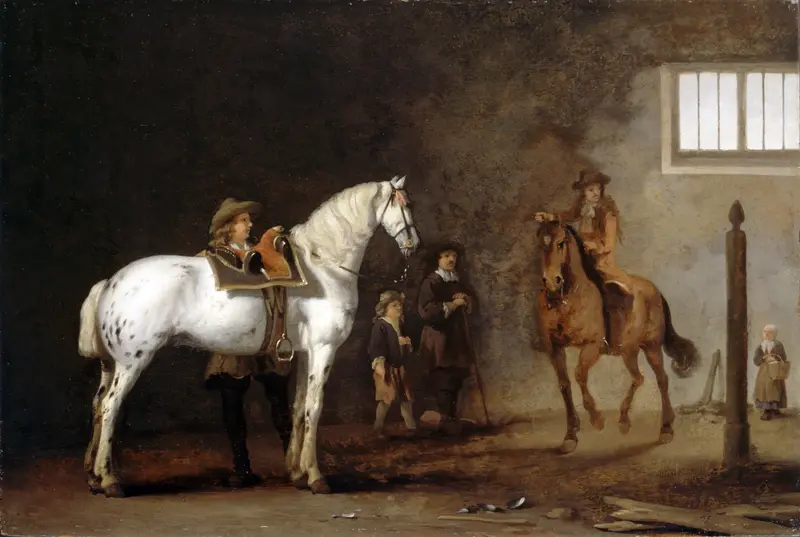
White Horse in a Riding School
Abraham Van Calraet
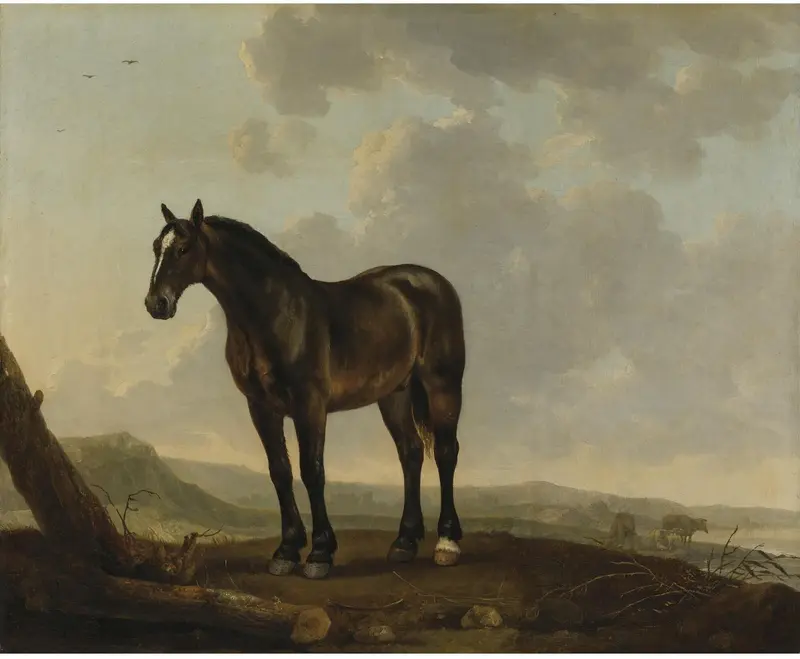
Landscape with a brown horse
Abraham Van Calraet
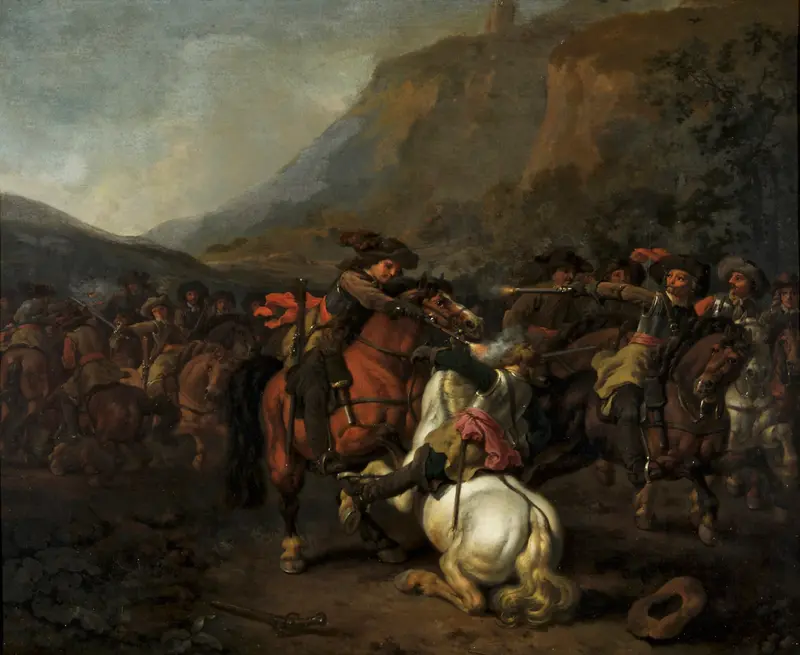
Ruitergevecht DM 016 1163 Dordrechts Museum
Abraham Van Calraet
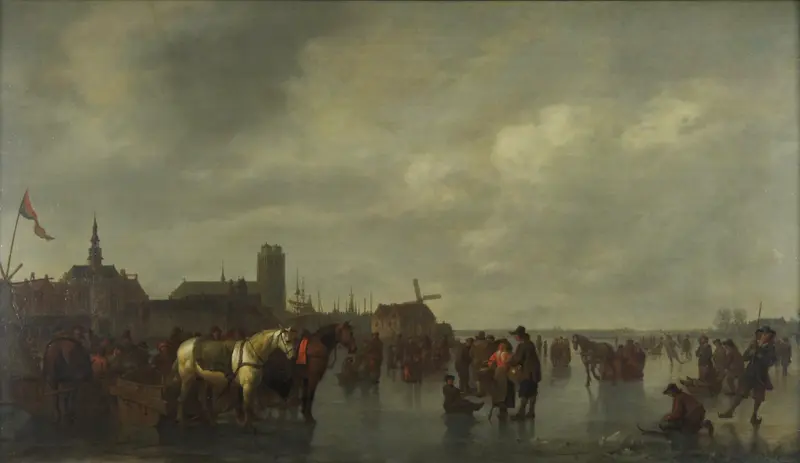
Scene on the Ice outside Dordrecht
Abraham Van Calraet
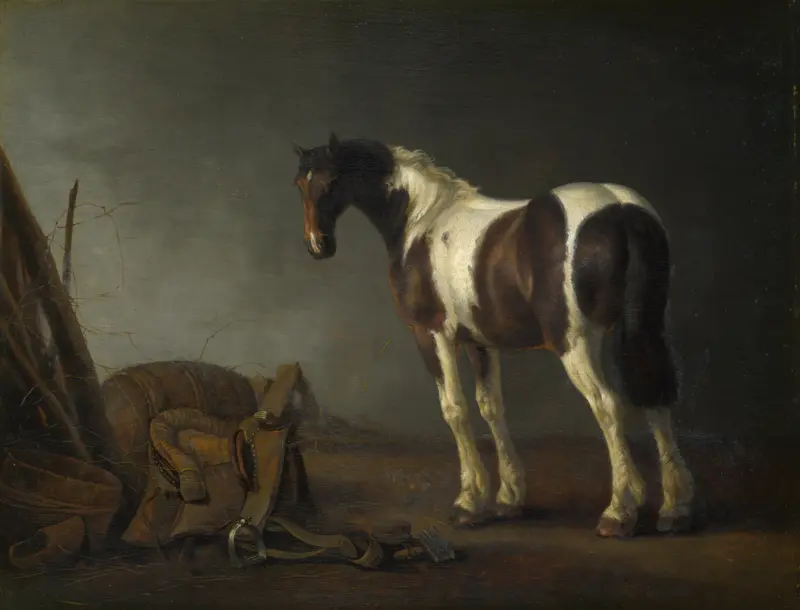
A Horse with a Saddle Beside it
Abraham Van Calraet
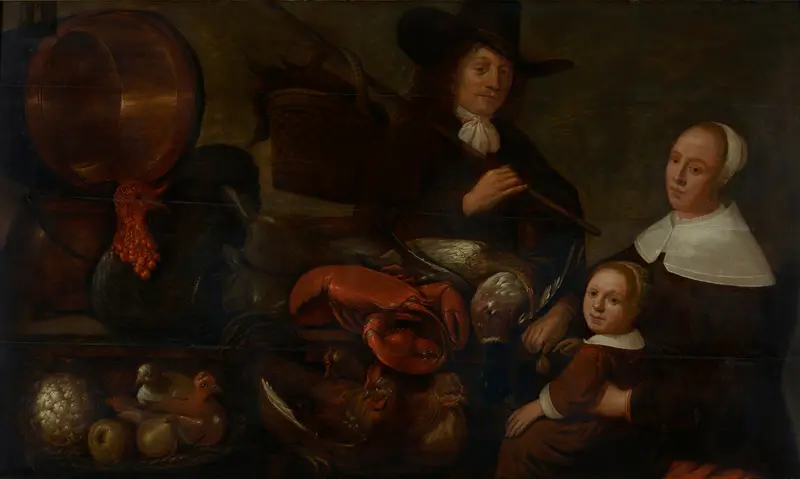
Portrait of a family
Abraham Van Calraet
More Genre Scene Art

Banquet of the Officers of the St George Civic Guard
Frans Hals

Rembrandt and Saskia in the Scene of the Prodigal Son
Rembrandt van Rijn

Bal du moulin de la Galette
Pierre-Auguste Renoir

Quadrille at the Moulin Rouge
Henri de Toulouse-Lautrec

A Burial at Ornans
Gustave Courbet

When Will You Marry?
Paul Gauguin