
Road along a river — History & Facts
The first thing that draws the eye in Road along a river by Adriaen Frans Boudewijns is the way the painter orchestrates a world in motion beneath the sheltering canopy of trees. The golden afternoon light threads through the branches, spotlighting a caravan of travelers and traders winding their way along a dirt road. Each figure, from the woman balancing a bundle to the horse-drawn carts, is placed with care, suggesting a living network of commerce and daily life.
The road curves gently toward a stone bridge, where the activity multiplies—people gather, boats drift, and distant buildings glow in the sun, inviting the viewer to imagine stories for each cluster of figures. The composition leads the eye from shadowed foreground to the luminous distance, where mountains and sky promise a world beyond. Painted between 1674 and 1717, this landscape belongs to a tradition that flourished in the Low Countries, where artists like Boudewijns became masters of both observation and idealization. Such works were often prized by wealthy patrons eager to display scenes of prosperity, travel, and the harmony of nature and civilization.
The genre evolved in a period of economic expansion and urbanization, when the landscape became a symbol of both national pride and private delight. Today, this painting resides in the collection of the Museo del Prado, a quiet testament to an era when the everyday journey could be rendered with the grandeur of history. Every detail—each cartwheel, every sunlit wall—invites you to linger and trace the rhythms of a world both distant and familiar.
More Artworks by Adriaen Frans Boudewijns
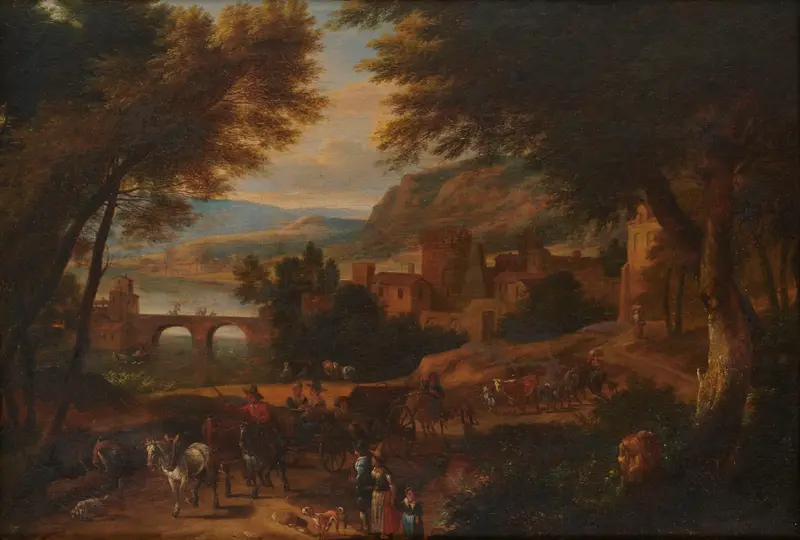
Landscape
Adriaen Frans Boudewijns
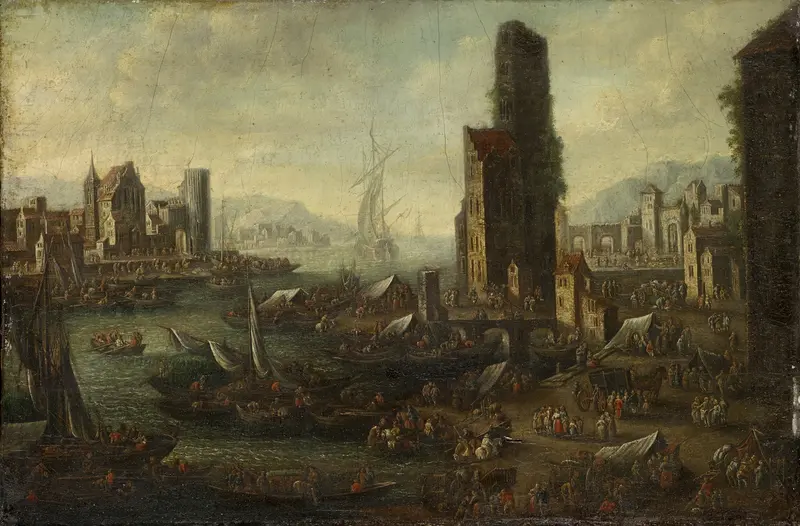
Seaport
Adriaen Frans Boudewijns
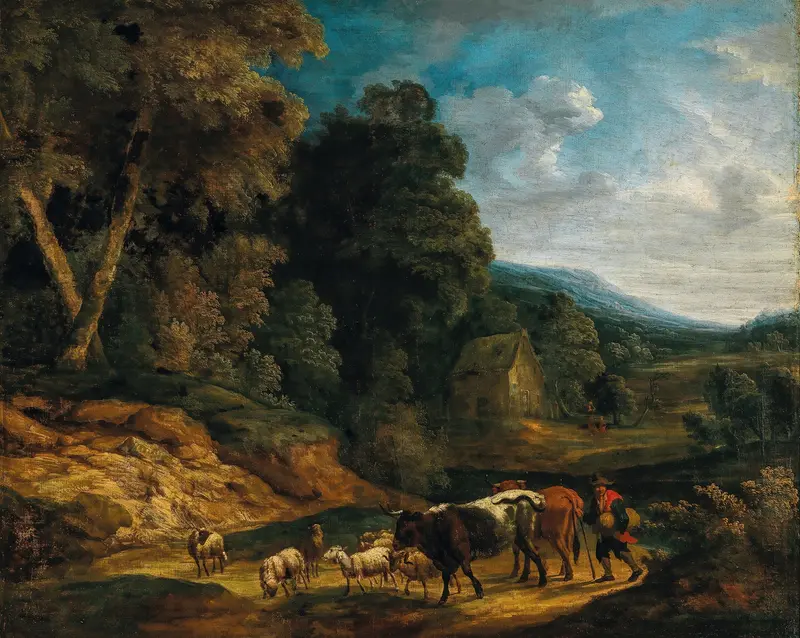
A southern landscape with herdsmen and their flock
Adriaen Frans Boudewijns
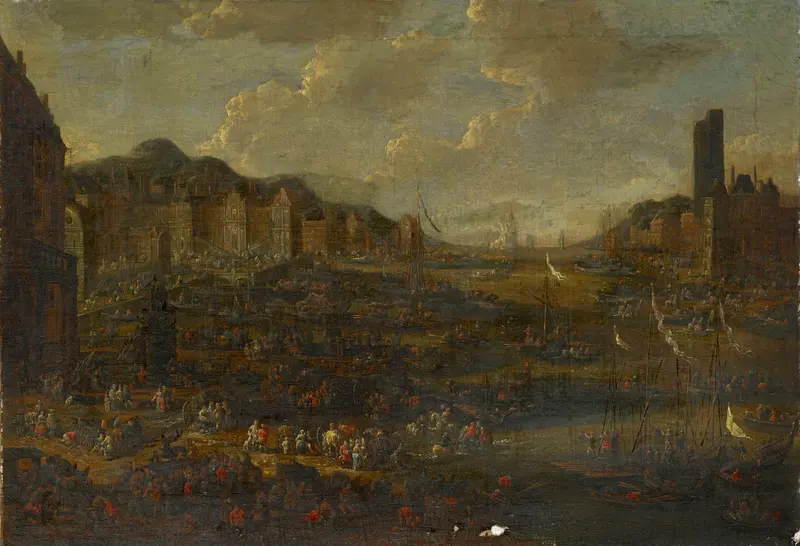
Seaport II
Adriaen Frans Boudewijns
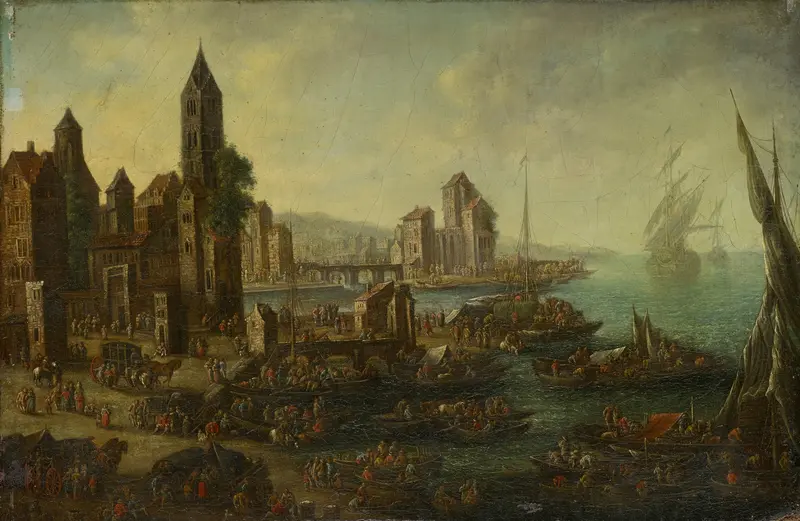
Seaport III
Adriaen Frans Boudewijns
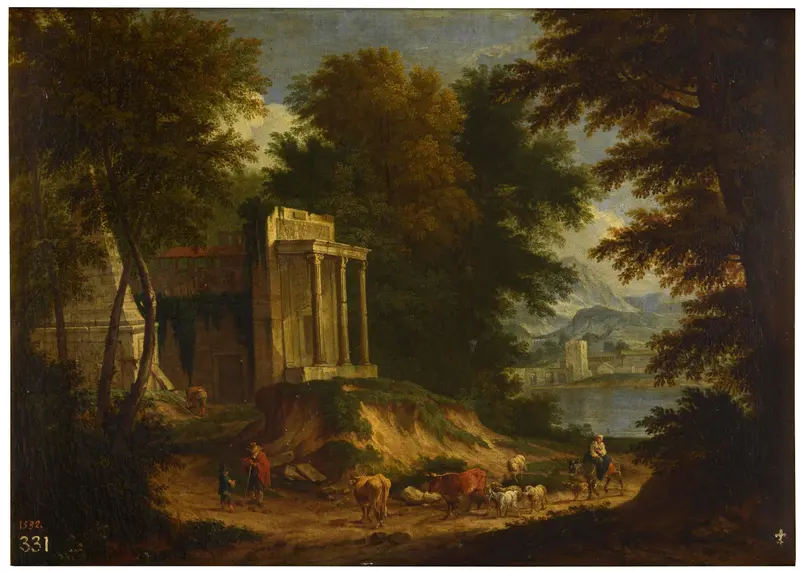
Landscape with ruins
Adriaen Frans Boudewijns
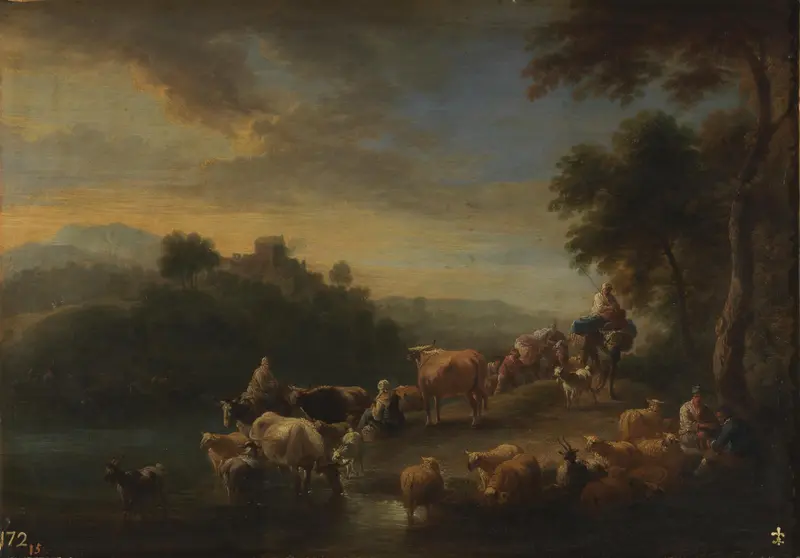
Landscape with the Cattle
Adriaen Frans Boudewijns
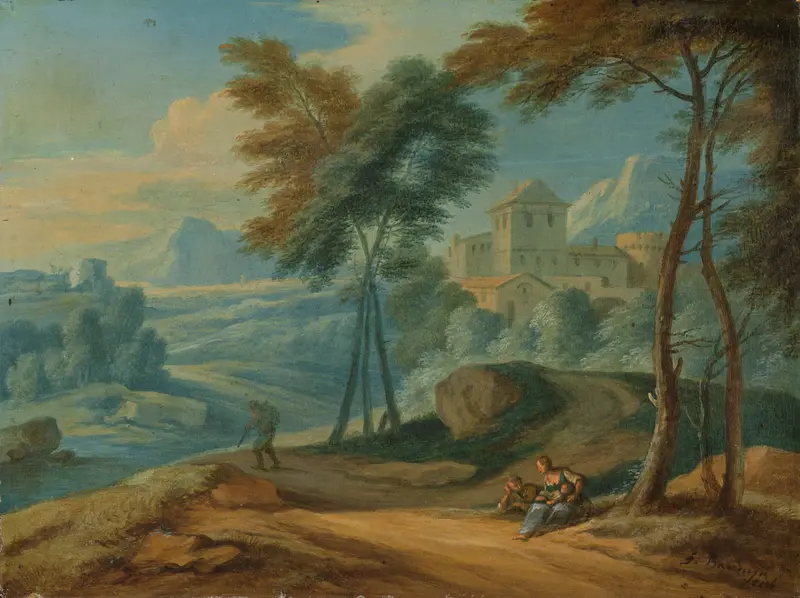
Mountainous landscape
Adriaen Frans Boudewijns
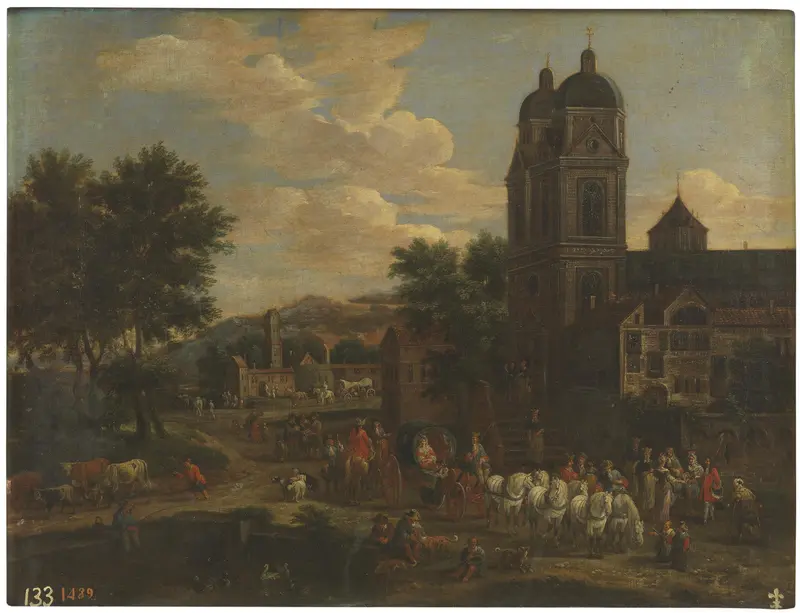
A sanctuary
Adriaen Frans Boudewijns
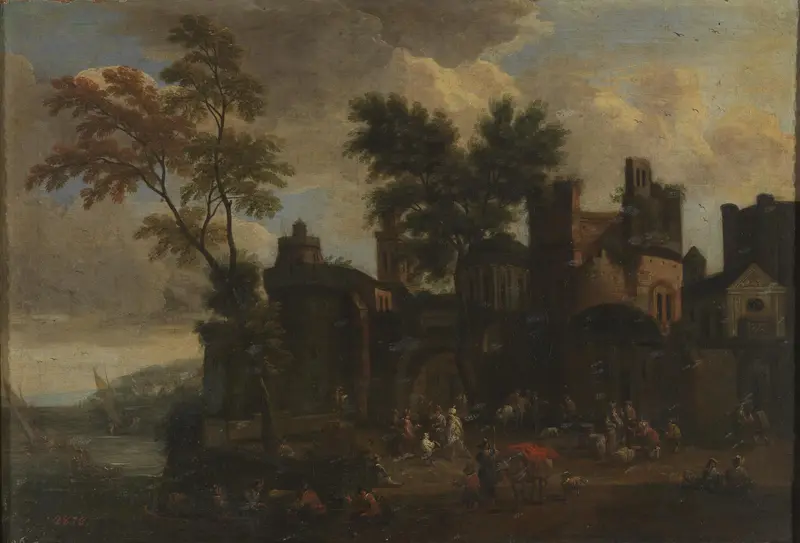
Port
Adriaen Frans Boudewijns
More Landscape Art

The Starry Night
Vincent van Gogh

View of Delft
Johannes Vermeer

Water Lilies
Claude Monet

The Grand Canal, Venice, looking north-west from the Ca' Corner to the Ca' Contarini degli Scrigni, with the campanile of Santa Maria della Carità
Canaletto

Windsor Castle
Canaletto

The Grand Canal looking North-East from the Palazzo Dolfin-Manin to the Rialto Bridge
Canaletto