
Ruines de la façade de l’Hôtel de Ville en 1871 — History & Facts
Where does light end, and longing begin? This query resonates through the hauntingly evocative canvas, where ruins speak of a past both glorious and tragic. Look to the center of the composition, where the skeletal remains of the Hôtel de Ville stretch towards the sky, their crumbling façades bathed in a soft, melancholic light. Notice how the interplay of shadow and illumination captures the remnants of grandeur, with delicate strokes revealing the intricate architecture that once inspired pride. The muted palette of grays and browns contrasts with the bright highlights, inviting a sense of reverence and sorrow for what has been lost. As the eye wanders around the painting, the emotional weight of destruction becomes apparent.
The juxtaposition of light and dark suggests a struggle between hope and despair, with every crack in the stone echoing the fragility of human endeavors. Fragments of life linger in the foreground—charred remnants and scattered stones that hint at the chaotic past. Each element seems to reflect a longing for rebirth amidst the ruins, reinforcing the theme of resilience in the face of adversity. In 1871, Richard Phené Spiers painted this work while living in Paris, shortly after the city had endured the devastating effects of the Franco-Prussian War and the Commune.
This period was marked by political upheaval and social unrest, profoundly influencing artists who sought to capture both the beauty and tragedy of their surroundings. Spiers’ rendering of the Hôtel de Ville’s ruins encapsulates the moment—a poignant reminder of loss and the enduring spirit of a city reclaiming its identity amid the ashes of destruction.
More Artworks by Richard Phené Spiers
Browse all →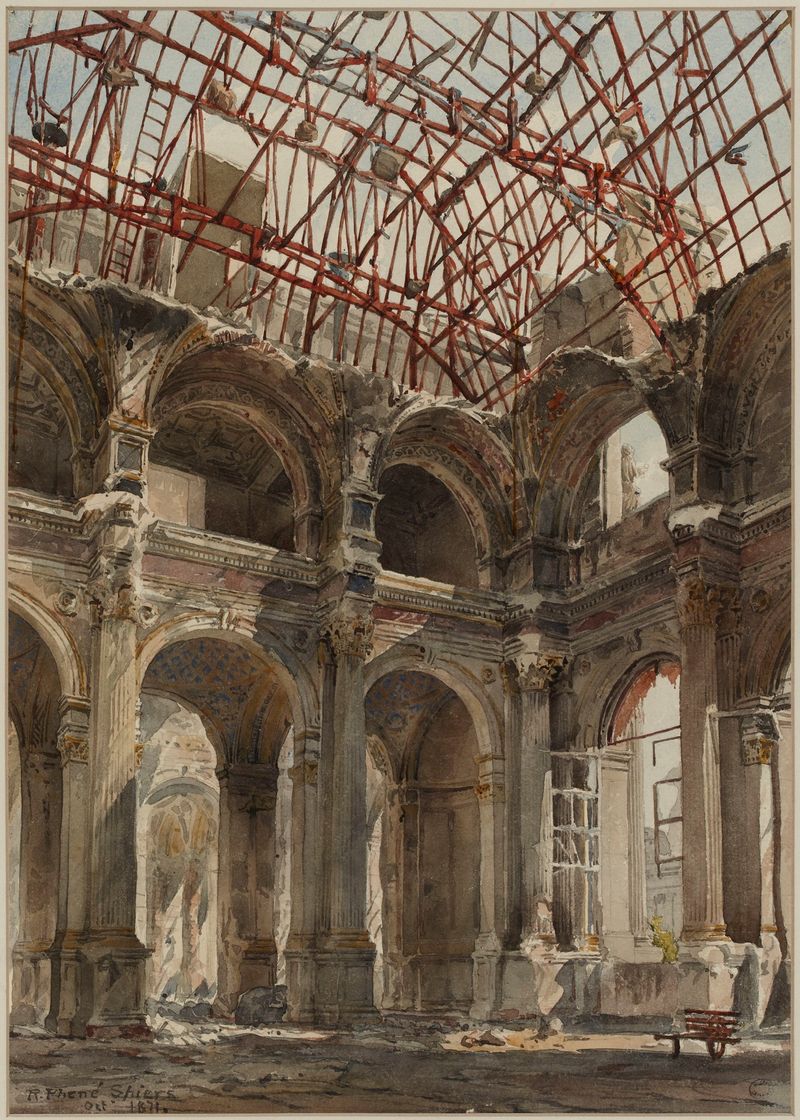
Ruines de l’Hôtel de Ville en 1871
Richard Phené Spiers

Ruines de l’Hôtel de Ville en 1871
Richard Phené Spiers
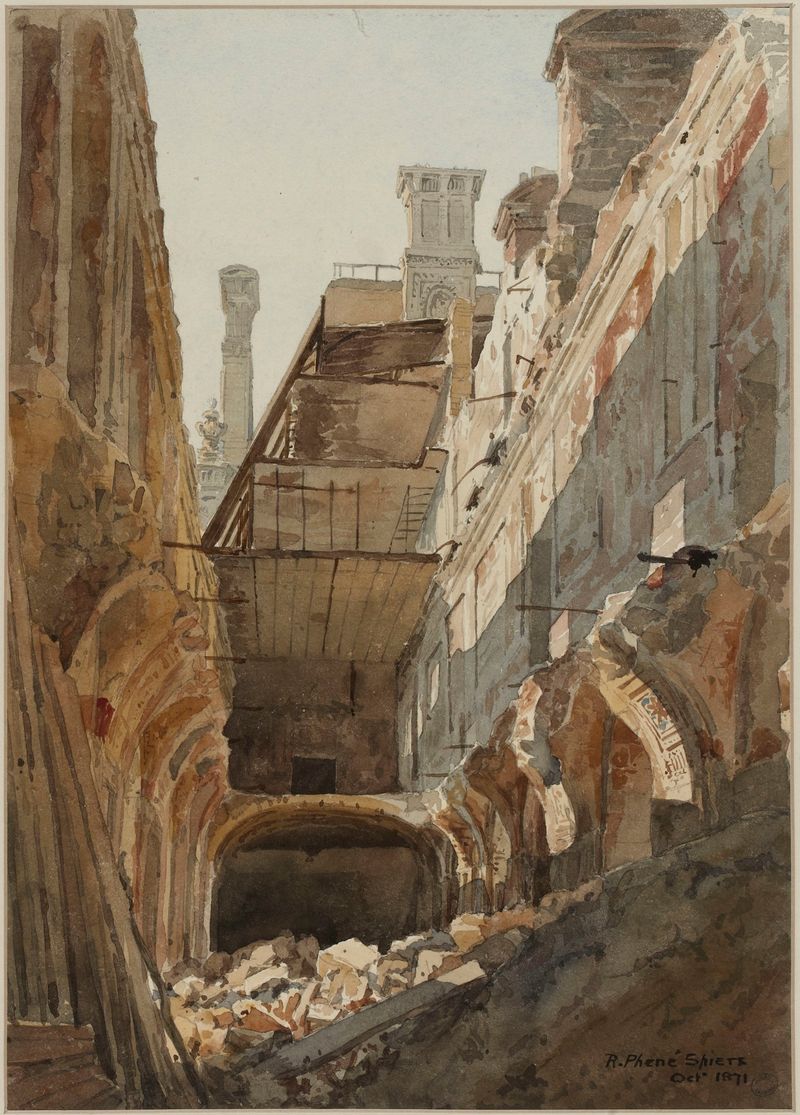
Ruines du Palais des Tuileries, salon de Diane, en 1871
Richard Phené Spiers
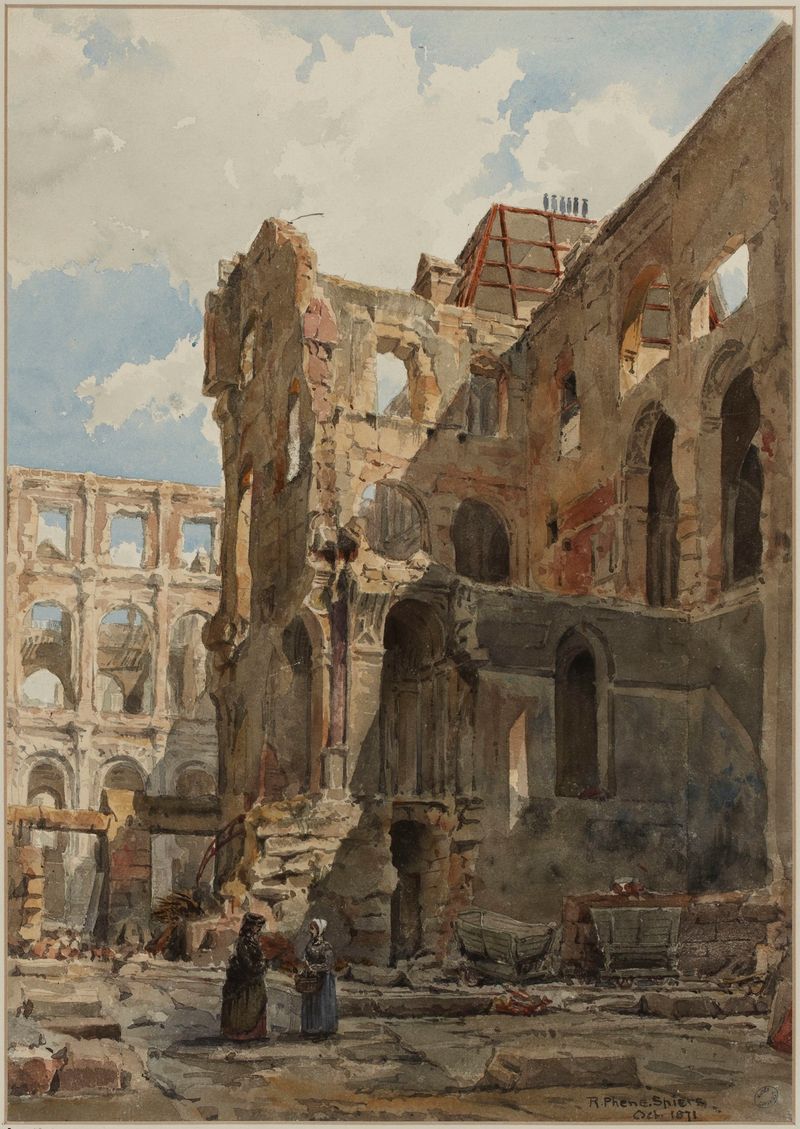
Ruines de l’Hôtel de Ville en 1871
Richard Phené Spiers
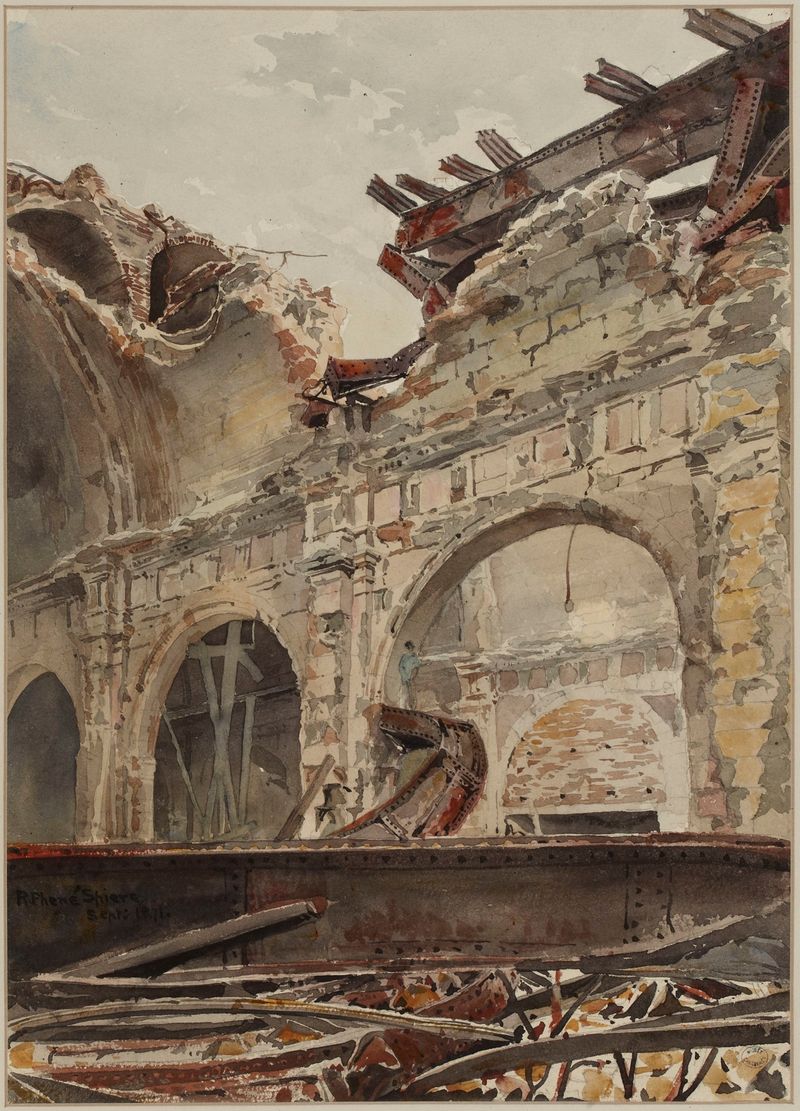
Ruines du Palais de Justice, salle des Pas-Perdus, après l’incendie de 1871.
Richard Phené Spiers

Ruines du Palais de Justice, salle des Pas-Perdus, après l’incendie de 1871
Richard Phené Spiers
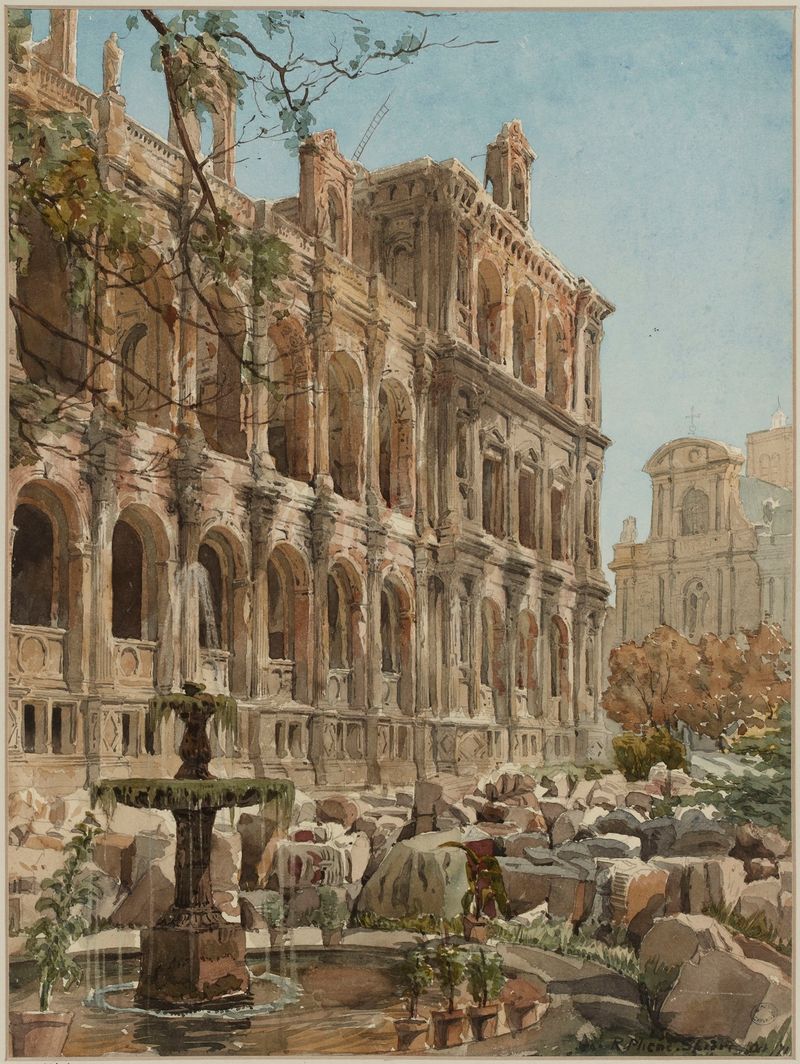
Ruines de la façade de l’Hôtel de Ville en 1871.
Richard Phené Spiers
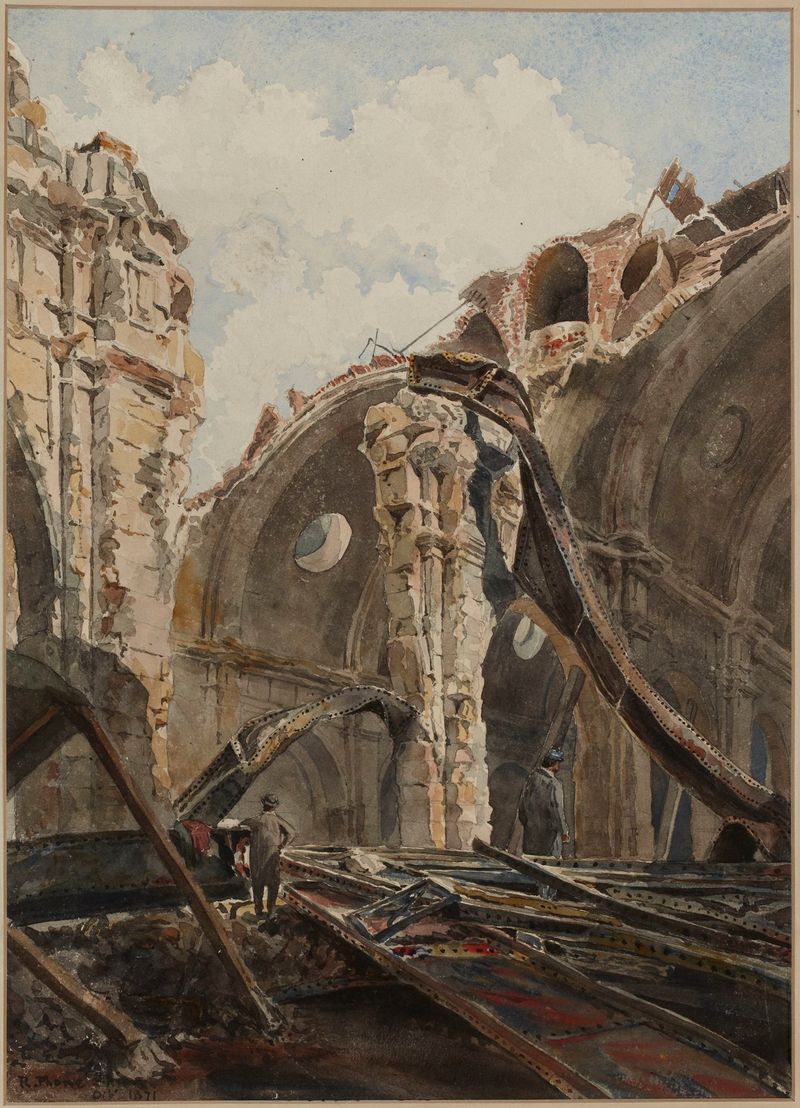
Le Palais de Justice après l’incendie de 1871
Richard Phené Spiers
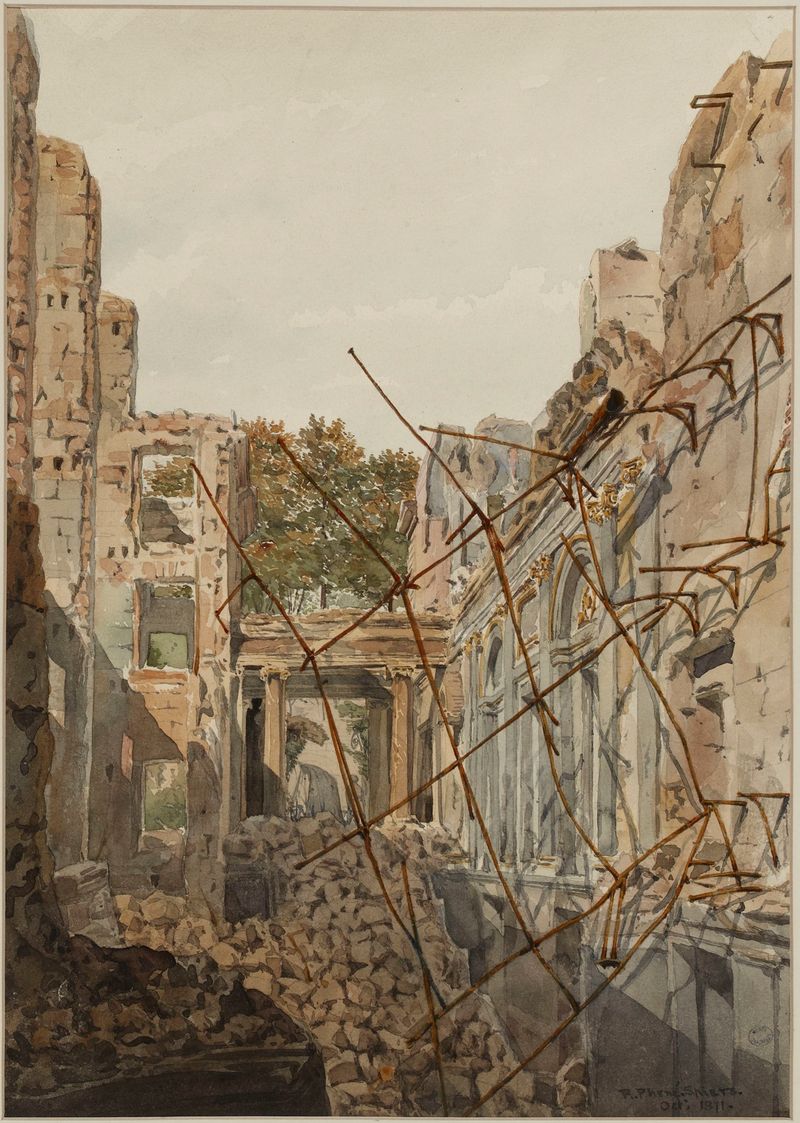
Ruines du Palais de Saint-Cloud en 1871.
Richard Phené Spiers
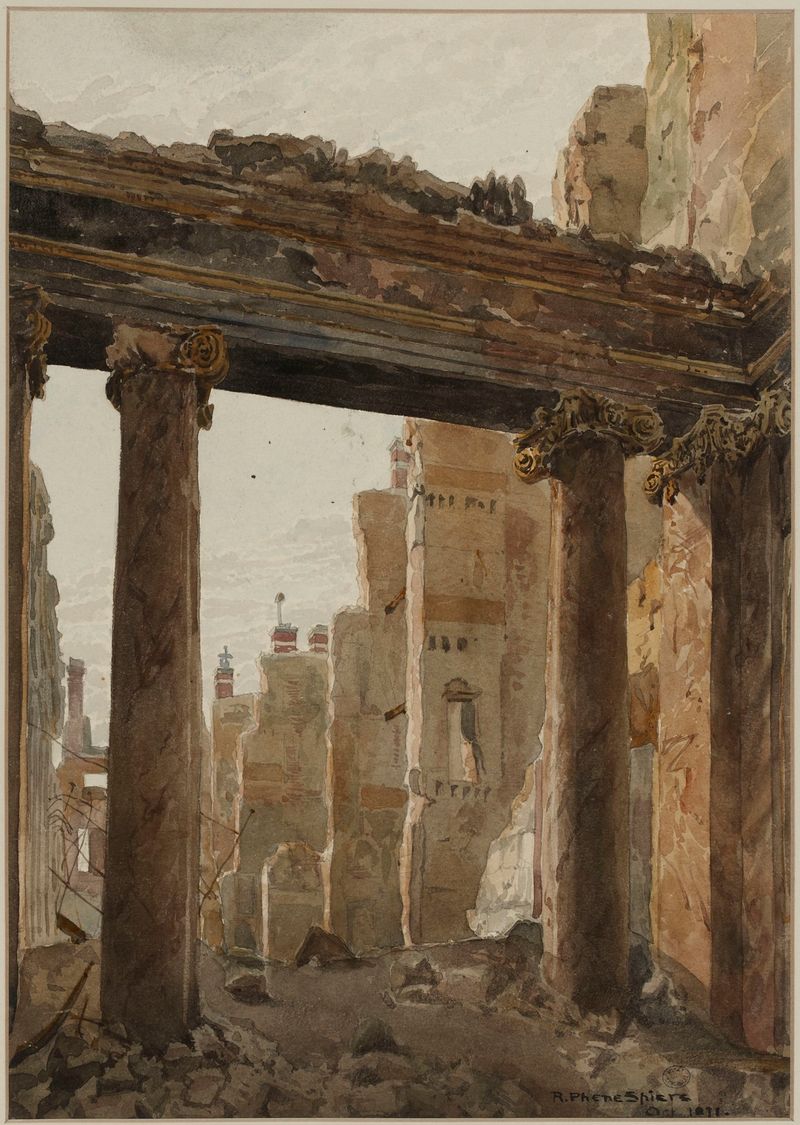
Ruines du Palais de Saint-Cloud en 1871
Richard Phené Spiers
More Architecture Art
Browse all →
The statue of Liberty
Frédéric Auguste Bartholdi

View of Houses in Delft, Known as ‘The Little Street’
Johannes Vermeer

View of Houses in Delft, Known as ‘The Little Street’
Johannes Vermeer

The Cathedral in Rouen. The portal, Grey Weather
Claude Monet

The yellow house
Vincent van Gogh

The Church in Auvers-sur-Oise, View from the Chevet
Vincent van Gogh