
Saint Jerome and a Donor — History & Facts
Few works by Piero della Francesca have provoked as much speculation as Saint Jerome and a Donor, painted around 1440, not least because its original purpose and patron remain shrouded in mystery. The painting is among the earliest known depictions by Piero of a donor kneeling beside a saint, a format that would become a hallmark of Renaissance piety and artistic innovation. Scholars have long debated the identity of the kneeling figure, whose richly detailed clothing suggests a man of wealth and status, perhaps a merchant or local dignitary from Borgo San Sepolcro, Piero’s hometown.
The absence of documentation means the donor’s name may be lost to history, but his presence firmly anchors the painting in the social realities of 15th-century Italy. At the heart of the image, Saint Jerome stands in the wilderness, caught in the act of removing a thorn from a lion's paw—a scene drawn from the saint’s legendary compassion and his years as a hermit. The donor kneels in prayerful humility, his gaze fixed not on the saint, but on the viewer, inviting us into the sacred drama. The rocky landscape, rendered with Piero’s characteristic clarity, frames the encounter, while the lion, tamed and attentive, symbolizes both Jerome’s wisdom and his dominion over the wild.
The saint’s cardinal’s hat and red robe signal his status, while the open book at his feet alludes to his scholarly translation of the Bible. Compared to Antonello da Messina’s later and more introspective Saint Jerome in His Study, Piero’s version is direct and communal, drawing the donor—and by extension, the viewer—into the saint’s world. The early history of Saint Jerome and a Donor is largely undocumented, typical of many small devotional works from this period. Its medium is still debated, though it likely combines tempera with oil, reflecting Piero’s experimentation with new techniques.
The painting’s restrained palette and geometric composition foreshadow the artist’s later masterpieces, such as The Flagellation of Christ. Today, the work’s attribution to Piero della Francesca is widely accepted, though it was once contested due to its early date and unusual format. Now housed in a major European collection, Saint Jerome and a Donor stands as a testament to the artist’s early genius and the devotional fervor of Renaissance Italy.
More Artworks by Piero Della Francesca

Portrait of the Duchess of Urbino, Battista Sforza
Piero Della Francesca

Portrait of Federico da Montefeltro
Piero Della Francesca

Federico da Montefeltro, Duke of Urbino
Piero Della Francesca
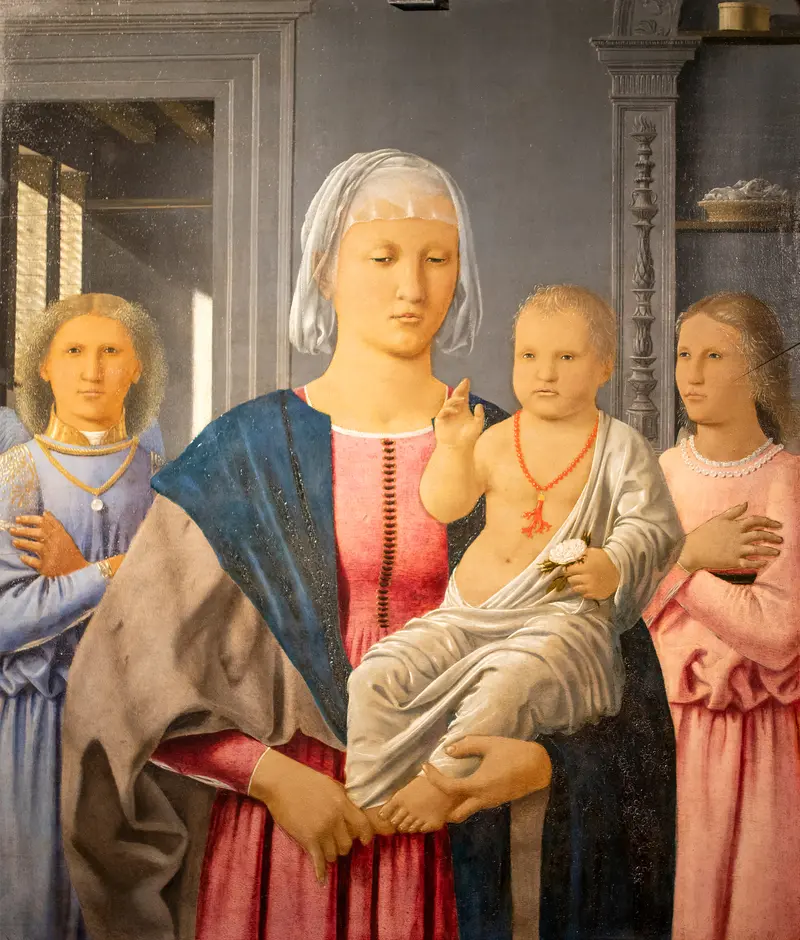
Madonna di Senigallia
Piero Della Francesca
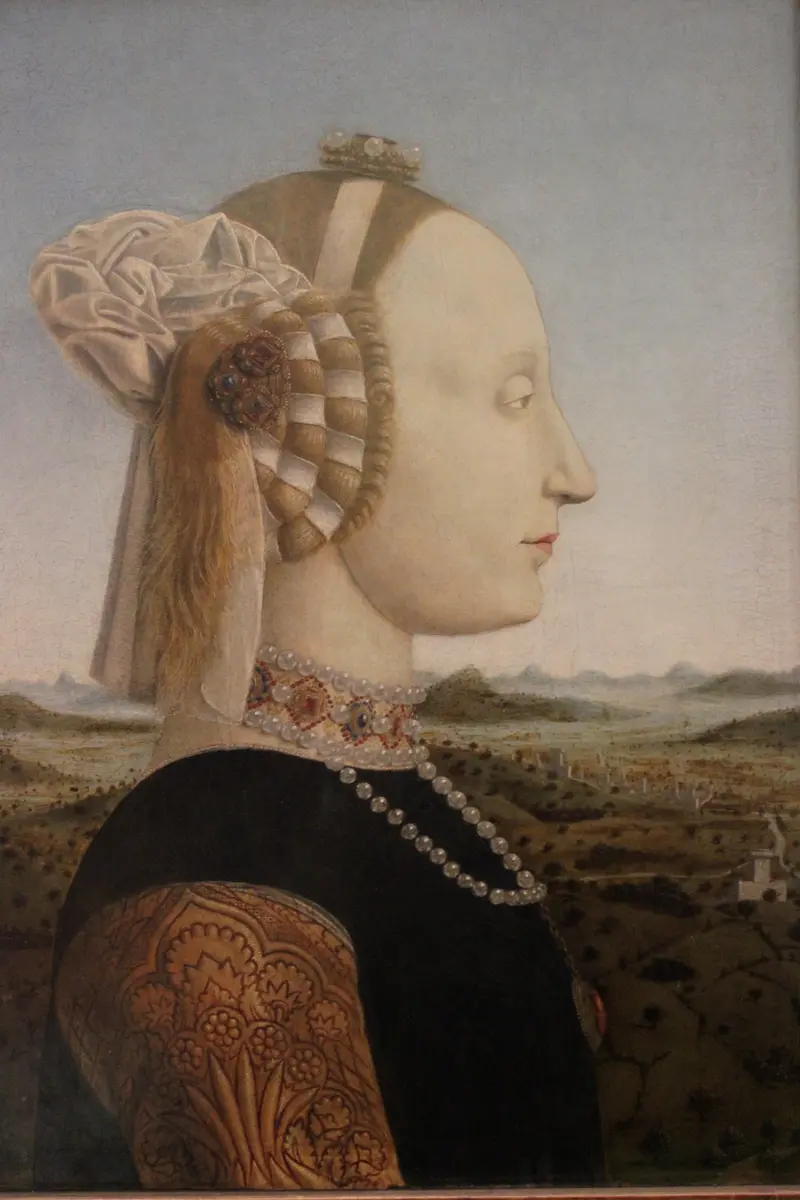
Portrait of Battista Sforza
Piero Della Francesca
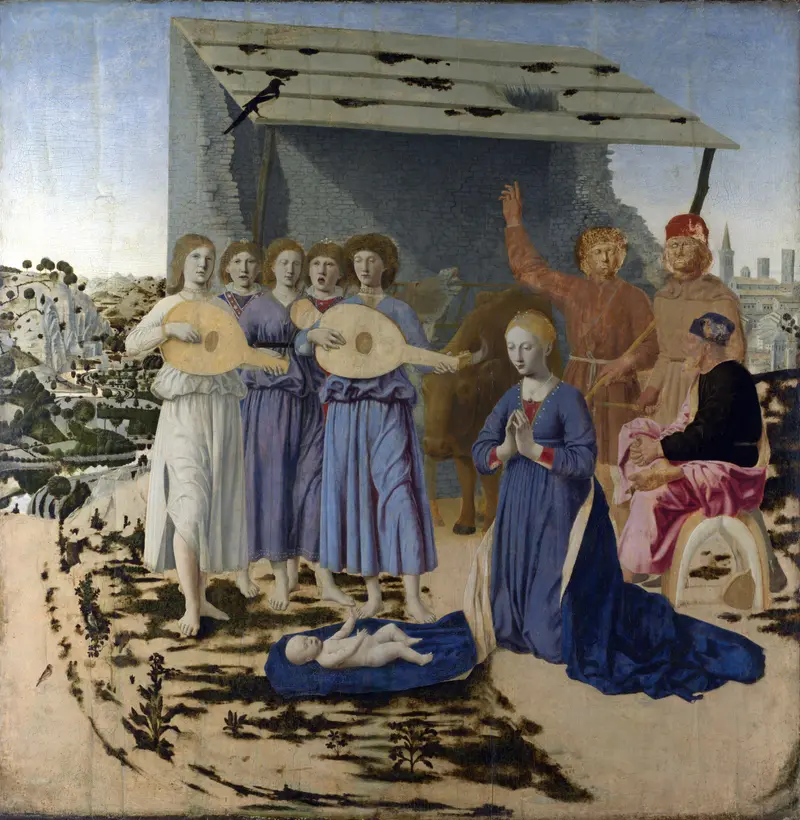
The Nativity
Piero Della Francesca
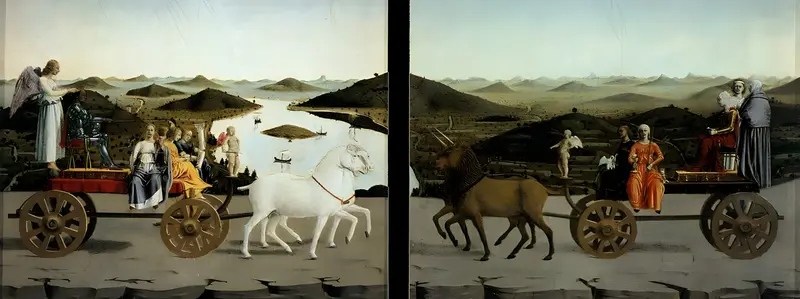
Diptych of Federico da Montefeltro and Battista Sforza
Piero Della Francesca
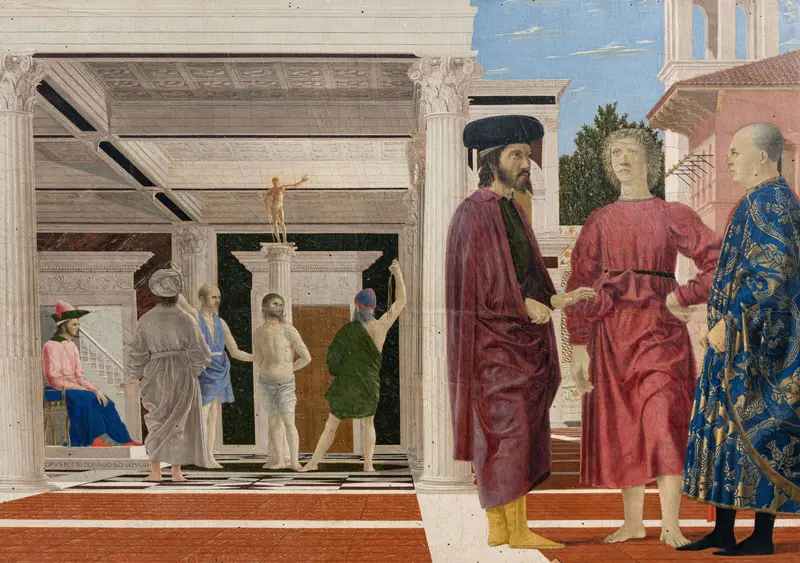
Flagellation of Christ
Piero Della Francesca
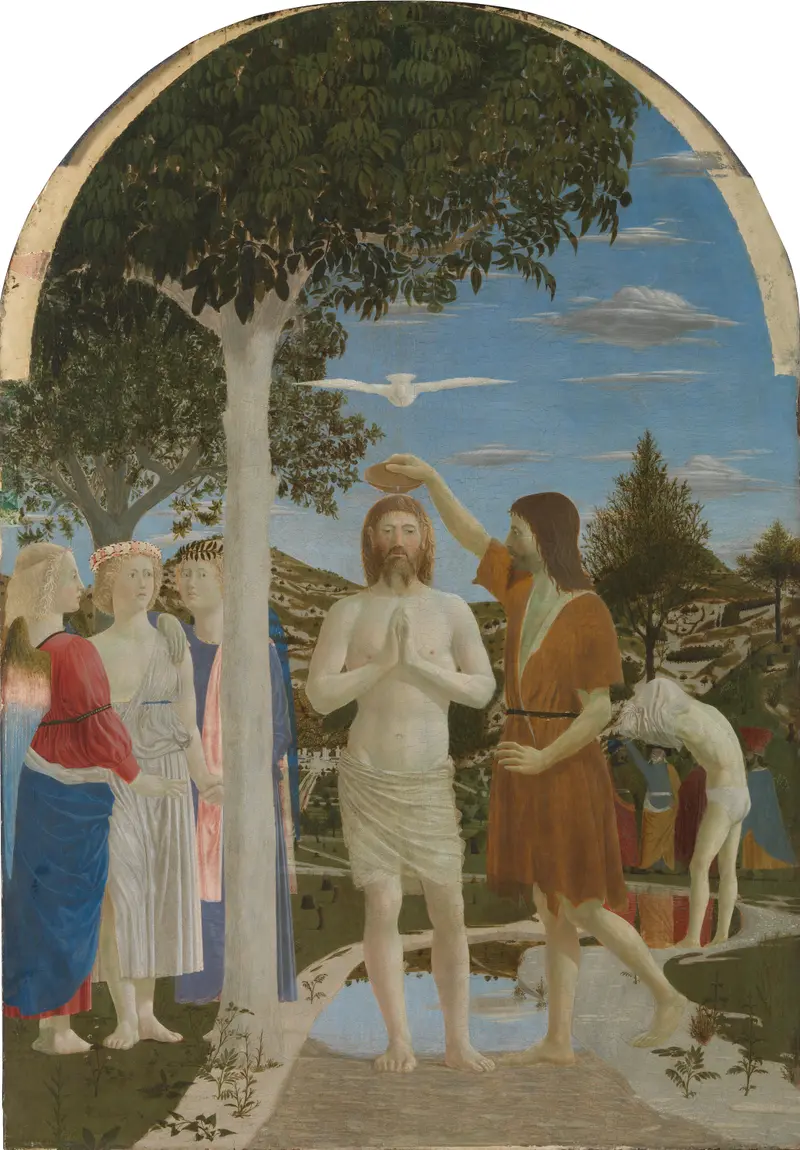
The Baptism of Christ
Piero Della Francesca
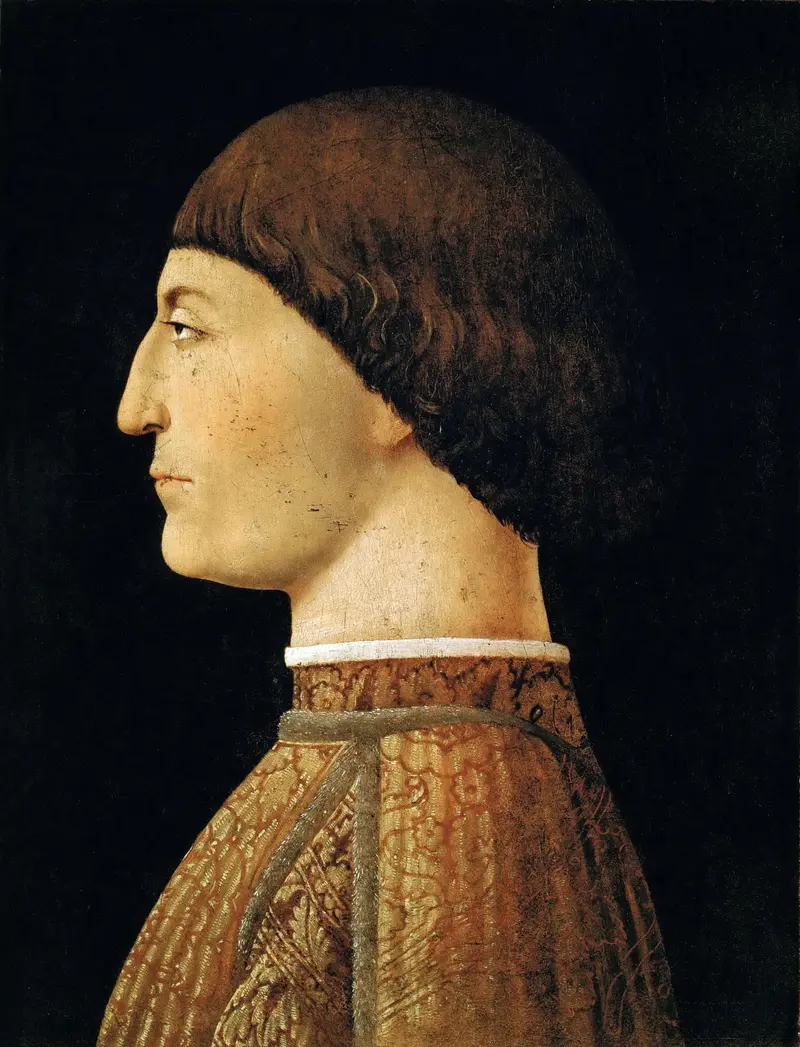
Portrait of Sigismondo Pandolfo Malatesta
Piero Della Francesca





