
Saint Julian the Hospitaller — History & Facts
No other painter of the Early Renaissance has left us so many riddles as Piero della Francesca, and none more so than his Saint Julian the Hospitaller of 1454. The painting’s subject—a nobleman condemned to unknowingly kill his own parents—was a favorite of medieval storytellers, but in Piero’s hands, the tale becomes a study in dignity and fate. Scholars still debate for whom this work was painted, and even its original location remains uncertain.
The medium itself is a mystery: it is not clear whether Piero used tempera, oil, or a combination, as technical analysis has been inconclusive. At the heart of the painting stands Saint Julian, clad in a rich red cloak, his gaze lowered, sword in hand. This is the moment after his terrible act, when he discovers the truth of the prophecy that he would kill his parents. The chain across his chest is both a mark of his noble status and a symbol of the burden he must now bear.
Light falls sharply across his face, isolating him in a space of remorse and revelation, while the muted landscape behind him suggests the world’s indifference to personal tragedy. Unlike the more dramatic versions by artists such as Domenico Ghirlandaio, who preferred scenes of Julian’s later penitence, Piero chooses the instant of realization—quiet, almost frozen in time. The painting’s journey through history is as enigmatic as its subject. Its early provenance is undocumented, and it first appears in records centuries after its creation, already attributed to Piero della Francesca.
Some art historians have speculated that it was part of a larger altarpiece now lost or dispersed. Today, Saint Julian the Hospitaller is recognized as a key work in Piero’s exploration of psychological depth and human isolation, though its original patron and setting remain unknown. Its restrained emotion and geometric clarity place it firmly within the innovations that made the Early Renaissance a turning point in European art.
More Artworks by Piero Della Francesca

Portrait of the Duchess of Urbino, Battista Sforza
Piero Della Francesca

Portrait of Federico da Montefeltro
Piero Della Francesca

Federico da Montefeltro, Duke of Urbino
Piero Della Francesca
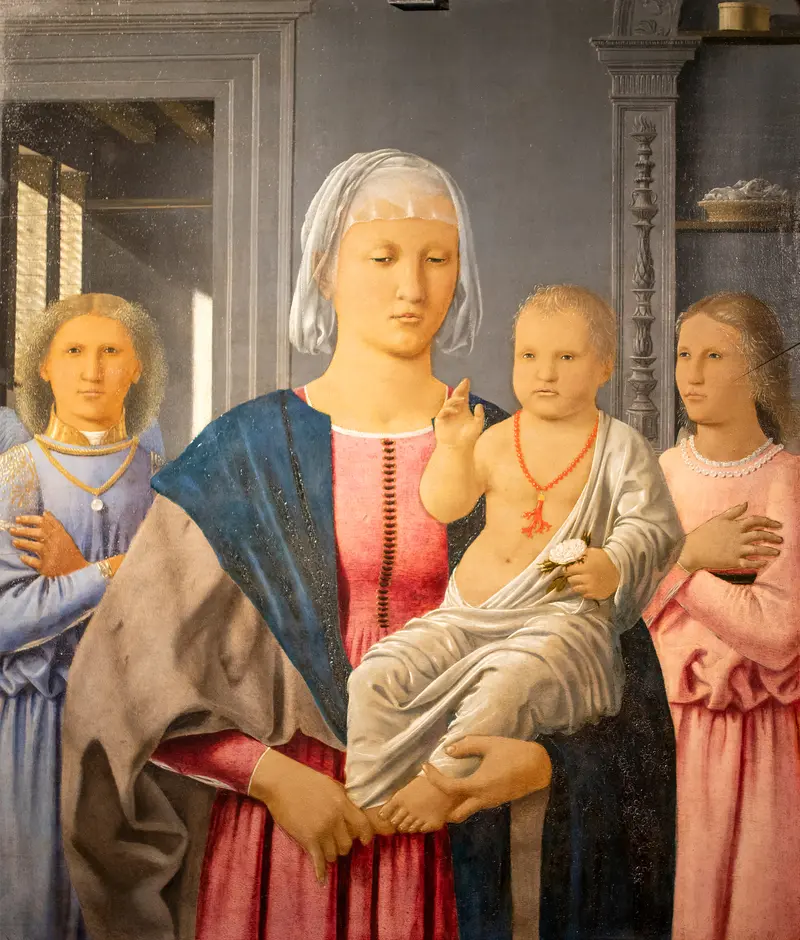
Madonna di Senigallia
Piero Della Francesca
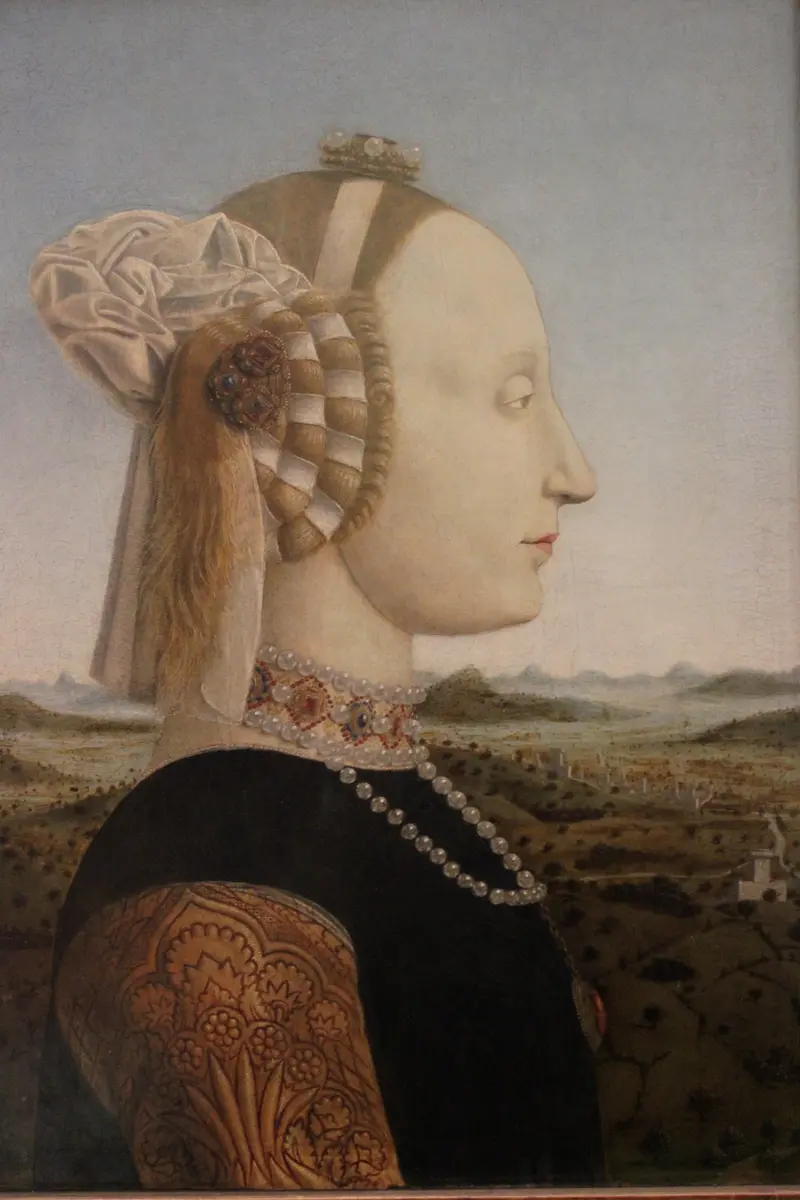
Portrait of Battista Sforza
Piero Della Francesca
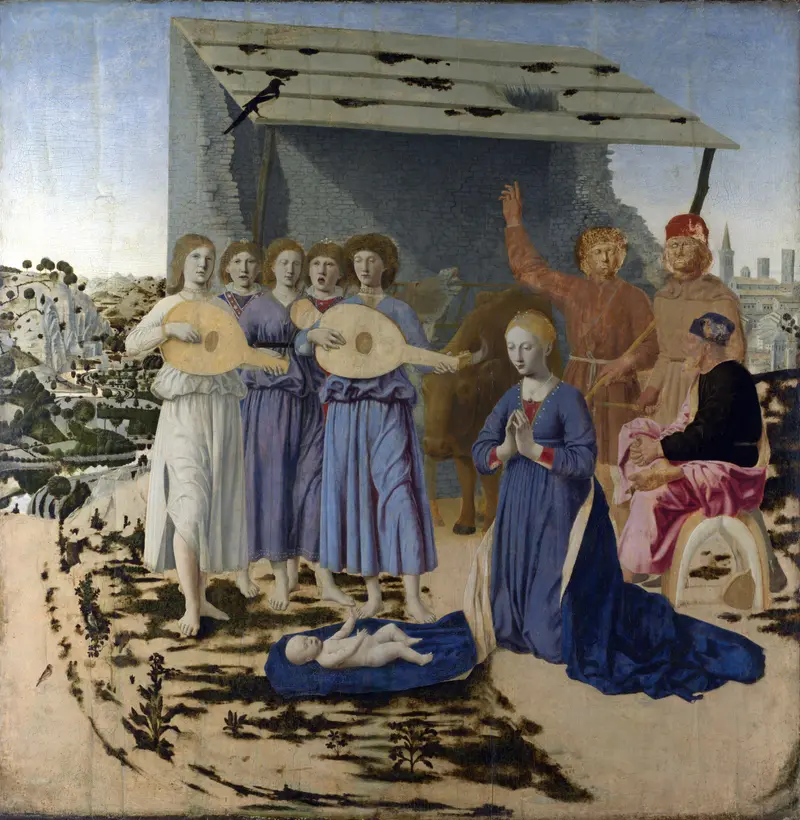
The Nativity
Piero Della Francesca
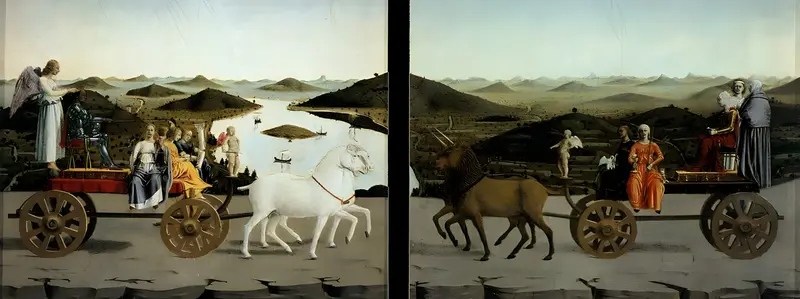
Diptych of Federico da Montefeltro and Battista Sforza
Piero Della Francesca
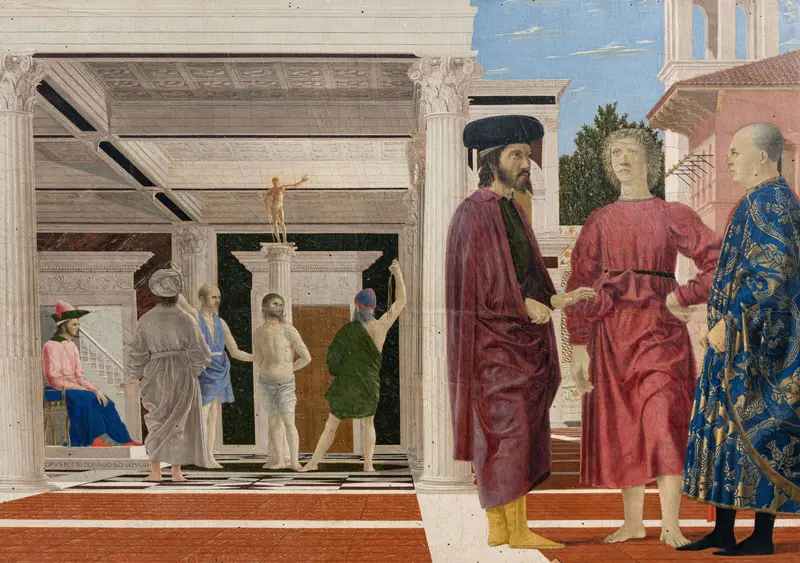
Flagellation of Christ
Piero Della Francesca
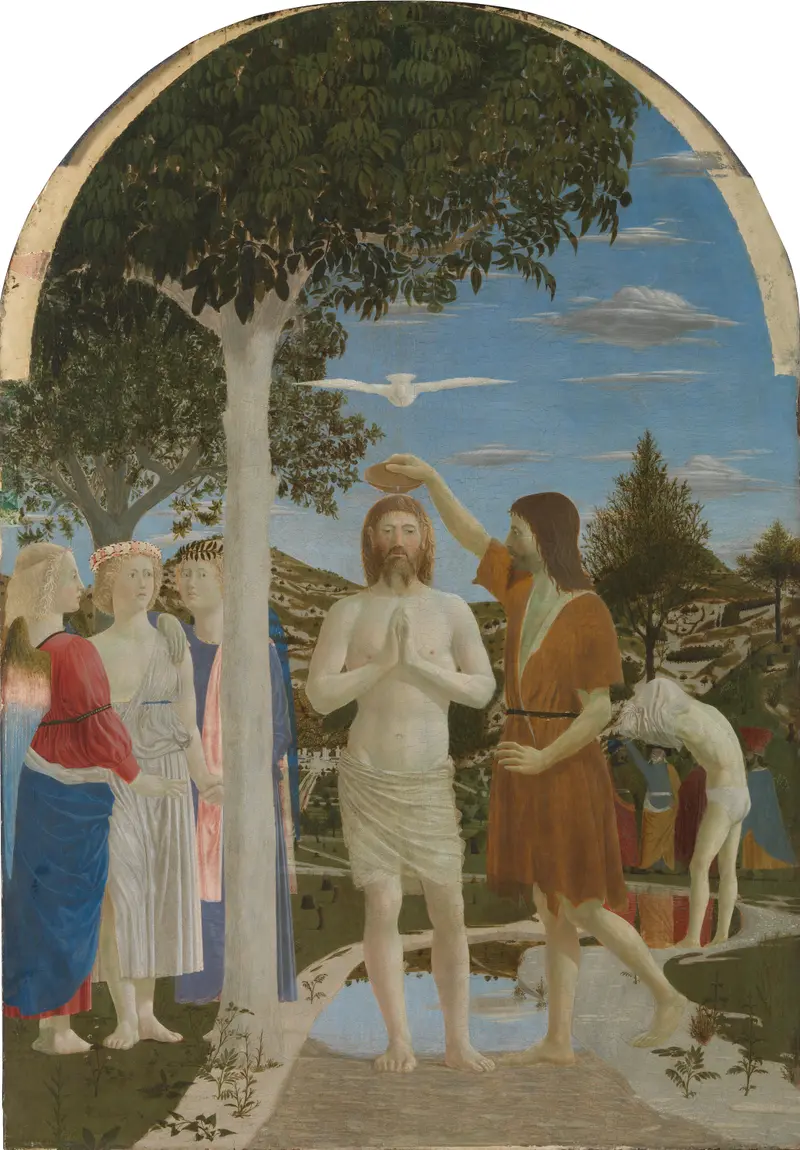
The Baptism of Christ
Piero Della Francesca
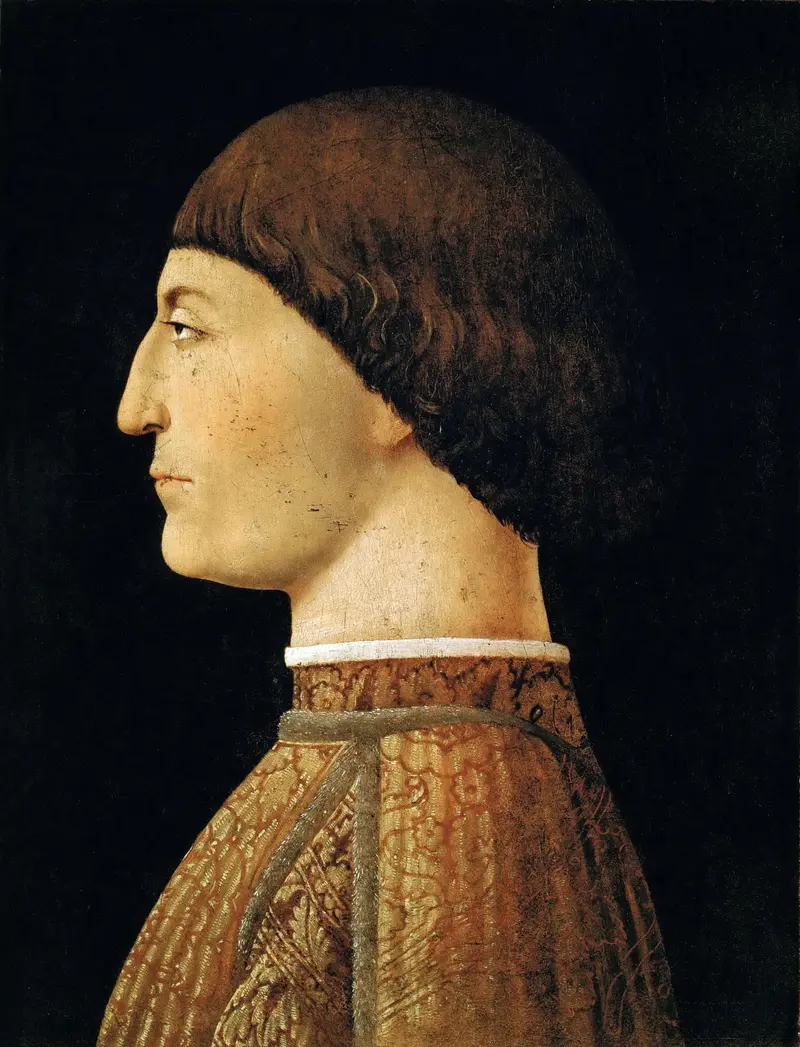
Portrait of Sigismondo Pandolfo Malatesta
Piero Della Francesca





